







Cats
Toys for indoor cats
Pounce, chase, play.
10 items picked for everyday life with your pet, with shipping estimates on every item.
 A little fun goes a long way.
All cats toys & play →Cat scratchers →Interactive cat toys →Cat tunnels →Cat scratching posts →Cat puzzle feeders →Cat exercise wheels →Cat scratch deterrents →Catnip & silvervine toys →
↗Tracked US shippingEstimates on every item↶Returns & refundsHow it works♡Here to helpTalk to Giddy Pets
Find their favorites
Shop cat toys by type
Choose a section to narrow the range.
All toys for indoor cats
Little essentials. Lots of love.

Cat exercise wheels
Cat Exercise Wheel, 31.5 in, with Carpet Track and Safety Lock
- Options
- 3 to choose from
From $81.99

Interactive cat toys
Felt Cheese Cat Puzzle Toy with Spring Pom-Pom and Balls
- Options
- 2 to choose from
$22.99


Interactive cat toys
Windmill Cat Toy with Suction Cup Base and LED Light Ball
- Options
- 2 to choose from
$18.99

Cat toys
Stackable Cardboard Cat Hideout Box Set with Colored Rings
- Options
- 7 to choose from
From $15.99
A little guidance
Help choosing toys for indoor cats
Buying guides and care advice written for this range: what to measure, what matters and what to skip.
From our guides
- Best Interactive Cat Toys for Indoor and Bored Cats →
- Best Cat Toys: How to Choose Toys Cats Actually Use →
- DIY Cat Toys: Easy Homemade Toys Cats Love →
- Best Automatic Cat Toys: What Actually Matters →
- Best Catnip Toys: How to Choose Ones Your Cat Will Love →
- Best Kitten Toys: What to Look For and What to Avoid →
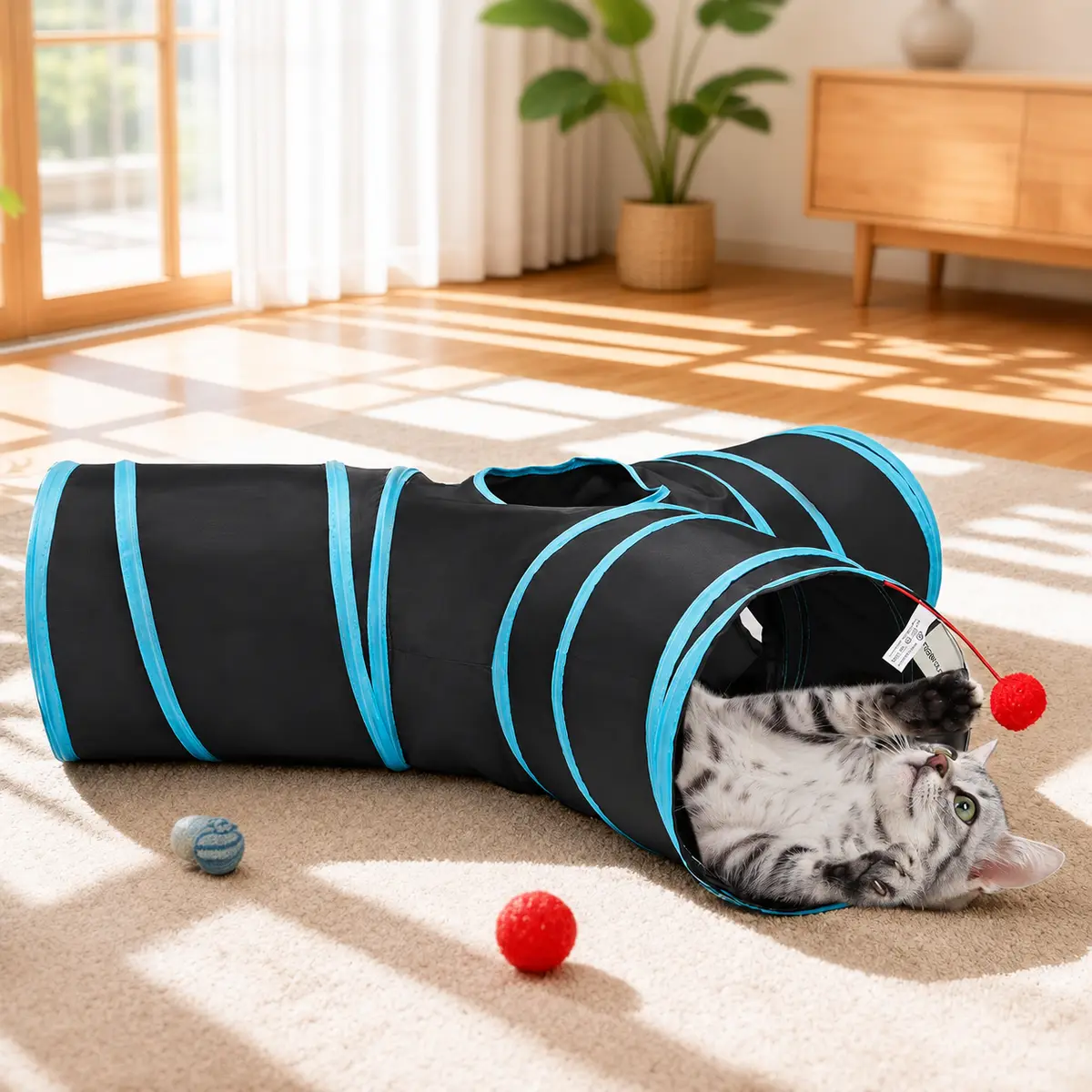
This page narrows our Cat Toys range to interactive toys that keep indoor cats busy: a felt cat puzzle toy with balls and a spring-loaded wand, rechargeable self-rolling motion balls that move in a pouch, an interactive windmill toy with an LED ball and suction base, a three-way collapsible tunnel, and a colorful set of plastic springs. They are for indoor cats who need more activity and stimulation than a quiet apartment offers. The guide below explains how to use them well.
Why indoor cats need interactive play
Indoor cats are safer than outdoor cats, but they miss out on the hunting, exploring and climbing an outdoor cat does every day. Without an outlet, many become bored, overweight or restless, and some develop behaviors such as night-time zoomies, attacking ankles or over-grooming.
Interactive toys fill some of that gap. A toy that moves, hides treats or responds to a paw engages a cat's hunting instincts and gets them moving. Two or three short play sessions a day, plus toys they can use on their own, make a real difference.
Puzzle toys and motion toys
Cat puzzle toys hide balls or treats in compartments a cat must fish out with a paw, combining play with problem solving. Spring-loaded wands built into a base give a cat something to bat even when you are not holding a wand.
Self-rolling motion balls move unpredictably, change direction when they bump into things and often sit inside a fabric pouch with a tail, so they look like scurrying prey. Windmill toys with a spinning ball attach to a floor or wall with a suction base and invite batting and swatting.
Simple toys still matter
Not every great toy needs a battery. Collapsible tunnels give cats a place to hide, ambush and race through. Plastic springs bounce unpredictably on hard floors and are a favorite of many cats. Both are inexpensive and good to have in rotation.
Rotate toys rather than leaving them all out. Put a few away each week and bring them back later, so they feel new. Novelty keeps indoor cats more interested than a large pile of the same toys.
Playing safely
Check electronic toys regularly for loose parts and keep charging cables out of reach. Supervise play with toys that have strings, tails or small parts, and store them away afterward. VCA Animal Hospitals warns that swallowed string can cause serious intestinal injury.
Plastic springs and small balls are a choking risk for some cats if chewed apart, so replace damaged ones. If your cat vomits repeatedly, stops eating or you think part of a toy has been swallowed, call your vet the same day.
What toys are best for indoor cats?
A mix works best: interactive wands for play together, puzzle toys and motion balls for solo play, and simple tunnels and springs. Rotate them weekly to keep interest high.
How much play does an indoor cat need?
Most indoor cats benefit from two or three short play sessions a day of 10 to 15 minutes, plus toys they can use alone. Active young cats may need more.
Are automatic cat toys good for indoor cats?
They help keep cats moving when you are busy and can spark interest in prey-like movement. They work best alongside interactive play with you, not instead of it.
How do I get my lazy indoor cat to play?
Try toys that move like prey, play at dawn or dusk when cats are most active, keep sessions short and end with a treat. Rotate toys so they feel new.
Can cat puzzle toys help with weight?
Puzzle toys slow eating and add activity, which can support a healthy weight when used with portion control. Ask your vet if your cat needs to lose weight.