Buying guides
Best Kitten Toys: What to Look For and What to Avoid
The best kitten toys are small objects a kitten can bat and carry, wand toys that you hold, and a few self-play toys for when you are busy. Skip anything small enough to swallow, and keep string, yarn and feathers for supervised play only. Choose the toys and start the games yourself, never with your hands.
By Matt GarnettUpdated November 13, 20264 min read2 sources
What matters most in a kitten toy
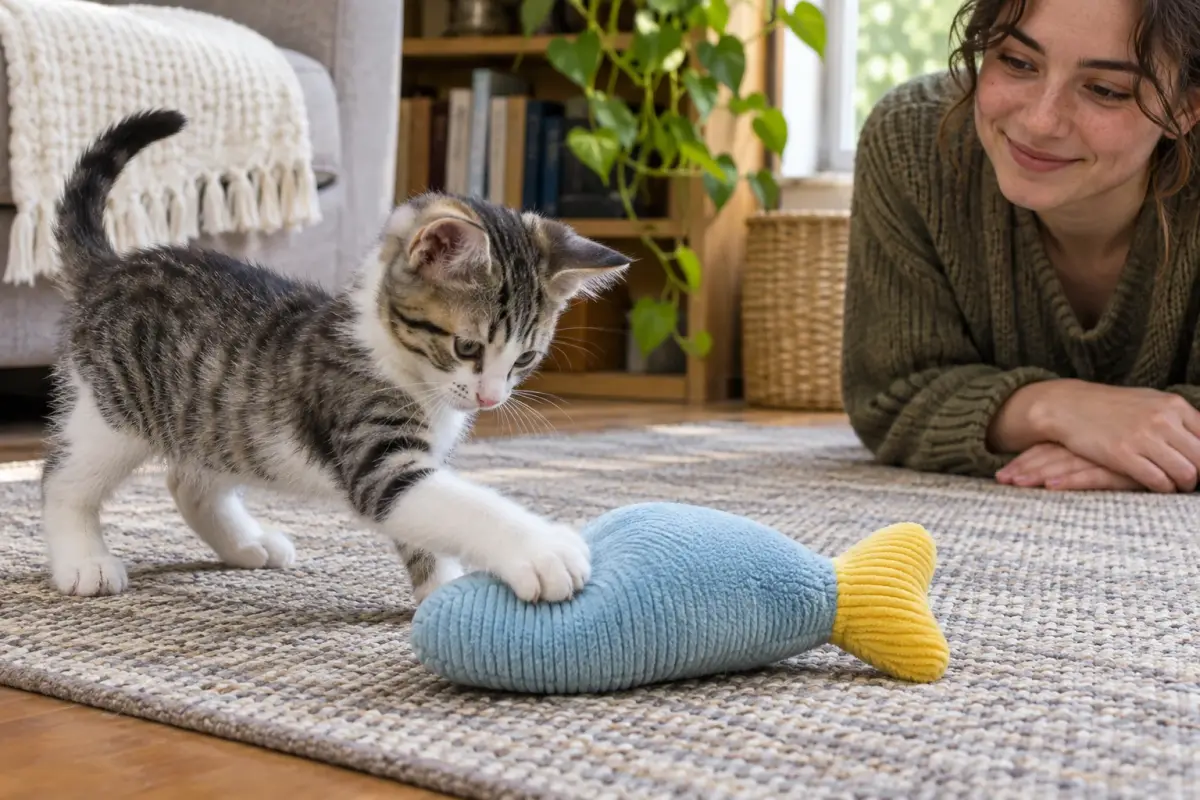
Kittens learn through play. VCA describes object play as starting at weaning, when kittens stalk, chase, swat and bat moving things, which is believed to build eye-paw coordination and hunting skills. By ten to twelve weeks, running and climbing play is fully developed and matters for balance and agility. A good toy gives that stalk-chase-pounce sequence a safe target.
Safety comes before novelty. Avoid toys small enough to swallow, because they can cause an intestinal blockage, and treat string and yarn as supervised-only items, since swallowed string can cause severe intestinal damage. Look for toys with no loose beads, buttons or eyes, and check them often. A toy that is coming apart goes in the trash, not back in the basket.
The main kitten toy types compared
Small chase toys such as ping-pong balls, crinkle balls and soft mice are easy for a kitten to bat across the floor and carry in its mouth. Small fleece toys that can be batted or fetched work well too. Wand or fishing-rod toys let you move the lure like prey, which keeps your hands out of the game and uses up a lot of energy, but they stay with you: never leave a cat alone with one, because it can get tangled or swallow the string.
Self-play toys cover the time you cannot play. These include catnip-stuffed toys, food-dispensing toys, battery-operated or mechanical toys and toys hung from doors or play centers. A tumbler bell toy or a seesaw toy for kittens are examples of the movement-based type, and our kitten toys collection groups them together. Empty cardboard boxes and paper bags, never plastic, are a free extra.
Best toy for each situation
For a high-energy kitten that wakes you at night, a hunting-style wand session before bed does more than any toy left on the floor. VCA suggests several short play sessions of about ten minutes a day. For a kitten left alone while you work, choose self-play toys and rotate them, since VCA suggests swapping toys every few days and keeping about four or five out at a time.
For a shy kitten, begin with soft toys it can carry and wand play at a distance. For a multi-cat home, give each cat its own small toys so nobody has to guard them. Catnip toys are worth trying only if your kitten enjoys catnip, and you should stop if it seems agitated. A variety set with a silvervine toy is a way to learn what your kitten likes, within our wider cat toys range.
What to avoid
Do not use your hands or feet as toys. VCA warns that a moving hand becomes a target, that correcting the kitten can make things worse, and that the habit can cause serious injuries as the cat grows. Keep a toy between you and the claws instead.
Avoid string, yarn, ribbon, rubber bands, hair ties and feathers as toys, especially when nobody is watching, and put wand toys away after every session. If your kitten vomits, has diarrhea or stops eating after play with string, call your vet promptly, because swallowed string can need emergency surgery.
Rotation, supervision and when to replace
Rotating toys keeps them interesting. Put four or five out, then swap a few every few days or weekly, so an old toy feels new when it returns. Supervise play with any new toy at first, and keep sessions kitten-sized: short, active and finished while the kitten is still keen.
Scratching is play-adjacent behavior, so give a scratching post or pad at the same time, such as the options in our cat scratchers range. Replace toys that lose pieces, fray or crack. When you leave the house, confine the kitten to a cat-proofed room with bedding, a litter box and safe toys rather than loose string or small items.
This page is general information, not veterinary advice, and it cannot replace an examination by the vet who knows your pet.
Toy movement and play involvement
| Format | How play happens | Handling distinction |
|---|---|---|
| Small chase toy | The kitten bats or carries a ball or soft shape | Check size and loose pieces |
| Wand or fishing-rod toy | A person moves the lure | Put away string and attachments after attended play |
| Food-dispensing toy | Food is hidden or released during play | Food access and cleaning |
| Mechanical or powered toy | A mechanism supplies movement | Exact operating instructions and components |
| Cardboard box or paper bag | The kitten explores a simple enclosure | Material condition and openings |
Common questions
What toys are best for a new kitten?
Small soft toys, ping-pong or crinkle balls and wand toys you control suit most kittens. Choose pieces too big to swallow, and keep string or feather lures for supervised play only.
Is it safe to give kittens string or yarn?
Only under supervision. VCA warns that swallowed string can cause severe intestinal damage and may need emergency surgery, so put it away after play and never leave it out.
How often should I play with my kitten?
VCA suggests several short sessions of about ten minutes each day. Short, active games end while your kitten is still keen, and they channel energy that might otherwise go into furniture or your ankles.
Can I play with my kitten using my hands?
It is better not to. A moving hand becomes a target, and the habit can lead to bites and scratches as the kitten grows. Use a toy to keep distance between your skin and the claws.
Should kittens have interactive toys when alone?
Self-play toys such as food-dispensing, mechanical or hanging toys can help, but supervise them at first and avoid anything with string or small detachable parts when you are out.
Sources we checked
This guide is general information, not veterinary advice. If your pet is unwell or injured, contact your veterinarian.