






Care & how-to
How Much Playtime Do Kittens Need?
Most kittens do best with several short play sessions a day, around 10 minutes each, rather than one long one. VCA Animal Hospitals recommends this pattern for kittens, and it suits their natural bursts of energy followed by long naps. Add safe self-play toys for the times you are busy, and always supervise anything with string. Browse our cat toys for ideas.
By Matt GarnettUpdated November 13, 20264 min read2 sources
How long and how often to play
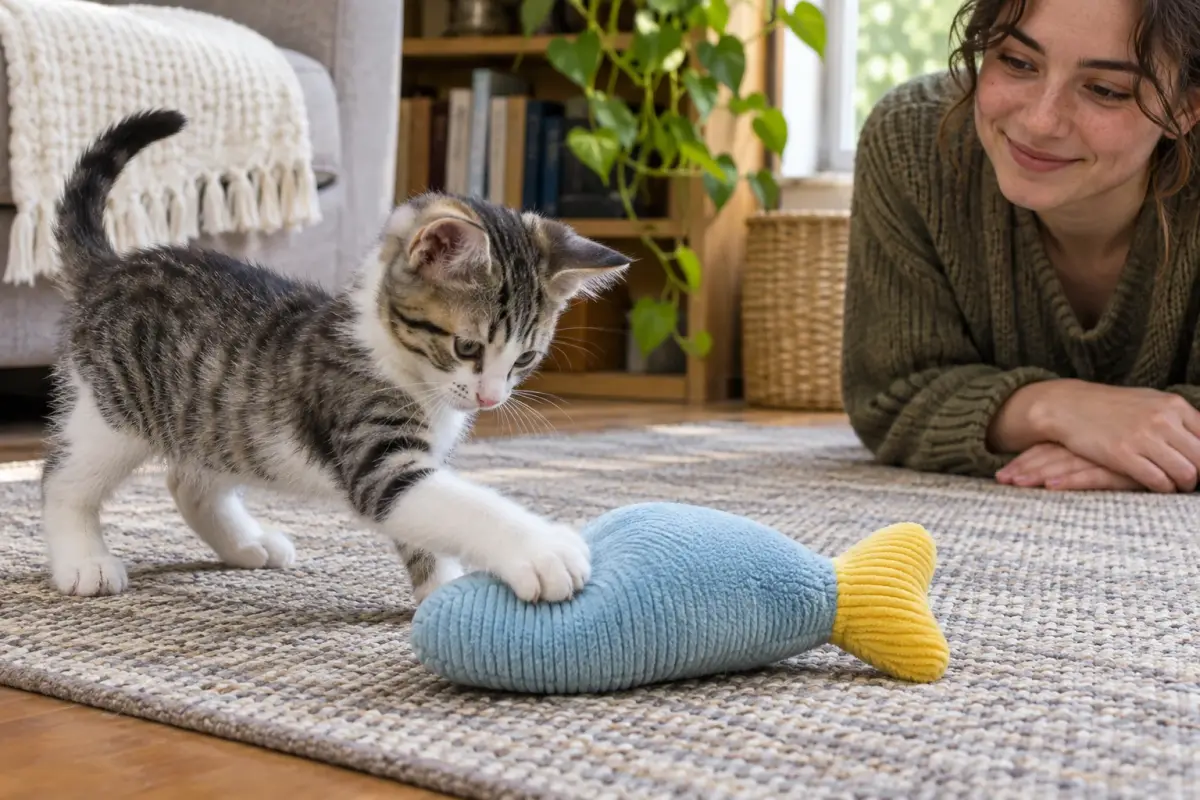
Aim for several play sessions of about 10 minutes each every day. That is the figure VCA gives in its guidance on kitten toys, and it works because kittens tend to play hard, then tire quickly. A few short sessions fit their energy better than a single long one.
Consistency matters more than length. A short session every day beats a long one at the weekend, so tie play to your routine, for example before meals, after you get home, and before bed. A kitten that has played enough is far more likely to settle for the night.
Why play matters for a kitten
For a kitten, play is learning. VCA describes it as an integral part of early learning, helping kittens practice the communication and hunting skills they will use as adults. Around weaning, kittens begin chasing and batting moving objects, which is thought to build eye-paw coordination. By 10 to 12 weeks, the movement play that builds balance and agility is fully developed.
That is why a bored kitten turns to your curtains, ankles and fingers. Giving that energy a proper outlet each day is the most reliable way to cut down on unwanted pouncing.
Play that works: chase, bat and carry
Choose cat toys a kitten can chase, bat or carry. VCA lists small stuffed mice, crinkle balls, ping pong balls and motorized chase toys among safe options, and food puzzles are on that list too. An automatic rolling ball toy gives a kitten something to chase when you are making dinner, though it should never replace time with you.
Wand and fishing-rod toys are great for shared play because your hands stay out of it, but put them away afterward. For solo moments, a self-play toy such as a kitten seesaw toy can keep a kitten busy for a few minutes.
Keep hands and feet out of the game
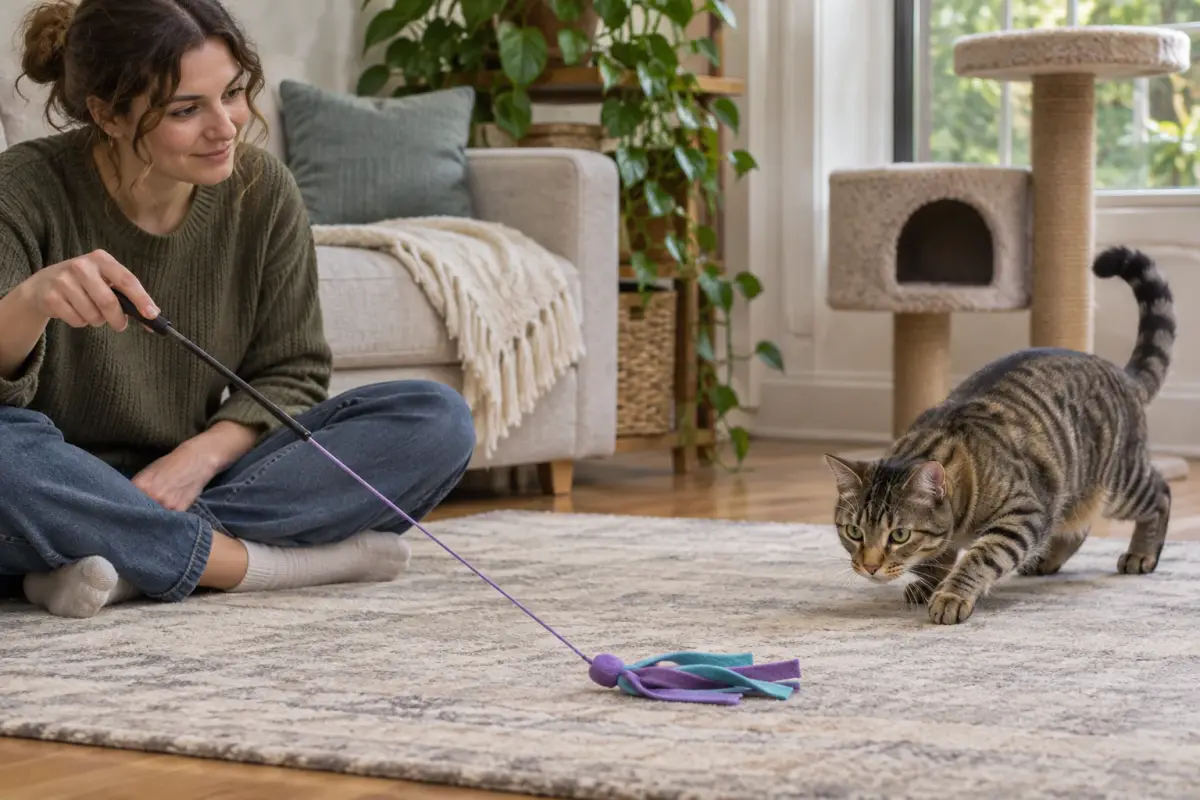
VCA is clear that you should not use your hands or feet as toys. A moving hand becomes a target, and play that seems harmless with a tiny kitten can cause injuries as the cat grows. Scolding a kitten for biting during play can make the behavior worse.
If your kitten grabs you, calmly stop and offer a toy instead. You should choose the toys and start sessions, and a kitten-initiated session can be ignored or redirected with a distraction so that play does not escalate.
Safety: string, feathers and supervision
Supervise play, and be careful with anything stringy. VCA warns that wand toys left out can tangle a kitten, and that swallowed string, yarn, rubber bands or feathers can be deadly. Allow string only under supervision, put wand toys away after each session, and avoid pieces small enough to swallow.
If your kitten swallows string or a toy, or vomits repeatedly, or seems unwell after play, call your vet or an emergency vet immediately. Do not pull string out of a kitten's mouth.
Rotate toys and add climbing, hiding and scratching
Switching kitten toys every few days or weekly, keeping about four or five available at a time, helps toys feel new. Boxes and paper bags with the handles removed are cheap hiding places, though VCA advises avoiding plastic bags.
Playtime is not only toys. Scratching posts and perches give a kitten other outlets, and a second young, sociable cat can be a play partner. Browse cat tunnels for hiding and pouncing games.
This page is general information, not veterinary advice, and it cannot replace an examination by the vet who knows your pet.
Common questions
How many times a day should I play with my kitten?
Aim for several short sessions of around 10 minutes each, spread through the day. Most kittens play hard in bursts, so frequent short sessions fit them better than a single long one.
Can you play with a kitten too much?
Kittens usually stop when tired, so let your kitten set the pace. Stop if it pants, walks away or loses interest, and keep sessions short. If your kitten seems unwell during play, call your vet.
Is it okay to play rough with a kitten using my hands?
No. VCA advises against using your hands or feet as toys, because a moving hand becomes a target and rough play can lead to injuries as the cat grows. Use a toy instead.
What should I do if my kitten has too much energy at night?
Fit a play session in the evening, then offer a meal so your kitten winds down. A kitten that has had enough play is more likely to settle. Keep wand toys put away afterward.
Do kittens need toys when I am out?
Safe self-play toys, such as food puzzles, catnip toys or battery-operated toys, can help while you are out. Avoid string, feathers and other loose parts when your kitten is unsupervised.
Sources we checked
This guide is general information, not veterinary advice. If your pet is unwell or injured, contact your veterinarian.


