







Cats
Cat tunnels
Little things. Happy cats.
26 items picked for everyday life with your pet, with shipping estimates on every item.
 A happy life, one little thing at a time.
All cats toys & play →Cat toys →Cat scratchers →Interactive cat toys →Cat scratching posts →Cat puzzle feeders →Cat exercise wheels →Cat scratch deterrents →Catnip & silvervine toys →
↗Tracked US shippingEstimates on every item↶Returns & refundsHow it works♡Here to helpTalk to Giddy Pets
Find their favorites
Shop cat tunnels by type
Choose a section to narrow the range.
All cat tunnels
Little essentials. Lots of love.








A little guidance
Help choosing cat tunnels
Buying guides and care advice written for this range: what to measure, what matters and what to skip.
From our guides
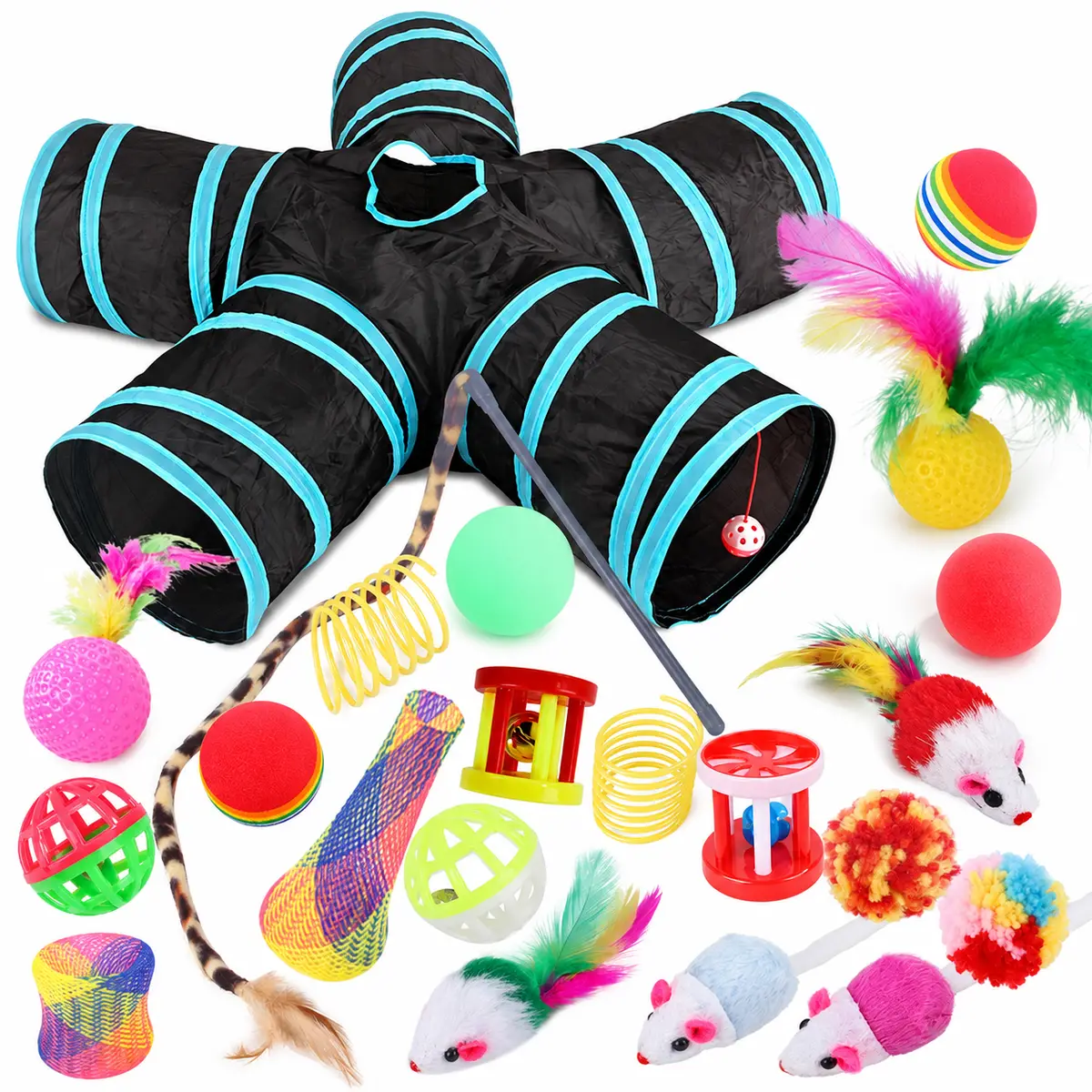
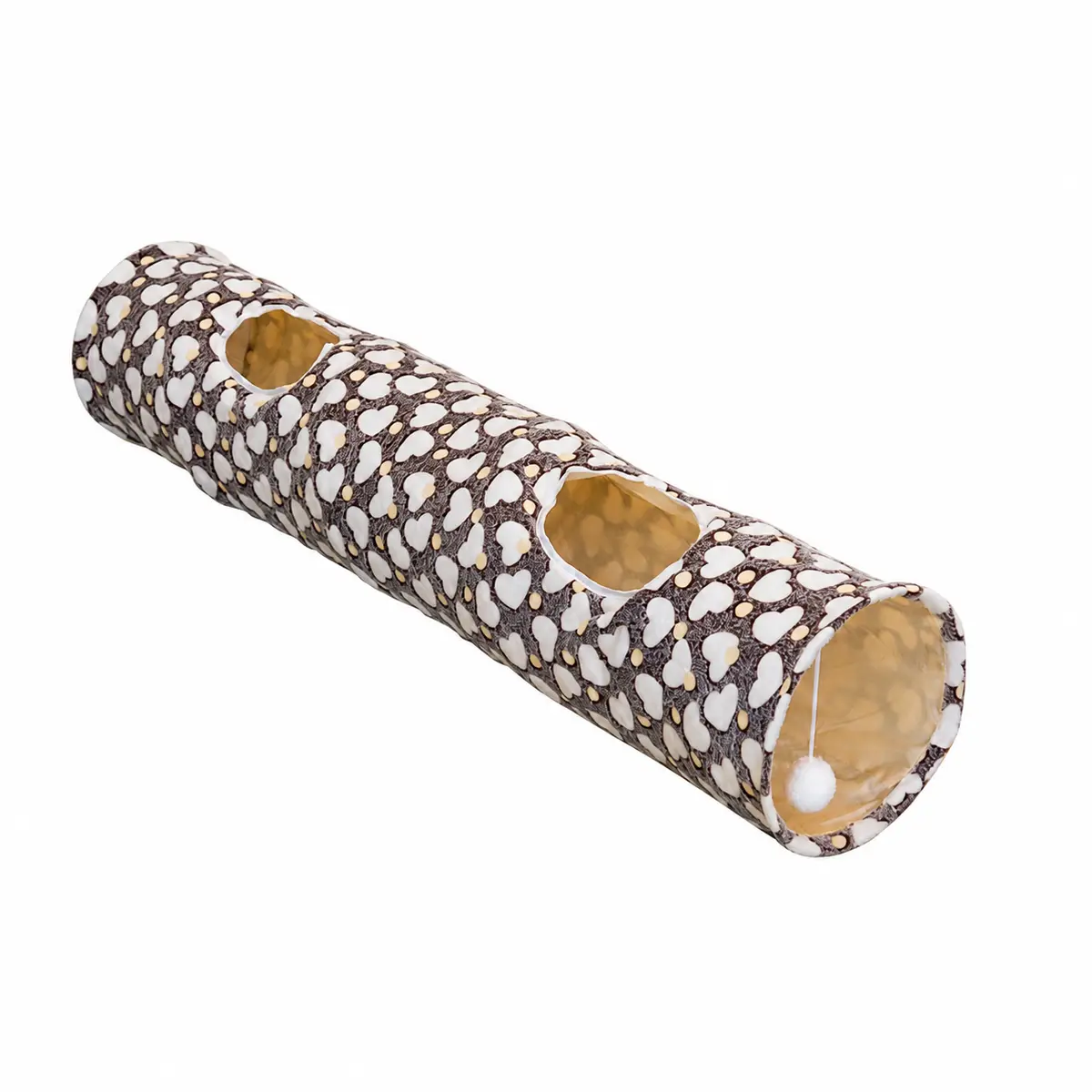
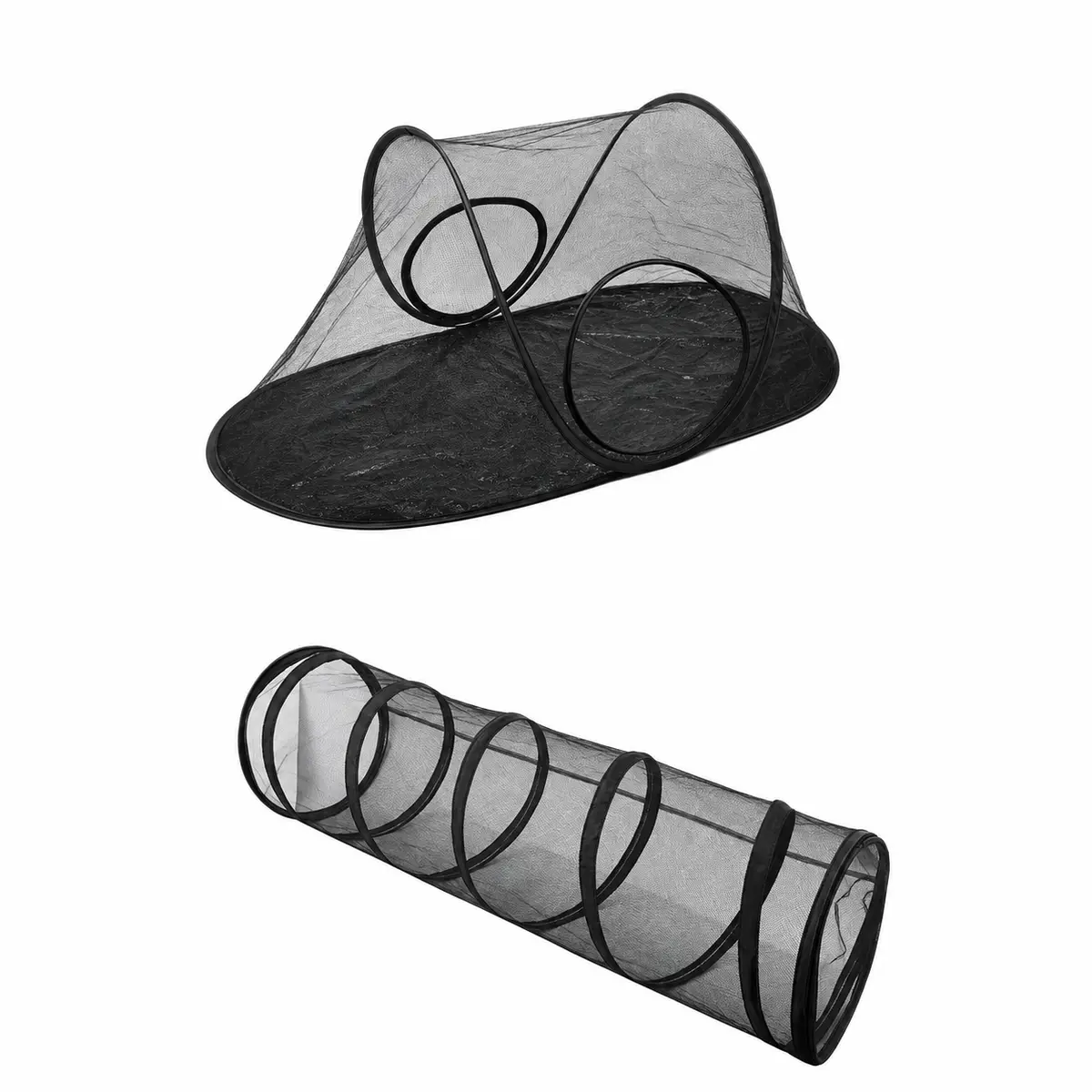
This page brings together cat tunnels: collapsible crinkle tunnels, three-way tubes that branch in different directions, round plush donut tunnels that double as beds, cardboard scratcher tunnels with no installation, a tire-shaped den, and foldable mesh and long wooden tunnels for safe outdoor time. They are for indoor cats who love to hide, ambush and race, and for owners looking to give a cat a safe way outside. The guide below covers choosing one.
Why cats love tunnels
Cats are both hunters and prey animals, so a narrow, enclosed space feels safe and makes a perfect ambush spot. A tunnel gives a cat somewhere to dash through, hide in and pounce from, which turns ordinary play into something closer to natural hunting behavior.
Tunnels are especially helpful for shy cats, cats in busy homes, and multi-cat households where one cat needs a quick escape route. Many cats also use them as a quiet napping spot, which is why plush donut tunnels double as beds.
Types of tunnel
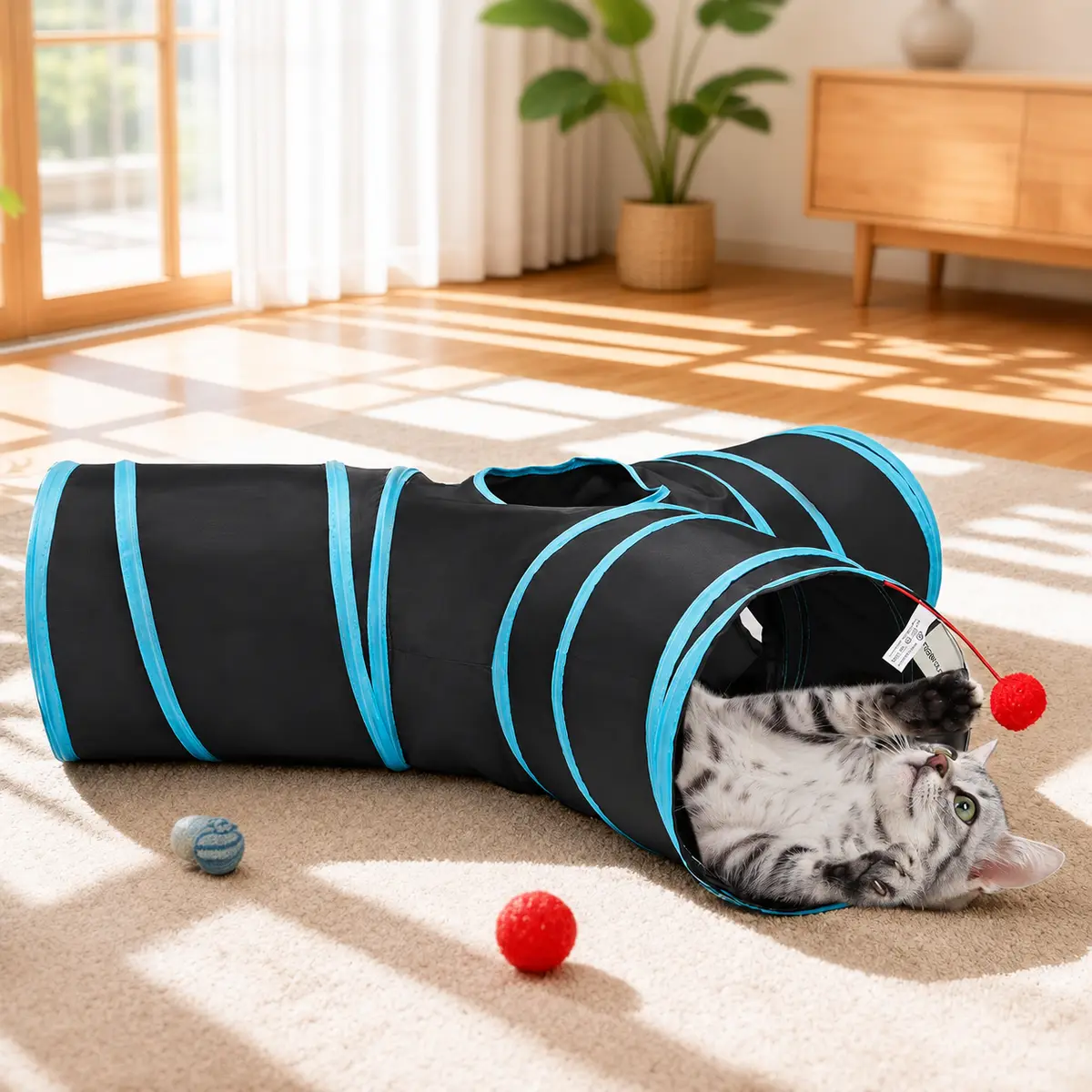
Crinkle tunnels are made of light fabric over a spring frame, with a crinkly lining that makes noise as a cat moves. They collapse flat for storage. Three-way tunnels branch into a T or Y shape, so a cat can choose an exit and you can hide a toy in one arm.
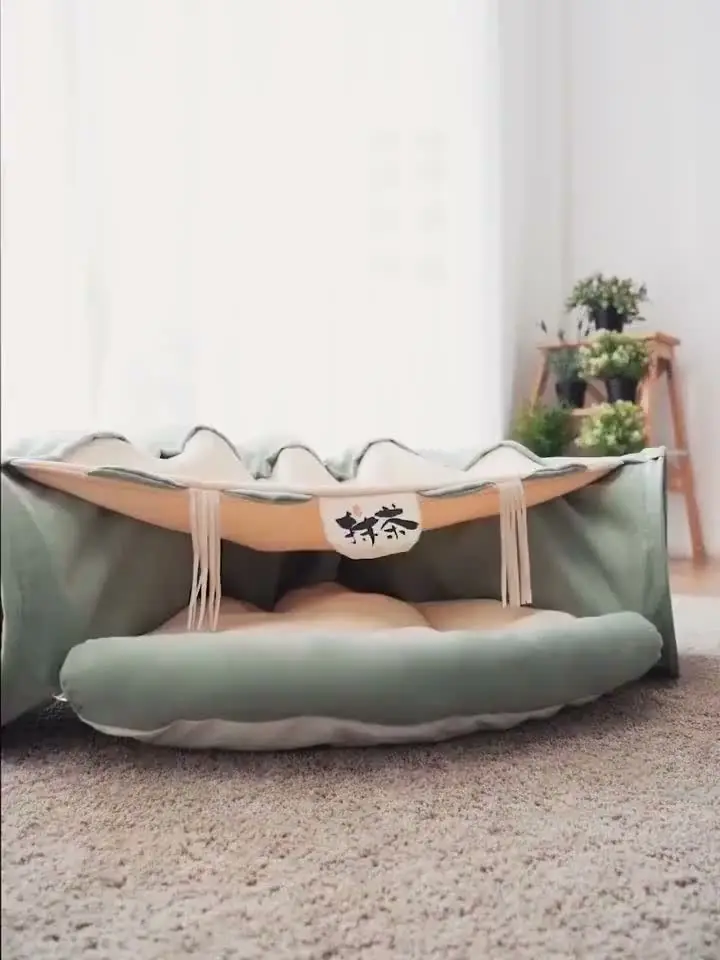
Donut tunnels are thick plush rings with a hole through the middle, comfortable enough to sleep in. Scratcher tunnels made from corrugated cardboard combine a hideout with a scratch surface. A tire-shaped den gives a sturdier hiding spot for cats who dislike fabric that moves.
Sizes for large cats
Standard tunnels are about 10 inches wide, which suits most cats. Large breeds such as Maine Coons and Norwegian Forest Cats can feel cramped in a narrow tunnel, so check the diameter and look for large or extra-wide options if your cat is big.
Length changes the game too. Longer tunnels give more room to run and hide toys, while short tunnels suit small apartments. Joining two tunnels makes a longer course if you have space.
Outdoor tunnels
Mesh outdoor tunnels and long wooden tunnels let indoor cats get fresh air without roaming free. They connect to a window, a door or a catio and let cats move between spaces while staying enclosed. This gives cats sights, sounds and smells of the outdoors with far fewer risks.
Use outdoor tunnels only when you are home at first, anchor them so they cannot blow away, and make sure every connection is secure. Bring cats in during extreme heat, cold or storms, and check the mesh regularly for holes.
Getting your cat to use a tunnel
Lay the tunnel where your cat already spends time and drop a few treats or a catnip toy inside. Drag a wand toy through it, and many cats will chase after it straight away. Some cats prefer to approach a new tunnel on their own terms, so leave it out for a few days.
Crinkle tunnels can be noisy at first. If your cat is startled, try a quieter plush or cardboard tunnel. Wash fabric tunnels regularly and check the frame wire is covered, since exposed wire ends can scratch.
Tunnel structures and storage
| Style | Physical arrangement | Check before choosing |
|---|---|---|
| Crinkle | Light fabric over a spring frame | Frame condition and folded size |
| Three-way | Branches from a central junction | Branch openings and overall footprint |
| Donut | A ring-shaped plush passage | Entry size and access for cleaning |
| Scratcher tunnel | Corrugated cardboard around a passage | Loose edges and replacement condition |
| Rigid den | A firmer shaped hideaway | Entrance and usable internal space |
Do cats like tunnels?
Most cats enjoy tunnels because they combine hiding, ambushing and running. Shy cats use them as a safe spot. Introduce a tunnel with treats or a wand toy if your cat is hesitant.
What size tunnel is best for a large cat?
Look for a tunnel with a wider diameter than the standard 10 inches if you have a large breed. A cat should be able to move through without crouching uncomfortably.
Are cat tunnels safe to leave out?
Generally yes. Check fabric tunnels for exposed wire and loose dangling toys, and remove anything your cat chews. Outdoor tunnels should be used with supervision until you know they are secure.
Can I use a cat tunnel outside?
Use a tunnel designed for outdoor use, such as mesh or weather-resistant wood, connected securely to a window, door or catio. Anchor it well and bring your cat in during bad weather.
Can dogs and cats share a tunnel?
Some small dogs enjoy crinkle tunnels, but cat tunnels are light and are not built for a dog's weight or claws. If you have both, let the cat keep the tunnel as a safe retreat the dog cannot follow into, which many cats value in a busy home.