Buying guides
Best Cat Tunnels: How to Choose One Your Cat Will Use
The best cat tunnel is wide enough for your cat to move through without squeezing, stable enough not to roll or collapse mid-chase, and free of dangling parts a cat could swallow. Beyond that, the choice is about your cat: a shy cat wants a quiet hideaway, a kitten wants a chase course, and a large cat needs extra room.
By Matt GarnettUpdated November 14, 20264 min read2 sources
What a cat tunnel is actually for
A tunnel gives a cat three things at once: a place to hide, a place to ambush and an obstacle to race through. International Cat Care says cats prefer play areas with obstacles and different levels, because they offer camouflage, hiding spots and a place to retreat. Browse our cat tunnels with that in mind: you are buying a hiding place that doubles as a play structure.
Tunnels also make play more stimulating. International Cat Care notes that pulling a wand toy through or around tunnels and boxes makes the chase more exciting, and VCA Hospitals recommends interactive hunting play with a wand toy in at least three short sessions a day. A tunnel turns a familiar toy into a new game.
What matters most when choosing
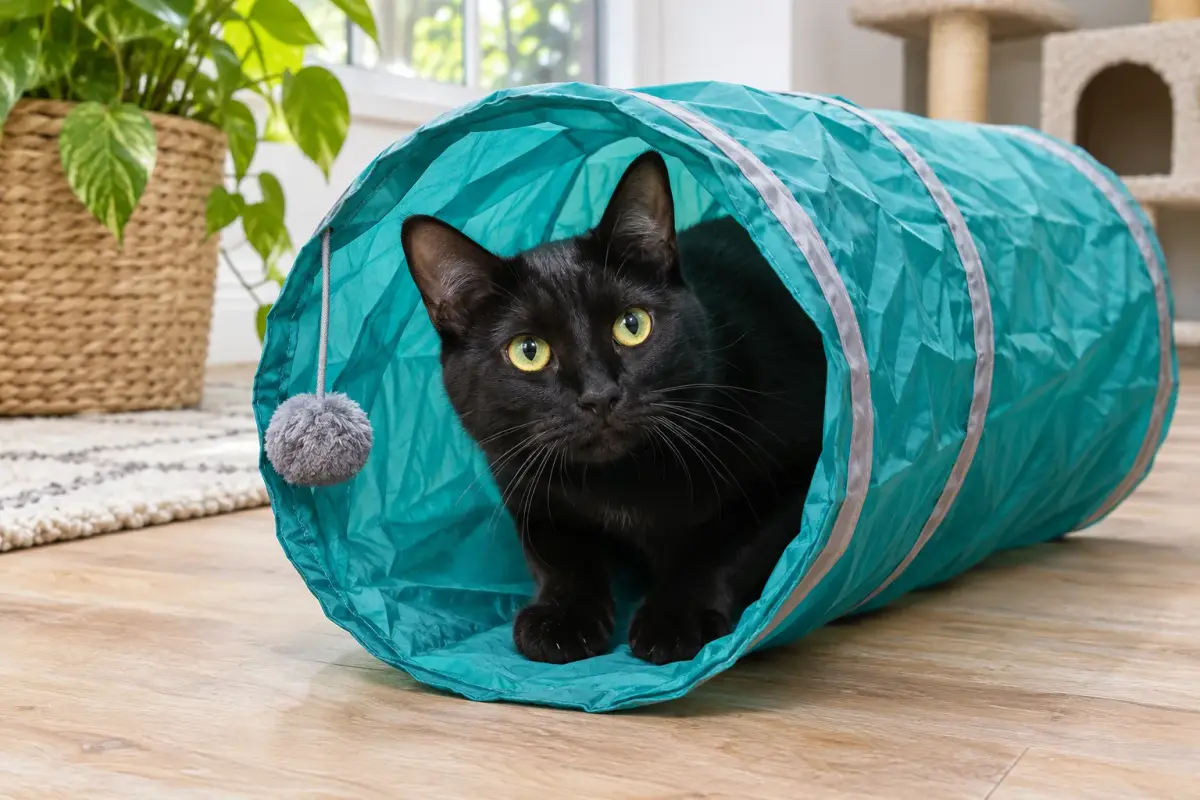
Width and length come first. The tunnel should be wide enough that your cat walks or crouches through without its shoulders brushing the sides, and a large or long-haired cat needs more room than a kitten. A tunnel that is too tight stops being a hiding place and becomes a trap, and many cats simply refuse to enter it.
Stability and structure come next. A good tunnel holds its shape with a wire or spring frame, springs back when a cat bounces off it, and does not slide across the floor. Peek holes add fun but should be big enough that a paw, not a head, goes through. Check seams and snaps, because a cat that tears at loose threads can swallow them.
Tunnel types compared
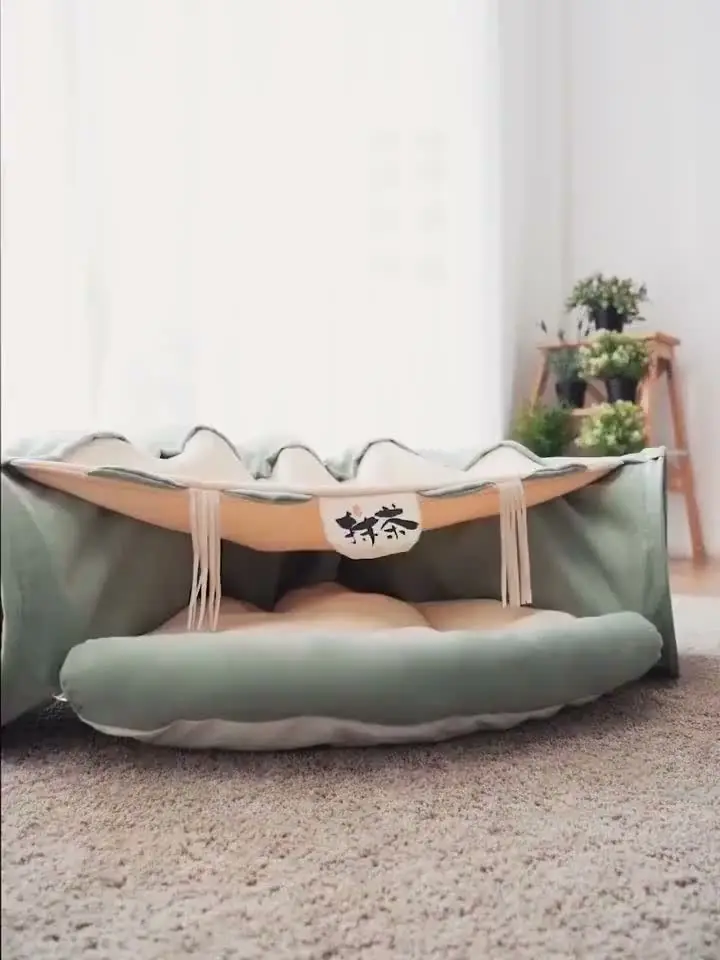
Crinkle tunnels, like the long cats tunnel, have a noisy lining that many cats find irresistible, and they fold flat for storage. Felt tunnels, like the felt cat tunnel with snaps, are quieter, hold a cozier shape and can be opened up as a bed, which suits cats who dislike crackling sounds.
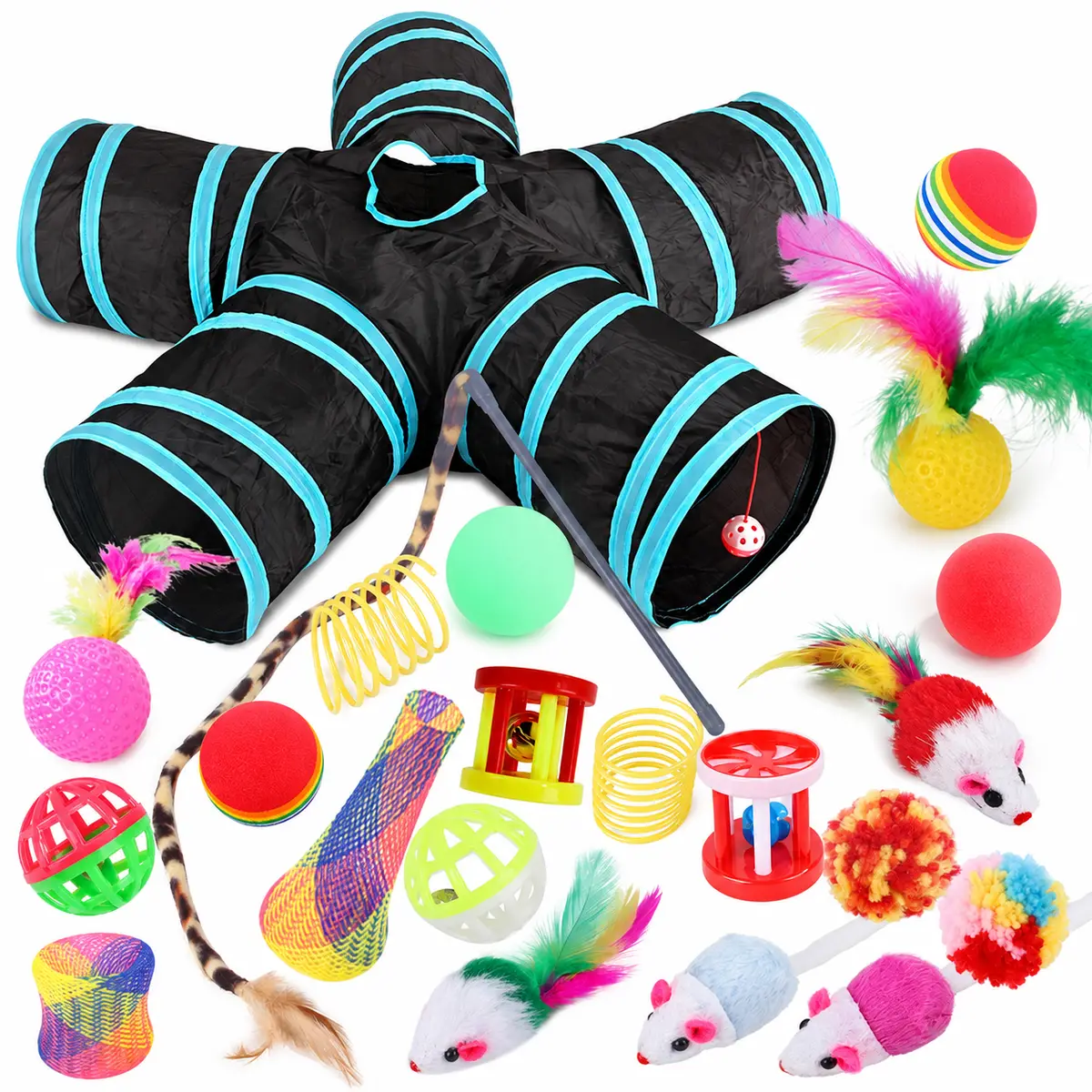
Collapsible multi-way or S-shaped designs, like the foldable S-type tunnel toy, give a chase course with turns and more than one exit, which suits multi-cat homes. Cardboard boxes with entry and exit holes are the budget version, and International Cat Care says a new box two or three times a week keeps most cats interested.
The best type for each cat
Kittens and high-energy cats do best with a long, bouncy crinkle tunnel and a wand toy to pull through it. Shy or nervous cats usually prefer a quieter felt or fabric tunnel placed against a wall or beside furniture, where they can watch the room, and they should never be disturbed while using it as a hideaway.
Large cats need the widest tunnel you can find and a sturdy frame, and senior cats do better with a short, low straight tunnel they can enter without jumping. In multi-cat homes, choose a tunnel with two exits so one cat cannot corner another, and offer more than one hiding spot. For tall climbing, see our cat trees.
Safety and what to avoid
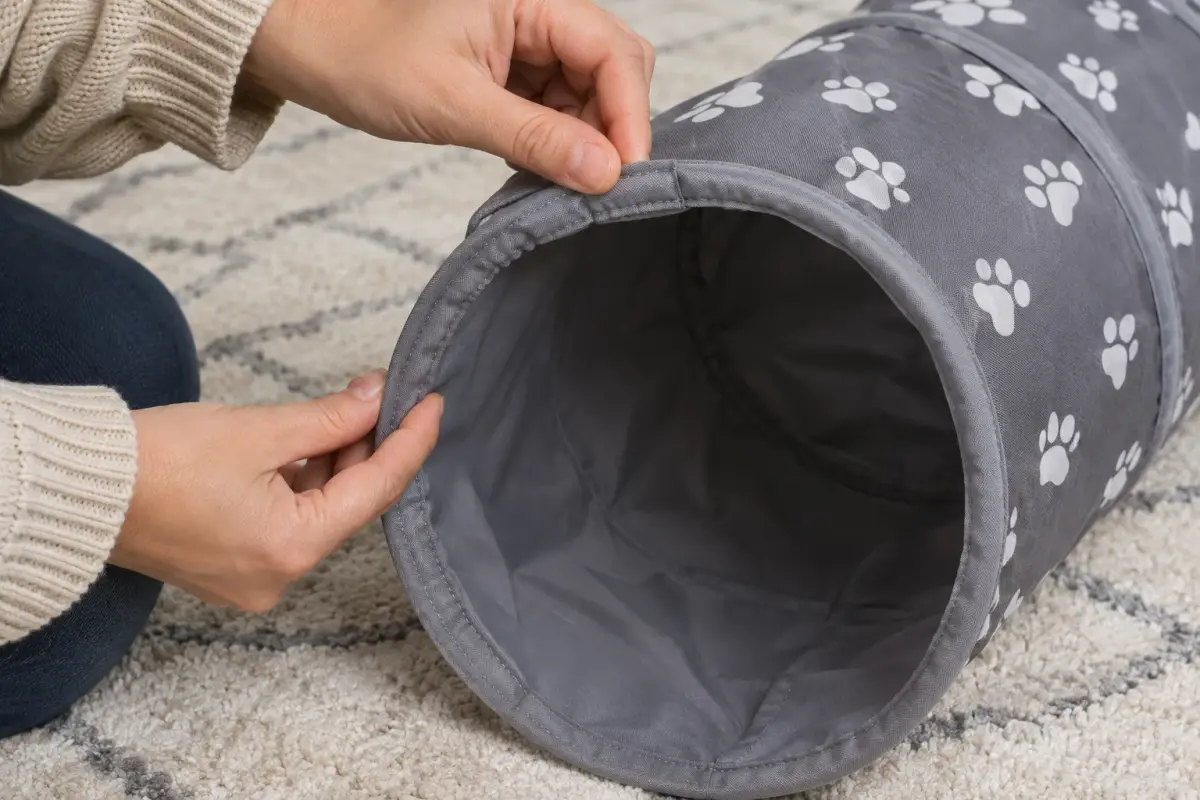
Avoid tunnels with dangling toys on string, ribbon or elastic. International Cat Care warns that ribbon, string and pipe cleaner toys can cause intussusception if swallowed, which may need emergency surgery, and VCA Hospitals advises against toys small enough to swallow and says never to leave wand toys unattended. Take off any dangling parts and use the tunnel with a wand you control.
Also avoid thin plastic that cracks, lining that sheds, and tunnels that roll away when bumped. Never put a tunnel where a cat can be trapped behind furniture, and keep the opening clear of cords. If your cat suddenly stops playing, hides far more than usual or seems to be in pain, call your vet, because a change in behavior can be a health sign.
Introducing a tunnel and keeping it fresh
Open the tunnel and leave it alone for a day so it picks up household smells. Then drag a wand toy through the middle, drop a treat just inside, and let your cat decide when to go in. Keep sessions short, since International Cat Care points out that cats are sprinters and one minute of frenzied activity is a good result.
Rotate toys and move the tunnel to a new spot every few weeks, because VCA Hospitals recommends offering a variety of toys and rotating them often. Shake out crumbs, wipe down felt and fabric with a damp cloth, and replace a tunnel when the frame bends or seams fray. For outside use, read our guide to the best outdoor cat tunnels instead, and come back to cat tunnels for indoor play.
Tunnel bodies and route shapes
| Format | Construction or route | Check before choosing |
|---|---|---|
| Crinkle fabric | A fabric shell with a noise-making layer | Frame condition and folded size |
| Snap-together felt | Panels connect with fasteners | Fastenings and assembled opening |
| Multi-way | Several branches from a junction | Full footprint and each opening |
| Curved route | A passage with turns | Overall dimensions and cleaning access |
| Cardboard hideaway | Openings cut into a rigid box | Loose edges and replacement condition |
Common questions
Do cats actually like tunnels?
Most do. Cats like hiding, ambushing and chasing, and a tunnel offers all three. International Cat Care says cats prefer play areas with obstacles and hiding places, though individual preferences vary.
How do I get my cat to use a tunnel?
Leave it open for a day, then pull a wand toy through it and place a treat just inside. Let your cat choose when to enter, and never push or force your cat inside.
Is a crinkle tunnel safe for cats?
A well-made crinkle tunnel is generally fine for supervised play. Check that nothing is loose or dangling, remove any string or small attached toys, and replace the tunnel if the lining tears or the seams fray.
What size cat tunnel do I need?
Pick a tunnel your cat can walk or crouch through without brushing the sides. A large or long-haired cat needs a wider tunnel than a kitten, and a tunnel that is too tight often goes unused.
Sources we checked
This guide is general information, not veterinary advice. If your pet is unwell or injured, contact your veterinarian.