Buying guides
Best Outdoor Cat Tunnels: What Actually Matters
The best outdoor cat tunnel is a fully enclosed one with no gaps a cat can squeeze through, sturdy materials and a spot you can watch from the house. A tunnel gives an indoor cat fresh air while keeping it contained, but only if the build is secure. Browse our outdoor cat tunnels, then use this guide to check the details.
By Matt GarnettUpdated November 13, 20265 min read2 sources
What an outdoor cat tunnel is for
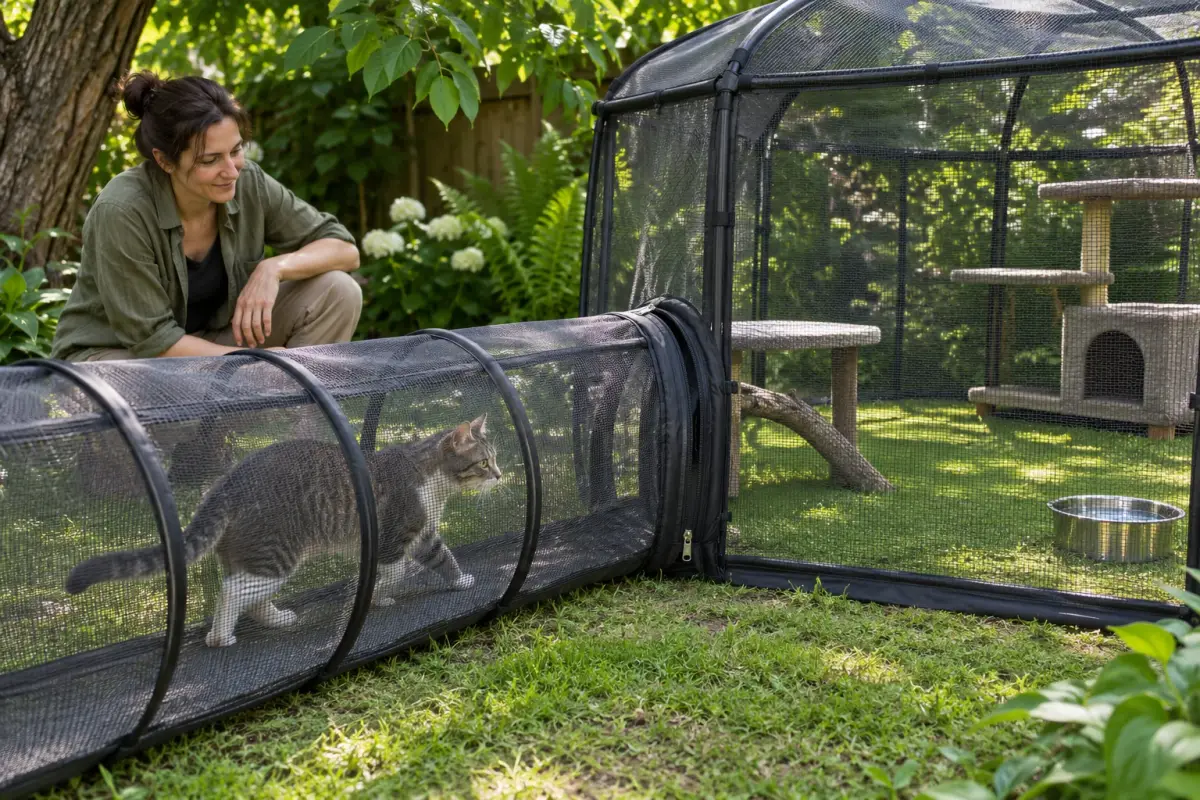
An outdoor tunnel is a run of enclosed passage, often joined to a window, a door or a larger enclosure, that lets a cat enjoy outdoor air without roaming. PetMD says catios protect cats from hazards such as cars, other cats and coyotes, and that the sights, sounds and smells of the outdoors act as enrichment for a cat that stays contained. A tunnel is a smaller, more flexible version of that idea.
That makes security the whole point. A tunnel that a cat can wriggle out of, or that something else can get into, defeats the purpose and can leave the cat worse off than if it had stayed inside. Before comparing colors or designs, decide where the tunnel will go, how it connects to your home, and how you will check it each day.
Escape-proofing comes first
Humane World for Animals puts it simply: an enclosure should have no openings cats could squeeze through, even on top. For a tunnel, that means checking every joint, zipper, door and corner. Mesh should be taut and securely fixed, connectors should lock, and any place the tunnel meets a wall or window frame should be sealed rather than left as a gap.
Look closely at the hardware. A small flap, a loose zipper or a connector that can be pushed apart is an exit route for a determined cat. Walk the tunnel once it is assembled and press on each seam. Because cats can squeeze through surprisingly small openings, treat anything you doubt as a gap and fix it before the cat goes in.
Mesh, wood and portable designs
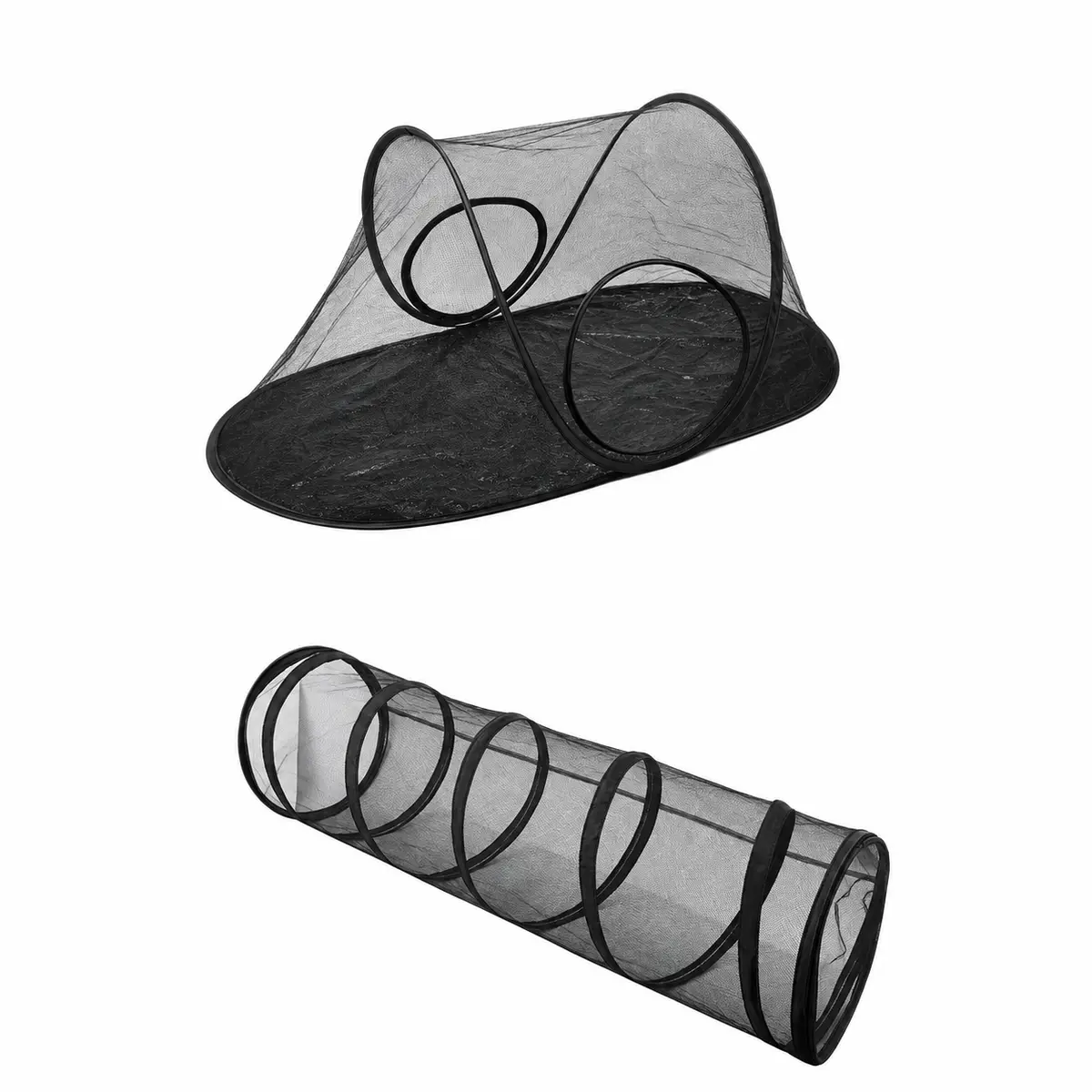
Tunnels come in three broad types. Fabric-and-mesh pop-up tunnels are light, fold flat and are easy to move, which is handy for a trial. Wood-framed modular tunnels are sturdier and can be combined into longer runs. Humane World advises choosing a plan built from wood, metal or other sturdy, nontoxic materials, which points toward the stronger end for permanent use.
A foldable outdoor mesh cat tunnel suits supervised short sessions and is easy to store. A wooden outdoor cat tunnel with a combinable design gives a more permanent run that you can extend. If you want a larger space at the end of the tunnel, an outdoor cat enclosure tent adds room to sit and watch. Always check that each piece locks to the next.
Shade, water and comfort
A cat in a tunnel cannot move away from the weather, so you have to bring the comfort to it. Humane World says the cat needs ventilation in warm weather, a cozy place to retreat from cold, rain and sun, and a bowl of fresh water, especially on warm days. A tunnel left in full sun can become hot quickly, so put it somewhere with natural shade and airflow.
Provide a litter box or an easy route back indoors, as Humane World also advises. Keep sessions short at first and watch how your cat behaves. An enclosure that gets too hot or damp tends to go unused, and a cat that seems stressed or is panting needs to come in right away. If you are unsure whether your cat is suited to outdoor time, ask your vet.
Safety details people overlook
Think about plants and materials. PetMD stresses always making sure any plant near or inside a catio is not toxic to cats, and says to check with the Pet Poison Helpline before using chemicals or treated wood. Wood is also hard to disinfect, so a cat that is sick needs careful handling. Keep the area around the tunnel free of anything that could drop in or poke through.
Check collars too. Humane World says to avoid anything that might snag a collar, so look inside for loose wire ends, hooks and gaps. If your cat wears a collar, make it a breakaway design, and see our guide to breakaway cat collars. A microchip and tag are still worth having in case of an escape.
Supervision and who a tunnel suits
Humane World says to build where you can see the enclosure from your home and to always supervise your cat while it is using it. Treat a tunnel as a supervised space, not a place to leave a cat for the day. Where coyotes, bears or other large predators live nearby, the same source says an enclosure may not suit you unless it is extremely sturdy.
A tunnel suits an indoor cat that watches birds from the window and needs a way out that is safe. It suits a calm, curious cat better than a nervous one, so introduce it slowly. For a bigger space, our catios go further, and for indoor play there are cat tunnels made for the living room.
Checklist before you buy
Run through a short list. Are there any gaps, even on top? Is the frame sturdy and made of nontoxic materials? Do the pieces lock together? Is there shade, ventilation, water and a route to a litter box? Can you see it from the house? Answer these before looking at size or color.
Then compare designs in our outdoor cat tunnels range. If your cat has a health problem or has never been outdoors, speak to your vet before starting. This page is general information, not veterinary advice, and it cannot replace an examination by the vet who knows your pet.
Common questions
Are outdoor cat tunnels safe?
They can be, if fully enclosed with no gaps even on top, made of sturdy nontoxic materials and used under supervision. A flimsy or poorly joined tunnel can let a cat out or let something in.
What should an outdoor cat tunnel be made of?
Humane World advises wood, metal or other sturdy, nontoxic materials for enclosures. Fabric and mesh tunnels are fine for short supervised use, but check every seam, zipper and connector for gaps.
Can I leave my cat in an outdoor tunnel all day?
No. Treat a tunnel as a supervised space, placed where you can see it from the house. Provide shade, ventilation and fresh water, and give the cat easy access to a litter box or back indoors.
Does my cat need a collar in a tunnel?
A breakaway collar with an ID tag is a sensible precaution in case of an escape, and a microchip is a good backup. Make sure nothing inside the tunnel can snag a collar.
What is the difference between a cat tunnel and a catio?
A tunnel is a narrow enclosed passage, often connecting to a window or door, while a catio is a larger enclosure where a cat can sit, climb and watch. Both need secure, gap-free construction.
Sources we checked
This guide is general information, not veterinary advice. If your pet is unwell or injured, contact your veterinarian.