







Cats
Cat brushes
Little things. Happy cats.
101 items picked for everyday life with your pet, with shipping estimates on every item.
 A happy life, one little thing at a time.
All cats grooming & hygiene →Cat litter boxes →Litter box furniture & enclosures →Cat grooming supplies →Litter accessories →Litter mats →Cat deshedding brushes →Cat nail clippers →Cat shampoo →Cat litter →Self cleaning litter boxes →
↗Tracked US shippingEstimates on every item↶Returns & refundsHow it works♡Here to helpTalk to Giddy Pets
All cat brushes
Little essentials. Lots of love.




Dematting combs & tools
Double-Sided Dematting and Undercoat Comb for Cats and Dogs
- Options
- 2 to choose from
$18.99

Cat scratchers
Silicone Cat Self-Grooming Brush with Strap for Table Legs
- Options
- 13 to choose from
From $11.99

Undercoat rakes
Stainless Steel Undercoat Dematting Rake for Dogs and Cats
- Options
- 2 to choose from
$19.99


A little guidance
Help choosing cat brushes
Buying guides and care advice written for this range: what to measure, what matters and what to skip.
From our guides
- Best Brush for Doodles: How to Keep a Curly Coat Mat-Free →
- Best Brush for Huskies: How to Choose Tools for a Double Coat →
- Best Cat Brush: How to Choose the Right Brush for Your Cat's Coat →
- Shih Tzu Grooming: Brushing, Bathing and Haircuts →
- Yorkshire Terrier Grooming: Brushing, Baths and Trims →
- Best Brush for Corgis: Tools for a Heavy-Shedding Double Coat →
This page holds brushes and combs for cats: self-cleaning slicker brushes, double-sided deshedding and flea combs, pin combs, wooden pin brushes, steam brushes, grooming gloves, interchangeable-head grooming sets and wall-corner self-groomers with a catnip ball. It is for owners of long-haired cats fighting mats and short-haired cats shedding on every surface, and anyone checking a cat for fleas.
Slicker brushes and pin brushes
A slicker brush has fine, bent wire pins that pull loose undercoat and work through small tangles. It is the workhorse for medium and long-haired cats. The self-cleaning slickers here retract the pins with a button, so the hair slides off in one sheet instead of being picked out by hand.
Pin brushes and wooden pin brushes have straighter, rounded pins that are gentler on the skin. They suit cats with sensitive skin and finish a long coat after the slicker has done the work. Brush gently: pressing hard with a slicker can scratch.
Combs: flea combs, deshedding and pin combs
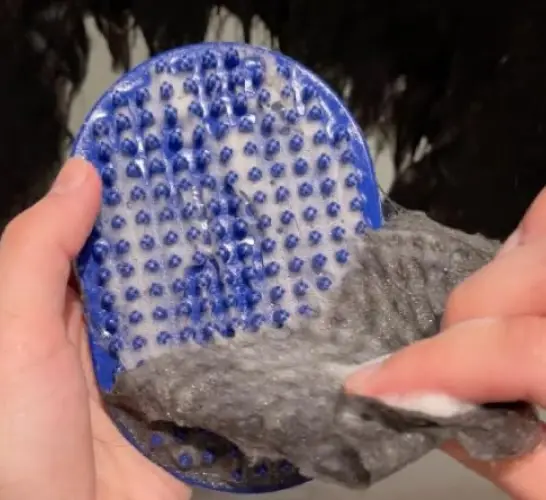
A flea comb has teeth set very close together, close enough to catch fleas and the black specks of flea dirt. Comb along the back, the base of the tail and around the neck, and wipe the comb on a damp white paper towel. Specks that turn reddish brown are flea dirt, and the ASPCA advises following a flea treatment program your vet recommends.
Double-sided deshedding and flea combs pair wider teeth for detangling with fine teeth for fleas and the undercoat. A metal comb is also the best tool for checking whether a long coat is truly tangle free right down to the skin.
Grooming gloves, steam brushes and self-groomers
Grooming gloves have soft rubber nubs that lift loose hair while you stroke your cat. Many cats who dislike brushes accept a glove, and the ASPCA notes that a rubber brush is especially effective for removing dead hair on short coats.
Steam brushes release a fine mist through soft bristles, which helps catch flyaway hair and static. Corner self-groomers mount on a wall or furniture edge so a cat can rub its cheeks and brush itself, with a catnip ball to draw them in. These help, but they do not replace hands-on brushing for long coats.
How often to brush
The ASPCA suggests one or two brushings a week for cats in general and every few days for long-haired indoor cats. Persians, Maine Coons and Ragdolls often need daily attention in spring and fall when they shed most.
Short sessions work better than long ones. Brush for a few minutes when your cat is relaxed, reward with a treat, and stop before your cat gets annoyed. Older and overweight cats often groom less well themselves, so they need more help, especially along the back and hindquarters.
Dealing with mats
Small tangles can often be teased apart with your fingers or a wide-tooth comb, working from the end of the hair toward the skin. The ASPCA suggests a little talcum powder over a knot before teasing it, and a mat splitter for stubborn ones.
Never cut a mat out with scissors. Mats sit tight to the skin, and it is very easy to cut a cat. Large or tight mats, mats near the armpits or belly, or a cat that cries when you touch the area, need a groomer or your vet. Painful, red or broken skin under a mat should be checked by a vet.
How do I use a flea comb on my cat?
Comb along the back, neck and base of the tail, then wipe the comb on a damp white paper towel. Specks that turn reddish brown are flea dirt, and your vet can recommend treatment.
What brush is best for a long-haired cat?
A self-cleaning slicker brush for the undercoat plus a metal comb to check for tangles is the most useful pair for long coats.
What is the best brush for a short-haired cat?
A rubber grooming glove or rubber brush lifts loose hair well on short coats, and a fine comb catches fleas and dandruff.
How often should I brush my cat?
Once or twice a week for most cats and every few days for long-haired cats, more during spring and fall shedding.
Can I cut mats out of my cat's fur?
Avoid scissors, because mats sit close to the skin and cuts are common. Tease small knots out gently and take large mats to a groomer or vet.