






Buying guides
Best Cat Brush: How to Choose the Right Brush for Your Cat's Coat
The right cat brush depends on coat length. VCA recommends stiff bristle brushes for short coats and long-toothed metal combs or offset-tine brushes for medium and long coats, with an undercoat comb during heavy shedding. A fine-toothed flea comb is worth owning for any cat. After that, the best brush is the one your cat tolerates, because a brush that stays in a drawer removes no hair.
By Matt GarnettUpdated November 14, 20264 min read2 sources
What matters most: matching the coat
Short-haired cats shed less tangled hair and groom themselves well, so they mainly need loose hair lifted out. VCA names stiff bristle brushes as best for short coats and sparse undercoats, and rubber grooming mitts and curry brushes do the same job in a way many cats find pleasant. Browse our cat brushes with your cat's coat length in mind.
Long-haired cats need something that reaches the skin. VCA recommends long-toothed metal combs or brushes with offset tines for medium and long coats, and says long, silky or curly coats need daily brushing to stop tangles around the ears, armpits and back legs. A brush that only skims the top layer leaves mats forming underneath.
The main tools compared
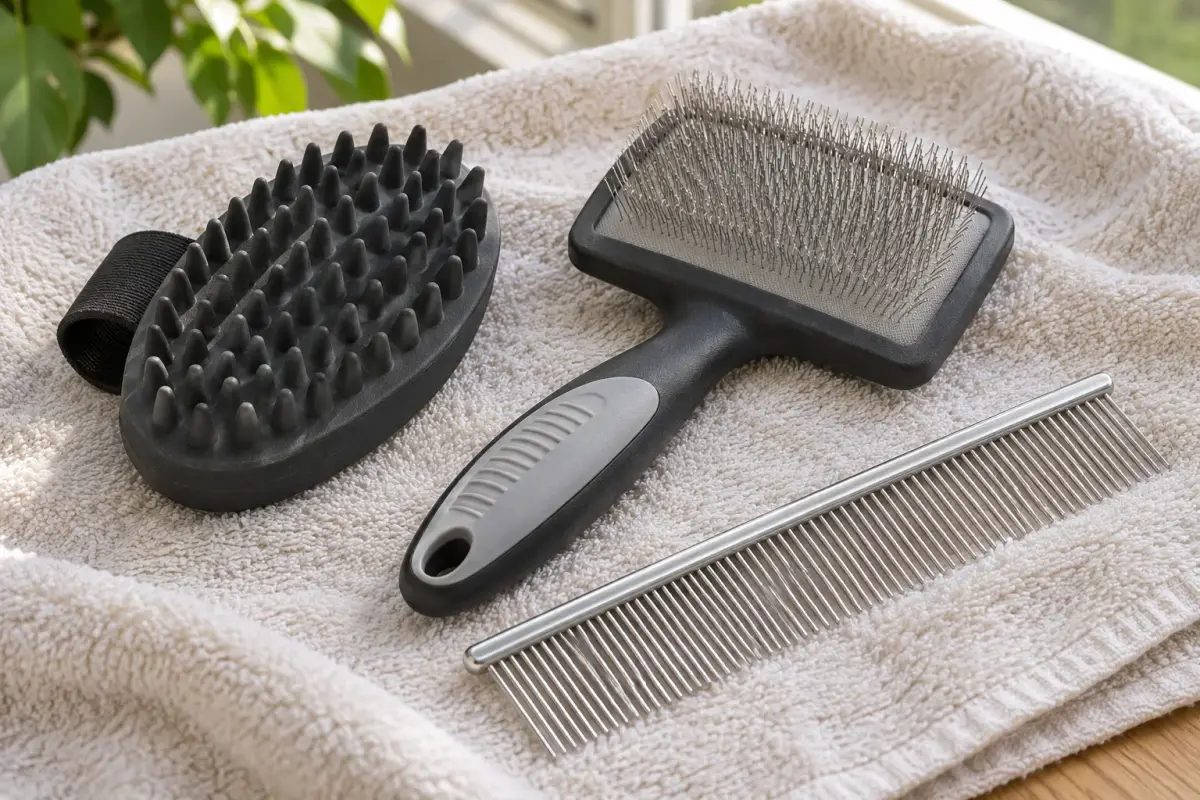
Slicker brushes have fine, bent wire pins that pull out loose hair and small tangles; they suit medium and long coats but need a light touch, as pressing hard scratches the skin. Bristle brushes and rubber brushes suit short coats and finish a groom by smoothing and distributing oils.
Metal combs, ideally with wide and narrow teeth on one comb, are the long-haired cat's essential tool and show you where tangles are hiding. Undercoat and deshedding tools remove dense loose undercoat during seasonal shedding but should be used sparingly. A double-sided deshedding comb is one example of this type. Flea combs have very tight teeth to catch fleas, flea dirt and dandruff flakes.
Best brush for each cat
For short-haired cats, a rubber brush or grooming mitt once or twice a week, plus a flea comb. For medium-haired cats, a slicker and a wide-toothed comb a few times a week. For long-haired breeds such as Persians, Ragdolls and Maine Coons, a metal comb and slicker every day, plus a dematting comb for the armpits and britches.
For senior cats, VCA and Cornell both note older cats groom less, and longhaired seniors can become painfully matted, so short daily sessions with a soft brush help. For cats with dandruff, gentle brushing and a fine comb lift flakes, but persistent dandruff is worth a vet check, as it can point to diet, weight or skin problems.
Handling mats safely
Small tangles can often be teased apart with fingers and a comb, working from the tip toward the skin while holding the hair at the base so you do not pull. Brush out tangles before any bath, because water tightens them.
For larger mats, VCA is clear: only use clippers to remove mats, never scissors, because the skin is pulled up into the mat and is easy to cut. If mats are large, widespread or the skin beneath looks sore, take your cat to a groomer or your vet, who can sedate a cat for pain-free removal if needed.
What to avoid
Avoid pressing a slicker brush hard against the skin, which causes brush burn. Avoid overusing bladed deshedding tools on short or thin coats; once or twice a week in shedding season is plenty. If shedding seems heavier than usual, our guide on why cats shed so much covers the common reasons. Avoid long first sessions: a few strokes with a treat after is better than a battle.
Avoid dog brushes with stiff, widely spaced pins for cats; they are often too harsh. Avoid ignoring changes: a cat that suddenly stops grooming, or develops a greasy, matted or flaky coat, may be unwell or in pain, and Cornell advises having a sudden drop in self-grooming checked by a vet.
How to brush, and how long tools last
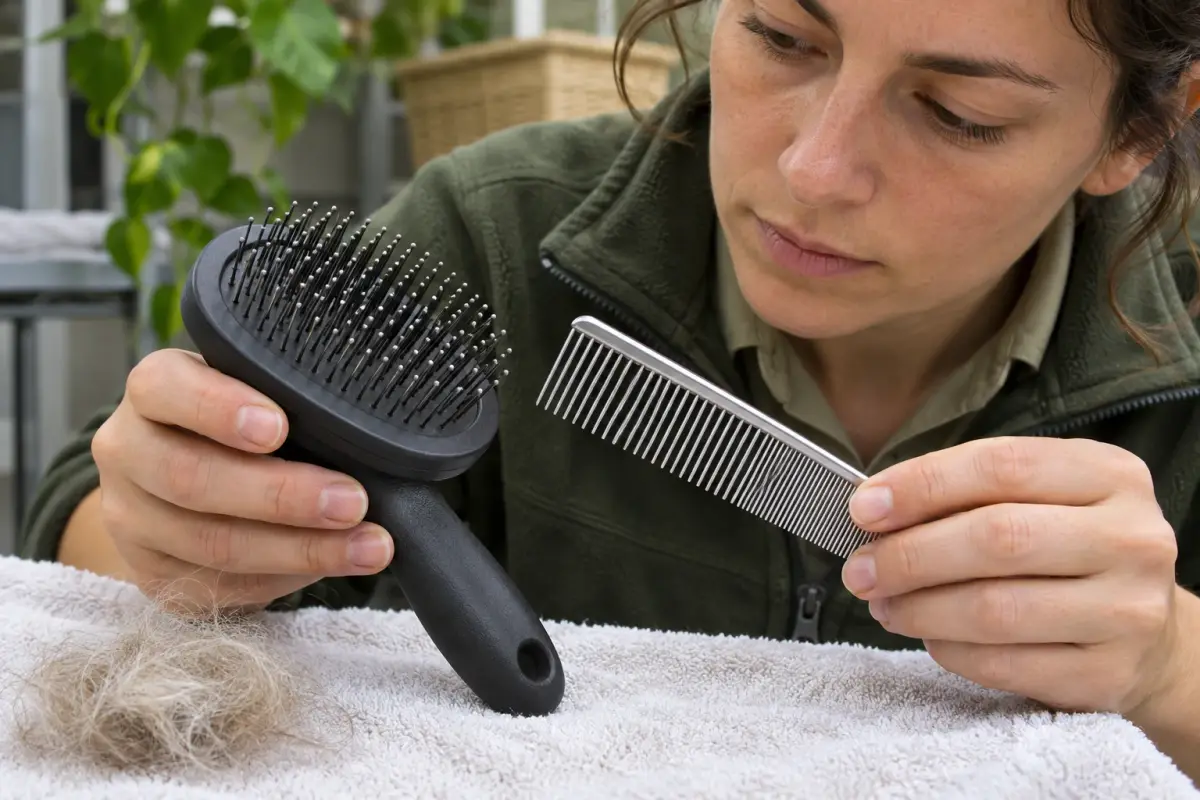
Brush in the direction the hair grows, starting where your cat enjoys it most, usually the cheeks, chin and back, and leave the belly and tail for when it is relaxed. Short sessions every day beat a long session once a week, and many cats come to enjoy it.
Clean hair out of brushes after each use and wash them in warm soapy water every few weeks. A self-cleaning cat deshedding brush is designed to make the first step quicker. Replace slickers when the pins bend or the pad splits, and combs when teeth bend or snag. A good metal comb lasts for many years. Compare replacements in our cat brushes and cat deshedding brushes.
This page is general information, not veterinary advice, and it cannot replace an examination by the vet who knows your pet.
Cat-grooming tool surfaces compared
| Tool | Working surface | Inspection point |
|---|---|---|
| Slicker | Fine bent pins | Pin tips and pressure directions |
| Bristle brush | Rows of bristles | Bristle condition |
| Rubber brush | Rubber contact surface | Surface damage |
| Metal comb | Wide and narrow teeth | Smooth ends and spacing |
| Undercoat tool | A dedicated deshedding edge or tooth arrangement | Exact working surface and instructions |
| Flea comb | Very closely spaced teeth | Tooth condition and cleaning access |
Common questions
What is the best brush for a short-haired cat?
A rubber brush, grooming mitt or stiff bristle brush, used once or twice a week, removes loose hair gently. Add a fine flea comb for checking skin and catching flakes. Short coats rarely need slickers or deshedding blades.
What is the best brush for long-haired cats?
A long-toothed metal comb and a slicker brush, used daily, reach the skin and stop mats forming. A dematting comb helps with small tangles behind the ears and on the back legs.
What brush is best for a Ragdoll or Persian?
Both have long coats that mat, so a wide-and-narrow metal comb plus a gentle slicker, used daily, is the core kit. Persians in particular need daily combing; many owners also book regular professional grooms.
How do I choose a flea comb for my cat?
Choose a metal comb with very tightly spaced teeth and a comfortable handle. Comb over a white towel and look for fleas or black specks of flea dirt. If you find them, talk to your vet about treatment.
Sources we checked
This guide is general information, not veterinary advice. If your pet is unwell or injured, contact your veterinarian.


