






Care & how-to
How to Trim Kitten Nails: Step-by-Step, Without Stress
To trim a kitten's nails, wait until the kitten is relaxed or sleepy, hold one paw gently, press the pad so the claw extends, and snip only the clear tip, well short of the pink quick. Take one or two nails per session at first, reward after every paw, and keep sessions short. Starting early makes nail care routine for life.
By Matt GarnettUpdated November 13, 20265 min read2 sources
Start early, and start with handling, not clipping
Kitten claws are thin and needle sharp, and they snag on blankets, curtains and your skin long before a kitten has any idea what a nail trim is. VCA Animal Hospitals advises starting routine trims while cats are still kittens, because a cat that grows up used to paw handling cooperates far better as an adult. If you are choosing tools while you build the habit, our cat nail clippers collection groups the scissor and clipper styles in one place.
Before any cutting, spend a few days just touching paws. The ASPCA suggests handling one toe at a time, every other day, until you know all ten, and then letting the cat hear the clipper click before it ever touches a claw. Reward right after each step. It feels slow, but this stage is what turns the first real trim into a non-event instead of a wrestling match.
What you need for a kitten trim
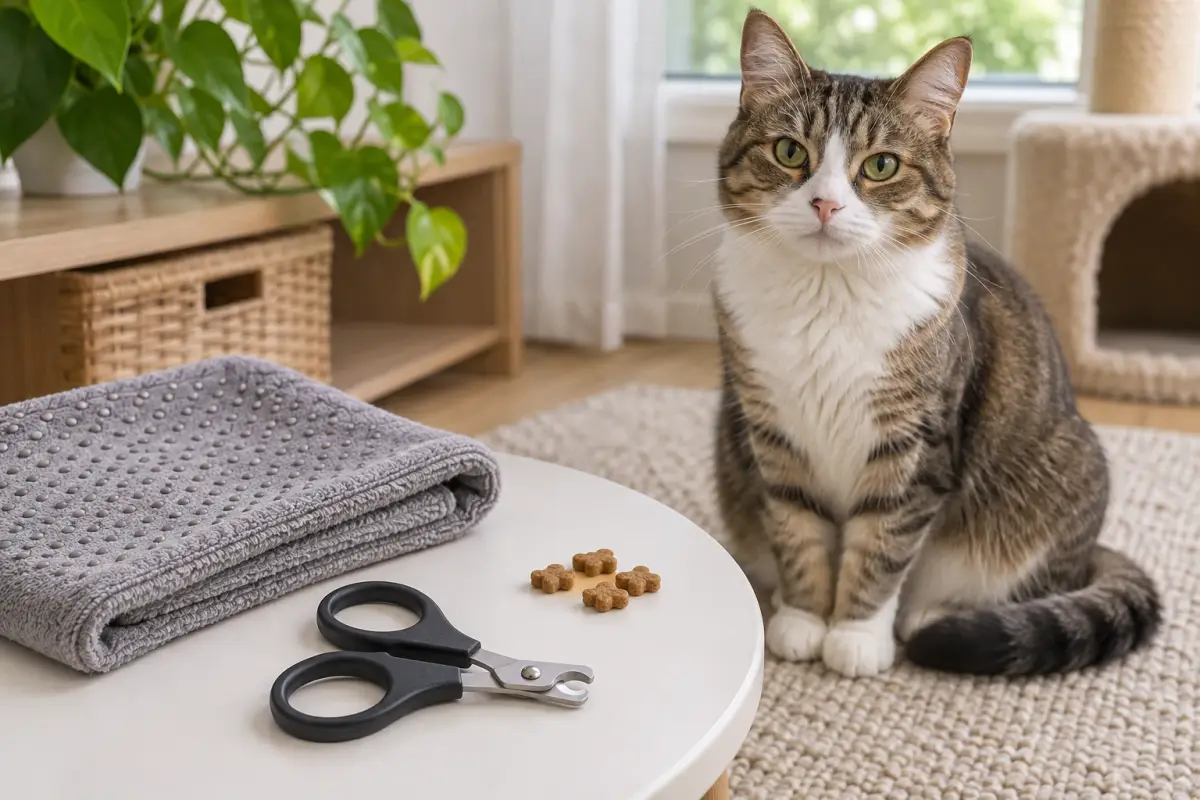
You need a sharp trimmer, good light, treats, and something to stop a bleed if you nick the quick: styptic powder, or flour or cornstarch from the kitchen, which VCA lists as a fallback. Sharp matters, because a dull blade squeezes and splinters a thin kitten claw instead of cutting it cleanly. Scissor-style trimmers let you see the tip of the claw as you cut, and a small pair of cat nail scissors or a compact stainless steel nail clipper for cats and small dogs suits that job.
Pick a quiet room with no other pets around, and a time when the kitten is sleepy, such as after a meal or a play session. A counter or table puts the kitten at a comfortable height for you and stops it wriggling off your lap. Lay a towel or soft blanket down so the surface is not slippery, and have the treats within reach before you pick up the first paw.
Step by step: how to clip a kitten's nails
Step 1: Settle the kitten on the towel and hold it with some gentle snuggling pressure over the shoulders. VCA's advice is that less restraint is better, so skip the firm grip unless you truly need it. Step 2: Take one paw, press lightly on the pad with your thumb and finger so the claw extends, and look at the nail in good light.
Step 3: On a pale claw you can see the pink quick, the part with the blood supply and nerves, and the ASPCA's instruction is simple: do not cut it. Trim only the clear tip. On a dark claw, cut where the nail curves or hooks downward. Step 4: Cut with pressure from top to bottom rather than side to side, which reduces splintering, and make several small snips instead of one big one. Step 5: Give a treat after every paw, and stop for the day if the kitten has had enough.
How to handle a wriggly kitten
A kitten that fights every trim is usually telling you the session is too long. The ASPCA suggests trimming no more than two claws at a time until the cat is comfortable, and VCA says not to push on if your cat resists. Take two nails today and two tomorrow. A week of tiny sessions beats one stressful battle that teaches the kitten to hide whenever it sees the clippers.
Some kittens relax with a second person helping: one gives gentle pressure and treats while the other trims. If a kitten will not tolerate it, or the nails need cutting right away, VCA's guidance is to see your veterinarian or a groomer for the first trim, then take over at home once that is done. Never scold a kitten, and never trim when either of you is upset.
If you clip the quick
It happens to nearly everyone eventually: a nail bleeds and the kitten yelps. Stay calm, since a kitten reads your mood. Press a small amount of styptic powder onto the tip of the nail, or flour or cornstarch if that is all you have, as VCA suggests, and hold gentle pressure for a moment. Offer a treat and end the session there.
If the bleeding does not stop, or the toe looks sore, swollen or the kitten limps afterward, call your veterinarian. Next time, trim less: taking off just the very tip in several small snips keeps you well clear of the quick, and a little patience at this stage is far better than a kitten that dreads the next session.
How often to trim, and what to read next
For indoor cats, VCA suggests a trim every two to four weeks, and the ASPCA suggests every ten days to two weeks. Check your kitten's paws about once a week and trim when the tips look sharp or catch on fabric. Trimming does not replace a place to scratch, so a sturdy cat scratching post gives the claws a healthy outlet, and cat grooming supplies cover the other kitten care routines you can build the same way.
For the adult routine, including dark nails and back paws, see how to trim cat nails, and for what to look for in a trimmer read our cat nail clipper buying guide. When you are ready to shop, browse all cat nail clippers. Call your veterinarian if a nail will not stop bleeding, a toe looks red or swollen, or your kitten will not let anyone handle its paws.
This page is general information, not veterinary advice, and it cannot replace an examination by the vet who knows your pet.
Common questions
How early can you start clipping kitten nails?
VCA advises starting routine trims while cats are still kittens. Begin with a few days of gentle paw handling, then trim one or two nails at a time and reward every step. Ask your veterinarian if you are unsure about a very young kitten.
How often should I cut my kitten's nails?
For indoor cats VCA suggests every two to four weeks and the ASPCA every ten days to two weeks. Check the tips about once a week, and trim whenever they look sharp or snag on fabric.
Can I use human nail clippers on a kitten?
Human clippers are shaped for flat nails and can crush or split a thin curved kitten claw, so a trimmer made for cats is the better choice. Whatever you use, keep it sharp and cut only the clear tip.
What if my kitten will not sit still for a nail trim?
Shorten the session. Trim no more than two claws at a time, choose a moment when the kitten is sleepy, use a towel and treats, and ask a second person to help. If it still fights, ask your vet or a groomer.
Sources we checked
This guide is general information, not veterinary advice. If your pet is unwell or injured, contact your veterinarian.


