






Care & how-to
How to Trim Cat Nails (and Kitten Claws) Without a Fight
To trim a cat's nails, hold a paw, press the pad gently so the claw extends, and snip only the clear, sharp tip, well short of the pink quick. Most indoor cats need a trim every two to four weeks. Go slowly, one or two nails at a time if needed, and pair every session with treats.
By Matt GarnettUpdated November 9, 20264 min read2 sources
What you need before you start
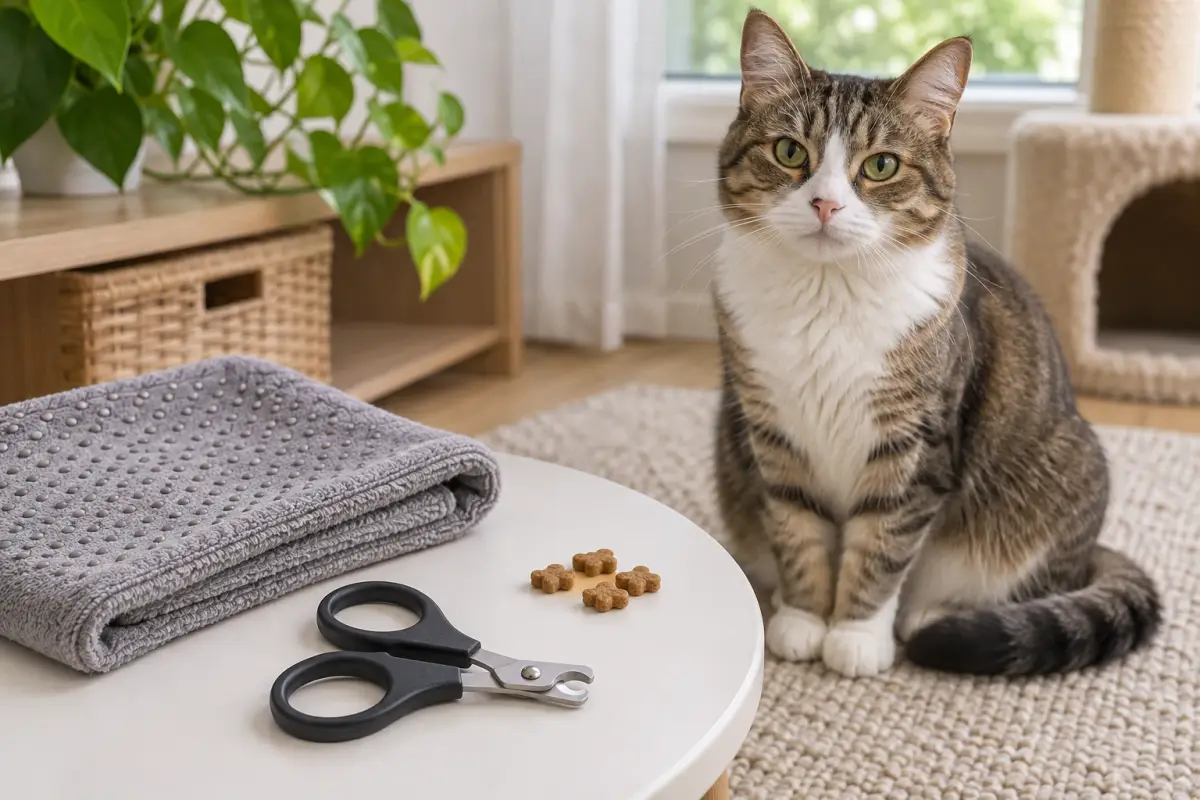
Use clippers made for cats, such as these cat nail clippers. VCA notes that both small scissors-style and guillotine-style clippers are safe; most owners find the scissors type easier to control, and the LED cat nail scissors and splash-proof pet nail scissors are two of that style. Our guide to the best cat nail clippers compares both kinds, or you can browse all cat nail clippers. Keep them sharp, because dull blades pinch and crush the nail. Have styptic powder within reach in case you nick the quick, plus a handful of your cat's favorite treats.
Pick a quiet time when your cat is relaxed or sleepy, such as after a meal, and a spot with good light. Many people sit with the cat on their lap facing away from them; others place the cat on a table and rest a hand gently over the shoulders. A towel wrapped around the body helps some cats feel secure.
Step-by-step: how to cut cat nails
Step 1: Hold a front paw in your non-dominant hand and gently press the middle pad between your thumb and forefinger. The claw slides out. Step 2: Look at the nail from the side. In a pale nail you will see a pink triangle at the base; that is the quick, which holds nerves and blood vessels.
Step 3: Cut only the sharp, curved tip, a little way in front of the quick, clipping from top to bottom so the nail does not split. Step 4: Release the paw, praise, and give a treat. Repeat on each claw, including the thumb-like dewclaw on the inside of each front leg, which is easy to miss and can curl into the pad if left long.
Dark nails and back paws
If your cat's nails are dark, you cannot see the quick. VCA's advice is to cut where the nail starts to curve downward and to take several small snips rather than one big one. Each tiny cut shows you a cross-section; when the center starts to look darker and moist, stop.
Back claws grow more slowly and are usually blunter, so many cats only need them done every second session. If your cat tolerates front paws but not back ones, do the fronts well and come back to the rear another day. A partial trim is still useful.
How to trim kitten nails and build tolerance
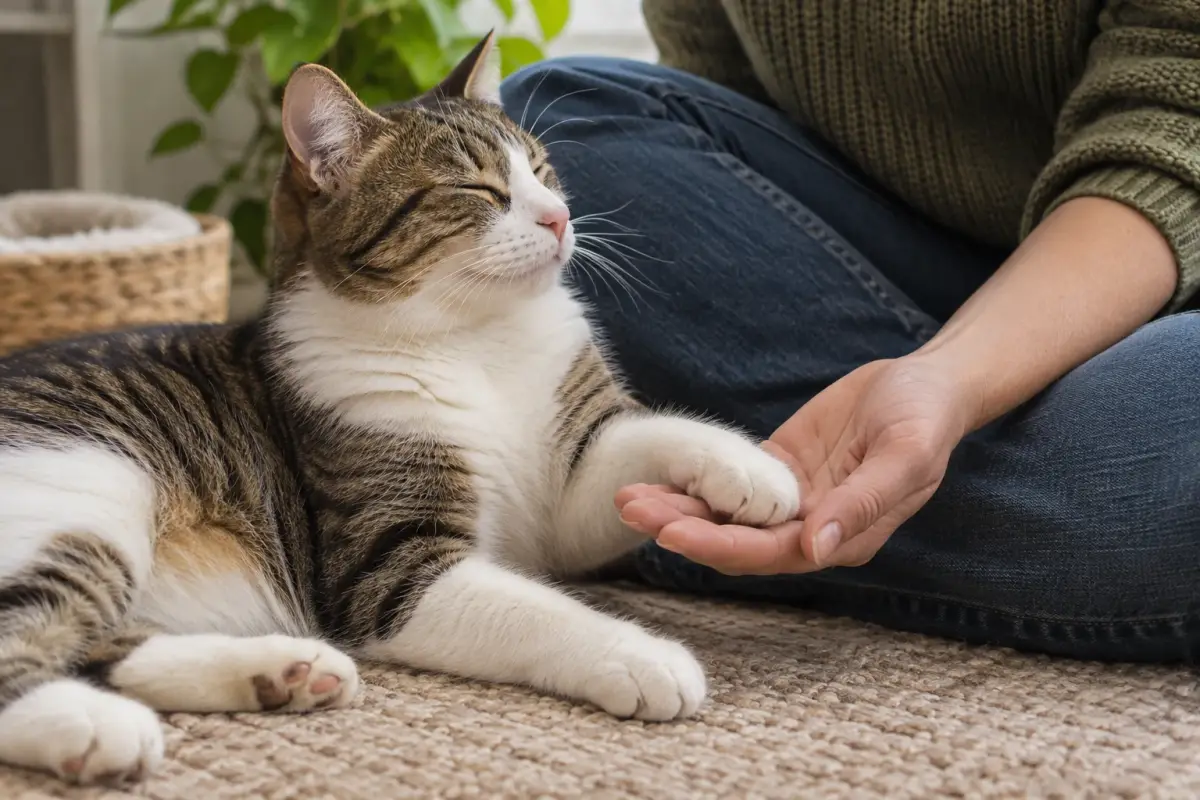
Kittens have needle-sharp claws, and they are the easiest cats to teach. Start by touching and holding paws for a second or two during calm cuddles, rewarding each time. The ASPCA suggests holding a paw for no more than about three seconds at first, letting go if the kitten pulls away, and getting the kitten used to the click of the clippers before any nail is cut.
For an adult cat that dislikes handling, build up over several weeks: handle the paws, then clip one nail, then two. The ASPCA recommends doing no more than two claws a session until the cat is comfortable. Never punish resistance. A calm cat with half its nails trimmed is a better result than a frightened cat with all of them done.
If you cut the quick, and how often to trim
Cutting the quick hurts and bleeds, but it is rarely serious. Press styptic powder onto the nail tip for a minute; VCA notes cornstarch or flour can stand in if you have none. Give a treat, end the session, and try again another day. Call your vet if the bleeding does not stop after several minutes of pressure.
Indoor cats usually need a trim every two to four weeks; the ASPCA suggests every 10 days to two weeks for some cats. Older cats often need trimming more often because they are less active, and their nails can grow thick and curl into the pads. Check paws monthly even if your cat uses a scratching post.
When to ask your vet or a groomer
Stop and ask for help if your cat struggles hard enough that either of you could be hurt. Your vet team can trim the nails at a routine visit and show you how to hold your cat. If you would rather learn to do it yourself, a pair of cat nail clippers and a calm routine make it manageable. Some cats do better with two people, or with a groomer who handles cats every day.
Book a vet visit if a nail has grown into a pad, a toe looks red or swollen, a nail is split or broken, or your cat suddenly limps or licks a paw. These need a proper look rather than a home trim.
This page is general information, not veterinary advice, and it cannot replace an examination by the vet who knows your pet.
Common questions
Can I use human nail clippers on my cat?
They can work on small claws, but cat clippers are shaped to cut a curved nail cleanly. VCA also suggests keeping separate tools for cats and people to reduce the chance of spreading infection.
How often should you clip a cat's nails?
Most indoor cats need a trim every two to four weeks. Check monthly and trim when the tips are sharp and hooked, or when you hear claws clicking on hard floors or catching on fabric.
Does trimming stop a cat scratching furniture?
Trimming does not stop the urge to scratch, which is normal behavior, but blunter claws do far less damage. Pair regular trims with a sturdy scratching post placed right next to the furniture your cat targets.
What if my cat won't let me trim its nails?
Go back a step and work on paw handling with treats for a week or two before trying again. If your cat still fights, ask your vet team or a groomer to trim the nails safely.
Sources we checked
This guide is general information, not veterinary advice. If your pet is unwell or injured, contact your veterinarian.


