






Buying guides
Best Cat Nail Clippers: Scissor vs Guillotine and How to Choose
The best cat nail clippers are small, sharp scissor-style clippers made for cats, which VCA notes many people prefer. Guillotine clippers work too. What matters most is a sharp blade that cuts cleanly instead of crushing, a size that fits your hand, and a cat used to having its paws handled. Keep styptic powder nearby before you start.
By Matt GarnettUpdated November 14, 20263 min read2 sources
What matters most: sharpness and control
A sharp blade cuts the nail cleanly in one squeeze; a dull one crushes and splinters it, which hurts and makes the next session harder. VCA advises applying pressure from top to bottom to reduce splintering and making several small cuts rather than one big one, checking after each. Small blades give you a clear view of how much nail you are taking. Our cat nail clippers include scissor-style designs and other small clippers, so check each listing for blade type.
Control matters as much as the blade. Clippers that fit your hand, with a grip that does not slip, let you work quickly on a cat that will tolerate only a few seconds. Choose a size for the cat rather than a dog clipper, which is bulky and blocks your view of the quick.
Scissor, guillotine and grinder compared
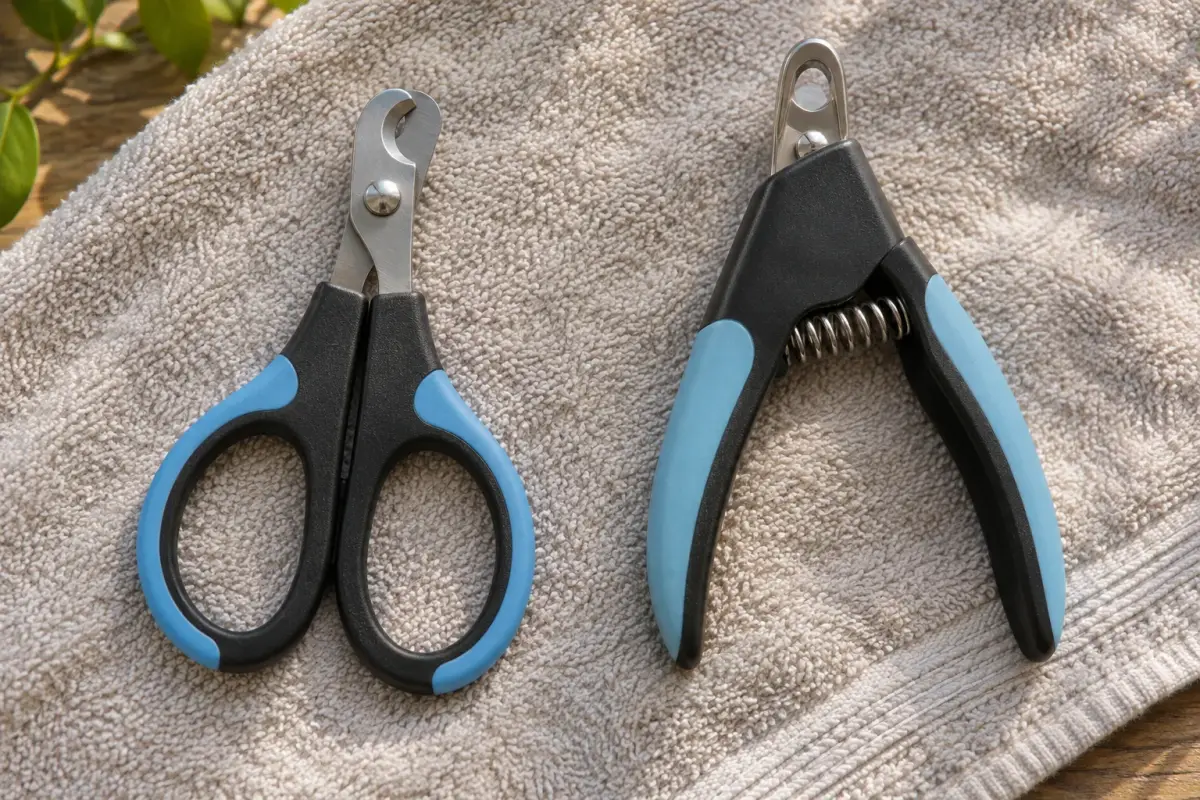
Scissor-style clippers have two curved blades that meet like small shears. A cat nail scissor with an LED light is one example. VCA notes many people prefer small scissor-style clippers made for cats, because they are easy to position on a tiny curved nail. Guillotine clippers have a hole the nail slips into and a single blade that cuts when you squeeze. VCA says both styles are safe.
Human nail clippers can work in a pinch, though VCA advises keeping separate tools to reduce the risk of spreading infection. Electric grinders file the nail down gradually and leave a smooth edge, but the noise and vibration bother many cats; they suit cats that are already calm about handling.
Best type for each cat and owner
For a kitten, use small scissor-style nail scissors and short, frequent sessions, trimming one or two nails and stopping with a treat; VCA notes that starting young helps. For a senior cat, check nails more often, because older cats scratch less and nails can overgrow and curl into the paw pad, causing pain and infection.
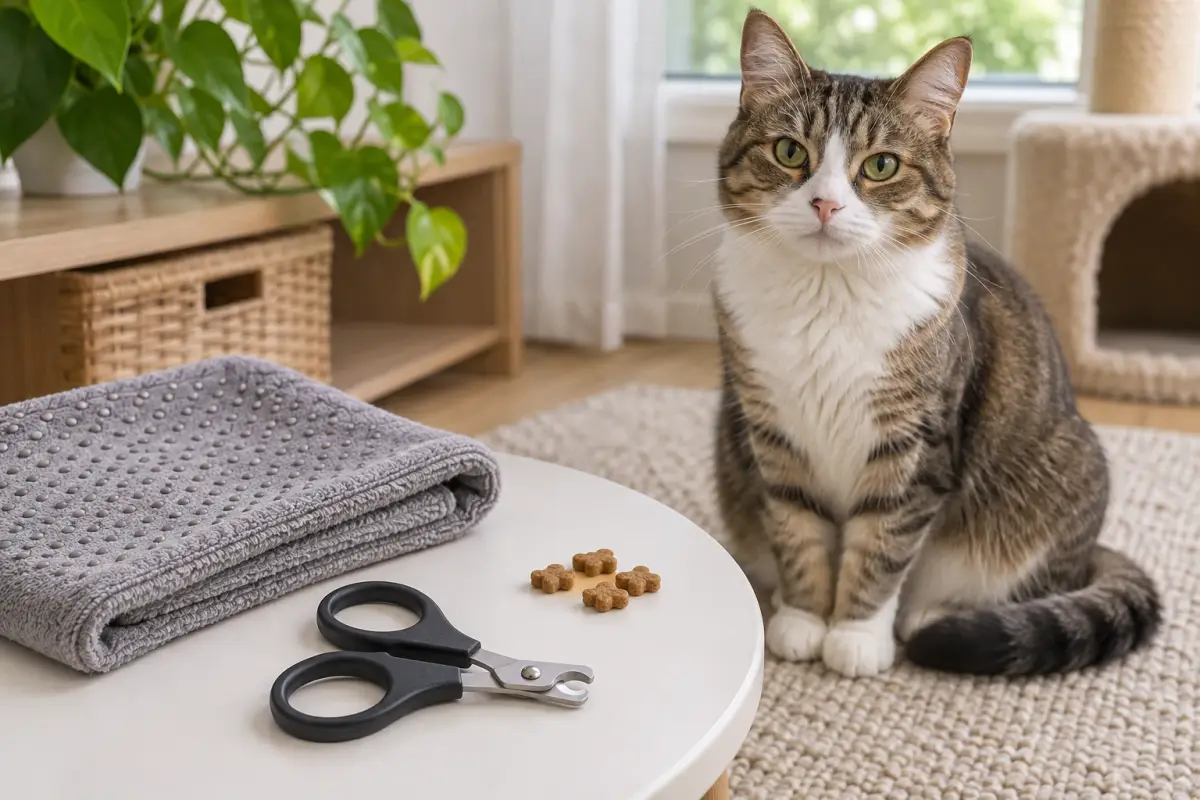
For a nervous cat, the tool matters less than the routine: trim a few nails at a time, as the ASPCA suggests, and never punish or trim when either of you is upset. If your cat will not tolerate trimming at all, a vet clinic or groomer can do it, and your vet can advise on handling.
How often to trim and how to find the quick
VCA suggests trimming an indoor cat's nails every two to four weeks; the ASPCA suggests every 10 days to two weeks. Signs it is time include clicking on hard floors and snagging on blankets. Cats that use scratching posts well may need less frequent trims.
Our step-by-step guide to how to trim cat nails walks through this. Press gently on the paw pad to extend the claw. On pale nails, you can see the pink quick, which holds blood vessels and nerves; cut only the clear tip well in front of it. On dark nails, VCA suggests cutting where the nail starts to curve downward. If you nick the quick, apply styptic powder, or flour or cornstarch if you have none.
What to avoid and clipper care
Avoid dull blades, large dog clippers, cutting the whole nail in one go, and trimming a cat restrained against its will for a long session. Avoid declawing; the ASPCA strongly discourages it. Nail caps are a non-surgical option for cats that damage furniture.
Wipe clippers with rubbing alcohol after use, store them dry so they do not rust, and replace them when they start to crush rather than cut. Compare replacements in our cat nail clippers. If a nail is ingrown into the paw pad, the pad is swollen, or a nail is torn and bleeding heavily, have your vet handle it.
Nail-tool cutting mechanisms
| Tool | Mechanism | Inspect before use |
|---|---|---|
| Scissor style | Two blades meet like shears | Blade condition and handle control |
| Guillotine | A blade crosses a nail opening | Opening size and blade alignment |
| Grinder | An abrasive surface rotates | Head,guard and controls |
Common questions
What type of nail clipper is best for cats?
Small scissor-style clippers made for cats are the choice many owners prefer for control and visibility. Guillotine clippers are also safe. Sharpness matters more than the style.
How often should I trim my cat's nails?
Every two to four weeks for most indoor cats, according to VCA, or more often if nails click on the floor or snag on fabric. Senior cats may need checks more often.
Can I use human nail clippers on my cat?
They can work, but VCA advises separate tools to reduce infection risk, and cat clippers are shaped for small, curved claws and give a better view of the quick.
What do I do if I cut my cat's quick?
Stay calm and press styptic powder on the nail tip, or flour or cornstarch if you have none. If bleeding does not stop within a few minutes, call your vet.
Sources we checked
This guide is general information, not veterinary advice. If your pet is unwell or injured, contact your veterinarian.


