






Care & how-to
Why Is My Cat Shedding So Much?
Most heavy shedding is normal: cats replace their coat continuously and shed most in spring and fall, and indoor cats under artificial light can shed all year. Shedding becomes a concern when it leaves bald patches, thin or broken fur, scabs or a dull, greasy coat. Merck lists flea allergy, other allergies, infections, stress and hormonal problems among the causes of real hair loss.
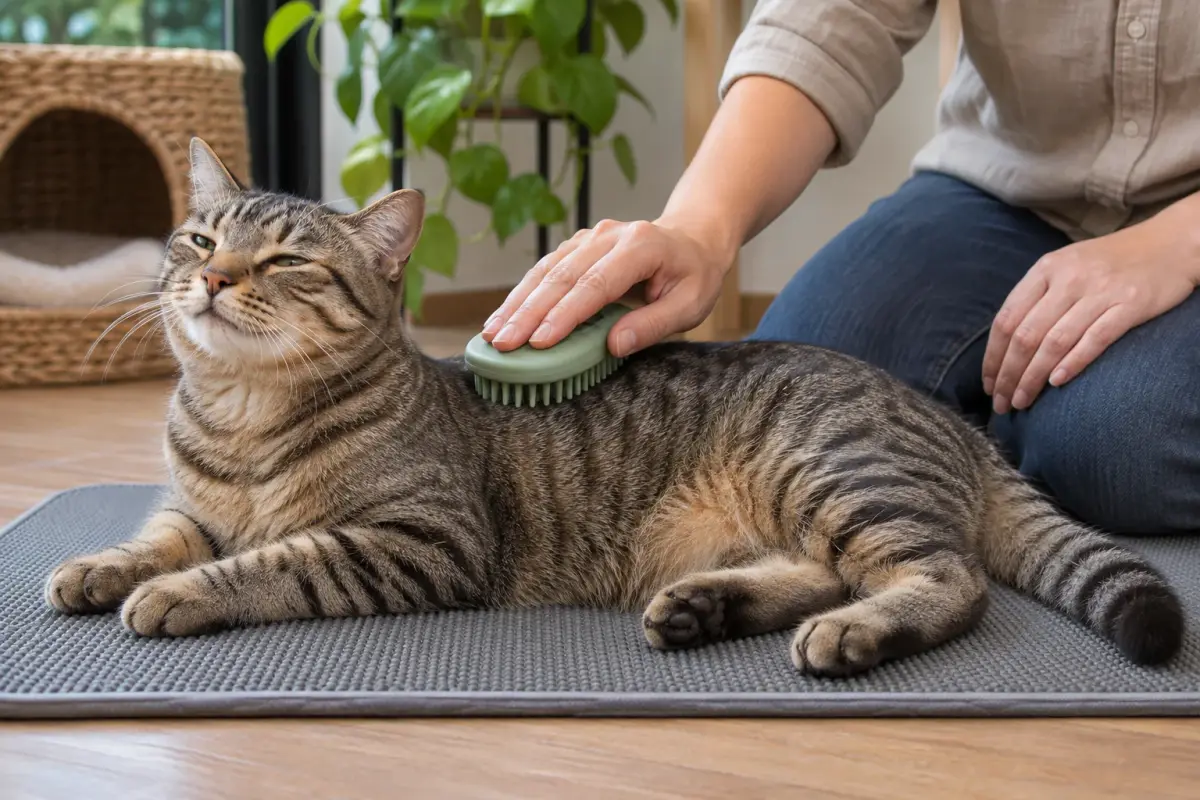
By Matt GarnettUpdated November 13, 20264 min read2 sources
Normal reasons for heavy shedding
Hair grows in cycles, and old hairs fall out as new ones come through. Many cats drop their winter undercoat in spring and grow a thicker one in fall, which can feel like an explosion of fur over a few weeks. Indoor cats living with steady heating and electric lights often shed moderately all year rather than in two big bursts.
Long-haired and double-coated breeds simply have more hair to lose, and senior cats or overweight cats that cannot groom properly can leave more loose hair around the home. A short spike in shedding is also common after a stressful event, such as a vet visit, a car journey or a move. Merck notes that shedding without bald spots is usually just part of the normal coat cycle.
Signs shedding is a problem
Look at the skin as well as the fur. Patches of thin or missing hair, especially in symmetrical areas on the belly, inner thighs or sides, are not normal shedding. Merck says flea allergy dermatitis is the most common cause of symmetrical hair loss in cats. Short, broken, stubbly hair usually means the cat is overgrooming, often secretly when you are not watching.
Other warning signs are redness, scabs, small bumps along the back and neck, circular scaly patches that could be ringworm, a greasy or smelly coat, dandruff and constant scratching. Changes in appetite, thirst, weight or energy alongside coat changes can point to an internal problem such as hyperthyroidism.
When to call your vet
Book a visit if your cat has bald patches, scabs, sores, red skin or ringworm-like rings, if they are scratching or licking constantly, or if the coat has suddenly become dull, greasy or matted. VCA notes that a coat that sheds excessively or looks unhealthy can signal a health problem.
Call sooner if coat changes come with weight loss, vomiting, increased thirst or appetite, or a cat that is hiding or less active. If anyone in the home develops itchy red rings on the skin, see your own doctor and mention that your cat may have ringworm, which spreads between pets and people.
How to manage shedding at home
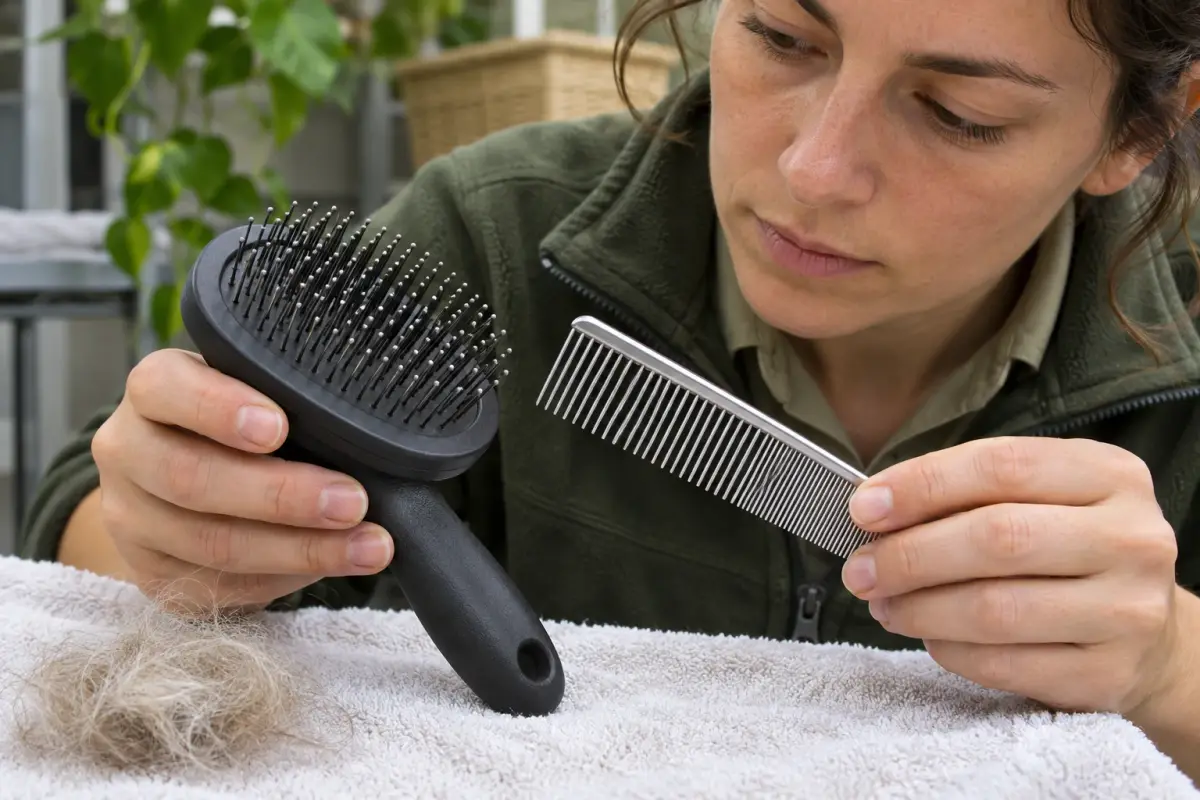
Regular brushing is the best way to keep loose hair under control. VCA recommends daily brushing for long, silky or curly coats and less often for short coats. Use a long-toothed metal comb for long coats, a rubber or bristle brush for short coats, and an undercoat tool during heavy shedding. Brush gently, and never pull on tangles.
For mats, VCA says to use clippers rather than scissors, which can easily cut the skin, and to have a groomer or vet handle severe ones. Healthy adult cats rarely need baths; if you do bathe, use only a cat shampoo and rinse thoroughly. Feed a complete, balanced cat food and keep fresh water available.
The cat brush guide explains tool types; match the tool to the coat and stop if brushing is uncomfortable.
What the vet will likely check
Your vet will examine the skin and coat closely, comb for fleas and flea dirt, and ask about diet, stress, other pets and when the shedding started. Merck describes common tests including skin smears and cultures to check for bacteria, yeast or ringworm, and skin scrapings to look for mites.
If those do not explain it, blood and urine tests can look for hormonal problems, and a skin biopsy may be taken. Treatment depends on the cause: flea control for every pet, treating infections, managing allergies, reducing stress, or a diet change. Stress-related overgrooming often improves with more play, hiding spots and a steady routine.
This page is general information, not veterinary advice, and it cannot replace an examination by the vet who knows your pet.
Common questions
Do indoor cats shed all year?
Often, yes. Indoor heating and artificial light blur the seasons, so many indoor cats shed steadily all year rather than in two big spring and fall bursts. Regular brushing keeps it manageable.
Can stress make a cat shed more?
Yes. A stressful event such as a vet visit or move can cause a sudden burst of shedding, and ongoing stress can lead to overgrooming and thin patches. If thinning persists, have your vet rule out medical causes first.
Does diet affect cat shedding?
A complete, balanced diet supports a healthy coat, and a poor diet can lead to a dull, brittle coat. Do not add supplements without asking your vet, and remember that many shedding problems are caused by fleas or allergies instead.
How often should I brush my cat?
VCA recommends daily brushing for long-haired cats to prevent mats and reduce hairballs. Short-haired cats usually need it less often, perhaps once or twice a week, with more frequent brushing during heavy seasonal shedding.
Sources we checked
This guide is general information, not veterinary advice. If your pet is unwell or injured, contact your veterinarian.


