






Buying guides
Best Cat Shampoo: What Actually Matters
The best cat shampoo is one made specifically for cats, ideally hypoallergenic and without added perfume, and one you can rinse out completely. Most healthy adult cats rarely need a bath at all, so the first question is whether your cat needs one. Our cat shampoo range covers the options once you have decided a bath is the right call.
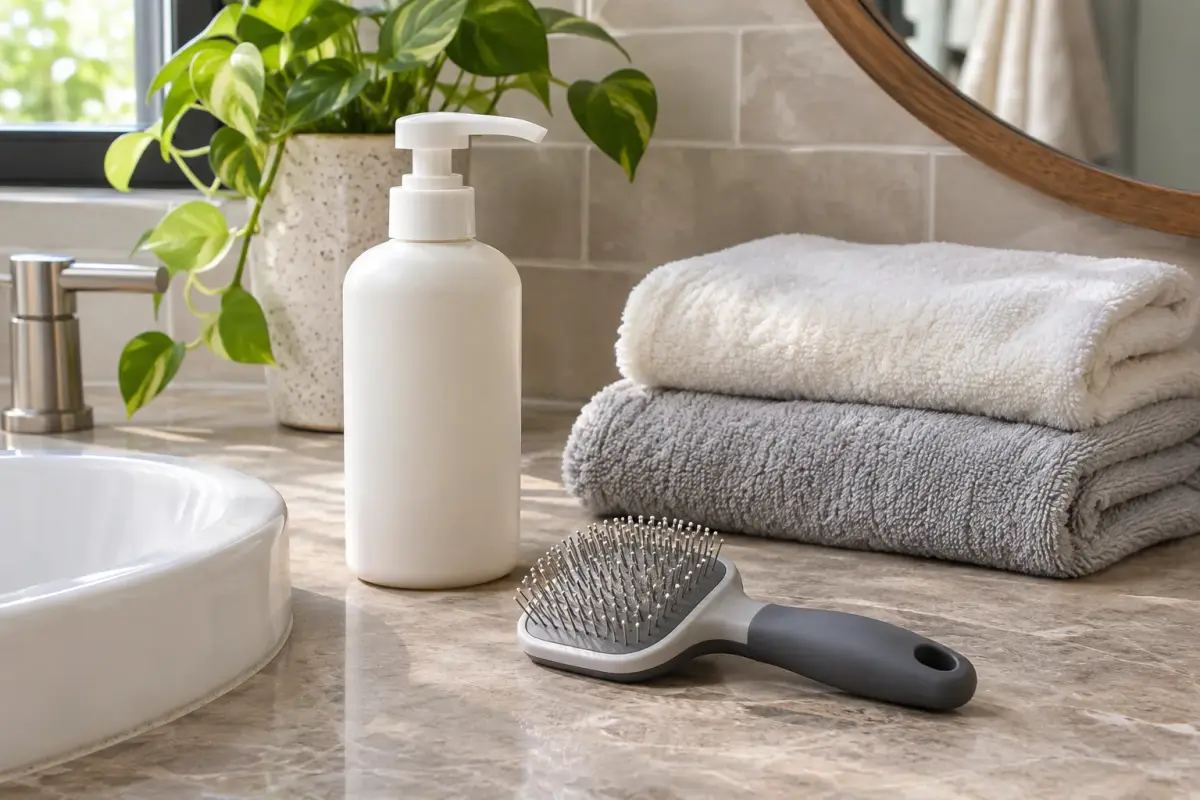
By Matt GarnettUpdated November 14, 20264 min read2 sources
Does your cat need a bath?
VCA Animal Hospitals says most healthy adult cats are fastidious groomers and rarely require a bath. There is no fixed schedule. A bath may make sense for a cat that cannot groom well, such as an arthritic or overweight cat, or for a cat that has got into something sticky or smelly, and your vet may prescribe frequent bathing as part of treating allergies.
Before you buy anything, rule out the reasons a coat might look bad. VCA lists excessive shedding, dandruff or a greasy coat as signs that can point to a health problem rather than a grooming need, and says to take your cat in if a mat has caused skin irritation. A shampoo will not fix any of those, so a vet visit comes first.
It must be made for cats
This is the one non-negotiable. VCA says cats should be bathed only with a shampoo formulated for cats, because their skin differs in thickness and pH, and that human shampoo, including baby shampoo, is far too harsh for their skin. A product made for dogs is not the same thing, so the label should name cats.
Read the front of the bottle and the directions. If the label does not clearly say it is for cats, leave it on the shelf. Cats also lick their coats afterwards, which is why a formula designed for them matters even more than it would for a dog.
What to look for on the label
For routine bathing VCA recommends a hypoallergenic shampoo with no added perfume, so start there. Plain, gentle formulas are a safer starting point than ones promising fragrance or special treatments. If you want a shampoo that does something specific, such as treating a skin condition or fleas, that is a vet decision, because medicated shampoos are chosen for your cat's skin condition and need a set contact time.
VCA notes that medicated shampoos must sit on the coat for 5 to 10 minutes before rinsing and that they do not typically contain soaps or detergents, so they may not clean a very dirty cat. Do not use an over-the-counter medicated product without asking your vet first, and follow the directions on the label or from your vet for contact time.
Rinsing, and shampoo alternatives
Rinsing matters more for cats than for most pets. VCA says the shampoo must be thoroughly rinsed out, running water is ideal, and a cup works if your cat panics. Because cats groom themselves afterwards, any residue gets swallowed, which is why rinsing is more important still with a medicated or flea product.
If your cat will not tolerate a full bath, a no-rinse approach can be gentler. VCA mentions dry shampoo as an option your vet may suggest for cats that need frequent cleaning, and a no-rinse cat bath set with towel is that type. A cat cleaning mousse or foam is another waterless option. Read the label to check it is made for cats and rinse-free.
Bath setup and handling
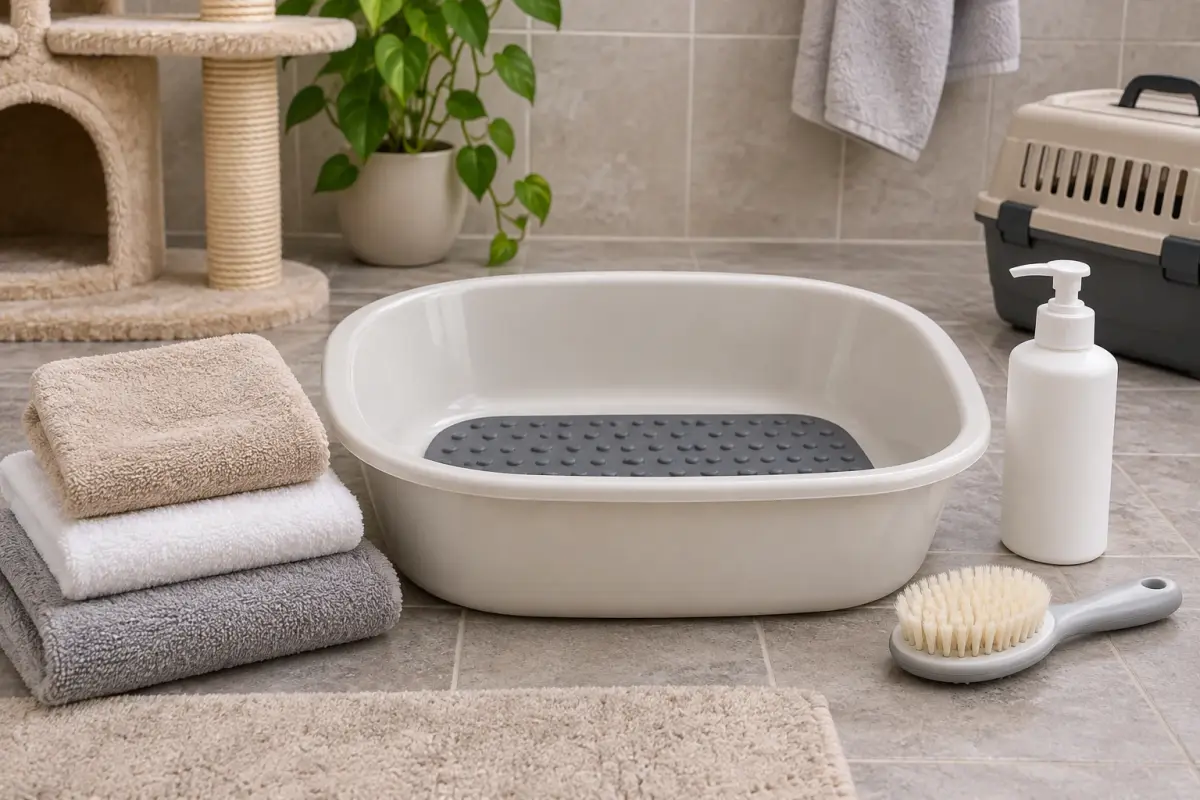
VCA suggests a comfortably warm area, clean dry towels within arm's reach, warm water and a spray nozzle or a large cup for rinsing. Pat the cat dry with a towel and keep it warm until it is fully dry. Mild redness right after a bath is usually normal, but call your vet if the skin looks consistently worse with bathing.
Some owners use a mesh cat bathing bag to limit scratching during a wash or grooming session. It is a handling aid and not a substitute for a calm approach, so stop if your cat panics, and never leave a cat unattended. For a cat that is too stressed to bathe at all, a groomer or your vet clinic is the better route.
When to ask a vet instead
Call your vet if your cat has itching, hair loss, flaking, scabs, a strong smell from the skin or ears, or a coat that suddenly changes. These are signs the skin needs a diagnosis, not just a wash. Your vet can also tell you whether a medicated shampoo is right and how long to leave it on.
Check the rest of your grooming kit while you are there. A good brush and regular nail care do more for most coats than bathing does, and our cat nail clippers are part of the same routine. This page is general information, not veterinary advice, and it cannot replace an examination by the vet who knows your pet.
Common questions
Can I use human shampoo on my cat?
No. VCA says human shampoo, including baby shampoo, is far too harsh for a cat's skin, which differs from ours in thickness and pH. Use only a shampoo made specifically for cats.
How often should I bathe my cat?
Most healthy adult cats rarely need a bath because they groom themselves. Bathe only when there is a reason, and ask your vet if you think your cat needs bathing regularly.
What is the best shampoo for a cat with sensitive skin?
For routine bathing, VCA recommends a hypoallergenic, unscented formula made for cats. If the skin is red, itchy or flaky, see your vet first, because that needs a diagnosis rather than a new shampoo.
Is dry shampoo safe for cats?
A waterless product made for cats can be a gentler option for cats that cannot be bathed. Read the label, use only what is intended for cats, and ask your vet if you are unsure.
Why is rinsing so important for cats?
Cats lick their coats clean, so any shampoo left behind is swallowed. VCA says to rinse thoroughly, with running water if possible, and to be especially careful with medicated or flea products.
Sources we checked
This guide is general information, not veterinary advice. If your pet is unwell or injured, contact your veterinarian.


