






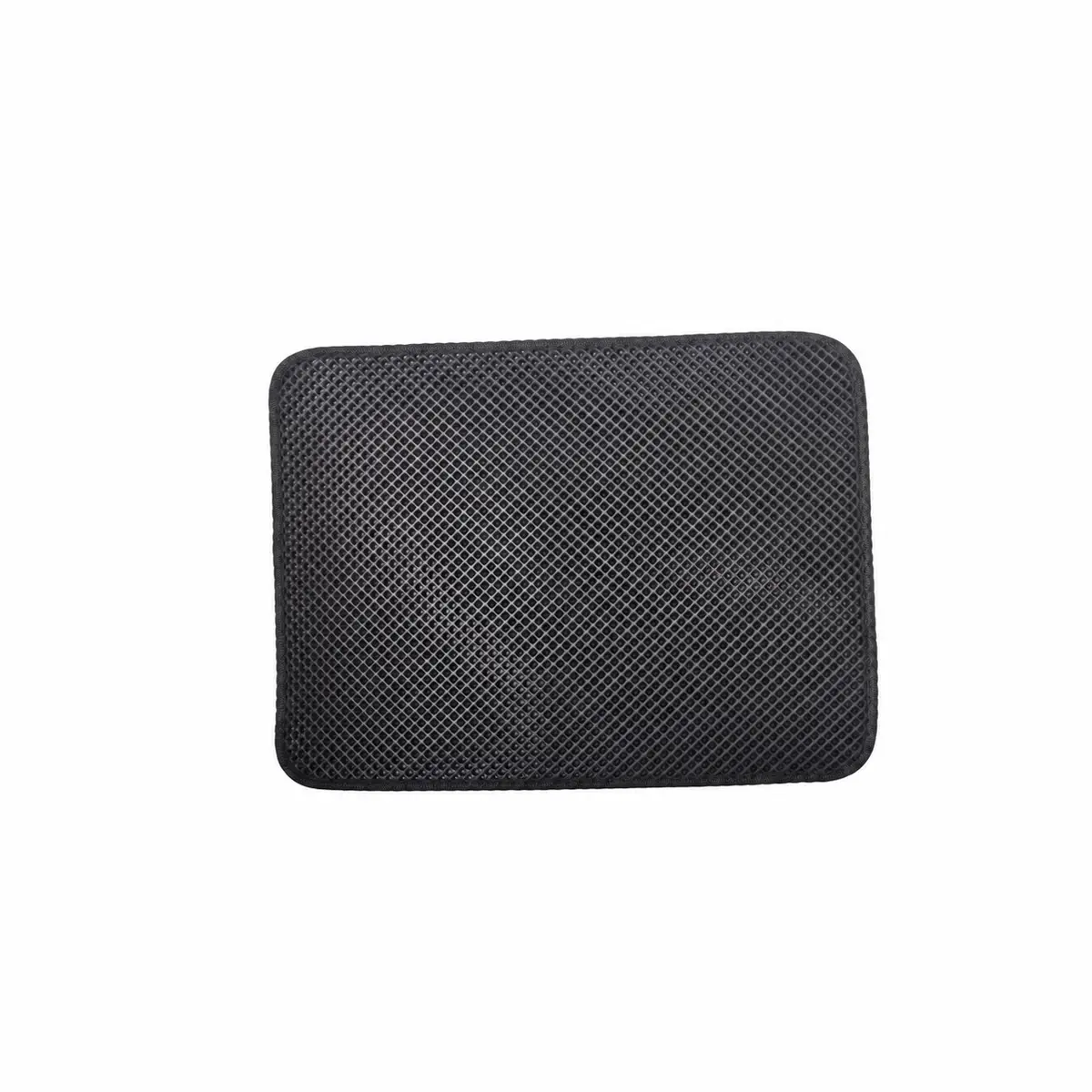
Litter mats
Double-Layer EVA Cat Litter Mat with Honeycomb Surface
- Options
- 29 to choose from
From $19.99
Free US shipping over $49 · 30-day free returns · Happy pets, happy homes
Pet care guidesCats
Tidy home. Happy cat.
8 items picked for everyday life with your pet, with shipping estimates on every item.
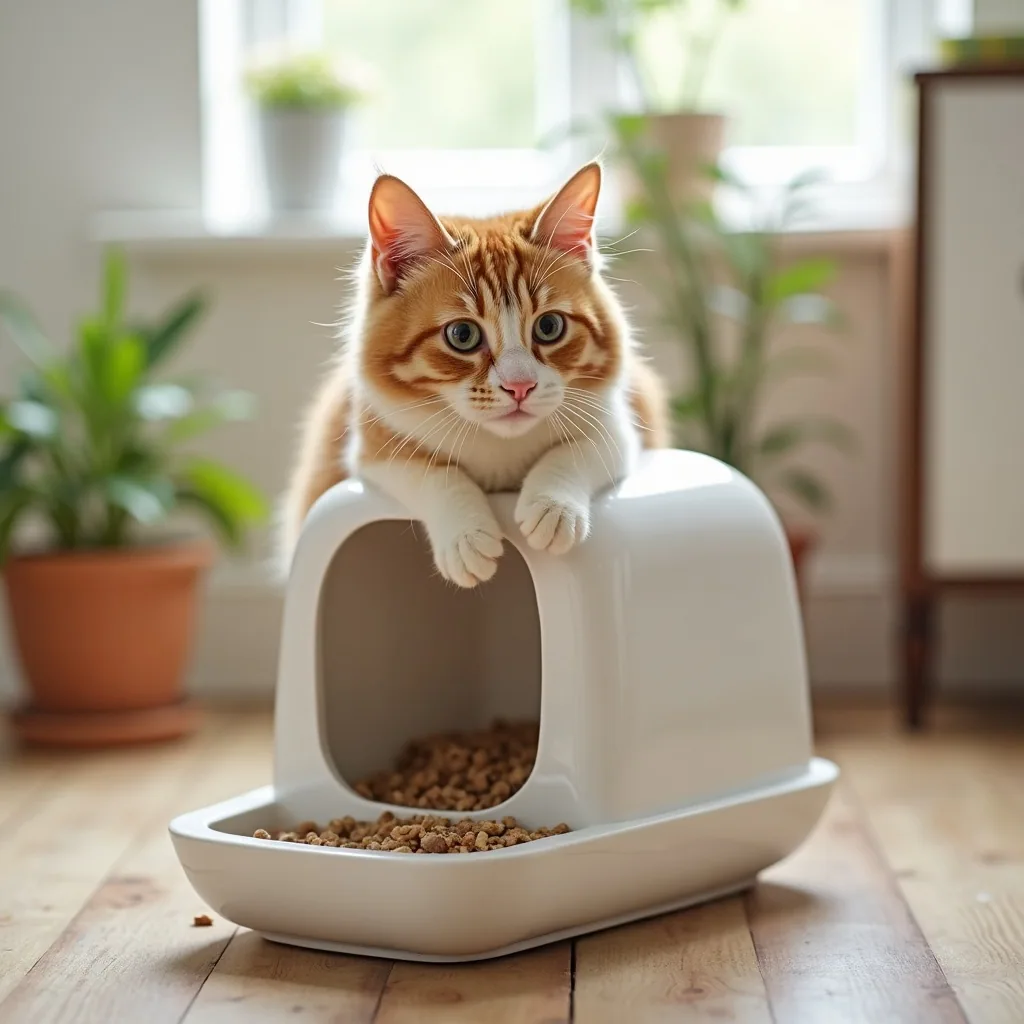 The everyday essentials, sorted.
Litter mats
From $19.99



A little guidance
Buying guides and care advice written for this range: what to measure, what matters and what to skip.
This page holds litter mats that catch the granules cats carry out on their paws: double-layer honeycomb mats that trap litter inside and empty out like a pouch, waterproof and urine-proof pads, and a hooded litter box sold with a matching litter-catching mat. It is for anyone tired of sweeping litter off the bathroom floor, and owners of cats who kick and dig hard.
When a cat steps out of the box, granules stick between its toes and fall out over the next few steps. A litter mat sits in front of the box and gives those steps a textured surface that pulls the litter from the paws before it reaches the floor.
Double-layer mats go further. The top layer has holes in a honeycomb pattern; litter drops through into a sealed bottom layer, and you open the mat along one edge and pour the collected litter into the trash or back into the box.
Double-layer honeycomb mats are the most effective for heavy scatter and the easiest to empty. Single-layer honeycomb pads are thinner and lie flat under a box or in a small space. Waterproof, urine-proof mats protect the floor from accidents and from litter that has been wet by an over-enthusiastic digger.
A hooded litter box with its own mat pairs a covered box, which cuts down on kicked litter, with a mat for what still comes out on the paws.
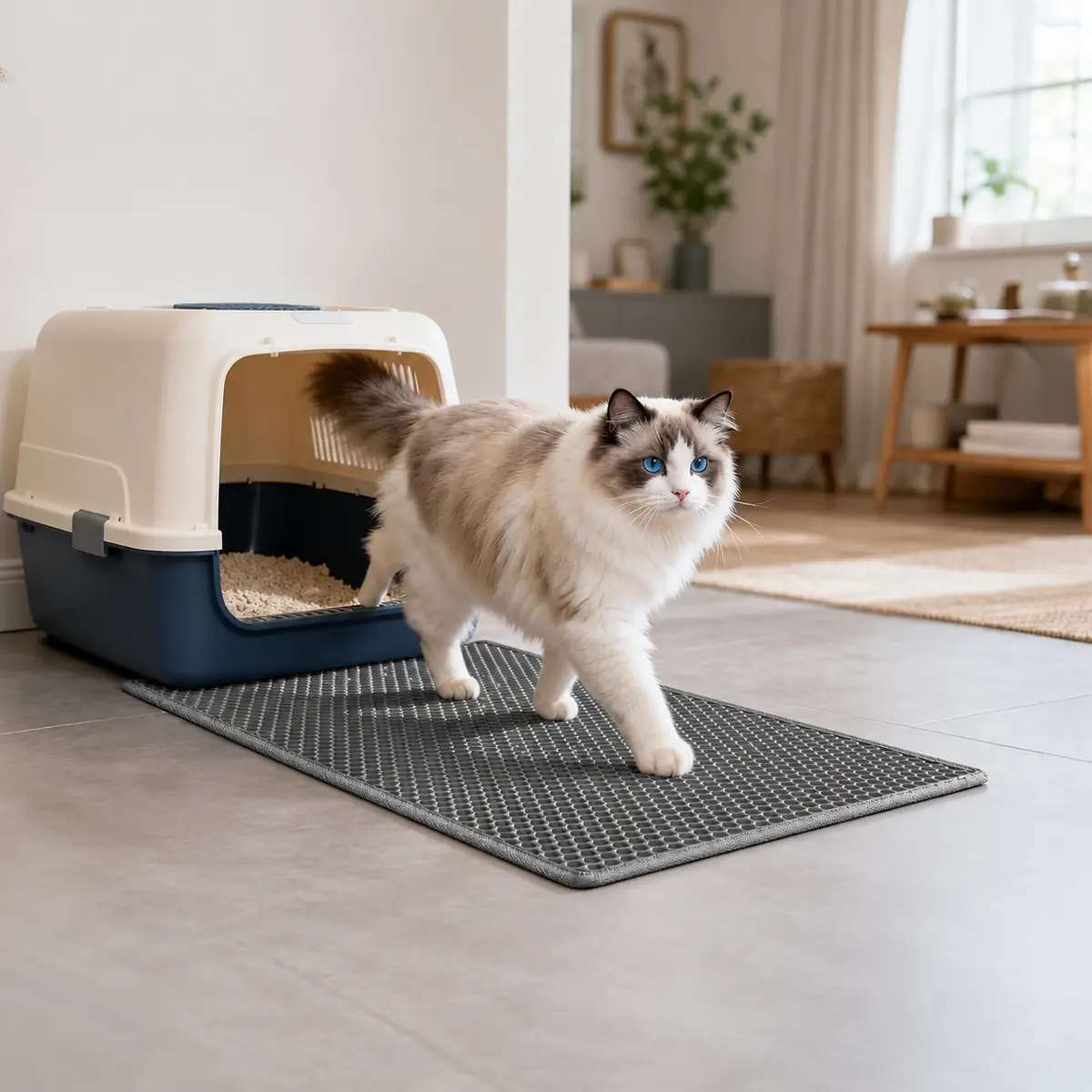
The mat should be large enough that your cat takes at least two or three steps on it after leaving the box. For a front-entry or open box, that usually means a mat as wide as the box and extending well out in front. A large mat under and around the whole box also catches litter flung over the sides.
For top-entry boxes, place the mat at the exit point instead. In a small bathroom, measure the floor space and door swing first.
Cats are fussy about what they stand on. A mat with very hard or sharp texture may make a cat jump over it or avoid the box. Soft, flexible EVA and rubber honeycomb surfaces are comfortable underfoot while still pulling litter loose.
Waterproof backing matters if your cat ever misses the box, and a non-slip underside keeps the mat from sliding when your cat jumps out.
Shake or empty the mat every day or two, at the same time you scoop the box. For double-layer mats, open the seam, tip the litter out and close it again. Once a week, rinse the mat with warm water and a mild unscented soap and let it dry completely.
Avoid strong scented cleaners near the box, as the ASPCA notes that cats can be put off a box by smells. A clean mat also cuts down on odor, since urine-soaked granules on the mat smell as much as the box itself.
A mat works best alongside a box that suits your cat. A larger box lets a cat turn and dig without kicking litter over the edge, and high-sided or covered boxes hold more in. Heavier, larger-grained litters track less than very fine ones.
Keep your cat's paw fur trimmed if it is long, since tufts between the toes carry more litter. If your cat suddenly starts digging frantically, missing the box or going outside it, the ASPCA recommends reviewing the box size, location and cleanliness, and a vet check if the change continues.
| Format | Construction difference | What to inspect |
|---|---|---|
| Double-layer honeycomb | An upper grid above a lower collecting layer | How the layers open for emptying |
| Single-layer honeycomb | One thinner grid-like pad | Surface and floor contact |
| Water-resistant backing | A barrier beneath the contact surface | Exact material and seam coverage |
| Box-and-mat combination | A mat supplied with a litter box | Actual included size and components |
Yes, a good mat catches most of the litter carried out on paws. Double-layer honeycomb mats work best for heavy scatter.
Choose one at least as wide as the box and long enough that your cat takes two or three steps on it after leaving.
Open the edge, pour out the trapped litter, close it, and rinse the mat weekly with warm water and mild soap.
Many are, including the urine-proof mats here, which protect floors from accidents. Check each listing.
Some cats dislike hard or prickly textures and jump over them. Try a softer, flexible mat and place it right at the box entrance.