Buying guides
Best Stainless Steel Cat Litter Box: What Matters
A stainless steel litter box suits a cat when it is large enough for the cat to turn around, low enough to step into, and easy to scrub. Veterinary guidance on boxes is about size, covers, cleaning and number, not material, so judge a steel box on those points. Most cats prefer open boxes, scooped daily and washed weekly.
By Matt GarnettUpdated November 13, 20264 min read2 sources
What matters most in any litter box
Cornell's Feline Health Center says overweight and large cats need bigger boxes, and ASPCA adds that the majority of cats prefer large boxes they can enter easily, with a box that is too small a common cause of avoidance. A steel box is only a good choice if it is roomy for your cat. Measure your cat from nose to the base of the tail and compare it with the box's inner length.
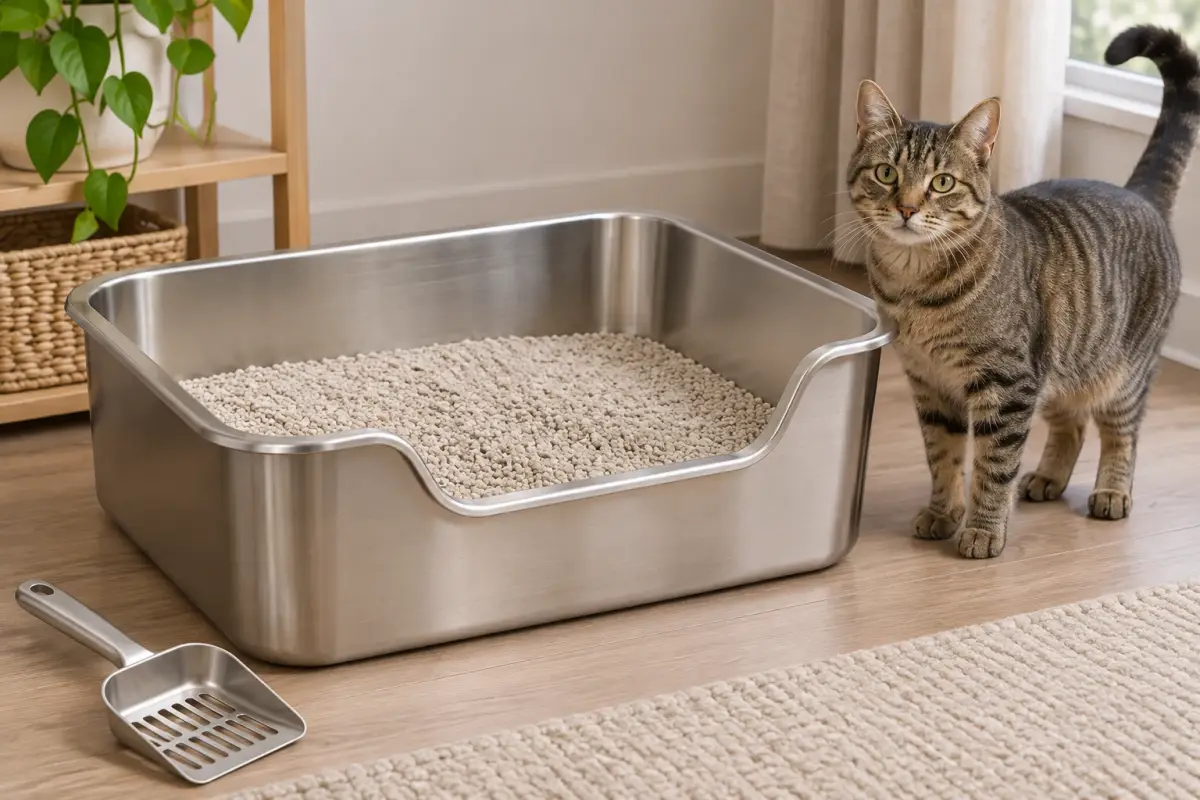
Entry height matters too. Kittens, elderly cats and cats with mobility problems need low sides, so a tall-walled steel tub can be hard going for a senior. A large stainless steel box leaves room for a big cat, while the sides decide how easy it is to enter. Browse our stainless steel litter boxes with your cat's size and age in mind, and read the wider litter box guide for the basics that apply to every material.
Is steel better than plastic?
The sources do not rank materials. Cornell does not discuss box material, and ASPCA gives no specific requirement, even suggesting a plastic storage container can make a good box. What they do say is that a box should be scrubbed with a gentle detergent, dried and refilled, and that boxes that smell or are cracked should be replaced.
That is where a steel box can help in practice: a smooth metal surface is straightforward to scrub, and it does not crack the way old plastic can. Treat that as a practical point, not a proven advantage. Your cat's acceptance of the box, its size and a clean routine matter more than the metal.
Open or covered steel boxes
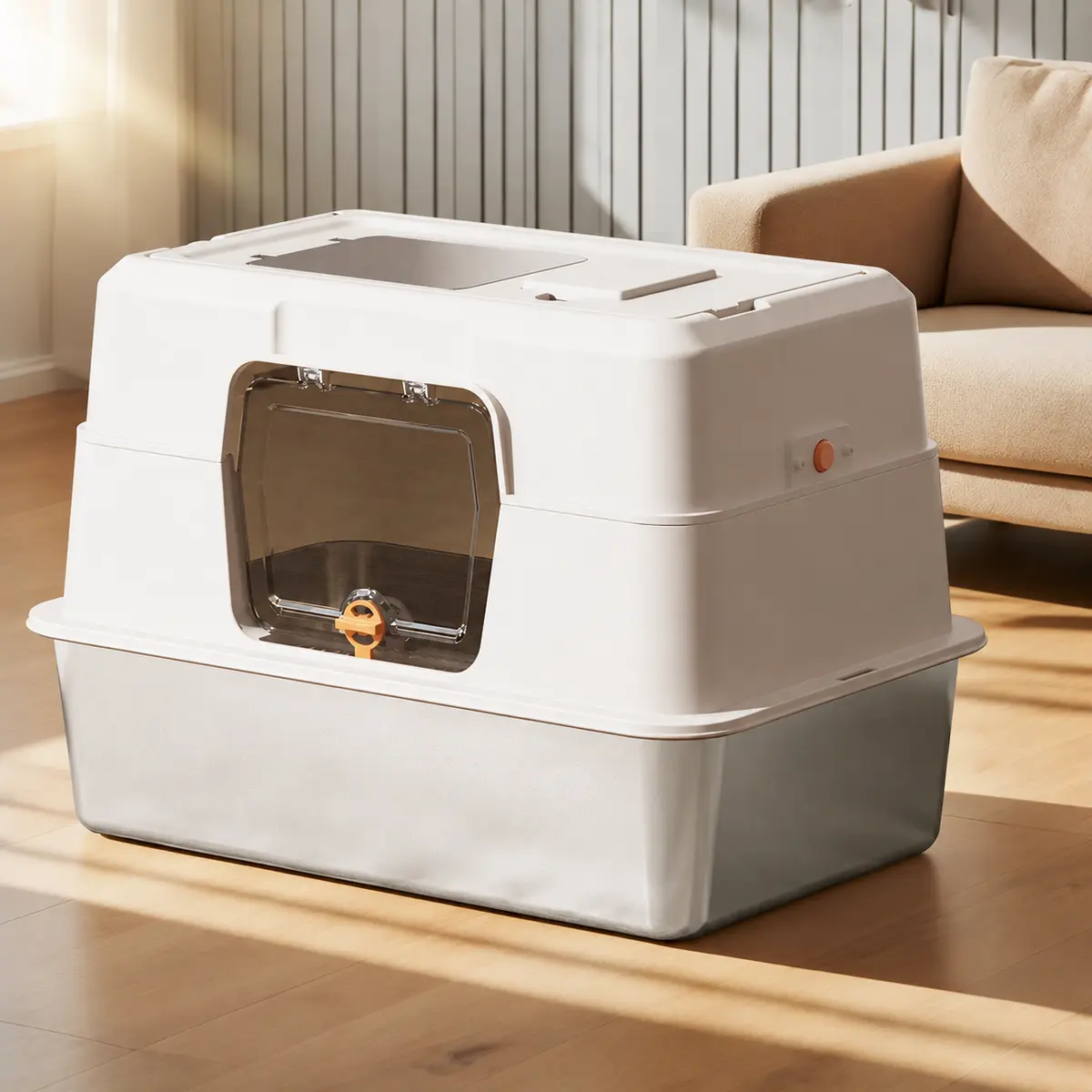
Cornell reports that most cats prefer an uncovered box, which lets odors escape and gives a 360-degree view of their surroundings. ASPCA says most cats do not like lids or liners. A cover can seem tidy to people, but from the cat's side it holds odor in. An open, high-sided steel box such as the big stainless steel box without a cover matches that preference.
If your cat sprays litter over the edge, tall sides are the sensible compromise, but do not close the box in on three sides, because a cat needs more than one exit. If you try a lidded version, test with the lid off first and watch your cat's behavior.
Number, placement and litter
Keep as many boxes as cats, plus one, per Cornell and ASPCA, in different quiet places away from food bowls and loud appliances. Cats prefer a spot that is private but easy to reach at any hour, and not boxed in at a corner. Heavy steel boxes are harder to move, so choose the spot before you fill one.
Most cats prefer unscented litter with a fine texture, about one to two inches deep. When changing litter, mix the new into the old gradually. If you are comparing boxes for a multi-cat home, see all litter boxes, including sizes for large cats.
Cleaning, care and when to see a vet
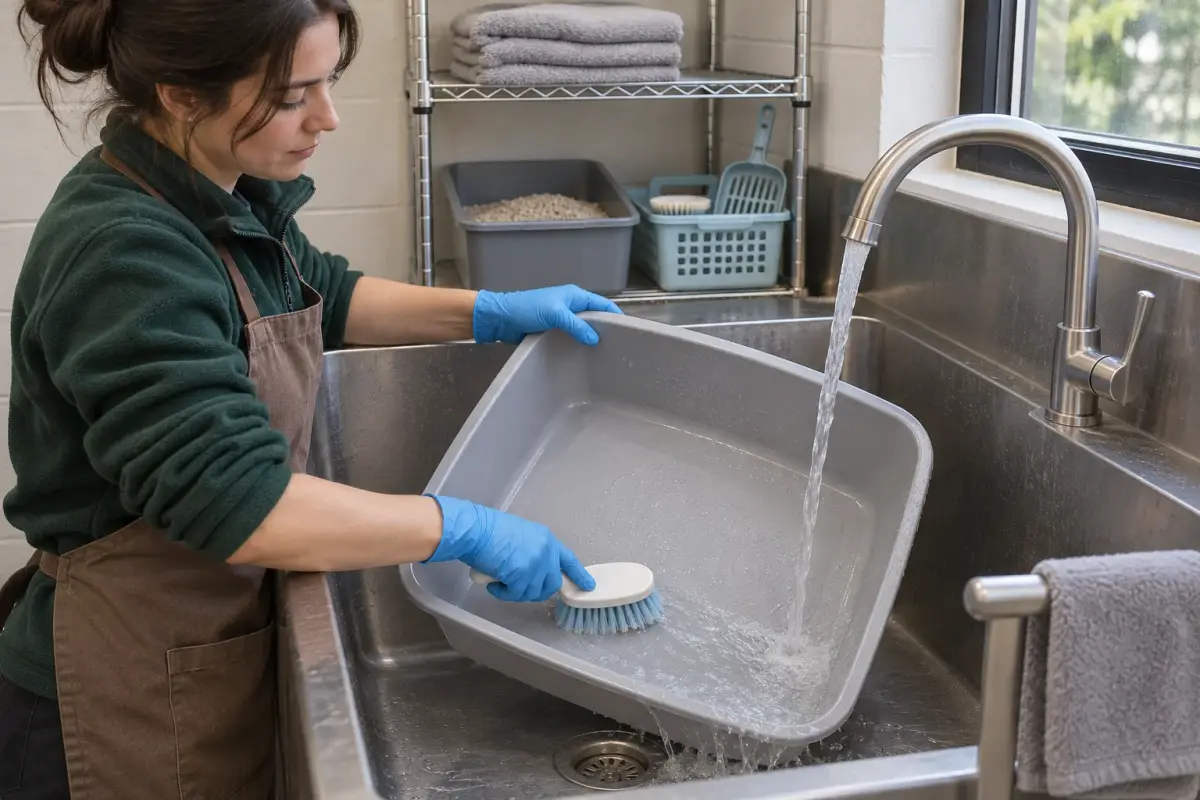
Scoop at least once a day. Once a week, rinse the box thoroughly with unscented soap or baking soda and replace the litter completely, and avoid scented cleaners because a cat may come to dislike the smell. Dry the steel, check for scratches and rust spots, and replace a box that no longer cleans well.
A cat that starts going outside the box can have a medical problem as well as a box problem, so call your vet if it strains, passes blood, goes often or cries in the box. Do not change the box and litter at the same time during a problem; make one change at a time.
This page is general information, not veterinary advice, and it cannot replace an examination by the vet who knows your pet.
Common questions
Is a stainless steel litter box good for cats?
It can be, if it is large enough, easy to enter and kept clean. Veterinary guidance focuses on size, covers and cleaning rather than material, so judge a steel box on those points.
Should a stainless steel litter box have a lid?
Most cats prefer an uncovered box, according to Cornell and ASPCA, because lids hold odors in and limit the cat's view. Start without a lid and add one only if your cat accepts it.
How often should I clean a stainless steel litter box?
Scoop daily and, once a week, wash the box with unscented soap or baking soda, rinse, dry and refill with fresh litter. Replace any box that smells even after cleaning or is damaged.
How big should a cat litter box be?
Large enough for the cat to enter easily and turn around. Large and overweight cats need bigger boxes, and kittens and seniors need low sides to step over.
Sources we checked
This guide is general information, not veterinary advice. If your pet is unwell or injured, contact your veterinarian.