






Buying guides
Best Litter Boxes for Odor Control: How to Choose the Right One
The best litter box is bigger than you think, open rather than covered for most cats, and easy to scoop every day. Aim for a box about one and a half times your cat's body length, choose low entry for kittens and seniors or high sides for cats that spray or kick, and for odor control rely on daily scooping, not a hood.
By Matt GarnettUpdated November 9, 20264 min read2 sources
What matters most in a litter box
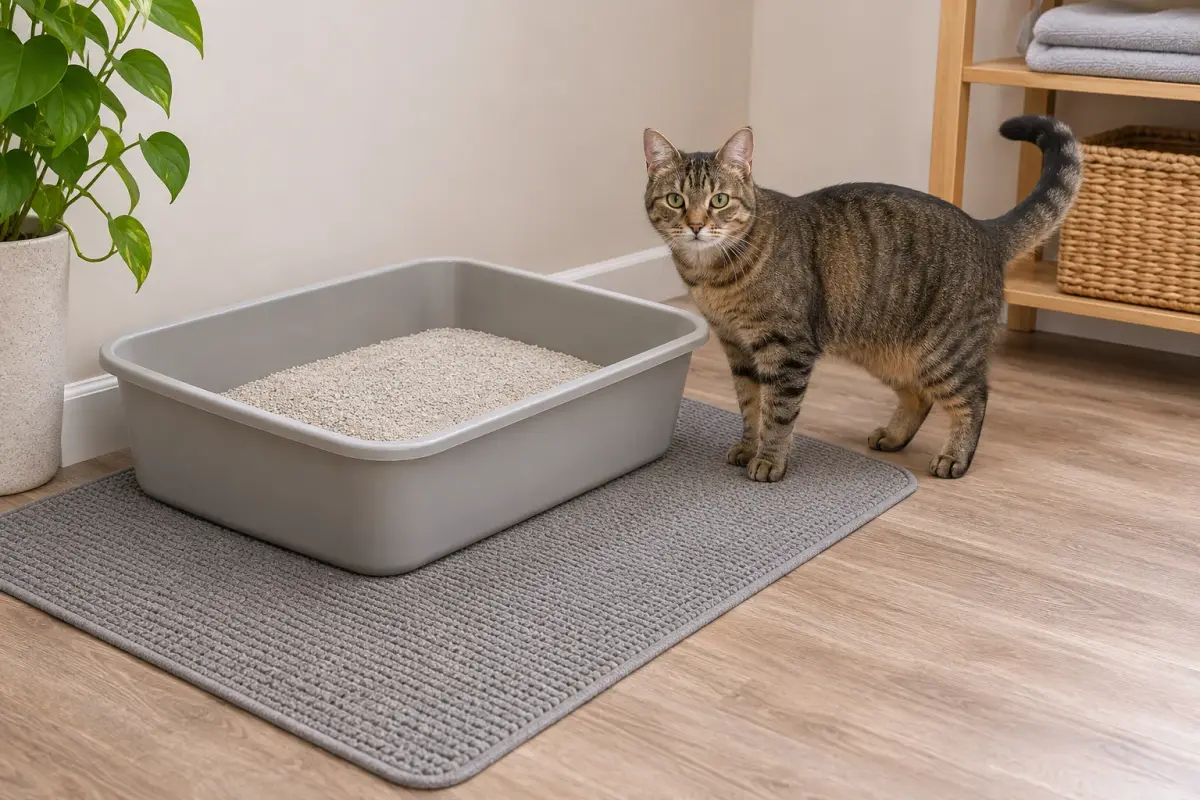
Size is the feature that decides whether a box works. Most commercial boxes are smaller than cats would choose, and a cramped box is a common reason cats perch on the rim or go just outside it. A useful rule is a box at least one and a half times the length of your cat from nose to base of tail, wide enough for the cat to turn around without stepping out. The ASPCA notes that a large plastic storage bin makes an inexpensive oversized box.
Entry height comes next. Kittens, older cats and cats with stiff joints need a low entry they can step over without effort, a point both the ASPCA and the Cornell Feline Health Center make. After size and access, look at how easy the surface is to scoop and wash, because a box that is pleasant to clean gets cleaned more often.
Open, covered, top-entry and self-cleaning boxes compared
Open boxes suit the most cats. Cornell notes that most cats prefer an uncovered box, because a lid traps odor inside with the cat and blocks its view of anything approaching. High-sided open boxes keep litter in for cats that dig vigorously or stand to urinate, while still letting the cat see out.
Covered boxes hide the contents from people and dogs, and some cats accept them, but they can concentrate smell where the cat's nose is. Top-entry boxes cut tracking and keep dogs out, but they are hard for kittens, seniors and heavier cats. Self-cleaning boxes reduce daily work; some cats are frightened by the motor, and if a cat starts avoiding one, going back to a traditional box is the usual first step.
Best type for each situation
For kittens, use a shallow box with a low entry, and size up as they grow; our guide to how to litter train a kitten covers the first weeks. For senior cats or cats with arthritis, pick a large box with a very low entry on at least one side and place it on the floor where the cat already spends time, without stairs in the way. For large cats such as Maine Coons, an extra-large box or a storage bin is usually the only thing roomy enough.
For multiple cats, the number and placement of boxes matter more than the model: one per cat plus one extra, spread across different rooms, with more than one exit so no cat can be cornered. In homes with a dog that raids the box, a top-entry box or a box behind a gate the cat can pass but the dog cannot is the practical answer.
What to avoid
Avoid boxes that are too small, liners that cats can snag their claws on, and scented inserts. Avoid putting the box next to food and water, beside a noisy appliance, or in a dead-end corner where another pet can block the way out. Cornell recommends a quiet, private spot that is available around the clock.
Avoid treating odor with a hood alone. A covered box that is scooped twice a week smells worse to the cat than an open one scooped daily. If a cat that used its box well suddenly stops, change nothing in a hurry and call your vet, because urinary problems are a frequent cause and some are urgent, especially straining with little or no urine in a male cat.
How to measure, set up and care for a box
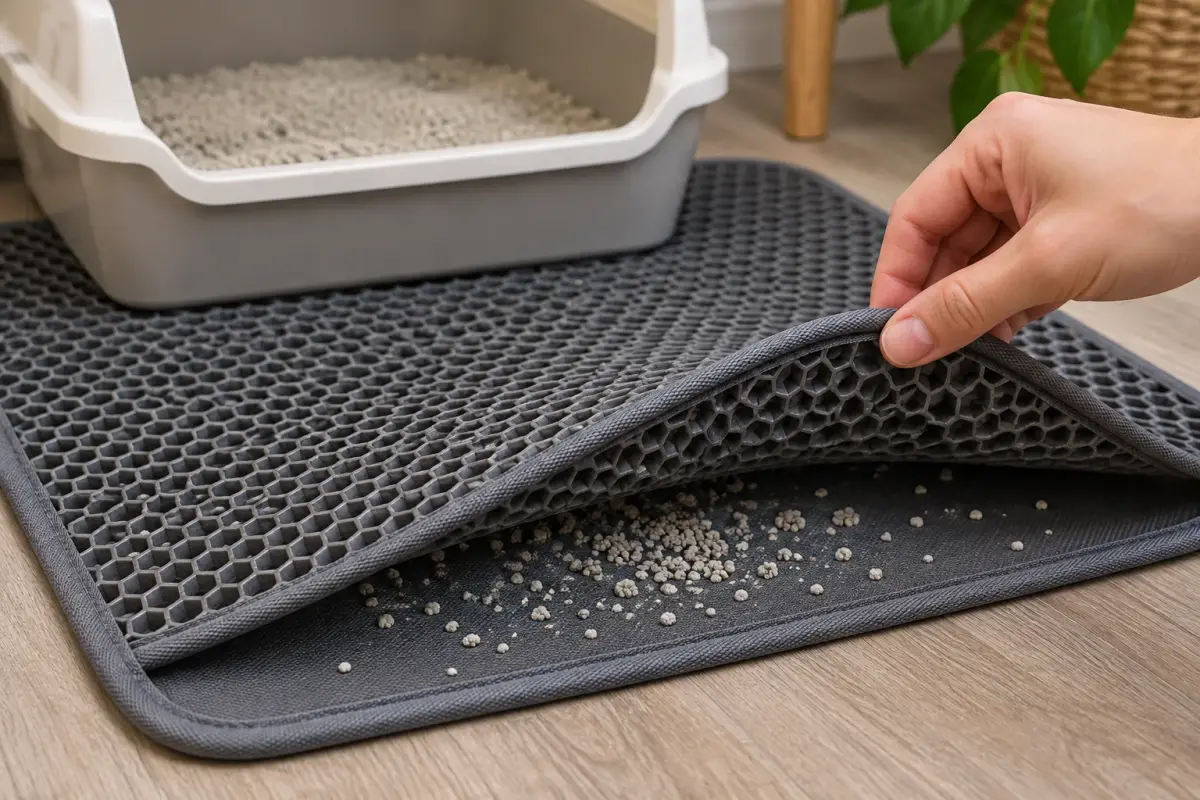
Measure your cat standing, nose to base of tail, and multiply by one and a half for the minimum box length. Fill with 1 to 2 inches of unscented litter, which the ASPCA describes as the depth most cats prefer. Put the box where the cat already goes, and if you need to move it, do it gradually, a few feet a day.
Scoop at least once a day. Wash the box about once a week with unscented soap or plain water, and replace plastic boxes that are scratched deeply or hold a smell after washing, because scratches trap odor. Cornell advises replacing any box that smells or has cracked, which for many homes means roughly once a year.
Litter-box openings and cleaning arrangements
| Design | Physical difference | Check before choosing |
|---|---|---|
| Open | No roof over the tray | Entry height and usable floor |
| High-sided open | Taller walls around an open tray | Entry edge and access for scooping |
| Covered | A lid surrounds the tray | Doorway and lid removal |
| Top-entry | Access through the top | Height and the individual cat’s ability to enter |
| Self-cleaning | A mechanism moves or sifts litter | Operating instructions,access and the cat’s response |
Common questions
What is the best litter box for odor control?
An open box that is large enough, filled with clumping litter and scooped daily controls odor best. Covers hide waste from people but hold smell inside for the cat, so they do not solve odor on their own.
What size litter box does my cat need?
Choose a box at least one and a half times your cat's length from nose to base of tail, with room to turn around. For large cats, a plastic storage bin with a cut-down entry often works better than standard boxes.
How many litter boxes do I need for multiple cats?
Provide one box per cat plus one extra, in different locations. Three cats need four boxes. Grouping them in one room counts as one big toilet to the cats, so spread them out.
Are covered litter boxes bad for cats?
Not always, but most cats prefer an open box. Lids trap odor and block the cat's view, which can make some cats nervous. If your cat uses a covered box happily, there is no need to change it.
Sources we checked
This guide is general information, not veterinary advice. If your pet is unwell or injured, contact your veterinarian.


