Buying guides
Best Automatic Litter Box: How to Choose One Your Cat Will Use
The best automatic litter box is the one your cat will actually step into. Three things decide it: an entry and inside space big enough for your cat to turn around, a cat-detection sensor that reliably pauses the cycle, and a design that works with the litter your cat already likes. Get those right and the self-cleaning part is a bonus; get them wrong and you own an expensive box that sits unused.
By Matt GarnettUpdated November 9, 20264 min read2 sources
What matters most in a self-cleaning litter box
Size comes first. Cornell Feline Health Center notes that large and overweight cats need bigger boxes, and that most cats prefer a box they can see out of. Measure your cat from nose to base of tail and look for an inside floor at least that long, with an entry tall enough that a big cat does not have to crouch. A 15 lb cat squeezing into a domed unit is the most common reason these boxes get rejected.
Safety sensing comes second. A good unit uses more than one way to know a cat is inside, such as a weight pad plus an infrared beam, and waits several minutes after the cat leaves before it rakes or rotates. Check the manual for a minimum cat weight, because very light kittens may not register at all.
The main types compared
Rake-style boxes drag a comb through the litter and push clumps into a lidded bin. They are usually open-topped, quieter, and closer to an ordinary box, which helps cautious cats. Rotating globe designs tip the whole chamber to sift clumps out; they hold more litter and contain odor well, but the enclosed shape and the movement put some cats off.
Sifting-tray systems are the simplest: you lift and tilt nested trays by hand, so nothing is motorized. Crystal-tray systems use disposable cartridges of silica litter and need no scooping at all, but you are tied to buying the matching refills. If your cat is picky about litter texture, a rake or globe model that takes ordinary clumping clay is the safer bet.
Best type for each situation
For a large or senior cat, choose an open-top rake box or a wide globe with a low step-in height, since stiff joints make tall entries hard. For a nervous cat, choose a quiet unit with a long, adjustable delay so the motor never runs while the cat is nearby. For kittens, wait: use an ordinary low-sided box until they are big enough for the sensor to detect them reliably.
For multi-cat homes, look at waste-bin capacity and cycle speed rather than gadgets. Cornell's guidance of one box per cat plus one still applies, because an automatic box clears waste faster but cannot make one box into two. Two cats sharing one self-cleaning unit is workable; three or more usually needs a second box.
What to avoid
Avoid units with a single sensor and no manual override, and any box whose cycle starts within a minute of the cat leaving. Avoid scented litter and scented liners if your cat is sensitive; Cornell found most cats prefer unscented, finer-textured litter about one to two inches deep, and a self-cleaning box does not change that preference.
Be wary of switching cold turkey. Put the new box next to the old one, leave it switched off for the first few days, and only turn on the cleaning cycle once your cat is using it. Removing the familiar box on day one is the fastest way to cause accidents elsewhere in the house.
How to measure and set up
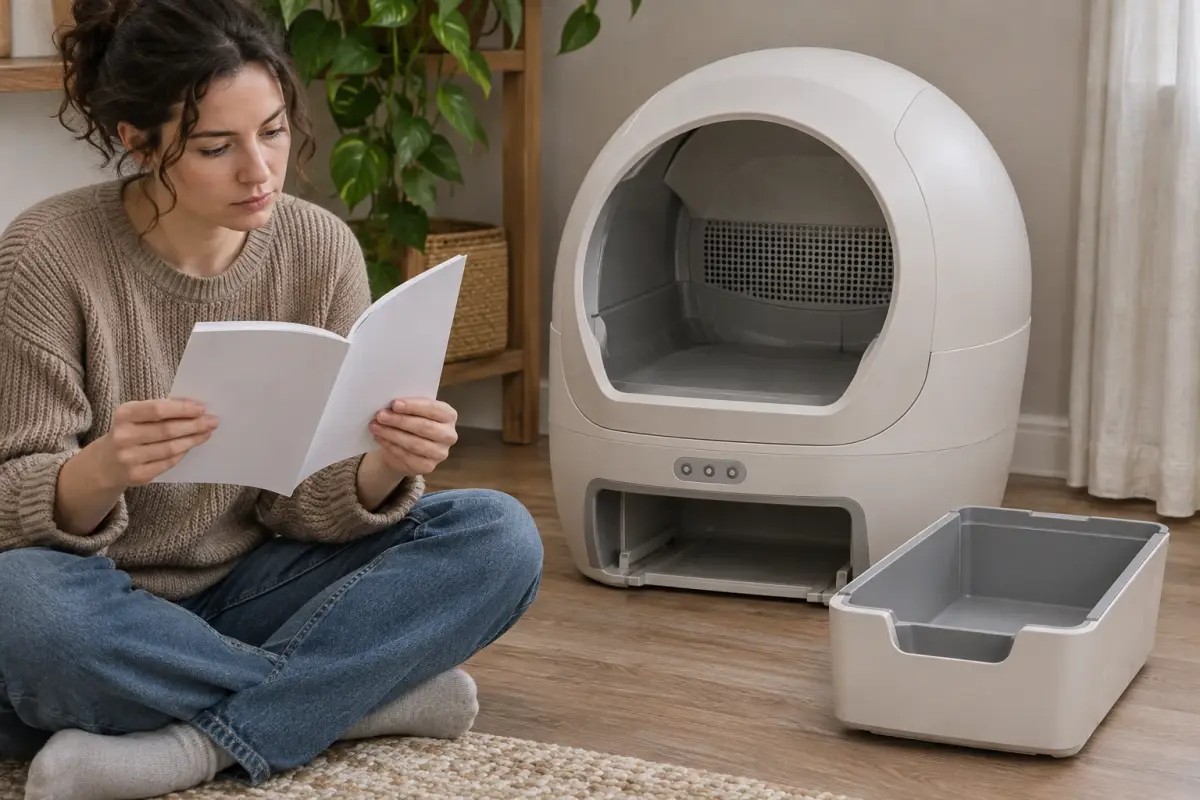
Measure your cat standing: nose to tail base for length, and floor to shoulder for height. Compare those numbers with the inside floor and the entry opening, not the outside dimensions on the box. Then measure the spot where it will live, leaving space at the back or top for the waste drawer to slide out.
Place it somewhere quiet, private and away from food, which Cornell lists as most cats' preference, and close to an outlet so a cord is not stretched across a walkway. If you live in an apartment with thin floors, a rubber mat under the unit cuts motor noise for the neighbors and for your cat.
Care, cleaning and lifespan
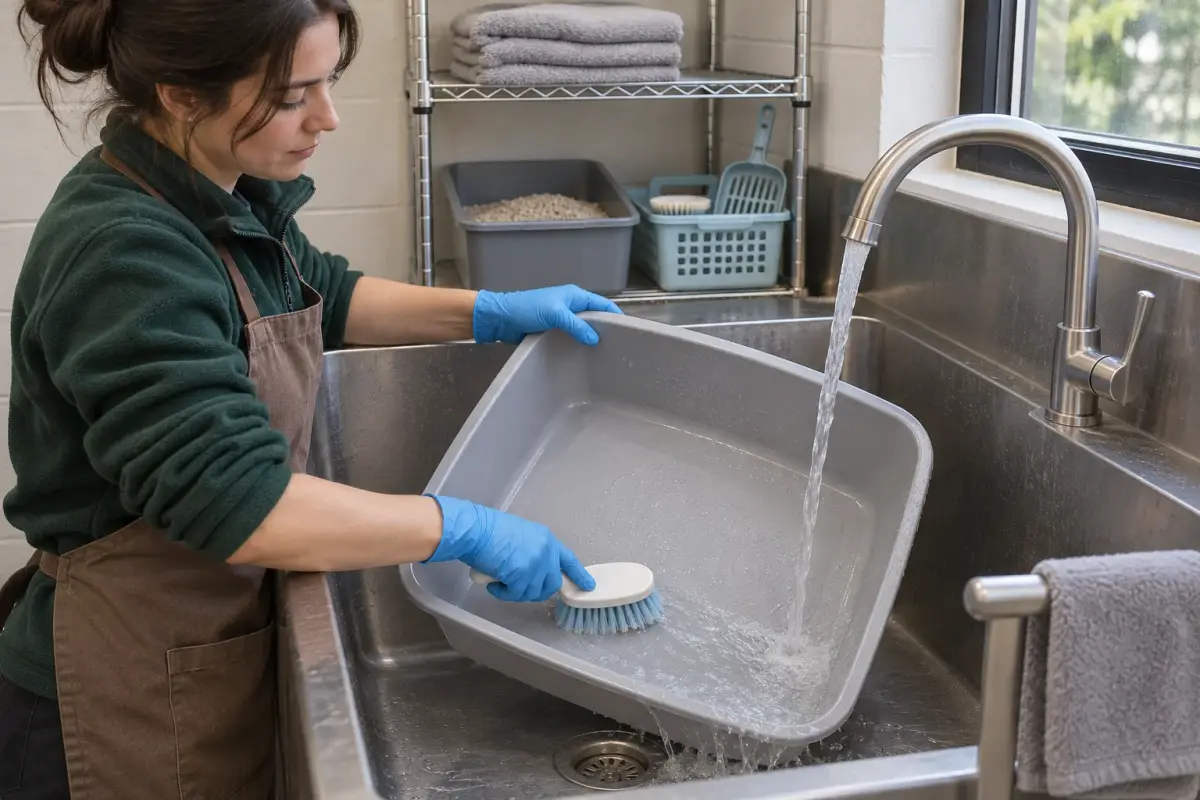
Self-cleaning does not mean no cleaning. Empty the waste bin every few days, wipe the sensors so dust does not cause false readings, and scrub the chamber with mild detergent every few weeks. Cornell recommends replacing ordinary boxes that smell or crack; on an automatic unit, watch the rake teeth and liner for wear in the same way.
Keep an eye on what the box no longer shows you. Because you are not scooping, you may miss changes in clump size or frequency. Straining, crying in the box, or going outside it can signal a urinary or other medical problem, and those signs mean a call to your vet the same day.
This page is general information, not veterinary advice, and it cannot replace an examination by the vet who knows your pet.
Litter-sifting mechanisms and refill formats
| Mechanism | What moves | Refill or access point to check |
|---|---|---|
| Rake-style | A comb travels through the litter | Waste-bin access and compatible litter |
| Rotating globe | The chamber rotates to sift | Doorway,chamber access and operating directions |
| Manual sifting trays | The owner lifts nested trays | Tray handling and cleaning access |
| Crystal-tray system | A cartridge or tray is replaced | The matching refill format |
Common questions
Are automatic litter boxes worth it?
They are worth it if your cat accepts the design and you clean the bin and sensors regularly. They save daily scooping and can control odor well, but they cost more, need power, and a cat that dislikes the noise or shape will simply refuse to use one.
Are self-cleaning litter boxes safe for cats?
Well-designed ones are, provided they use reliable cat-detection sensors and a delay before cleaning. Avoid units without a manual stop, supervise the first weeks, and check the stated minimum cat weight, since very small kittens may not be detected by the sensor.
What is the best automatic litter box for multiple cats?
Choose a unit with a large waste drawer, a fast cycle and enough inside room for your biggest cat. Even then, keep the one box per cat plus one rule in mind, because cats who share one box are more likely to start going elsewhere.
Can I use any litter in an automatic litter box?
No. Most rake and globe designs need a hard-clumping litter, while crystal-tray systems need their own silica cartridges. Using the wrong litter jams rakes and leaves waste behind, so match the litter to the design before you buy.
Sources we checked
This guide is general information, not veterinary advice. If your pet is unwell or injured, contact your veterinarian.