Buying guides
Best Cat Litter for Automatic Litter Boxes: What Actually Works
The best litter for an automatic litter box is the one its mechanism was built around, and for most rotating and raking designs that means an unscented clumping clay with fine to medium grains that forms hard clumps within a few minutes. Clump strength decides whether waste is sifted out cleanly, grain size decides whether it jams, and low dust protects the sensors. Pellets, paper and loose crystals only suit boxes designed for them.
By Matt GarnettUpdated November 14, 20265 min read2 sources
What matters most: clump strength, grain size and dust
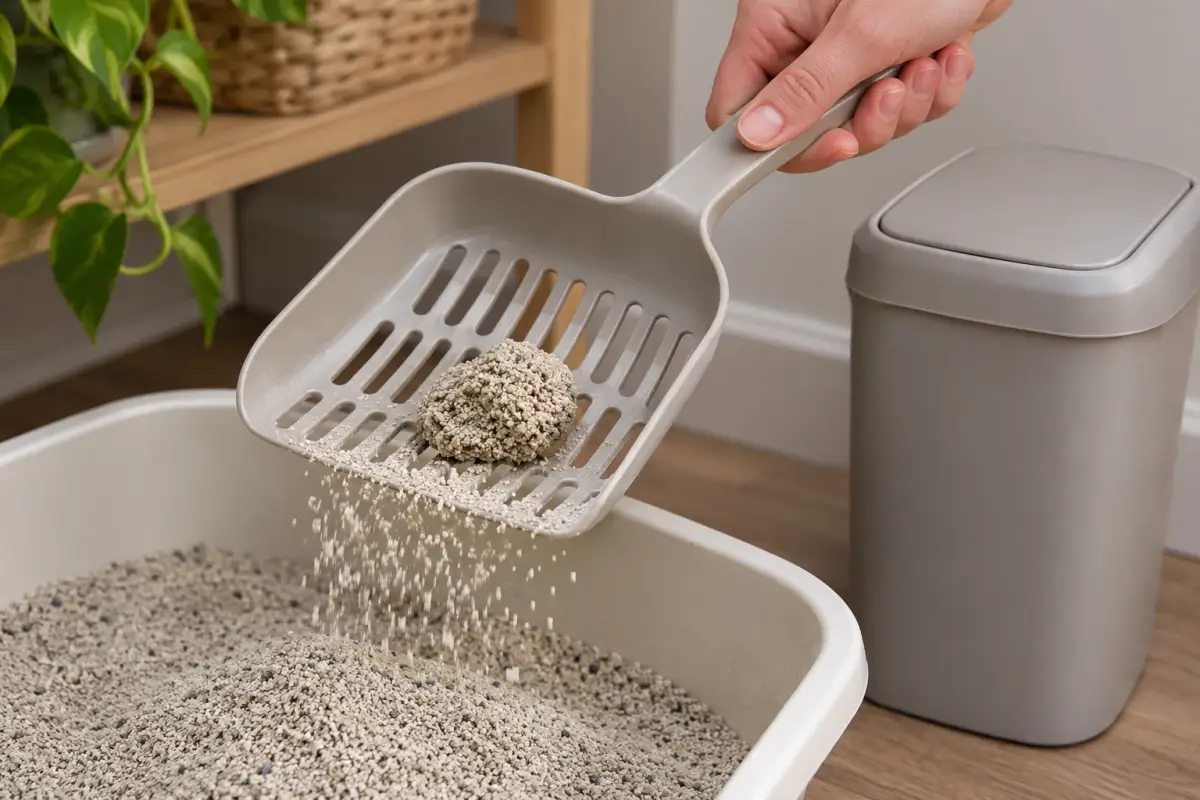
An automatic box waits a set time after your cat leaves, then sifts, rakes or rotates the bed. Anything that has not set firm by then breaks apart, and soft fragments get smeared on the screen or left behind in clean litter. So the first test of any litter here is how fast and how hard it clumps. A clump you can lift with your fingers without it crumbling, ten minutes after it formed, is what you want.
Grain size comes next. Very coarse or irregular pieces catch in screens and slots, while powder-fine litter tracks badly and coats the sensors that detect your cat. Fine to medium grains sit in the middle. Low dust matters for the same sensors and for your cat's airways, and unscented litter is the safer default because Cornell's Feline Health Center notes most cats prefer unscented, finer-textured litter.
The main litter types compared for self-cleaning boxes
Clumping clay (bentonite) is the reference litter for most rotating-globe and rake designs. It forms firm clumps, separates cleanly and is easy to find. Its drawbacks are weight and some dust, so look for a low-dust version. Clumping plant litters made from corn, wheat, grass seed or tofu can work if the clumps set hard enough, but many set more slowly and some swell or stick to surfaces, which is the most common cause of jams.
Silica crystal litter does not clump at all, so it only belongs in tray-style automatic boxes that rake solids into a bin and let urine be absorbed by a replaceable crystal tray. Wood or paper pellets suit sifting systems built for pellets and nothing else. If a maker names a litter type in the manual, treat that as part of the machine, not a suggestion.
Best type for each situation
For a rotating or globe-style box, choose a premium clumping clay with fine to medium grains and the lowest dust you can find. For a rake-style box, the same applies, with extra weight on hard, quick clumps because the rake pushes through the bed rather than letting gravity sift it. For a tray system, use only the crystal or pellet cartridge it is designed for.
In a multi-cat home, clump speed matters even more because a second cat may step in before the cycle runs. In a small apartment, low dust and low tracking carry more weight, and a litter mat at the exit helps. If you have a senior cat or a long-haired cat, avoid litters that stick to fur and paws, since clumps on the coat are a sign the litter is too tacky.
What to avoid
Avoid scented litters and litters with added deodorizing powders. They mask odor rather than removing waste, some cats dislike them, and the powder settles on sensors. Avoid non-clumping clay entirely in a sifting box, because urine soaks the whole bed and nothing is removed. Avoid mixing two litter types, which usually gives you the weaknesses of both.
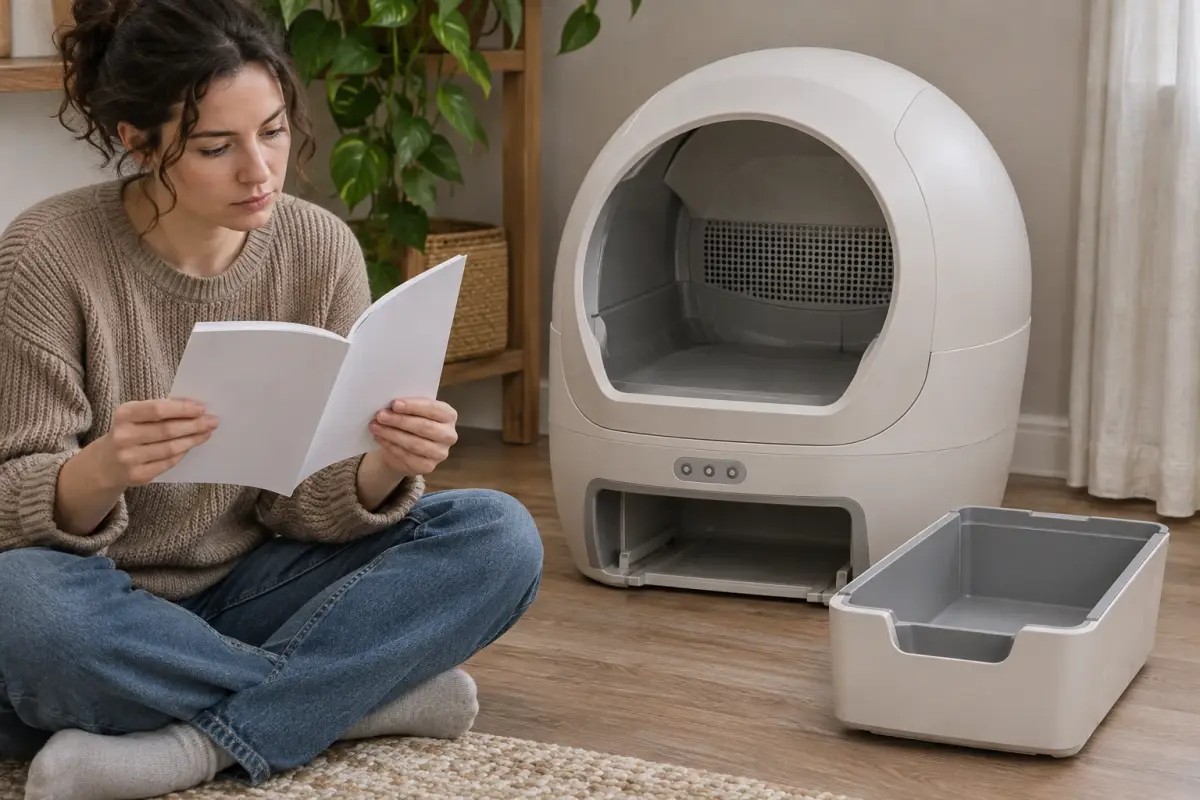
Be cautious with any litter that swells a lot when wet, because it can wedge the drum or screen. Also avoid overfilling: most machines have a fill line, and too much litter strains the motor and buries the sensor. If your cat suddenly stops using the box after a litter change, switch back, and if it continues, ask your vet to rule out a urinary or bowel problem.
How to switch litter and set the depth
Cats notice changes in texture, so move to a new litter gradually. Mix about a quarter of the new litter into the old for a few days, then half, then three quarters, watching that your cat keeps using the box. Many owners also run the automatic cycle manually for the first week, so the noise and movement are not a surprise while your cat is still deciding whether to trust the box.
Fill to the maker's line, not by eye. For an ordinary box, Cornell's guidance is one to two inches of litter, but automatic boxes are calibrated to their own depth. Too little and urine reaches the floor of the drum and sticks; too much and the clumps never reach the screen. Check the depth weekly and top up with fresh litter rather than waiting for it to run low.
Care, cleaning and how long litter lasts
Clumping litter in an automatic box usually lasts longer than in an open box because waste is removed quickly, but the bed still wears out. Fine particles build up, clumps start to break, and odor rises. When that happens, empty the box, wash the drum or tray with mild unscented soap, dry it fully and refill. Many owners do this every two to four weeks, depending on the number of cats.
Empty the waste drawer before it is full and replace any carbon filter on the schedule given. Keep one ordinary litter box available as well; Cornell recommends one box per cat plus one, and a backup protects you during a power cut or a jam. Watch the clumps themselves too: much larger or more frequent clumps than usual are worth mentioning to your vet.
Litter formats and machine compatibility checks
| Litter format | Physical behavior described | Compatibility check |
|---|---|---|
| Clumping clay | Forms clumps for separation | The machine’s named litter specification |
| Clumping plant litter | Clumping behavior varies by formulation | Setting,swelling and sticking in the actual mechanism |
| Silica crystal | Absorbent crystals rather than ordinary clumps | Whether the machine uses a matching crystal tray |
| Wood or paper pellets | Pellet-shaped material | Whether the system is designed to sift pellets |
Common questions
What is the best litter to use with a Litter-Robot style rotating box?
Rotating-globe boxes are built around clumping clay that forms hard clumps quickly. Choose an unscented, low-dust, fine to medium grain clumping clay and fill to the line. Avoid pellets, crystals, paper and very soft plant litters.
Can I use crystal litter in an automatic litter box?
Only in a tray-style automatic box that is designed for crystals, where a rake moves solids into a bin and the crystal tray absorbs urine. In rotating or sifting boxes, crystals do not clump and urine is never removed.
Does clumping plant-based litter work in self-cleaning litter boxes?
Sometimes. It works if the clumps set hard within the cycle delay. Many plant litters clump more slowly or turn sticky, which leaves residue and can jam screens, so test a small bag and check the clumps after ten minutes.
Why does my automatic litter box keep jamming?
The usual causes are soft clumps that smear, litter that swells, coarse grains catching in the screen, or overfilling past the fill line. Switch to a hard-clumping fine clay, fill to the line and clean the drum fully.
Is scented litter bad for automatic litter boxes?
It is not ideal. Fragrance and deodorizing powders can coat sensors, and many cats prefer unscented litter. An automatic box removes waste quickly, which does more for odor than any added scent.
Sources we checked
This guide is general information, not veterinary advice. If your pet is unwell or injured, contact your veterinarian.