






Buying guides
Best Cat Litter for Odor Control: What Actually Works
The litter that controls odor best is usually a fine-grained, unscented clumping litter kept one to two inches deep and scooped every day. Clumping locks urine into a ball you can lift out, so ammonia never gets the chance to build up in the box. Fragrance and additives matter far less than a texture your cat will happily use and how often the clumps come out.
By Matt GarnettUpdated November 14, 20264 min read2 sources
What actually stops a litter box from smelling
Most litter box smell is ammonia, released as bacteria break down urine that sits in the box. A litter controls odor in one of two ways: it clumps, so the wet part can be removed whole, or it absorbs and holds moisture until the whole box is changed. Clumping wins for odor in most homes because the source leaves the house every day instead of sitting in the litter for a week.
That makes your routine the biggest single factor. The Cornell Feline Health Center advises removing feces and clumps daily when you use clumping litter and topping up with clean litter as needed. A premium litter scooped twice a week will smell worse than a basic one scooped every morning, so choose a litter that makes daily scooping quick, with clumps that hold together and do not crumble back into the clean litter.
The main litter types compared
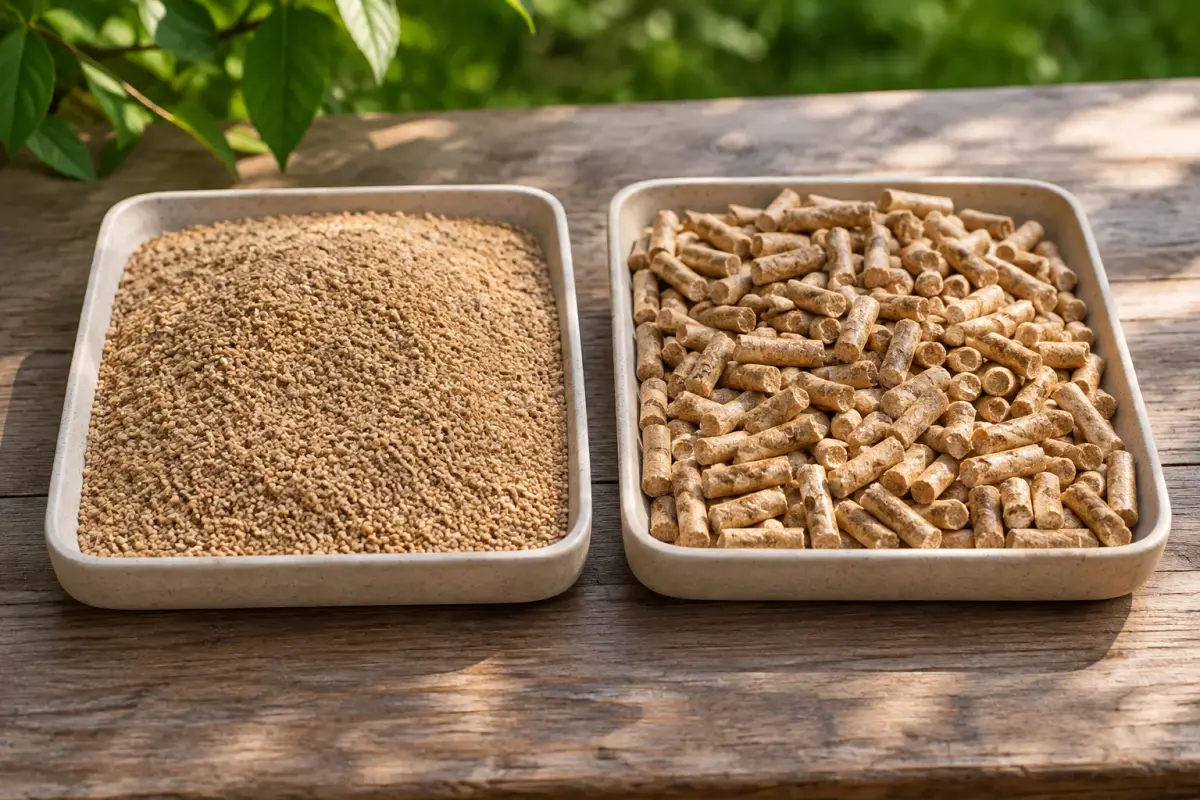
Clay clumping litter, made from bentonite, forms the firmest clumps and is the benchmark for odor control. Its downsides are weight and dust, which VCA notes can irritate cats and people with breathing problems, so look for a low-dust version. Silica crystal litter absorbs urine and dries out solid waste very well, and many owners find it the least smelly between changes, but some cats dislike the hard, sharp-feeling texture under their paws.
Plant-based litters made from corn, wheat, walnut shell, grass seed or pine are lighter and usually lower in dust. Clumping versions of corn, wheat and grass come close to clay for odor; pine pellets do not clump but have a strong natural smell that masks ammonia while the pellets break down into sawdust. Recycled paper pellets absorb well and suit cats recovering from surgery, but they control odor the least and need changing most often.
Scented or unscented litter?
Unscented is the safer choice. Cornell notes that most cats prefer unscented, finer-textured litter, and a cat that dislikes the smell of its box is a cat that may start going somewhere else, which is a far bigger odor problem than anything in the litter. A cat's nose is much more sensitive than ours, so a perfume that seems mild to you can be overwhelming to them at close range.
If you want extra odor help, choose additives that do not smell of anything themselves. Activated charcoal and baking soda blended into the litter absorb odor rather than covering it. Avoid heavy floral or citrus scents, and skip sprays and plug-in fresheners right next to the box. A fragrance only masks a smell that is still there, and it tells you less about when the box actually needs attention.
The best type for each situation
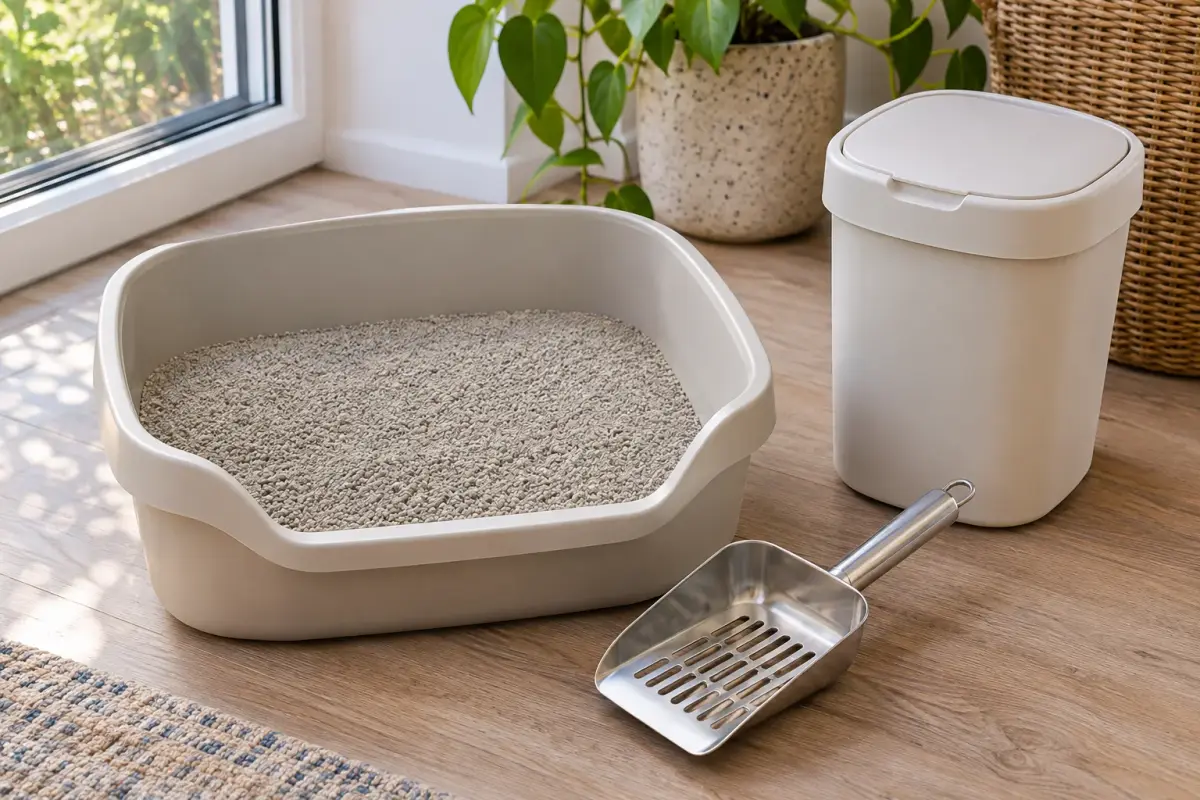
For several cats sharing boxes, a hard-clumping clay or a clumping plant litter is the strongest option, because daily scooping removes the most urine. Cornell recommends one more box than the number of cats, which does more for odor in a multi-cat home than any litter formula. In a small apartment, a low-dust clumping litter in an uncovered box placed in a ventilated spot is usually the best balance.
For a cat with sensitive airways, choose a low-dust plant or paper litter, and ask your vet if sneezing or coughing gets worse after scooping. For senior or arthritic cats, texture and access matter more than formula: a fine litter in a low-sided box. Kittens learning the box often do well on unscented clumping litter, though some owners use paper pellets while very young kittens are still tasting everything they find.
What to avoid, and how to switch litter
Plastic liners and covered boxes are the two common odor fixes that often backfire. Cornell notes that most cats dislike liners and prefer uncovered boxes. A hood keeps the smell away from your nose, but it concentrates it for the cat inside, which can push it to avoid the box. Filling the box too deep also works against you, because clumps sink and break apart; one to two inches is plenty for most litters.
When you change litter, do it gradually by mixing the new type into the old over a week or two, rather than switching overnight. A sudden change in odor that is not explained by a missed scoop deserves attention too. Strong-smelling urine, larger or more frequent clumps, or straining in the box can point to a urinary or kidney problem, so mention it to your vet rather than changing litter again.
Common questions
What type of cat litter is best for odor?
For most homes, an unscented clumping litter, either bentonite clay or a clumping plant-based type such as corn, wheat or grass, controls odor best, because the urine can be scooped out completely every day.
Is silica litter better than clay for smell?
Silica crystals absorb urine and dry out solid waste very well, so many owners find them less smelly between changes. Some cats dislike the texture, though, and a box the cat avoids creates far worse odor problems.
Why does my cat litter smell even after I clean it?
Urine soaks into scratches in old plastic boxes, so the box itself may smell. Wash it with mild unscented soap, replace a heavily scratched box, keep litter one to two inches deep and scoop daily.
Does scented litter control odor better?
Not really. Fragrance masks smell rather than removing it, and most cats prefer unscented litter. An odor absorber such as activated charcoal or baking soda does the job without adding a perfume your cat may dislike.
Sources we checked
This guide is general information, not veterinary advice. If your pet is unwell or injured, contact your veterinarian.


