






Buying guides
Types of Cat Litter: Which One Is Right for Your Cat?
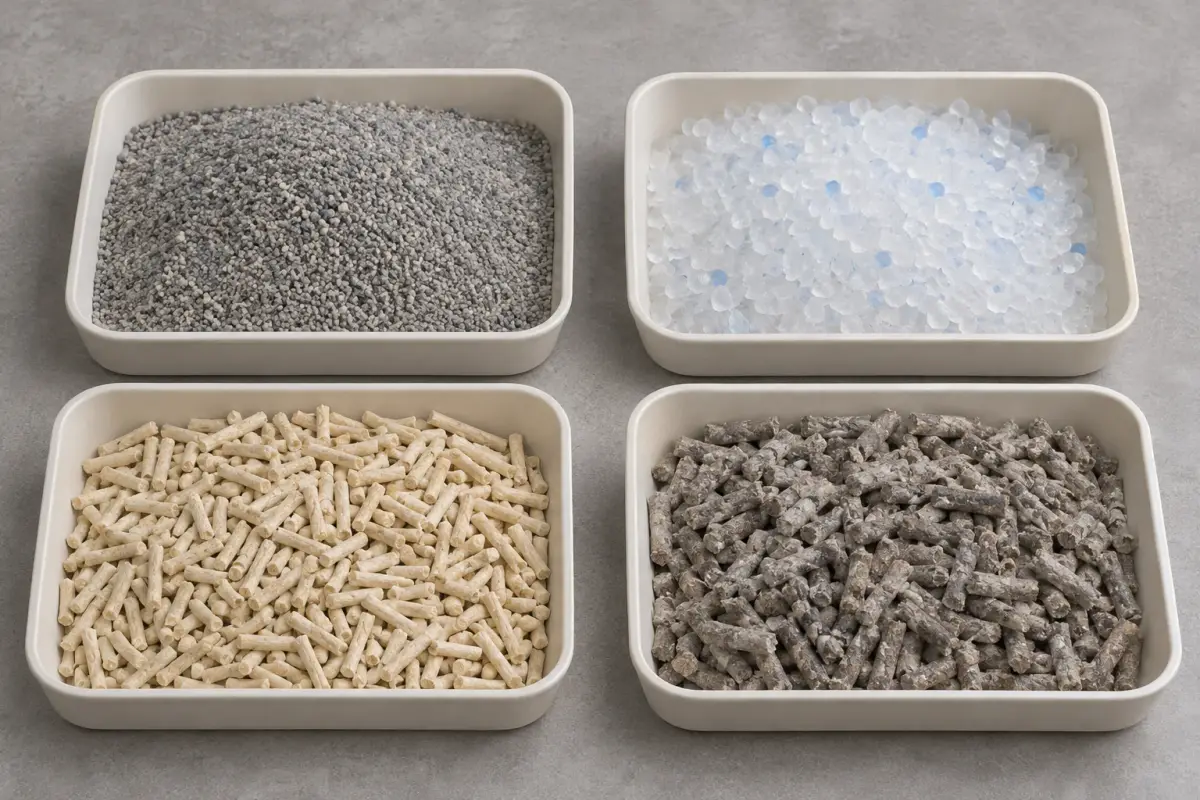
The main types of cat litter are clumping clay, non-clumping clay, silica crystals, and plant or paper litters made from pine, wheat, corn, walnut shell or recycled paper. Most cats prefer an unscented, fine, sand-like texture, which is why clumping clay is the usual starting point. Clay litter is safe for most cats; paper or pellets suit kittens that eat litter and cats recovering from surgery.
By Matt GarnettUpdated November 9, 20264 min read3 sources
What cats actually prefer
Before comparing cat litter materials, start with your cat's point of view. The ASPCA reports that cats generally prefer clumping litter with a medium to fine texture, and Cornell Feline Health Center says most cats prefer unscented, fine-textured litter. That matches what cats would choose outdoors: soft, loose, sandy soil that is easy to dig and cover.
Scent is for people, not cats. The ASPCA warns that scented litter can cause a cat to avoid the box, and Cornell recommends unscented litter. If you want a fresher-smelling home, scoop more often rather than reaching for perfume.
Clay litter: clumping and non-clumping
Clumping clay, usually made with bentonite, forms firm balls around urine so you can scoop out waste with a litter scoop and leave clean litter behind. It is widely available, inexpensive and has the sandy feel most cats like. Its downsides are weight, some dust, and tracking on paws.
Non-clumping clay absorbs urine into the granules without forming clumps. It is cheaper still but has to be replaced completely every few days, and odor builds faster between changes. Some cats that dislike the feel of clumping litter are happy on it, and it is a reasonable option for a kitten that tries to eat litter.
Silica crystal litter
Silica gel crystal litter absorbs urine and lock in moisture, which makes them very good at controlling odor and lightweight to carry. You scoop solids and stir the crystals daily, then replace the whole box once the crystals are saturated, typically every few weeks for one cat.
Many cats accept crystals, but some dislike the larger, hard texture or the crackling sound. Introduce them gradually by mixing a little into your cat's current litter. Choose an unscented, low-dust version.
Plant-based and paper litters
Pine pellets or shavings, wheat, corn, grass seed, walnut shell and recycled paper are the main alternatives. They are lighter than clay, often lower in dust and usually compostable or flushable according to the label, though check local rules before flushing anything. Clumping versions exist for wheat, corn, grass and some pine.
Paper pellets are soft, very low in dust and do not clump, which is why vets often suggest them after surgery or for a paw injury, where loose granules could stick to a wound. Pellets feel very different from sand, so many cats need a slow transition. Corn and wheat litters can attract pantry pests if stored in a damp place, so keep the bag sealed.
Is clay litter safe for cats?
For most healthy adult cats, clay litter is safe and it remains the most widely used option. The practical concerns are dust, which can bother cats with asthma or sensitive airways and people with allergies, and the habit some kittens have of eating litter.
If your cat coughs, sneezes or wheezes after using the box, switch to a low-dust or dust-free litter and tell your vet. If your kitten eats litter rather than just exploring it with its mouth, change to paper or pellets and mention it at your next visit, because eating non-food items can have medical causes worth checking.
How to switch litters, and when to call the vet
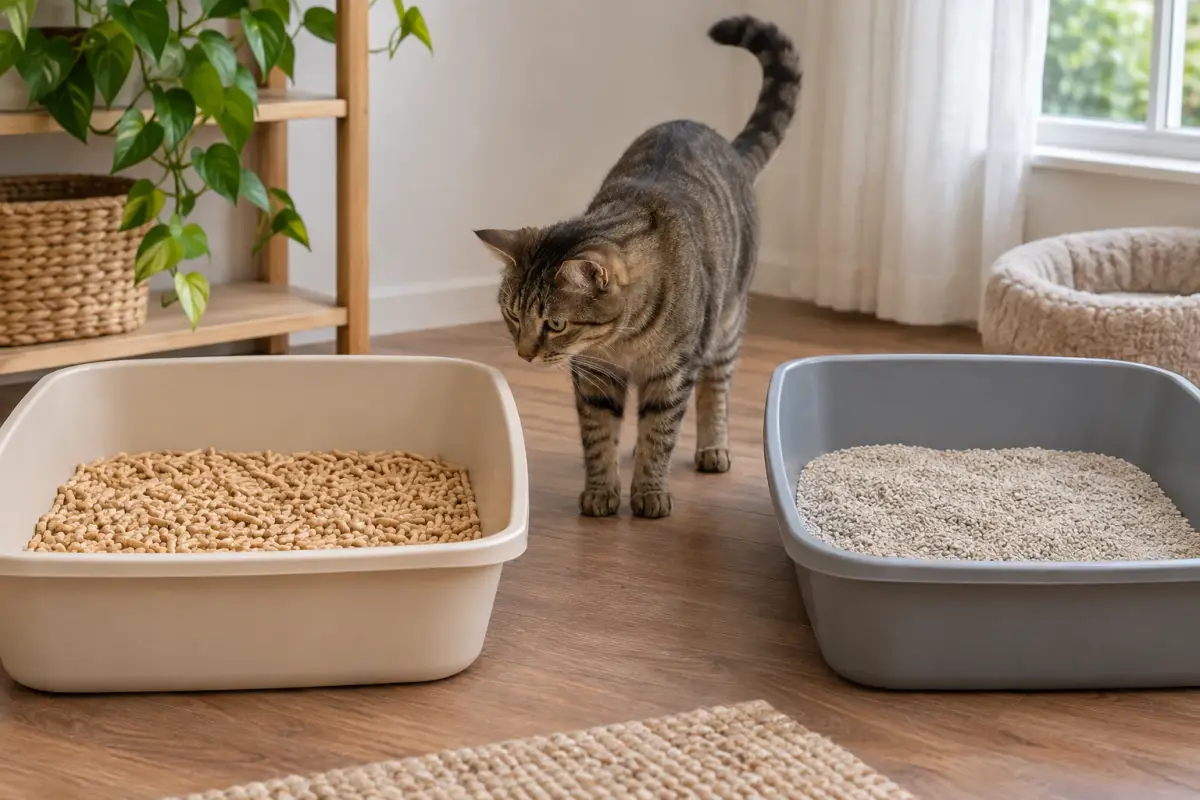
Change litter slowly. Cornell suggests mixing small amounts of the new litter into the old and increasing the proportion over a week or two. The ASPCA suggests a side-by-side test: put two litter boxes with different litters next to each other and let your cat choose.
If your cat starts avoiding the box after a litter change, go back to the old litter. If avoidance continues, or you notice straining, blood, very frequent small clumps or no urine, call your vet. A cat that strains and cannot pass urine needs to be seen the same day.
This page is general information, not veterinary advice, and it cannot replace an examination by the vet who knows your pet.
Common questions
What is the best type of cat litter?
For most cats, an unscented, fine-grained clumping litter is the best place to start, because that is the texture most cats prefer. The best litter is the one your cat uses every time, so let preference decide.
What litter is best for kittens?
Many kittens do well on unscented clumping litter, which VCA notes they tend to prefer. If your kitten eats litter, switch to a non-clumping paper or pellet type and mention it to your vet.
Is scented cat litter bad for cats?
Scented litter is not toxic, but many cats dislike it, and the ASPCA lists scent as a cause of litter box avoidance. Unscented litter, scooped daily, controls odor without putting your cat off.
Is pine litter safe for cats?
Kiln-dried pine litter sold for cats is generally considered safe and has a natural woody smell. Some cats dislike the pellet feel, so transition slowly and watch whether your cat uses it.
Sources we checked
This guide is general information, not veterinary advice. If your pet is unwell or injured, contact your veterinarian.


