






Care & how-to
Is Clay Litter Safe for Cats?
For most healthy adult cats, clay litter is a normal, widely used choice, and the cat's own preference matters as much as the material. The real concern is swallowing it: bentonite clay clumps when wet, and a poison center warns that eating it can block the intestines. Kittens and cats that eat litter deserve extra care, and your vet is the right person to ask about a specific cat.
By Matt GarnettUpdated November 14, 20265 min read4 sources
What clay litter actually is
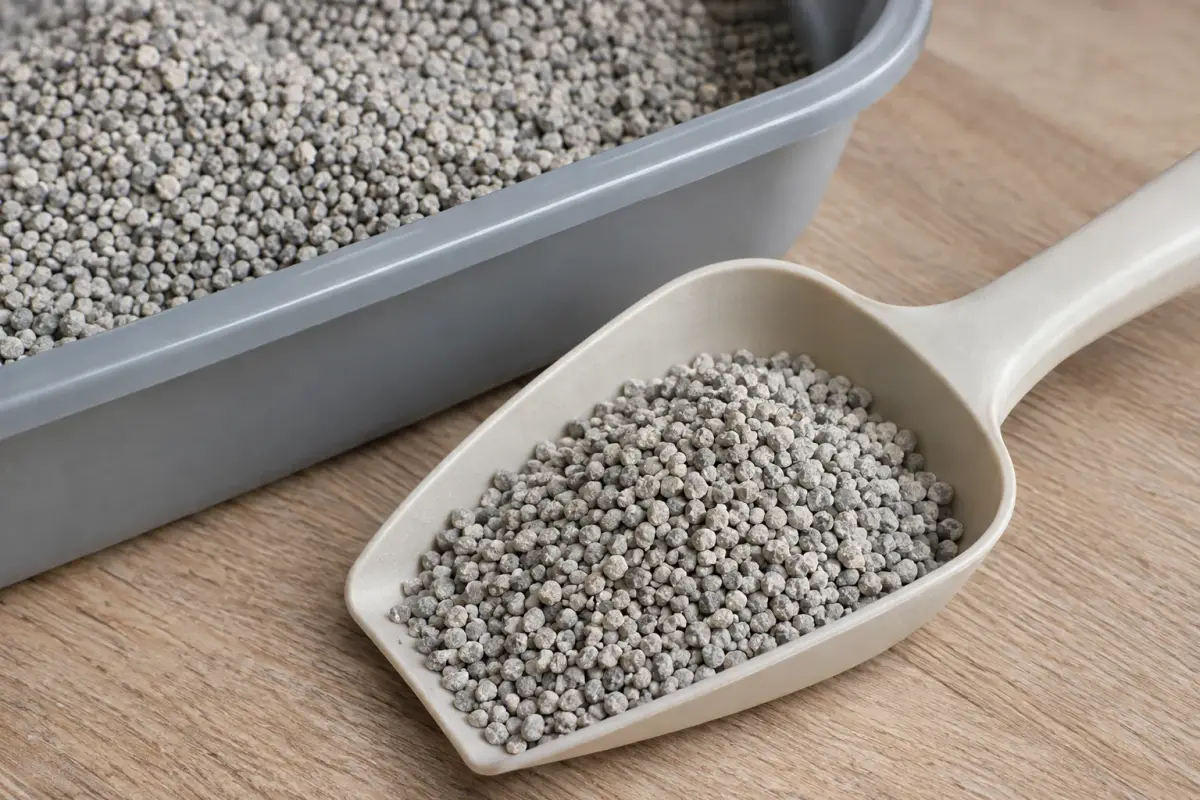
Clay litter is made of granules that soak up urine and, in the clumping kind, bind it into a solid ball you can scoop out. The clumping action comes from a clay called bentonite, which sticks together as it absorbs moisture. Non-clumping clay is a looser granule that absorbs wetness but does not form a ball, so the whole box is changed out more often.
Because clumping clay is so common, it is the litter most cats meet first. The ASPCA notes that most cats prefer clumping, unscented litter with a medium to fine texture, and VCA Animal Hospitals lists fine clay clumping-style litter as what most cats prefer. That is a point in its favor: a litter your cat will actually use is a safer choice than one that sends her to the carpet.
Is it safe for a healthy adult cat to use?
Using clay litter, as in standing in it, digging and covering, is what the product is designed for, and none of the veterinary pages we opened describe it as a hazard for an adult cat that behaves normally around the box. What the pages do warn about is eating it. So the practical question is less 'is clay safe' and more 'does my cat swallow litter?'
Most adult cats do not. A cat that licks litter from her paws after the box will swallow tiny amounts, and that is different from a cat that deliberately eats it. If you only ever see the first behavior and your cat is eating, drinking and passing stool normally, ordinary clay litter is not something the sources flag as a concern.
The real concern: swallowing clumping clay
The Washington Poison Center explains that cat litter often contains bentonite, which clumps as it absorbs moisture, and that swallowing it may cause a bowel obstruction that can become a medical emergency. That is the clearest published statement we found on this question, and it is about blockage, not poison in the usual sense.
This matters most for kittens, which explore the world with their mouths. VCA Animal Hospitals describes pica, the eating of non-food items, as something that can be natural in exploring kittens but that should be prevented when it continues, because the most common problem is gastrointestinal obstruction. If your kitten tries to eat litter, supervise box time, keep the box clean, and ask your vet whether a different litter is wise while she is small. The same VCA page says ongoing pica can also point to an underlying illness, which is one more reason to mention it at a checkup.
Dust, scent and what your cat prefers
Cornell Feline Health Center advises an unscented, finer-textured litter, and the ASPCA likewise says unscented litter is the better bet because many cats dislike strong smells. So if you are choosing between a heavily perfumed clay litter and a plain one, plain is the safer pick for getting your cat to keep using the box.
Depth is another detail owners overlook. The ASPCA and Cornell both suggest about one to two inches of litter, while VCA says cats prefer at least three inches of digging material. The sources differ, so watch your own cat: if she scratches at the bare floor of the box or seems unsure, adjust the depth. If your cat has a breathing condition, ask your vet whether a litter that kicks up dust is a good fit for her.
When to call your vet
Call your vet promptly if your cat or kitten has eaten a noticeable amount of litter, or if she is vomiting, unusually tired, straining to pass stool or refusing food. VCA lists vomiting or passing the non-food material, reduced appetite and weakness among the signs that warrant a visit. Have the litter's brand and ingredients to hand, because the vet will ask.
A cat that eats litter regularly should be seen even if she seems well. The cause can be behavioral, but pica can also be linked to medical problems, so it is not something to simply watch for weeks. If you cannot reach your own vet, an emergency clinic can advise on whether she needs to be seen right away.
If you want to switch litters
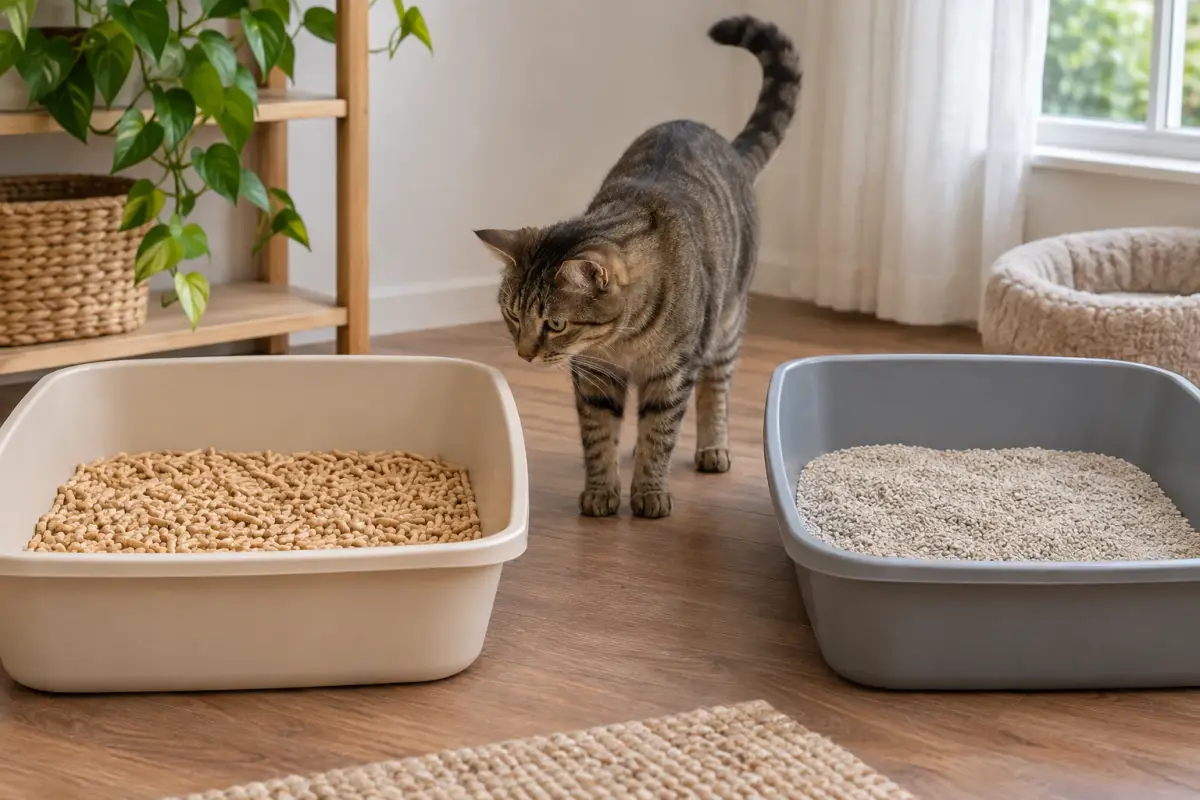
Cats have strong opinions, so change slowly. Cornell suggests adding small amounts of the new litter to the old, and the ASPCA recommends offering a couple of litter types side by side so your cat can show you which she prefers. VCA calls this a litter box cafeteria. Keep one box of the familiar litter available until the new one is accepted.
Whatever you use, scoop clumps and stool at least once a day, as Cornell advises for clumping litter, and add fresh litter as needed. A clean box is the single best way to keep a cat using the right spot. A long-handled metal litter scoop or a mesh litter scoop makes daily clump removal quick, and a textured litter mat catches the granules that cling to paws. You can also compare cat litter and other litter accessories, and our guide to the types of cat litter explains how clay compares with paper, pine and crystal.
This page is general information, not veterinary advice, and it cannot replace an examination by the vet who knows your pet.
Common questions
Is clumping clay litter safe for kittens?
Kittens explore with their mouths, and a poison center warns that swallowing bentonite clay can block the intestines. Ask your vet whether a different litter is wiser while your kitten is small, and supervise box time.
Is clay litter toxic to cats?
The sources we opened describe the risk as intestinal blockage if a meaningful amount is swallowed, not as a poison in the usual sense. If your cat has eaten litter or seems unwell, call your vet or a poison center.
Do cats prefer clay litter?
Many do. The ASPCA says most cats prefer clumping, unscented litter with a medium to fine texture, and VCA says fine clay clumping-style litter is what most cats prefer. Your own cat's preference is what counts.
How often should I scoop clumping clay litter?
Cornell Feline Health Center advises removing stool and clumps daily and adding clean litter as needed. Change the whole box often enough that it looks and smells dry and clean.
What are the signs my cat swallowed too much litter?
Vomiting, unusual tiredness, reduced appetite, constipation or straining can all be warning signs. Any of these after eating litter means a call to your vet that day.
Sources we checked
This guide is general information, not veterinary advice. If your pet is unwell or injured, contact your veterinarian.


