






Buying guides
Best Cat Litter: How to Choose One Your Cat Will Actually Use
The best cat litter is the one your cat keeps using, and most cats choose a fine, unscented, clumping texture poured 1 to 2 inches deep. After that, pick for your household: low dust if anyone has allergies, larger granules if litter tracks across the floor, and a hard-clumping formula if several cats share the boxes.
By Matt GarnettUpdated November 14, 20264 min read2 sources
What matters most in a cat litter
Texture comes first because the cat decides, not the owner. The ASPCA and the Cornell Feline Health Center both describe the same preference: most cats like a soft, sand-like, finer-grained litter without added scent. A strongly perfumed litter smells clean to us and can smell overwhelming to an animal whose nose is far more sensitive, which is one common reason a cat starts going beside the box instead of in it.
Depth is the second factor people get wrong. Both sources suggest about 1 to 2 inches, not the 3 or 4 inches many owners pour to stretch the time between changes. Clumping performance, dust and tracking come after that. If your cat is already using a litter happily, any switch should be gradual, mixing more of the new litter into the old over a week or so.
The main litter types compared
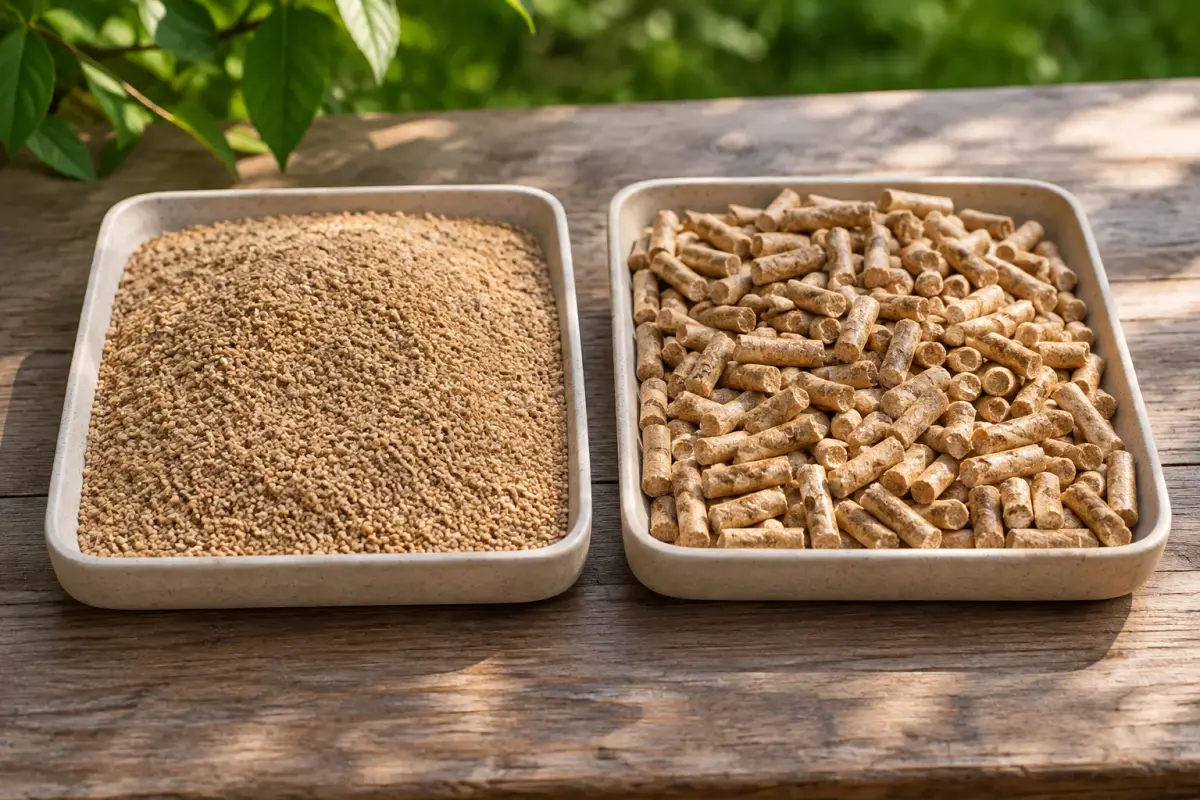
Clumping clay forms solid balls around urine, so you can scoop out waste daily and top up rather than replace everything. It is the closest match to the fine, sandy feel most cats choose, which is why it is the default in so many homes. Its weaknesses are weight and dust, and lower-quality formulas can crumble when scooped.
Silica crystal litter absorbs urine and controls odor well with very little dust, but the large, hard beads feel different underfoot and some cats refuse them. Plant-based litters made from pine, wheat, corn, paper or tofu are lighter and often lower in dust; they vary widely, from fine clumping grains to large pellets that many cats find uncomfortable. Paper pellets are a common pick after surgery because they stick less to wounds, a choice to make with your vet.
Best type for each situation
For kittens, choose an unscented, non-toxic litter with a soft texture and a low-sided litter box, and supervise early on in case a kitten tries to taste it. For multiple cats, hard-clumping litter makes daily scooping practical, and the ASPCA advice of one box per cat plus one extra matters more than the brand of litter you buy.
If tracking is the problem, larger or heavier granules shed less from paws, and a litter mat at the exit catches most of the rest. For a home with allergies or a cat with a sensitive airway, look for formulas labeled low dust and pour slowly. For odor control, frequent scooping does more than any additive: waste that leaves the box daily cannot smell.
What to avoid
Avoid strongly scented litters, deodorizing powders sprinkled on top, and box liners if your cat has ever hesitated at the box; the ASPCA lists scents, liners and covers among things many cats dislike. Avoid pouring litter too deep, and avoid sudden switches between textures, which can feel like a new surface entirely to a cat.
Be cautious with pellet litters for long-haired cats or kittens if they balk at the feel, and with any litter that crumbles to fine powder, which adds dust. Never use a litter change to solve a cat suddenly urinating outside the box without ruling out illness first. Frequent trips with little output, straining or blood in urine are reasons to call your vet that day.
How much litter you need and how to keep it fresh
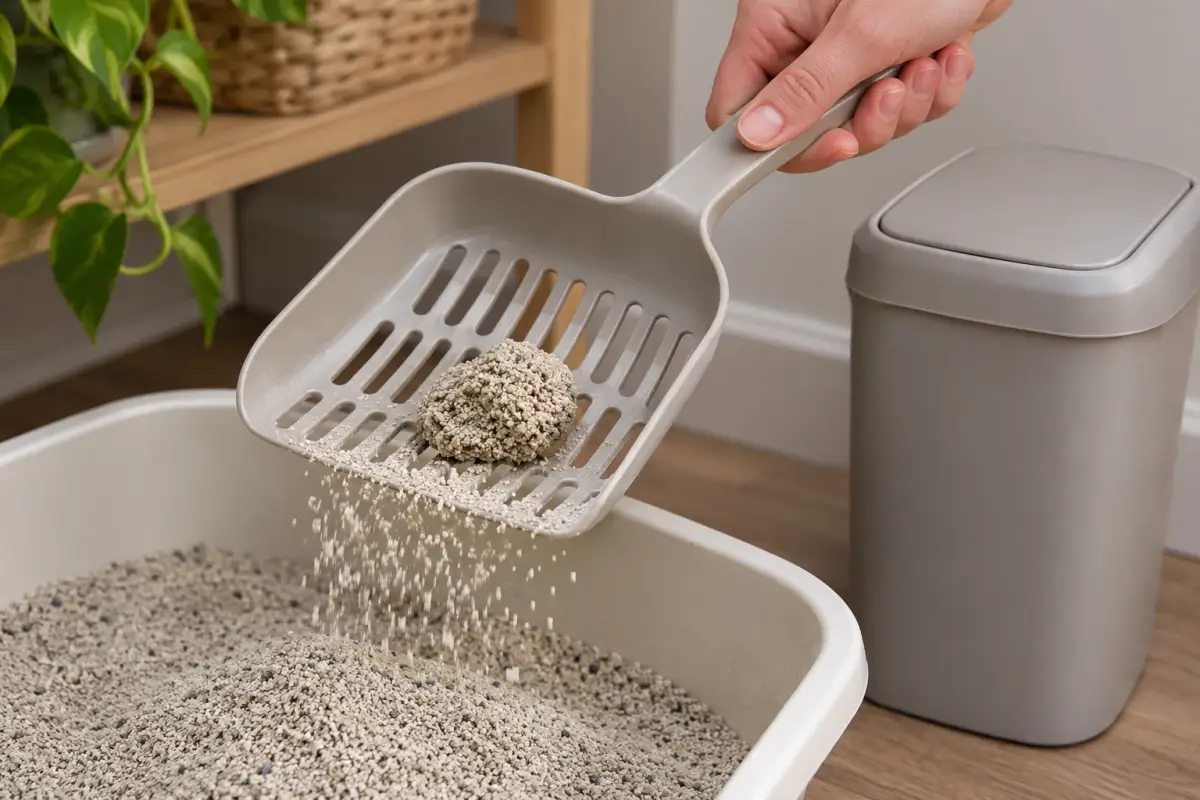
Work from the box, not the bag. A large box filled 1 to 2 inches deep takes far less litter than most people expect, and a clumping litter only needs topping up after each pass with a litter scoop. The ASPCA suggests scooping at least once a day and washing the box and replacing all the litter about once a week with unscented soap or plain water.
Non-clumping types need a full change more often, because urine soaks into the whole bed rather than forming a removable clump. Whatever you choose, store litter sealed and dry, and keep a second bag of the same type of cat litter on hand so you are never forced into an unplanned switch when the store runs out of your usual one.
Common questions
What cat litter do cats prefer most?
Most cats prefer a fine, soft, sand-like litter with no added scent, poured about 1 to 2 inches deep. Clumping clay matches that texture closely, but individual cats differ, so watch how yours uses the box.
What is the best cat litter for multiple cats?
A hard-clumping, low-dust litter that you can scoop every day works best for several cats. Just as important is having one box per cat plus one extra, in separate locations, so no cat has to queue or be ambushed.
What is the best litter for kittens?
Choose an unscented, soft-textured litter in a low-sided box that small legs can step into easily. Watch young kittens for the first few days in case they try to eat litter, and switch if they do.
What is the cleanest cat litter for odor control?
Odor depends more on how often you scoop than on the litter. A litter that clumps firmly makes daily removal easy, and silica crystal absorbs smells well, but no litter stays fresh if waste is left in the box.
Which cat litter tracks the least?
Larger, heavier granules and pellets generally track less than fine litters because they fall off paws before the cat leaves the box. A textured litter mat at the exit and a box with higher sides reduce scatter further.
Sources we checked
This guide is general information, not veterinary advice. If your pet is unwell or injured, contact your veterinarian.


