






Care & how-to
How Often Should You Change Cat Litter?
Scoop the box at least once a day, and empty and replace all of the litter about once a week. Non-clumping litter may need a full change every few days, because urine soaks in rather than forming clumps you can remove. Wash the box with mild, unscented soap at each full change or at least monthly, and replace the box itself about once a year.
By Matt GarnettUpdated November 9, 20264 min read3 sources
Daily: scoop at least once
Both the ASPCA and Cornell Feline Health Center recommend scooping at least once a day. Cats are fastidious, and a box that smells or feels used is one of the most common reasons a cat starts going elsewhere. VCA adds that some cats want the box scooped more than once a day, particularly if two cats share it.
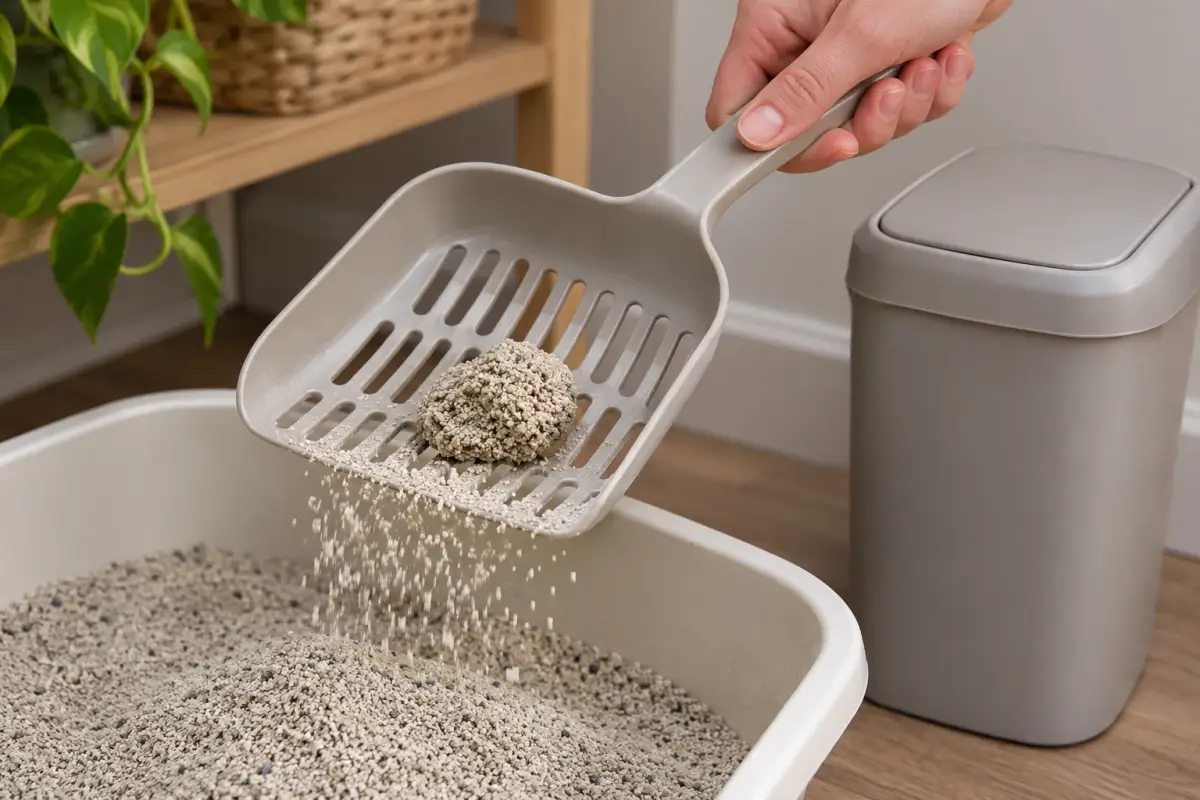
Scoop out every clump and all feces with a litter scoop, right down to the bottom of the box, then top up with fresh cat litter so the depth stays at about one to two inches, the level the ASPCA and Cornell suggest. A deeper layer is not better; most cats prefer a moderate depth they can dig in comfortably.
Weekly: replace all the litter
Even with perfect scooping, small fragments of clumps and dust build up and hold odor. The ASPCA recommends that once a week you dump all the litter, wash the box and refill it. VCA gives the same schedule for emptying and refilling.
If you have several cats using the same boxes, or one large cat, you may need to change the litter more often. Cornell's rule of thumb is simple: change it often enough that the box always looks and smells clean to you, remembering that a cat's nose is far more sensitive than yours.
Clumping vs non-clumping litter schedules
Clumping litter traps urine in solid balls you can lift out, so the rest of the box stays relatively clean between full changes. A weekly full change usually works well, and some owners with a single cat stretch it slightly with diligent scooping, as long as the box still smells fresh. A litter mat beside the box catches stray granules between changes.
Non-clumping clay, paper, pine and similar litters absorb urine into the whole bed rather than forming clumps. You can scoop solids and any obviously wet patches, but the litter saturates faster. Plan on a full change every two to four days, or sooner if you notice smell or wet litter under the surface.
How to wash the litter box
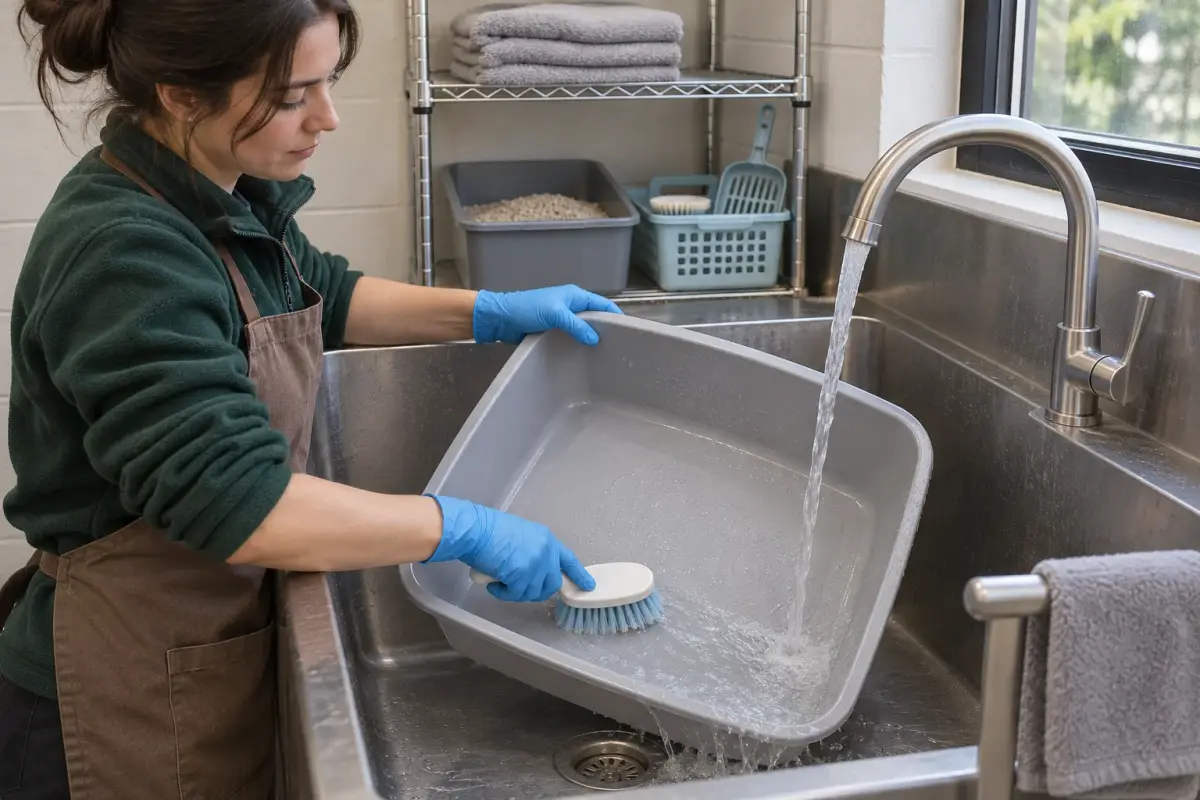
Empty the box completely, then wash it with warm water and a mild, unscented dish soap. The ASPCA also mentions baking soda or plain water as options. Rinse well and let it dry fully before refilling, because damp litter clumps to the bottom and smells sooner.
Avoid strong-smelling cleaners, bleach-heavy mixtures and ammonia, which smells like urine to a cat. Cornell also advises against vinegar-based products for this reason. VCA recommends a full scrub at least monthly; many owners simply do it at every weekly change.
When to replace the box
Plastic scratches with use, and urine and bacteria settle into the scratches where washing cannot reach. VCA suggests replacing the entire litter box about once a year. Cornell recommends replacing any box that stays smelly after washing or has cracked.
When you change boxes, keep the same type and size if your cat was happy with the old one. Our litter boxes come in covered, high-sided and large styles to match. A sudden switch to a covered box, a different shape or a new litter at the same time as a new box can be enough for some cats to object.
Signs the box needs attention, and when to call the vet
Watch your cat's behavior. The ASPCA lists signs of litter box aversion: perching on the edge, stepping in and leaving quickly, hesitating at the entrance or going right next to the box. Any of these suggests you should scoop more often or change the litter sooner.
Changes in what is in the box matter too. Much larger or more frequent urine clumps, very small frequent clumps, straining, blood, diarrhea or no urine at all are reasons to call your vet. A cat that strains and produces nothing needs to be seen the same day, as this can be an emergency, especially in male cats.
This page is general information, not veterinary advice, and it cannot replace an examination by the vet who knows your pet.
Common questions
How often should you change cat litter for one cat?
For one cat with clumping litter, scoop daily and replace all the litter about once a week. With non-clumping litter, plan on a full change every few days, since urine soaks through the whole box.
How often should you change cat litter with two cats?
With two cats, scoop at least twice a day if they share a box, and change all the litter weekly or more often. Better still, provide three boxes, one per cat plus one extra, as the ASPCA recommends.
Can cat litter be changed too often?
Fresh litter is never a problem, but frequent switches of brand or type can be. Change the litter as often as needed to keep it clean, and introduce any new type gradually by mixing it with the old.
Is it safe to change cat litter while pregnant?
Cat feces can carry toxoplasmosis, so pregnant people are generally advised to have someone else scoop. If you must do it, wear gloves, scoop daily and wash your hands well, and ask your doctor for guidance.
Sources we checked
This guide is general information, not veterinary advice. If your pet is unwell or injured, contact your veterinarian.


