






Buying guides
Best Cat Litter Pellets: What to Know Before You Switch
The best cat litter pellets are the ones your cat will actually use, in a box built to handle them. Pellets do not clump, so a sifting-style box, regular scooping of the sawdust and a slow switch from the old litter decide whether they work. Browse our pine pellet cat litter range, then use this guide to check the features that matter first.
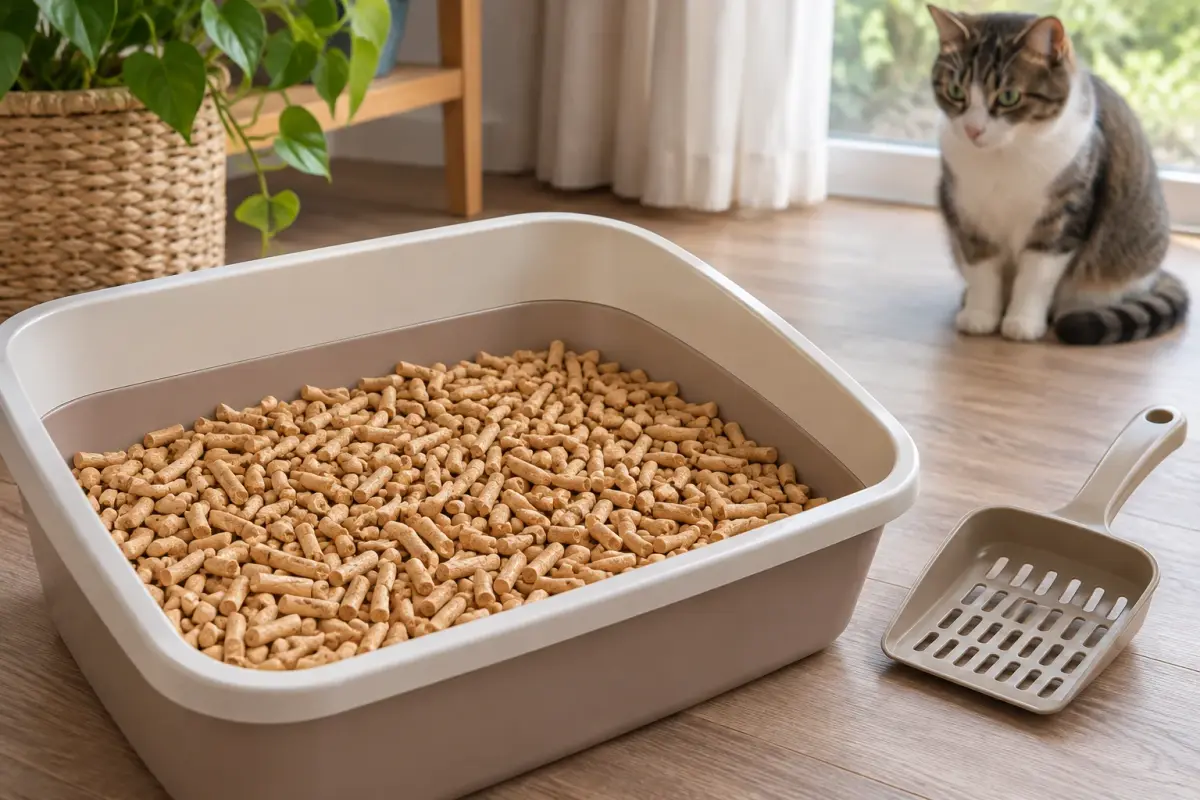
By Matt GarnettUpdated November 14, 20266 min read3 sources
How pellet litter works
Pellet litter is compressed wood, usually pine, pressed into small hard cylinders. When urine reaches a pellet it absorbs the liquid and swells until it crumbles into soft sawdust. Solid waste stays on top and gets scooped out like any other litter. Because nothing sticks together, there are no clumps to lift out, which is the biggest difference from clumping clay.
That crumbling is also why pellets suit a particular kind of box. The sawdust needs to fall away from the intact pellets, and a sifting litter box does that with a slotted upper tray over a solid lower one. If you pour pellets into an ordinary pan, the sawdust piles up at the bottom and turns damp, which is where most complaints about smell and mess come from.
What cats prefer, and why that decides everything
The ASPCA says most cats prefer clumping, unscented litter with a medium to fine texture, and that a cat may favor the type it used as a kitten. Pellets are hard, large and unclumping, so they are further from that preference than most litters. That does not make them a bad choice, but it does mean the cat has a vote, and a cat that dislikes the surface will go elsewhere.
The simplest test is the one the ASPCA suggests: put different litters in boxes side by side and let your cat show you her choice. Offering a pellet box next to the current box costs nothing and settles the question in a week or two. If your cat keeps using the old box and ignores the pellets, take that as her answer rather than forcing the switch.
Choosing the pellets themselves
Start with the label. Choose litter that is sold for cats, with a plain pellet and no added fragrance. Cornell's Feline Health Center notes that cats generally avoid perfumed litter, so a pine scent from the wood itself is the most you want, and added scent is a reason to pass. Avoid anything sold for another purpose, such as fuel or bedding for other animals, because the label should say it is made for cat litter.
Pellet size and firmness matter too. Smaller, softer pellets are usually kinder on paws, which is worth thinking about for kittens, seniors and cats that were happy on fine litter. If you are unsure whether a wood-based litter suits your cat, particularly a kitten or a cat with a respiratory or digestive problem, ask your vet before switching.
The box and the setup
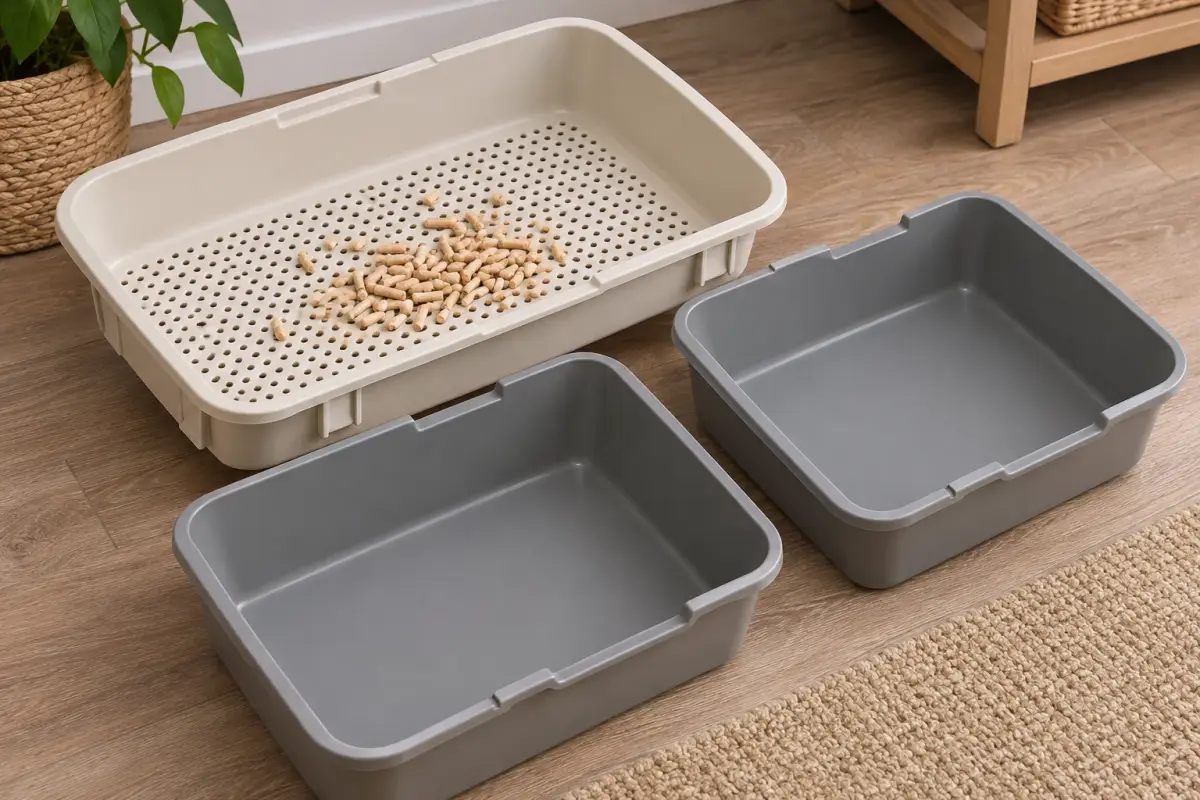
For pellets, the box is half the product. A sifting box has a slotted tray that lets sawdust drop through to a lower pan, so you lift out the pellets and empty the sawdust without digging. Look at our sifting litter boxes for that two-tray design. Check that the tray slots are small enough to keep intact pellets in and that the lower pan is deep enough to hold a few days of sawdust.
Depth is another number to get right. Both the ASPCA and Cornell recommend about one to two inches of litter rather than three or four, and the same applies here. Pellets poured too deep never reach the lower tray and just soak up urine. Fill to a shallow, even layer, and keep the surface level so the cat has a firm place to dig and stand.
Switching your cat over
Move gradually. Put a little pellet litter in with the old litter and raise the share over a couple of weeks, or keep a second box of the old litter alongside until the pellets are being used reliably. A sudden change is one of the commonest reasons a cat starts going outside the box, and if that happens, go back to the old litter and see your vet to rule out a health cause.
Pellets also track differently from clay. Intact pellets tend to stay in the box, but sawdust can drift onto the floor, so a mat under and around the box helps. A double-layer litter mat or a washable EVA litter mat catches the loose material from paws before it spreads through the house, and you can browse more litter mats too. Shake or vacuum it each time you scoop.
Scooping, cleaning and how many boxes
The routine is simple but not optional. The ASPCA recommends scooping at least once a day and washing the box out completely once a week with mild, unscented soap. Cornell adds that litter should look and smell dry and clean, and that the more cats use a box the more often it needs doing. With pellets, that means emptying the sawdust tray daily and topping up with fresh pellets as they dissolve.
The number of boxes matters as well. Cornell's guideline is as many boxes as you have cats, plus one. If you are testing pellets, that extra box is the perfect place to run the trial, because the cat keeps a familiar option while she decides. Our litter boxes range covers pan styles, and pine pellet litter is worth a second look once the box is right.
Who pellets suit, and who should skip them
Pellets suit people who want a lightweight, low-fuss litter that handles urine odor in a sifting box, and cats that are not fussy about texture. They are a poor match for a cat that strongly prefers fine clumping litter, for a household that will not empty the sawdust tray daily, and for a kitten or health-compromised cat until a vet has said wood litter is fine.
Whichever way you go, match the litter to the cat rather than the other way round. If the cat accepts the pellets, stick with it and keep your pine pellet litter stocked in the same box. If she does not, a fine-textured, unscented clumping litter is the safer default. See our related guide on clumping vs non-clumping litter to compare, or read the overview of types of cat litter. This page is general information, not veterinary advice, and it cannot replace an examination by the vet who knows your pet.
Common questions
Do cat litter pellets clump?
No. Pellets absorb urine and crumble into sawdust instead of forming clumps. You scoop solid waste from the top and sift or empty the sawdust, which is why a sifting litter box works best with them.
Can I put pellet litter in a normal litter box?
You can, but the sawdust collects at the bottom and goes damp, which causes smell. A box with a slotted sifting tray over a lower pan lets the sawdust drop away so you can remove it without digging.
How do I switch my cat to pellet litter?
Mix a little pellet litter into the old litter and raise the share over a couple of weeks, or offer a pellet box beside the old one. If your cat refuses, go back to the old litter and ask your vet if the problem continues.
How deep should pellet litter be?
About one to two inches, as the ASPCA and Cornell suggest for litter in general. Pellets poured too deep stay above the sifting slots and soak up urine instead of breaking down and falling through.
How often should I clean a pellet litter box?
Scoop solid waste at least once a day, empty the sawdust tray as it fills, and wash the whole box with mild unscented soap about once a week, as the ASPCA recommends for all litter boxes.
Sources we checked
This guide is general information, not veterinary advice. If your pet is unwell or injured, contact your veterinarian.


