






Breeds
Clumping vs Non-Clumping Cat Litter
For most cats and most homes, clumping cat litter is the better choice. It lets you remove all the urine every day, so the box stays cleaner and smells less, and its fine texture is what most cats prefer. Non-clumping litter makes sense for kittens that eat litter, cats recovering from surgery and owners who prefer a full change every few days.
By Matt GarnettUpdated November 9, 20264 min read3 sources
How each type works
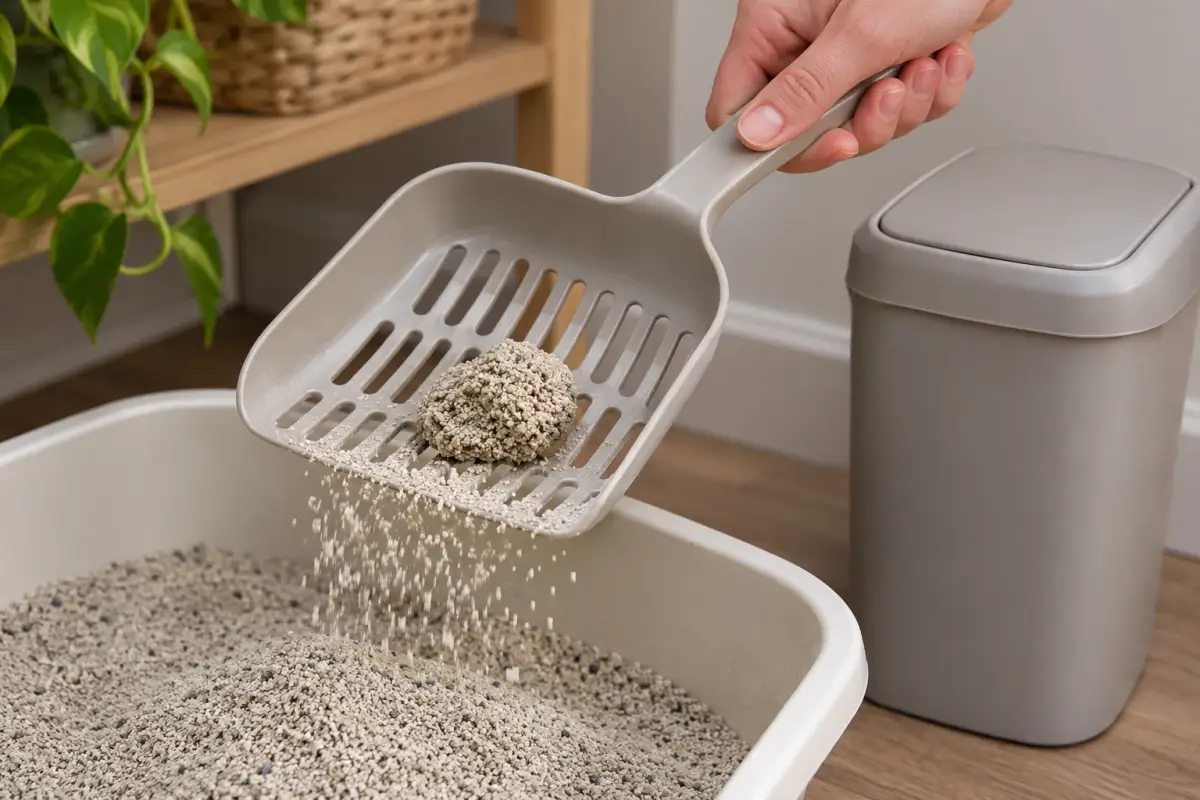
Clumping litter, most often bentonite clay but also some wheat, corn, grass and pine litters, binds around urine to form a firm ball. You scoop the ball out along with feces, and what remains is dry, clean litter. The box only needs a complete change about once a week (see how often to change cat litter).
Non-clumping litter, such as standard clay, paper pellets, many pine pellets and silica crystals, absorbs urine into the granules. You can scoop out feces and obviously wet patches, but urine gradually saturates the whole bed, so the box needs emptying every few days. Silica, as in this crystal cat litter, is a partial exception, holding a lot of moisture before it needs a full change.
Odor and hygiene
Clumping litter usually wins on odor because the urine leaves the box every time you scoop. The ASPCA and Cornell Feline Health Center both recommend daily scooping with clumping litter and a full change weekly, and both report that cats prefer a clean-smelling box.
With non-clumping litter, ammonia odor builds as the granules saturate. That is fine if you change it often, but if you tend to stretch the schedule, a non-clumping box can become unpleasant for your cat well before it seems bad to you. Our guide to getting rid of litter box smell has more on keeping odor down.
Cats' preferences
The ASPCA says cats generally prefer clumping litter with a medium to fine texture, and VCA's kitten checklist notes that kittens tend to prefer clumping litter. A fine, sandy feel is easy on paws and easy to dig, which is what a cat wants from a toilet.
That said, preference is individual. Some cats are happy on paper or pine pellets, especially if that is what they learned on. If your cat is using its box reliably, there is rarely a reason to change.
Cost, dust and tracking
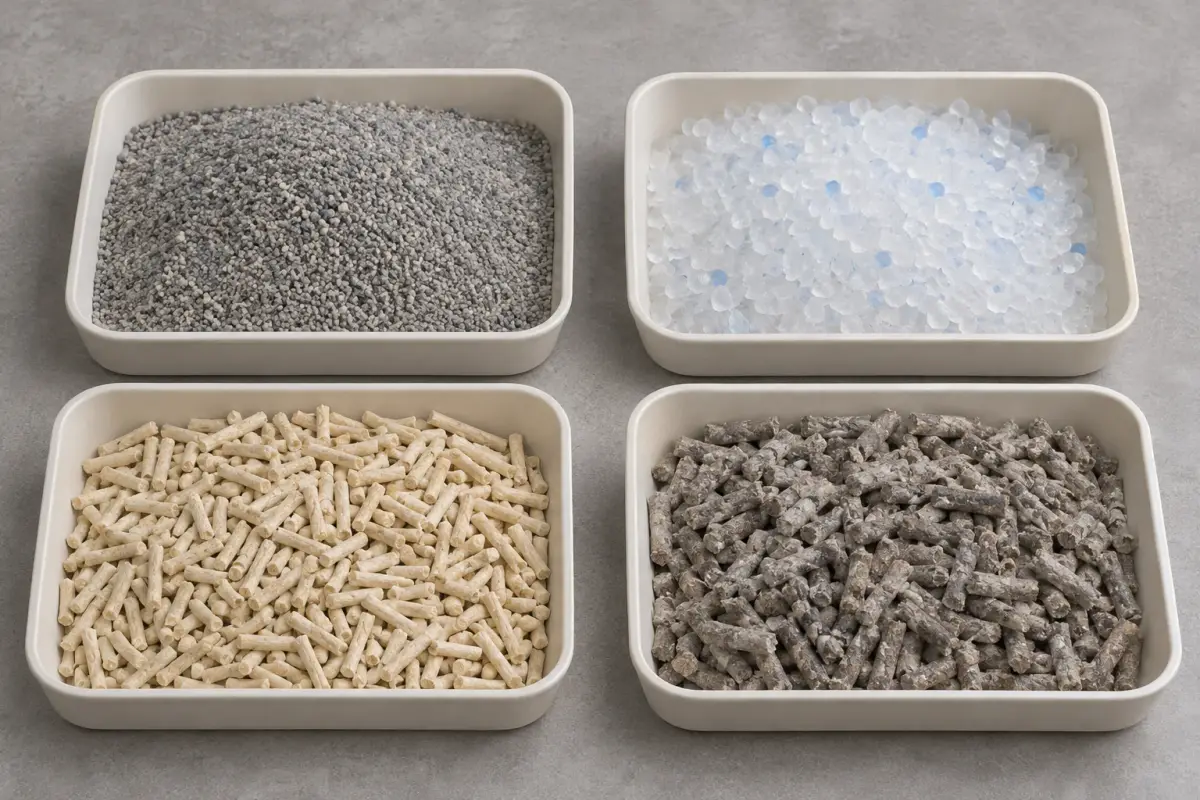
Clumping clay costs more per bag than basic non-clumping clay, but you throw away less because only the used portion is scooped out. Over a month, the two are often close in cost. Clay of both kinds is heavy to carry and can be dusty, so look for low-dust versions.
Fine clumping granules track out of the box on paws more than large pellets do. A litter mat at the entrance, such as a double-layer trapping mat, and a litter box with higher sides reduce scatter. Paper and pine pellets track very little but can be kicked out by an enthusiastic digger.
When non-clumping is the better choice
Choose a non-clumping paper or pellet litter for a kitten that eats litter rather than simply digging in it, and mention the habit to your vet. Vets also commonly recommend paper litter after surgery or for a cat with a paw wound, since fine particles can stick to stitches or open skin.
Non-clumping litter can also be the answer for a cat that refuses clumping litter, or for an owner who prefers a simple full change every few days to daily scooping.
Switching litters and when to see your vet
If you change from one type to the other, do it gradually. Cornell suggests mixing small amounts of the new litter into the old, and the ASPCA suggests offering two boxes side by side so your cat can choose. Keep the litter about one to two inches deep, as both recommend. Our guides to the types of cat litter and to choosing cat litter cover the rest of the options.
Clumping litter has a bonus: you can see the size and number of urine clumps. Much bigger or more frequent clumps, many tiny ones, blood, or no clumps at all are worth a call to your vet. A cat straining with nothing coming out needs to be seen the same day.
This page is general information, not veterinary advice, and it cannot replace an examination by the vet who knows your pet.
Common questions
Is clumping litter safe for kittens?
Most kittens use clumping litter without problems, and VCA notes they tend to prefer it. If your kitten eats litter rather than just digging, switch to a non-clumping paper or pellet litter and tell your vet.
How often do you change non-clumping litter?
Scoop solids daily and replace all non-clumping litter every two to four days for one cat, or sooner if it smells or feels damp. Wash the box with mild, unscented soap at each full change.
Can you mix clumping and non-clumping litter?
Mixing is mainly useful as a short bridge when switching types. Long term, a mix clumps poorly and saturates unevenly, so it combines the drawbacks of both. Pick one and transition fully.
Sources we checked
This guide is general information, not veterinary advice. If your pet is unwell or injured, contact your veterinarian.


