






Care & how-to
How to Get Rid of Litter Box Smell
Litter box smell comes from urine and feces left in the box, soaked into the plastic or spilled around it, so the fix is removal, not masking. Scoop at least daily, replace all the litter weekly, wash the box with unscented soap, replace old scratched boxes, use an unscented clumping litter and give the box space and airflow. Clean any accidents with an enzymatic cleaner.
By Matt GarnettUpdated November 9, 20264 min read3 sources
Why litter boxes smell
Fresh cat urine does not smell especially strong. The sharp ammonia smell develops as bacteria break down urine that has been sitting in litter, in the gaps of old clumps, under liners or in scratches in the plastic. Feces left uncovered add the rest. A box that smells is almost always a box with waste in it somewhere.
Cats notice long before we do. Cornell Feline Health Center points out that cats can detect residual odors that people cannot, and the ASPCA lists a dirty box among the most common reasons cats stop using it. So getting rid of the smell is about your cat's comfort as well as your home's. When you are ready to change litter, browse odor-control cat litter or read our odor-control litter guide.
Step 1: Scoop more often
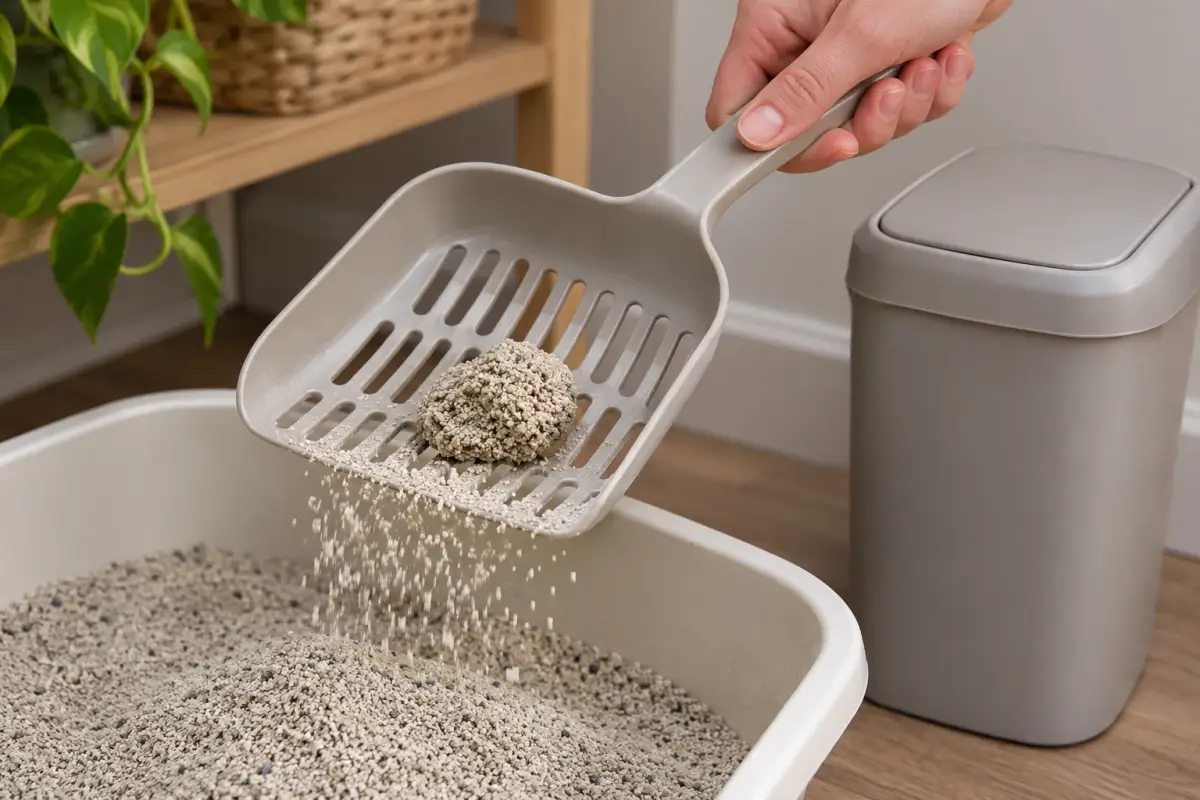
Scoop at least once a day, and twice a day if two cats share a box. Both the ASPCA and Cornell recommend daily scooping as the baseline. Go all the way to the bottom and into the corners, where wet clumps stick and break apart.
Seal scooped waste in a bag and take it out, or use a lidded bin with a liner kept away from living areas. Top the box back up to about one to two inches of litter so urine forms tidy clumps instead of pooling on the bottom of the box.
Step 2: Change the litter and wash the box
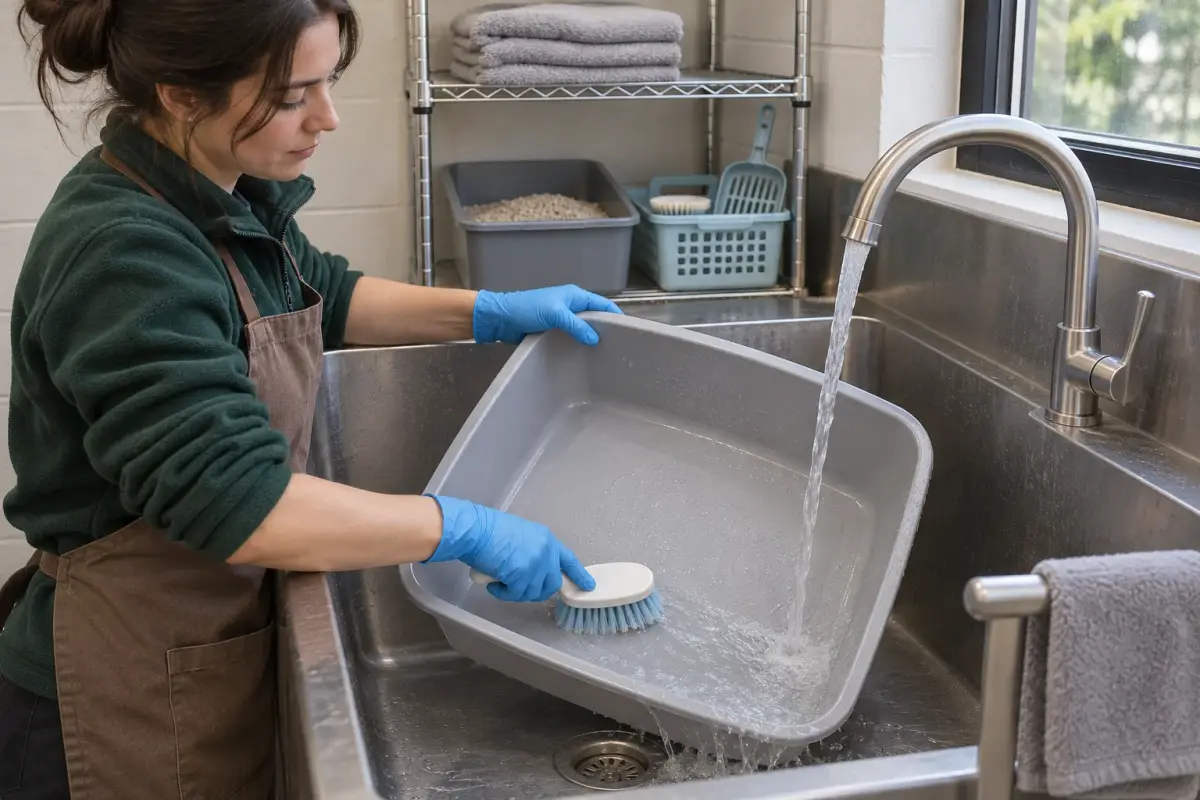
Replace all the litter about once a week, or every few days with non-clumping litter. The ASPCA suggests washing the box weekly with warm water and unscented soap, baking soda or plain water. Rinse and dry it before refilling.
Plastic boxes absorb odor over time. VCA recommends replacing the whole box about once a year, and Cornell advises replacing any box that still smells after washing or has cracked. If your box has fine scratches across the bottom, that is where the lingering smell lives.
Step 3: Choose the right litter and box
An unscented, fine clumping litter controls odor well because it lets you remove all the urine every day. Avoid heavily scented litters and plug-in air fresheners next to the box: the ASPCA notes scented litter can make cats avoid the box, and that leads to a much worse smell somewhere else. A thin layer of plain baking soda under unscented litter is a gentle option for some owners. Crystal cat litter is another type to consider.
Covered boxes trap smell inside rather than removing it, and Cornell notes many cats dislike them for exactly that reason. An open, large box in a well-ventilated spot dries faster and smells less. Keep enough boxes, one per cat plus one, so no single box gets overloaded. Our litter box guide covers sizes and styles.
Step 4: Treat the room, not just the box
Put a washable litter mat under and in front of the box to catch scattered litter, and wipe the floor and nearby walls weekly; urine spray on a wall is a common hidden source. Open a window or use a fan for airflow, and keep the box out of small, closed closets.
If your cat has had accidents nearby, clean them thoroughly with an enzymatic pet-odor cleaner. Cornell and the ASPCA both warn against ammonia-based products, and Cornell also advises against vinegar, because these smells can draw a cat back to the same spot. Once the area is clean, a fresh fill of odor-control litter helps keep the box fresh.
When the smell is a health sign
A sudden change in smell, color or amount is worth noticing. Very strong-smelling urine, much larger or more frequent clumps, many tiny clumps, blood, or unusually foul diarrhea can point to urinary, kidney, digestive or other medical problems. Call your vet and describe what you are seeing.
An intact male cat's urine has a very strong odor, and spraying can be part of the picture; neutering usually reduces both. Any cat straining in the box without producing urine needs to be seen by a vet the same day.
This page is general information, not veterinary advice, and it cannot replace an examination by the vet who knows your pet.
Common questions
What litter has no smell?
No litter makes waste odor-free, but unscented clumping clay and silica crystals are among the best at controlling smell when scooped daily. The real difference comes from scooping and regular full changes.
How do I get rid of cat litter smell in a small apartment?
Scoop twice daily, use an open box with unscented clumping litter, put a washable mat underneath, keep a window cracked or run a fan, and take waste outside daily instead of using an indoor bin.
Is baking soda safe in cat litter?
Plain baking soda is commonly used under or mixed into litter and is generally considered safe in small amounts. Use it unscented, and stop if your cat seems to avoid the box afterward.
Why does my litter box smell even after cleaning?
Lingering odor usually means urine has soaked into scratches in an old plastic box, under a liner, or into nearby flooring or walls. Replace the box, skip liners and clean the surrounding area with an enzymatic cleaner.
Sources we checked
This guide is general information, not veterinary advice. If your pet is unwell or injured, contact your veterinarian.


