






Buying guides
Best Unscented Cat Litter: What to Look For
For most cats, the best unscented litter is a plain, fine-textured, clumping litter with no added perfume or deodorizer. Cornell's Feline Health Center says most cats prefer unscented, finer-textured litter, so the features that matter are texture, dust, clumping and how deep you fill the box, not the fragrance on the bag.
By Matt GarnettUpdated November 13, 20265 min read4 sources
Why unscented is the safe default
Cats have a far stronger sense of smell than we do, and a litter box is the one place in the house they use several times a day. The Cornell Feline Health Center advises that most cats prefer unscented, finer-textured litter, and the ASPCA goes further and recommends switching away from scented litter if that is what your cat is using. The perfume is there to please the buyer, but the cat is the one who has to stand in it.
VCA Hospitals makes the same point in its guidance on house soiling: many cats dislike litter that contains strong deodorizers or perfumes, and some prefer a plain material without odor control agents. If you are choosing litter boxes and litter together, start with the unscented option and add scent control through cleaning instead. A cat that avoids the box is a much bigger problem than a box that smells faintly of cat.
What actually matters once the scent is gone
Texture comes first. Cornell describes the usual preference as finer-textured litter, and VCA recommends fine clay, clumping-style litter as the starting point for most kittens and cats. Coarse pellets and large granules can feel unpleasant underfoot, so if your cat is fussy, look for a soft, sand-like grain before you look at anything else on the label.
Next is clumping. Both VCA and the ASPCA note that most cats prefer clumping litter, and clumps make daily scooping quick and thorough. Check the dust as well, because a cloud when you pour is a cloud your cat breathes while digging. If your cat has any breathing trouble, ask your vet which litter suits, rather than guessing from packaging claims.
The main unscented litter types compared
Unscented describes the fragrance, not the material. Plain clumping clay is the type the veterinary sources keep returning to, and it is the best benchmark. VCA also lists cedar shavings, recycled newspaper and plastic pearls as materials a cat might be offered in a trial, which tells you that cats vary and that a surprise preference is possible.
For a household that prefers a natural material, plant-based and paper litters exist in unscented versions too, and our guide to natural cat litter covers how those compare. If dust is your main worry, read dust-free cat litter next. None of these choices beats the one your cat will actually use, which is why a side-by-side trial is worth the effort.
How deep to fill the box and how often to scoop
Depth is where well-meaning owners go wrong. VCA recommends at least 3 inches of digging material, while the ASPCA suggests one to two inches rather than three to four, and Cornell also says about one to two inches. The sources disagree, which is a good reason to let your cat decide: start at around 2 inches and adjust if your cat seems to dig to the floor or scatters litter everywhere.
Scoop at least once a day. VCA says to remove all clumps daily, and some cats want it more often, while Cornell says to change the litter often enough that it looks and smells dry and clean. Keep one box per cat plus one extra, and wash the box with a gentle detergent rather than a scented cleaner, since the ASPCA warns that a cat can develop an aversion to a scented cleaner.
Keeping litter in the box without adding scent
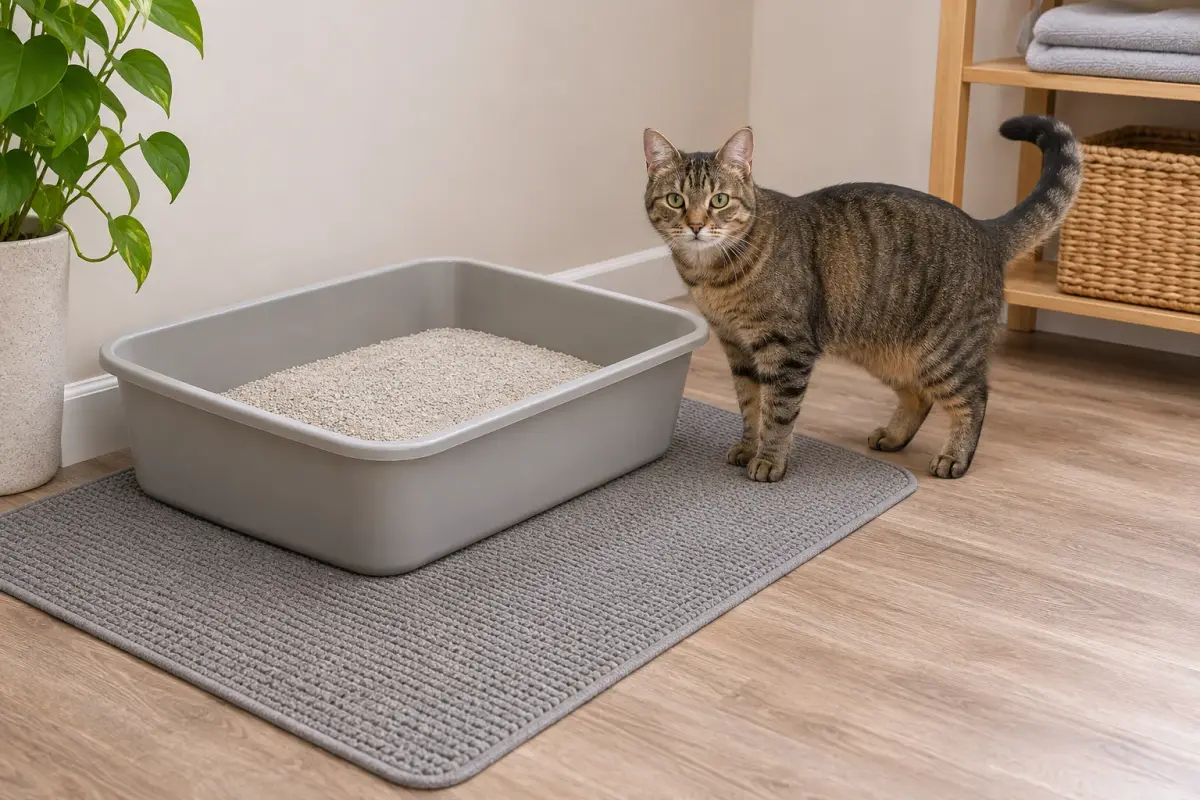
Unscented clumping litter still gets carried out on paws, and the answer is a mat, not a perfume. A litter mat placed at the box exit catches granules before they reach the floor. Mats come as ridged, textured or double-layer designs, such as the double-layer litter mat with a filter layer, which lets litter fall through the top layer, or a washable EVA double-layer mat.
Choose a mat large enough that your cat has to cross it before stepping onto the floor, and shake it out outdoors each week. For a deeper look at odor without scent, our guide to getting rid of litter box smell covers scooping routines and box placement, and where to put a litter box helps if the box sits somewhere your cat avoids.
Switching litter without a standoff
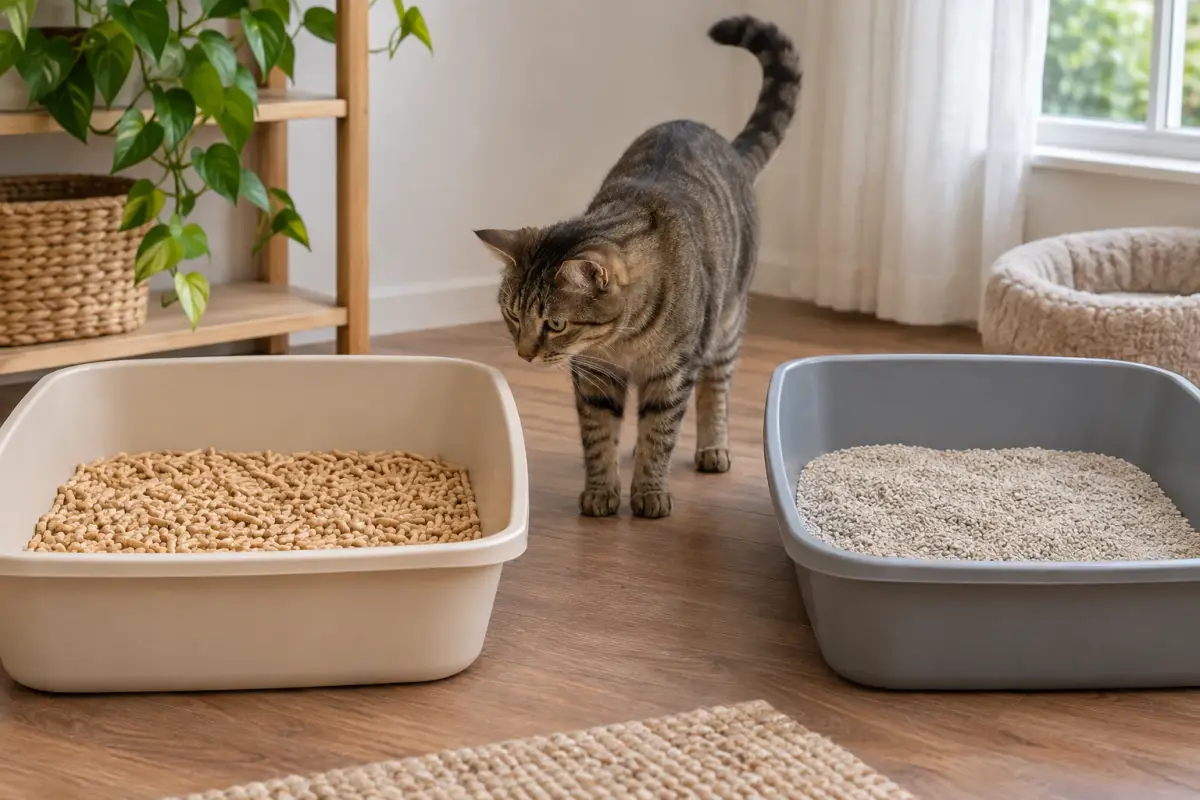
Cats notice change, so introduce a new litter gradually. Pour a little of the new unscented litter into the existing litter and increase the share over a couple of weeks. The ASPCA recommends offering a choice of litter types side by side, which lets the cat show you its preference instead of leaving you to guess. VCA describes the same idea as a litter box buffet.
If your cat starts going outside the box, do not assume the litter is the cause. Cornell advises that cats who have problems using the litter box consistently should be checked by a veterinarian, and the ASPCA lists frequent trips with only small amounts of urine as a reason to see one promptly. Our guide to a cat peeing outside the litter box explains what to look for. If you are still comparing options, return to our litter boxes and pick a clean, roomy one to pair with the litter.
This page is general information, not veterinary advice, and it cannot replace an examination by the vet who knows your pet.
Fragrance and litter material are separate choices
| Detail | What it describes | What it does not establish |
|---|---|---|
| Unscented | The fragrance choice | The underlying material or a dust rating |
| Clumping clay | A clay-based clumping format | That every formulation has the same granules |
| Plant-based | A plant-derived material group | Fragrance or the individual cat’s preference |
| Paper | A paper-based format | Acceptance by every cat |
| Side-by-side trial | Offering actual alternatives | A universal category ranking |
Common questions
Is unscented cat litter better for cats?
For most cats, yes. Cornell's Feline Health Center says most cats prefer unscented, finer-textured litter, and the ASPCA also recommends unscented over scented. Individual cats vary, so a side-by-side trial is the most reliable test.
What texture of unscented litter do cats prefer?
Fine, sand-like grains that clump are the usual starting point. VCA recommends fine clay, clumping-style litter, and Cornell describes finer-textured litter as the common preference. Coarse pellets suit some cats, but they are the less typical choice.
How do I control litter box odor without scented litter?
Scoop clumps daily, change or top up litter often enough that it looks and smells dry and clean, and wash the box with a gentle unscented detergent. Keep one box per cat plus one extra, so no single box gets overused.
How much unscented litter should I put in the box?
Sources differ: VCA suggests at least 3 inches, while the ASPCA and Cornell suggest about 1 to 2 inches. Start near 2 inches and watch your cat. Adjust depth if the cat digs to the floor or kicks litter out.
My cat stopped using the box after I changed litter. What now?
Go back to the old litter or offer both side by side, and switch gradually next time. If the problem continues, or your cat strains or passes only small amounts, call your vet, because medical causes need ruling out.
Sources we checked
This guide is general information, not veterinary advice. If your pet is unwell or injured, contact your veterinarian.


