Buying guides
Where to Put a Litter Box (and How to Hide It)
Put the litter box somewhere quiet and easy to reach, away from your cat's food and water, loud appliances and busy hallways, in a spot where your cat can see who is coming and has more than one way out. A bathroom, a spare bedroom or a quiet corner of a living area usually works. You can hide a box, as long as your cat can still get in easily and does not feel trapped.
By Matt GarnettUpdated November 9, 20264 min read3 sources
What makes a good litter box location
A cat using the box is vulnerable, so the spot has to feel safe. The ASPCA recommends quiet places that are not cornered, where the cat can see people or animals approaching and has more than one escape route. Cornell Feline Health Center adds that the box should be private but accessible at all hours, so no doors that get shut at night.
Convenience for the cat matters more than convenience for you. A box in a distant basement is easy to ignore for a human, but for a kitten, an older cat or a cat with sore joints, it can be too far to reach in time. Put boxes where your cat already spends its day.
Places to avoid
Keep boxes away from food and water. Cats do not like to eat near their toilet, and both the ASPCA and VCA advise separating the two. Avoid spots next to washers, dryers, furnaces or anything that starts up suddenly and loudly; a single fright mid-use can put a cat off a box for good.
Busy hallways and entryways, rooms where the dog sleeps, and narrow spaces where another pet can block the only exit are also poor choices. The ASPCA specifically mentions keeping boxes away from the dog's food and water and from high-traffic areas.
Good spots in a typical home
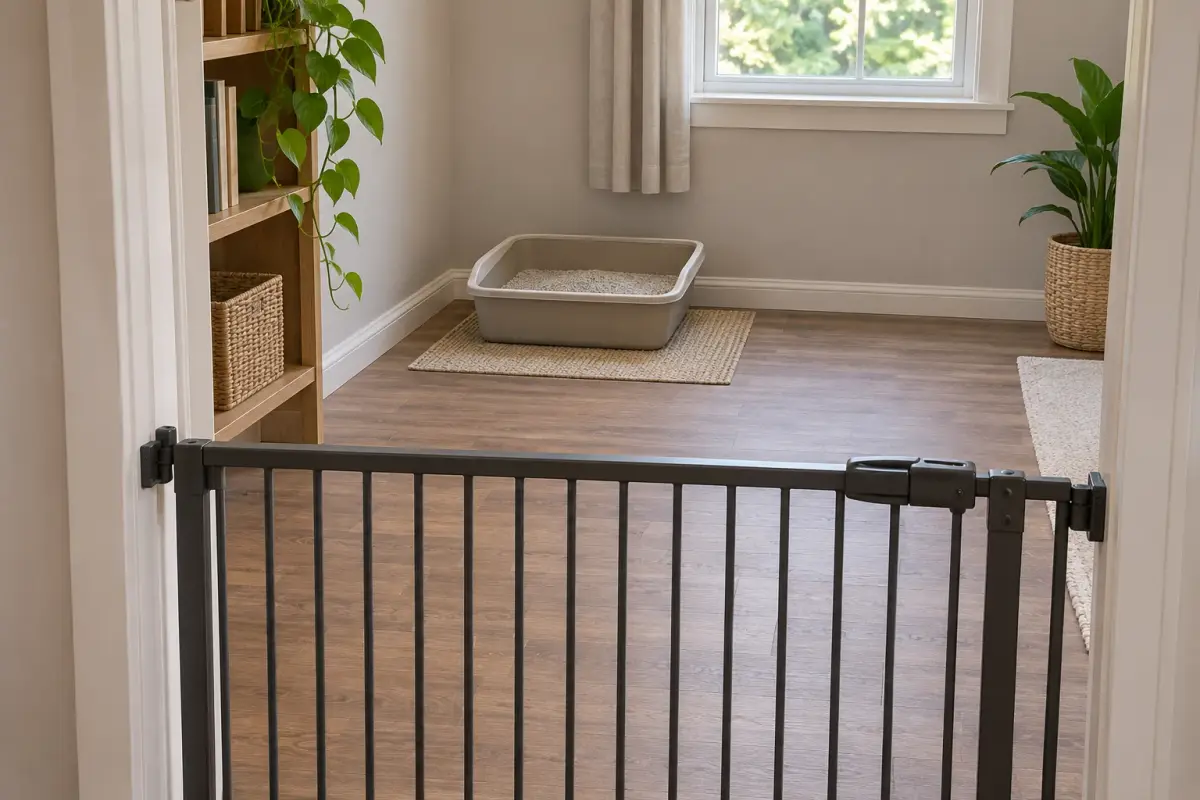
A main bathroom works well for many homes, as long as the door is propped open with a doorstop so it cannot swing shut. A spare bedroom or home office, a quiet end of the living room, or a laundry room with the machines on the far side are other common choices.
If you have more than one box, which is recommended, spread them out: one on each floor, and in different rooms rather than side by side. Cornell suggests placing boxes in different areas of the house so no single location problem affects all of them.
How to hide a litter box
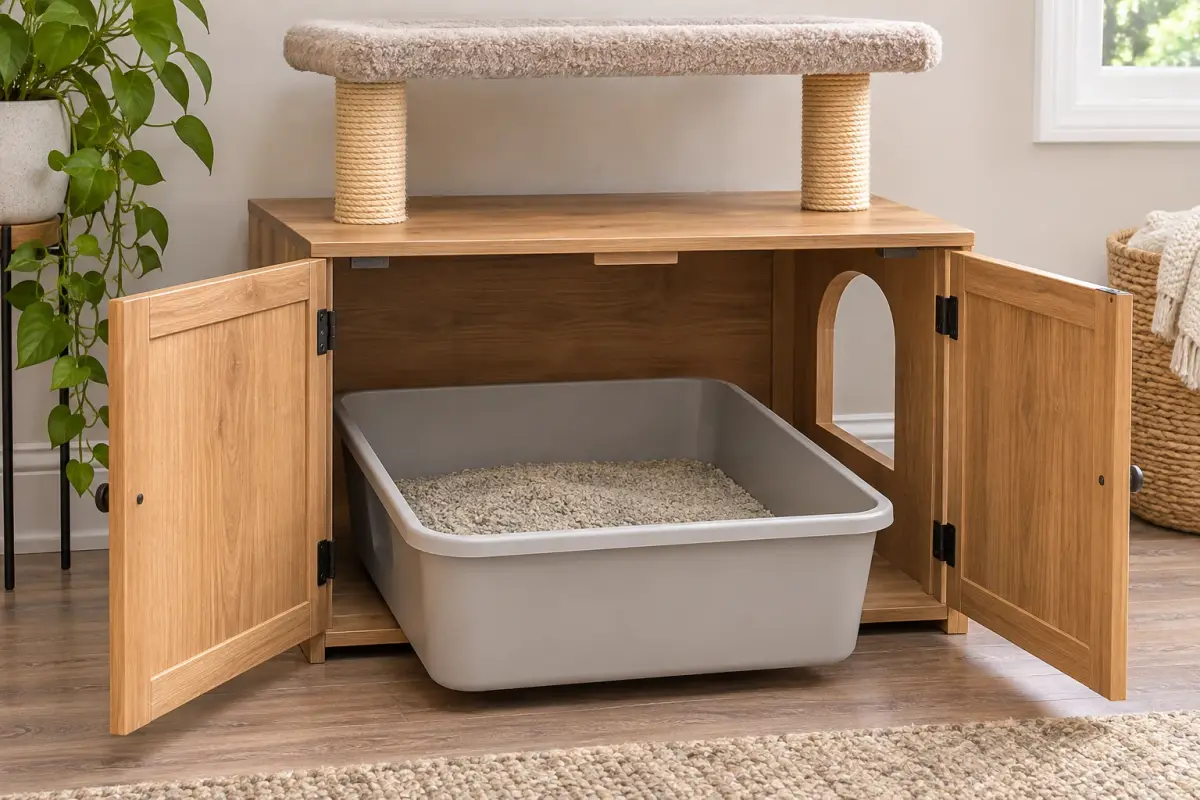
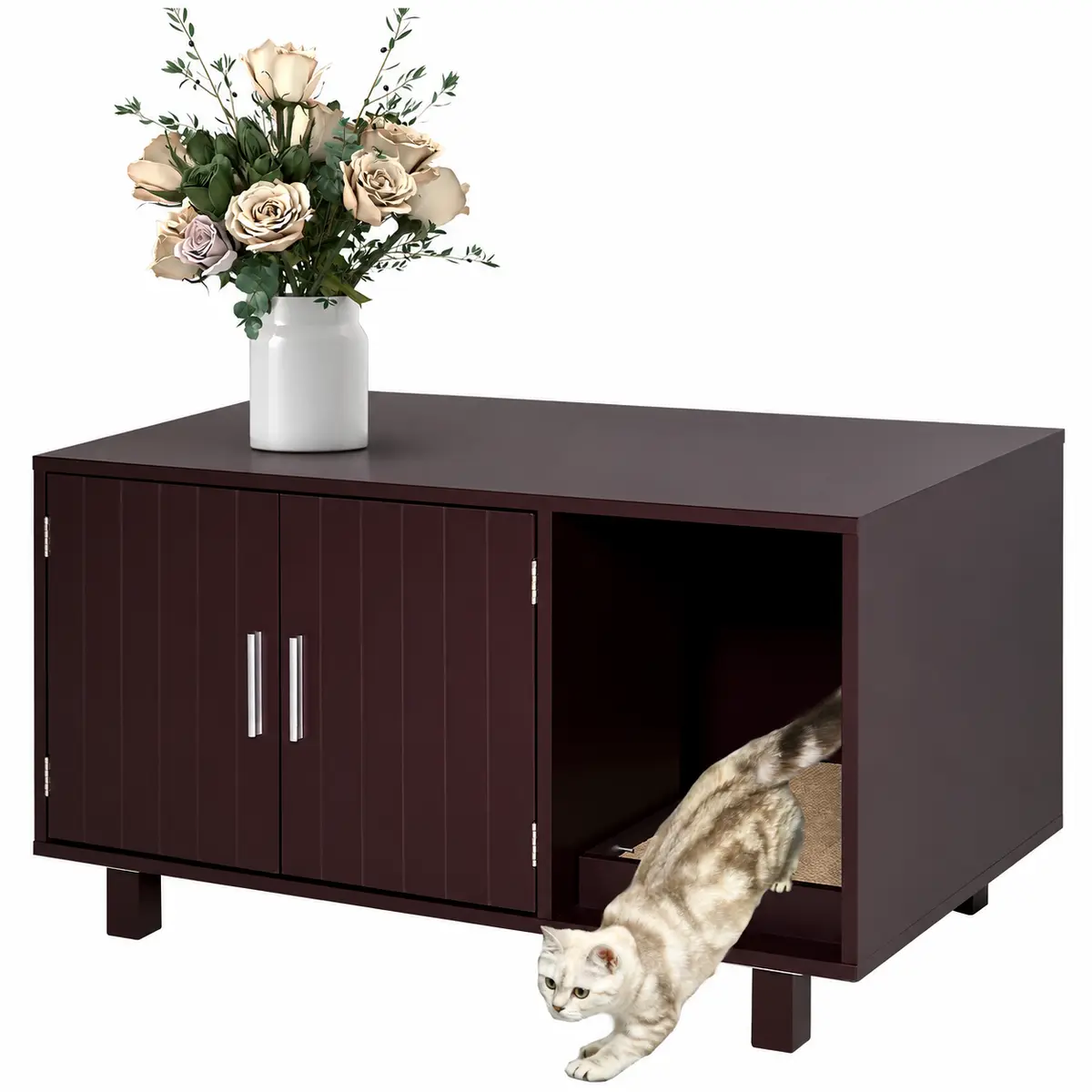
Furniture-style litter cabinets, folding screens, an open-top litter box fence, a cabinet under a bathroom sink with the door removed, or a large potted fake plant beside the box can all disguise it. The key is that the entrance stays wide and easy to use, the inside stays well ventilated, and your cat can see out as it approaches.
Introduce any enclosure gradually. Start with the open box in its usual spot, then add the cabinet around it with the door off, and only add a door or flap once your cat uses it confidently. Remember that the ASPCA and Cornell both report most cats prefer uncovered boxes, so an enclosure is a compromise. If your cat hesitates or starts going beside it, take the cover off.
Moving a litter box
Cats are creatures of habit, and a box that suddenly disappears can lead to accidents in the old spot. Move it gradually, a few feet a day, toward the new location. If the move is to another room, set up the new litter box first and leave the old one in place until your cat uses the new one reliably.
Whenever a cat starts going where a box used to be, you can place a box there temporarily, or put food bowls or a bed on that spot, which the ASPCA suggests to make it feel less like a toilet.
When location is not the problem
If your cat avoids a well-placed, clean box, have your vet check for a medical cause. Cornell lists urinary tract inflammation, kidney or thyroid disease, diabetes, digestive problems and age-related mobility changes among the common reasons. A cat straining with little urine should be seen the same day.
Stress and conflict between cats can also be behind it, and your vet can help you sort out which is which.
This page is general information, not veterinary advice, and it cannot replace an examination by the vet who knows your pet.
Common questions
Is it OK to put a litter box in the bedroom?
Yes, if your cat likes the room and the box is kept clean. Place it away from the bed and any food, and make sure the door stays open overnight so your cat can always reach it.
Can I put a litter box in the kitchen?
It is better not to. Cats prefer to keep toilet and food areas apart, and a box near where people prepare food is a hygiene concern. A nearby bathroom or utility area is a better choice.
Should a litter box be in a corner?
A corner can feel sheltered, but your cat should still be able to see the room and leave in more than one direction. Avoid tight spots where another pet could block the way out.
Is the garage a good place for a litter box?
Usually not. Garages are often too hot or cold, noisy and closed off at night, and they may store chemicals. Your cat should be able to reach the box at all hours in a comfortable space.
Sources we checked
This guide is general information, not veterinary advice. If your pet is unwell or injured, contact your veterinarian.