






Buying guides
Best Cat Trees With Litter Box Enclosures: What Matters
The best cat tree with a litter box enclosure has an interior big enough for the cat to turn and dig, an entry low enough to step into, good airflow, and a side or top door that makes scooping easy. The tower matters too, but the box comes first. Start with our cat trees with litter box enclosures and use the checks below.
By Matt GarnettUpdated November 14, 20265 min read2 sources
The litter space is the first thing to measure
Veterinary sources summarized by WebVet say a litter box should be about 1.5 times your cat's body length, and that many commercial boxes are too small. Merck adds that cats want room to dig and turn around, so bigger is generally better. A study of cats in cat cafes found they used boxes larger than 50 cm (about 20 inches) most, and that a 40 cm (about 16 inch) box received only a small share of use, particularly for defecation.
So measure your cat from nose to base of tail, multiply by 1.5, and compare that to the interior floor of the enclosure, not the outside of the furniture. A tree with a tidy-looking compartment of 16 inches is unlikely to suit an adult cat. Large and heavy cats may need more, and the study's authors noted that large cats may need larger boxes.
Entry height, door and cleaning access
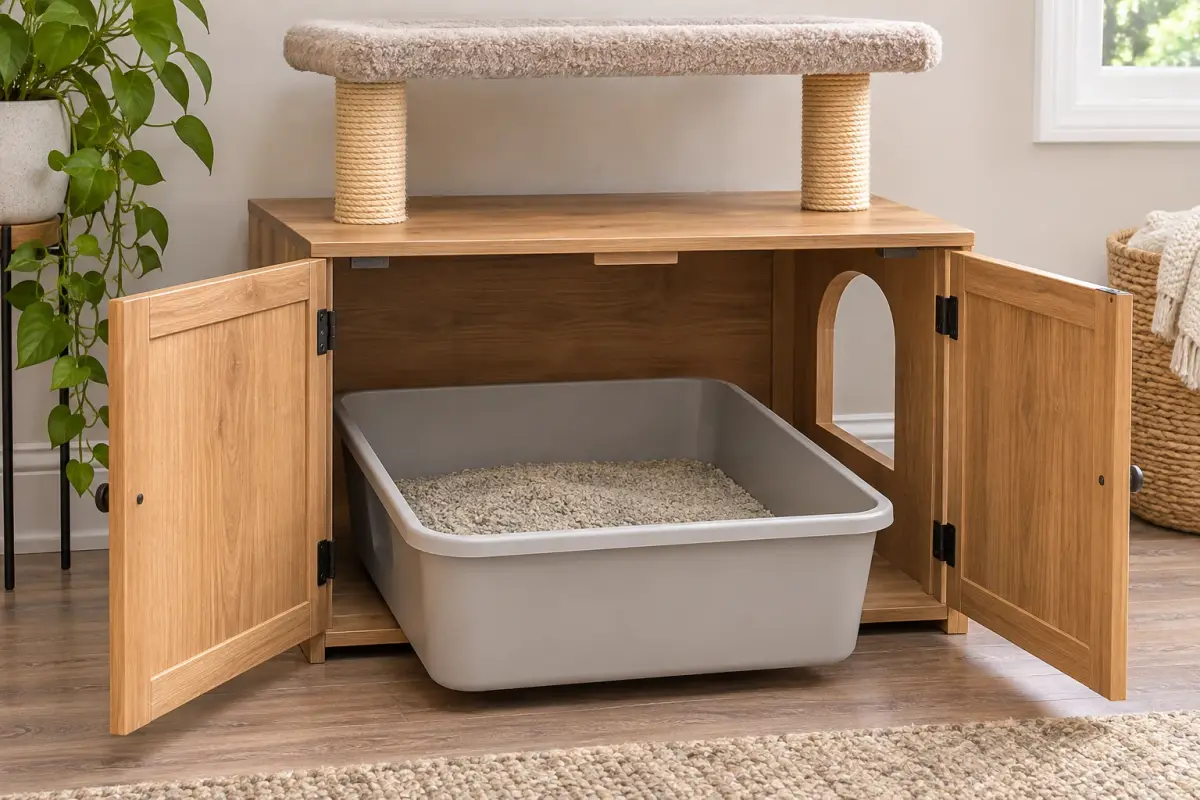
Merck notes that older cats with arthritis may need lower box sides to get in and out, and VCA says kittens need low sides, according to WebVet. Look at the threshold of the enclosure: a high lip or a hole cut in the side of a cabinet is hard on a senior cat, while a low doorway is easier. If the tree has climbing platforms leading to the box, check that a cat does not have to jump to get in.
Cleaning access matters as much as size. Merck advises scooping every day and washing the whole box at least weekly, and WebVet's summary cites a full wash every 1 to 4 weeks with hot water and mild soap. An enclosure with a removable tray or a large top or side door makes that routine realistic; a small flap that makes you reach in blind encourages skipping it.
Ventilation, odor and whether your cat will accept it
Merck says open boxes have more air circulation, and the Illinois guidance WebVet cites warns that lids, or boxes in small enclosed spaces, can contribute to litter box anxiety. The same page notes that no source it reviewed measures ammonia inside litter furniture or sets a minimum vent size, so claims about odor control are marketing, not measured fact.
On acceptance, the evidence is mixed rather than negative. A study of 28 cats found no significant overall preference between covered and uncovered boxes, and the authors suggested most cats will use either when the box is cleaned at least daily. Still, Merck notes some cats dislike going into enclosed spaces. Introduce the new box next to the old one, and keep the old one available until the cat clearly uses the new one.
The tree half of the product
A cat tree with an enclosure is two products in one, and the tree has to work on its own terms. Look for a wide, heavy base, sisal on the posts and platforms big enough for your cat to lie on. Our guide to the best cat trees explains the stability checks, and the same points apply here, since the litter compartment adds weight low down but does not make the upper levels any steadier.
One practical point is traffic. Litter is tracked onto carpet, and a cat tree is a place cats like to lie. If the box compartment opens onto the same area as the beds, the bedding will collect grit. Check how the layout separates the two, and think about where the whole unit will stand; see where to put a litter box for placement basics.
Multi-cat homes and placement
Merck, VCA and Cornell recommend one box per cat plus one, according to WebVet, and the Illinois guidance warns that cats consider boxes close to each other as one large litter box. A single enclosure in a corner therefore counts as one location, however many compartments it has. In a multi-cat home it should be one of several boxes spread around the house; our page on how many litter boxes per cat goes through the count.
Merck recommends a secluded, low-traffic spot, and warns against hiding the box in a basement or garage. Cats should also be able to approach from more than one angle so they do not feel cornered, so avoid pushing furniture hard into a dead-end corner.
Which type suits which home
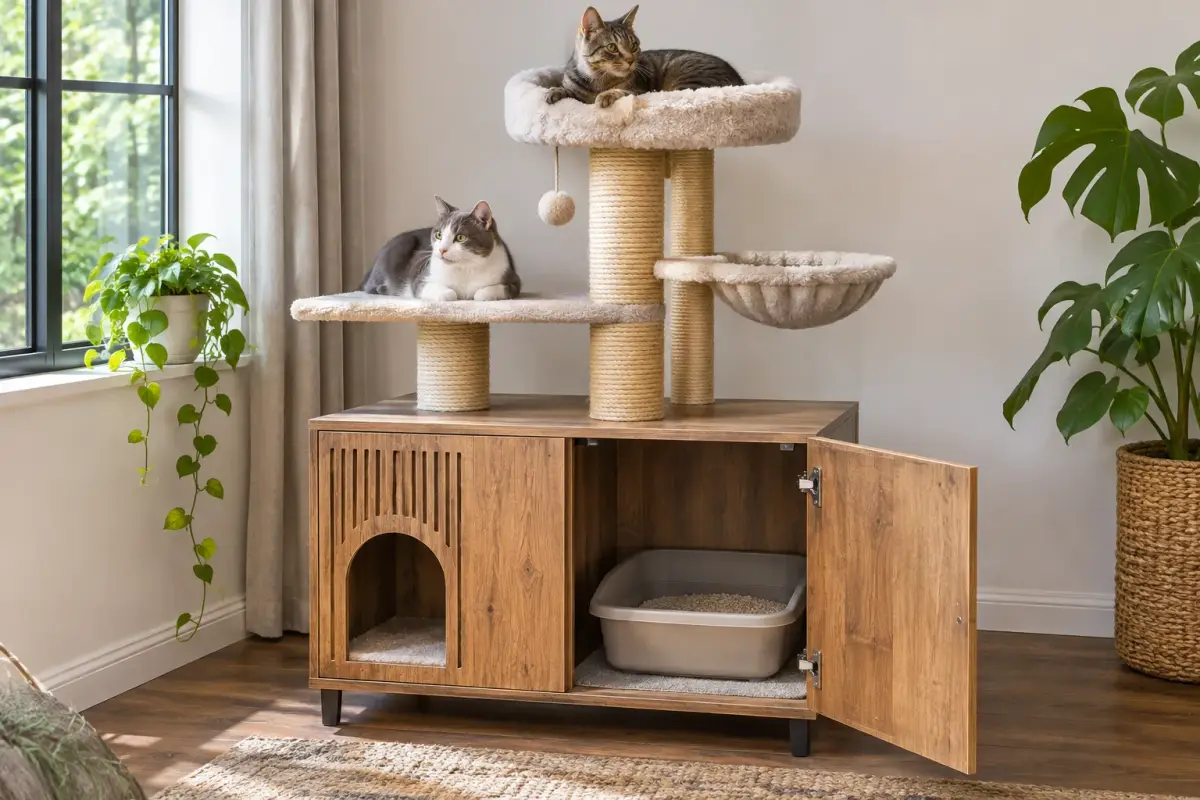
For one adult cat in an apartment, an enclosure tree can save floor space, provided the interior meets the 1.5 times rule and the cat has accepted a covered box. A cat tree with a litter box enclosure, scratching posts, bed and climbing platforms is an example of the all-in-one design, so check the listed interior dimensions against your cat's length.
For kittens, seniors or cats that have had litter box accidents, an open low-sided box is usually the safer bet, and a covered unit can wait. If your cat is straining in the litter box or cannot pass urine, Merck says that can be a life-threatening emergency, especially in males, so call your vet right away. When you are ready to compare, browse cat litter box furniture and cat trees.
Common questions
How big should a litter box in a cat tree be?
WebVet's summary of veterinary guidance says about 1.5 times the cat's body length. A study found cats preferred boxes larger than 50 cm, around 20 inches, so check the interior floor, not the exterior.
Do cats like covered litter boxes?
Results are mixed. A study of 28 cats found no significant overall preference between covered and uncovered boxes when cleaned daily, but Merck notes some cats dislike enclosed spaces to pee or poop.
How often should I clean a cat tree litter box?
Merck advises scooping every day and cleaning the whole box at least weekly. Another summary suggests a full wash every 1 to 4 weeks with mild soap and hot water, avoiding strong chemicals.
Can one enclosure serve two cats?
Not on its own. Merck, VCA and Cornell recommend one box per cat plus one, and cats treat boxes placed close together as a single large box, so spread boxes around the home.
When should I call a vet about litter box problems?
Straining in the litter box can be life-threatening, especially in male cats, according to Merck. Call your vet right away if your cat strains, produces little urine or cries while trying to go.
Sources we checked
This guide is general information, not veterinary advice. If your pet is unwell or injured, contact your veterinarian.


