






Buying guides
Best Cat Trees: How to Choose One That Is Tall, Stable and Used
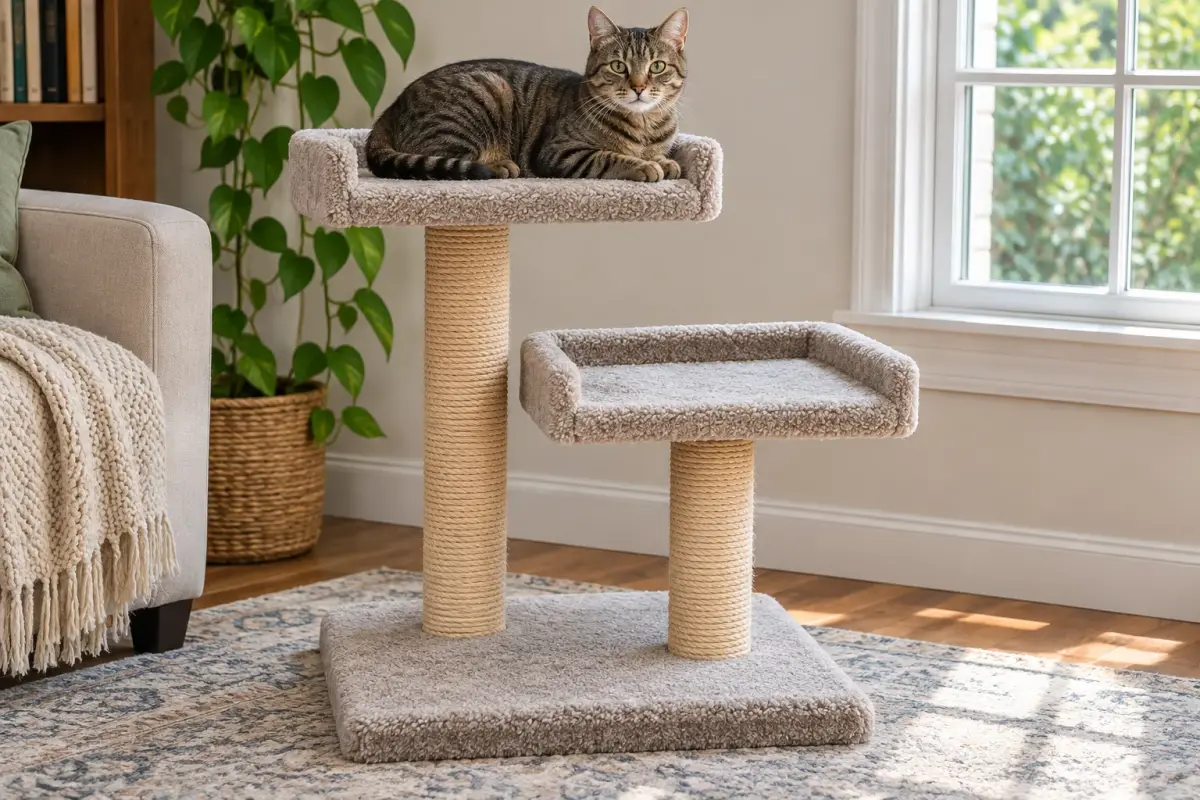
A good cat tree is stable enough not to wobble under a leaping cat, has sisal-wrapped posts tall enough for a full stretch, and platforms wide enough for your cat to lie down on. Stability decides whether your cat trusts it, the posts decide whether it saves your sofa, and platform size decides whether a large cat actually sleeps there. Everything else is decoration.
By Matt GarnettUpdated November 14, 20264 min read2 sources
What matters most: stability
A cat that feels a tree sway once may never climb it again. The two numbers that decide stability are base size and weight. As a rule of thumb, a tree over about 5 feet tall needs a base at least 20 by 20 inches and solid particleboard or wood, not hollow tubes. Floor-to-ceiling trees brace against the ceiling with a tension pole and are the steadiest tall option.
Give the tree a shake in the store, or read reviews for words like wobbly or tipped. If you already own a tall tree that rocks, anchor it to a wall stud with a furniture strap or move it into a corner, where two walls stop it from leaning. You can compare cat trees with these stability points in mind.
Posts and scratching
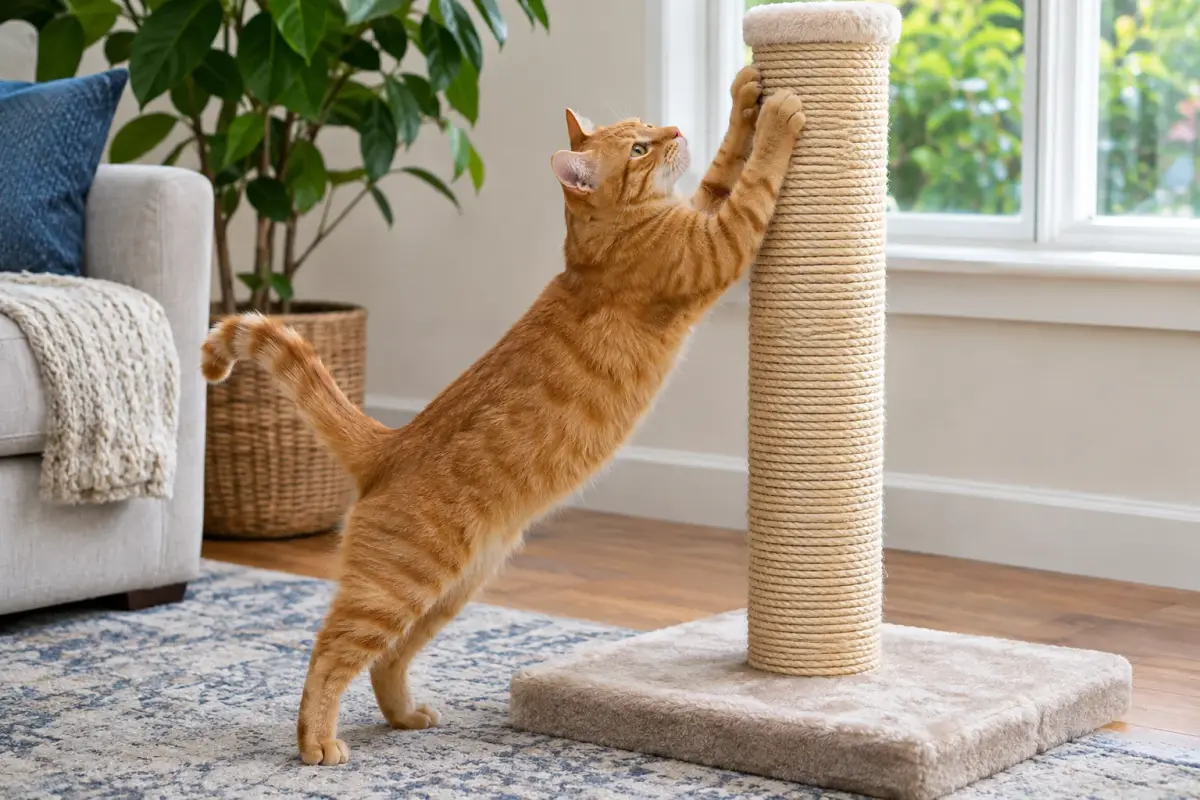
Cornell Feline Health Center says a scratching post should be at least as tall as your cat standing on its hind legs with front legs outstretched, and sturdy enough not to tip. On a cat tree, that means at least one uninterrupted sisal post of about 30 inches or more, not a series of short sections broken up by platforms.
Sisal rope is the most durable scratching surface and the one most cats prefer for vertical scratching. Carpet-covered posts look softer but snag claws and can teach a cat that carpet is for scratching. Thick posts, around 3 to 4 inches across, feel steadier under a big cat than thin ones.
The main types compared
Compact towers of 3 to 4 feet suit small apartments, kittens and seniors, with a condo, a perch and a post. Mid-size trees of 4 to 6 feet suit most adult cats and add more levels. Floor-to-ceiling trees reach 7 to 9 feet and give the height climbers love in a small footprint, but need a ceiling the pole can grip.
Modern wooden or furniture-style trees use solid wood and fabric pads; they often look better and last longer but cost more. Wall-mounted shelves and steps create a climbing route without floor space. Cardboard and novelty trees are fun but rarely sturdy enough for large or energetic cats.
Best type for each cat and home
For large cats such as Maine Coons, which PetMD puts at up to 25 pounds for males, look for platforms at least 16 by 20 inches, a heavy wide base and posts of 4 inches or more. PetMD suggests a sturdy tree at least 6 feet tall for the breed. For kittens and seniors, choose a lower tree with short gaps between levels, ramps or steps, and a low first platform.
For multi-cat homes, choose a tree with several perches at different heights, two entrances on any condo, and more than one route up, so one cat cannot block another. A five-story cat tree with a hammock is one example of a multi-level design. For apartments, a floor-to-ceiling pole or a window-side tower gives height without a big footprint. A cat climber with a house is another style to consider.
What to avoid
Avoid narrow bases on tall trees, platforms held up by a single thin tube, and hammocks or cubes held on with staples. Avoid dangling toys on long strings for unsupervised cats, as cats can swallow string. Avoid tiny perches marketed as beds: if your cat cannot curl up fully, it will not sleep there.
Check the stated weight capacity and assembly hardware. Cheap trees often come with soft screws that strip after a few weeks of jumping. Tighten all bolts after the first week and again every couple of months, which keeps even a modest tree steady.
Where to put it, and how long it lasts
Placement drives use. Most cats prefer a tree near a window and in a room where the family spends time, rather than tucked away in a spare room. Browse cat trees with that spot in mind. Cornell suggests placing scratching posts near areas the cat already likes, then encouraging use with treats, praise or a little catnip.
Expect to replace the sisal before the tree. Many trees have replaceable posts or can be rewrapped with sisal rope. If one sisal post is not enough, cat scratching posts add a second scratching spot, and a sisal cat tree is one place to look for sisal-wrapped posts. Vacuum carpeted platforms weekly and replace cushions that smell. A wobbly or damaged tree is a fall risk; a cat that limps after a jump or fall should be checked by your vet.
This page is general information, not veterinary advice, and it cannot replace an examination by the vet who knows your pet.
Cat-tree supports and floor use
| Structure | How it occupies space | Check before choosing |
|---|---|---|
| Compact tower | A shorter floor-standing structure | Base,platform dimensions and routes |
| Multi-level tree | A taller stack of platforms and enclosed spaces | Platform spacing and full footprint |
| Floor-to-ceiling | A pole reaches the ceiling | Permitted ceiling height and fixing |
| Wooden furniture style | Exposed rigid panels with pads | Pad attachment and cleanable surfaces |
| Wall route | Separate shelves or steps fixed to a wall | Wall construction and exact mounting instructions |
Common questions
What is the best cat tree for multiple cats?
Choose one with several perches at different heights, more than one route up, wide platforms and condos with two openings. A heavy base matters more with several cats jumping on and off at once.
How tall should a cat tree be?
Most adult cats enjoy trees of 5 to 6 feet, and climbers love floor-to-ceiling designs. Kittens and seniors do better with lower trees and short gaps between levels. Height only helps if the base is stable enough.
What makes a good quality cat tree?
A wide, heavy base, solid wood or thick particleboard, sisal-wrapped posts, platforms big enough to lie on, and strong bolts. Replaceable posts and washable cushions add years of use.
Are floor-to-ceiling cat trees safe?
They are among the most stable tall designs when the tension pole is fitted to the right ceiling height and tightened properly. Check the pole every few weeks, and do not use one under a sloped or textured ceiling it cannot grip.
Sources we checked
This guide is general information, not veterinary advice. If your pet is unwell or injured, contact your veterinarian.


