






Care & how-to
How to Cat-Proof a Christmas Tree
You can have a Christmas tree with a cat. The trick is to assume your cat will climb it, bat at it and chew it, then remove the parts that can hurt. Anchor the tree so it cannot tip, skip tinsel completely, cover the tree stand water, keep cords and glass ornaments out of paw reach, and give your cat something better to climb.
By Matt GarnettUpdated November 9, 20265 min read3 sources
Why cats and Christmas trees clash
To a cat, a tree that appears in the living room overnight is a new climbing frame, a scratching post and a toy box hung with shiny moving objects. Climbing is normal behavior, and so is swatting at anything that dangles or sparkles, so a cat that goes up the trunk on the first night is not being naughty.
The risk is not really the tree itself. It is what we hang on it and put under it: tinsel and ribbon that can be swallowed, glass that can break, plugged-in cords that can be bitten, tree water that can upset a stomach, and a tree heavy enough to injure a cat if it falls.
Step 1: Choose the spot and anchor the tree
Pick a corner away from sofas, shelves and windowsills your cat already uses as launch pads. A tree with nothing beside it to jump from is much harder to reach the top of. A wide, heavy stand helps, and an artificial tree is lighter but just as easy to pull over.
Then secure it. The ASPCA advises anchoring the tree firmly so it cannot tip onto a pet. Run clear fishing line or a thin cord from the upper trunk to a small hook in the wall or ceiling, or tie it to a curtain rod bracket. Test it by giving the tree a firm push before any decorations go on.
Step 2: Skip tinsel and choose safer ornaments
Tinsel is the single most important thing to leave in the box. The ASPCA warns that swallowed tinsel can cause severe vomiting, a blocked digestive tract, dehydration and possibly surgery, and cats are especially at risk because they love to bat it and carry it in their mouths. Ribbon, curling string and gift bows carry the same risk.
For ornaments, use shatterproof plastic, felt or wood, and keep anything glass or sentimental on the top third of the tree. Hang ornaments with closed loops of thread or green twist ties rather than open metal hooks, which can snag a paw or be swallowed. Avoid salt-dough ornaments: the ASPCA notes they can cause dangerous electrolyte imbalances even when dry.
Step 3: Cover the water and manage the lights
A real tree sits in a bowl of water that many cats find irresistible. VCA notes that tree water can contain fertilizers, pine oils and bacteria that cause stomach upset, and Pet Poison Helpline says drinking it typically causes mild vomiting or diarrhea. Cover the stand with a tree skirt tucked tight, a stand cover or a circle of foil, and keep additives out if you can.
Cords are the more serious hazard. VCA warns that a cat biting a plugged-in cord can suffer a severe tongue burn or an electrical shock that may damage the lungs or heart. Run cords up the back of the tree, tape them to the wall or floor, slip them through cord protectors, and unplug the lights whenever no one is in the room.
Step 4: Needles, plants and the rest of the room
Fallen needles are worth sweeping up daily. Pet Poison Helpline says needles can irritate the mouth and stomach and, in larger amounts, may cause a blockage. Artificial needles that a cat chews off can do the same, so watch for chewing on either kind and move the tree or block access if it becomes a habit.
Holiday plants need the same care. Lilies, including Christmas lilies, are highly toxic to cats and can cause kidney failure, so keep them out of a cat home entirely. Poinsettias usually cause only mild stomach irritation, while holly and mistletoe can cause stomach upset and, in larger amounts, more serious signs. Faux plants are the simplest answer. Keep candles out of reach or use battery-powered ones.
Give your cat a better option, and know when to call the vet
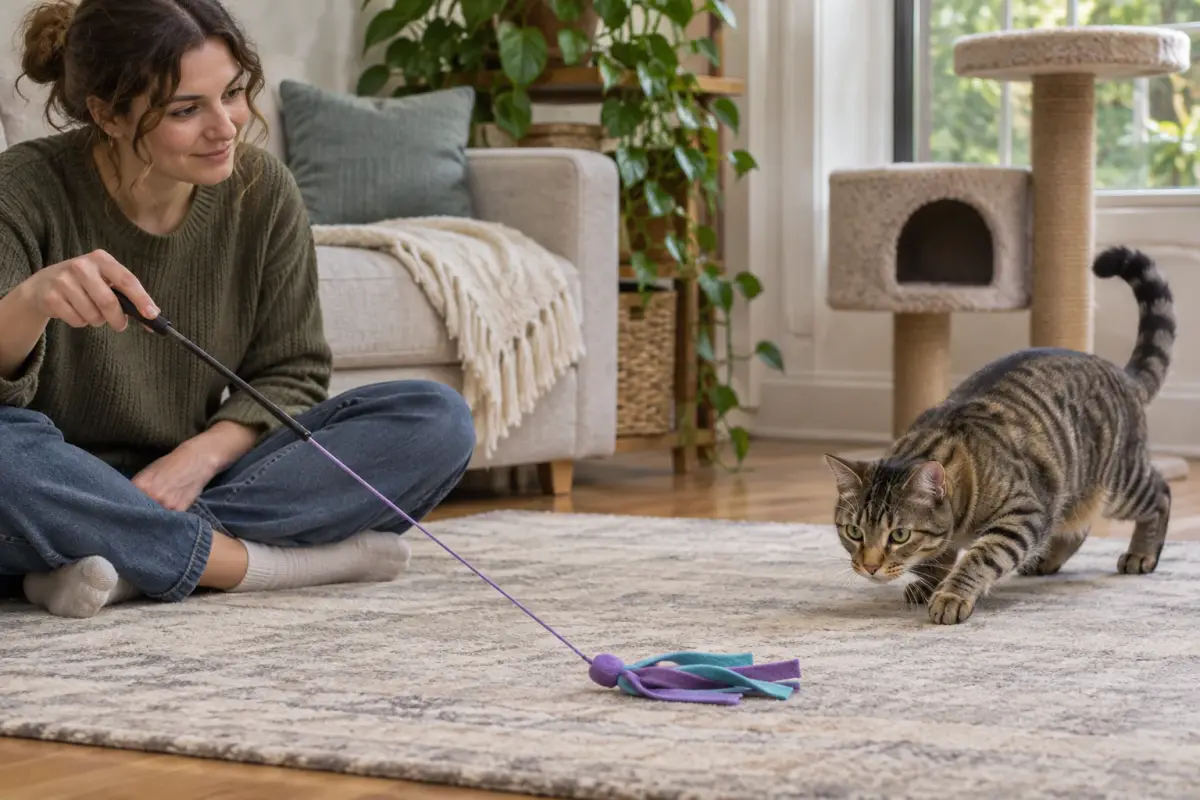
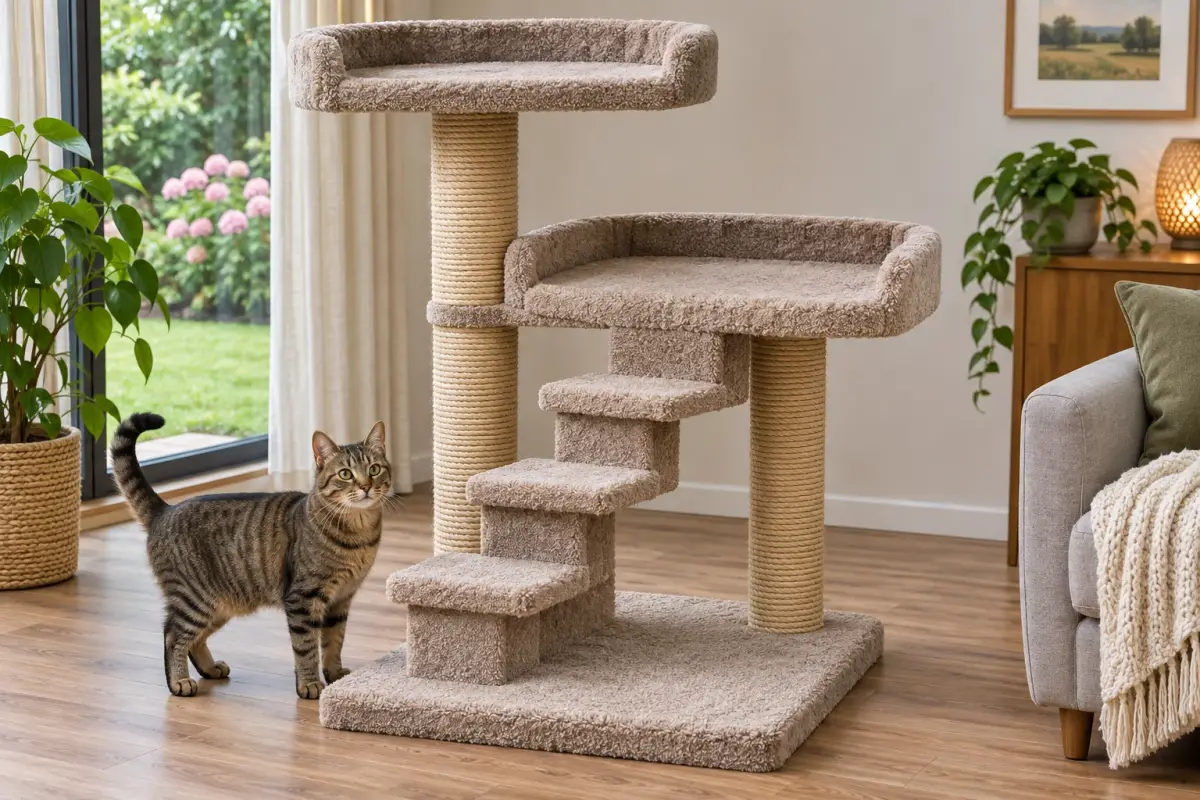
Cats leave the tree alone more readily when they have somewhere more appealing to climb. Put a cat tree or a sturdy shelf with a view of the room nearby, play with a wand toy before you leave the house, and reward your cat for using its own space. A wooden cat tree or a scratching post in a different corner gives the urge to climb and scratch an approved target. Some owners close the door to the tree room overnight for the first week, which is a perfectly good solution.
Call your vet straight away if your cat has swallowed tinsel, ribbon or string, bitten a cord, or chewed a lily. If you see string or tinsel coming from your cat's mouth or rear end, do not pull it; VCA warns this can injure the intestine. For possible poisoning, the ASPCA Animal Poison Control Center is at (888) 426-4435 and Pet Poison Helpline at (855) 764-7661; a fee may apply.
This page is general information, not veterinary advice, and it cannot replace an examination by the vet who knows your pet.
Common questions
Are real Christmas trees poisonous to cats?
Pine, fir and spruce trees are not considered highly toxic, but the needles can irritate the mouth and stomach, and swallowing many can cause a blockage. Tree water can also cause mild vomiting or diarrhea, so keep it covered.
How do I stop my cat from climbing the Christmas tree?
Anchor the tree so climbing cannot topple it, place it away from furniture your cat jumps from, and leave the lower branches bare for the first few days. A nearby cat tree and daily play give your cat a better place to burn energy.
Is an artificial tree safer for cats?
It removes the tree water and fresh needles, which helps, but artificial trees still tip, still carry lights and ornaments, and some cats chew the plastic needles. Anchor it and decorate it with the same care as a real tree.
Do citrus sprays keep cats away from the tree?
Many cats dislike citrus smells, so some owners place orange peels around the base. Never use concentrated essential oils, which can be harmful to cats, and remember a deterrent works best alongside a more appealing place to climb.
Sources we checked
This guide is general information, not veterinary advice. If your pet is unwell or injured, contact your veterinarian.


