






Care & how-to
How to Clean a Cat Tree: Carpet, Sisal and Fleas
Vacuum a cat tree weekly, spot-clean stains with mild, unscented soap and water, and deep clean it every month or two by vacuuming thoroughly, washing removable covers and blotting the carpet. Use an enzymatic cleaner on urine or vomit, avoid strong chemicals and essential oils, let everything dry completely, and tighten loose screws while you are there.
By Matt GarnettUpdated November 14, 20264 min read3 sources
Why cat trees need cleaning
A cat tree collects fur, dander, dust, litter tracked from paws, the odd hairball and, for some cats, food. Over time this builds up in the carpet and in the gaps of the sisal. For people with allergies, it becomes one of the biggest sources of cat dander in the room.
Cleanliness also affects whether your cat keeps using it. Cats are sensitive to smell, and a tree that smells of urine or vomit, or of a harsh cleaner, may be abandoned. Keep the familiar scent but lose the grime. If your tree is beyond cleaning, our cat trees are the place to look for a replacement.
Weekly: vacuum and de-fur
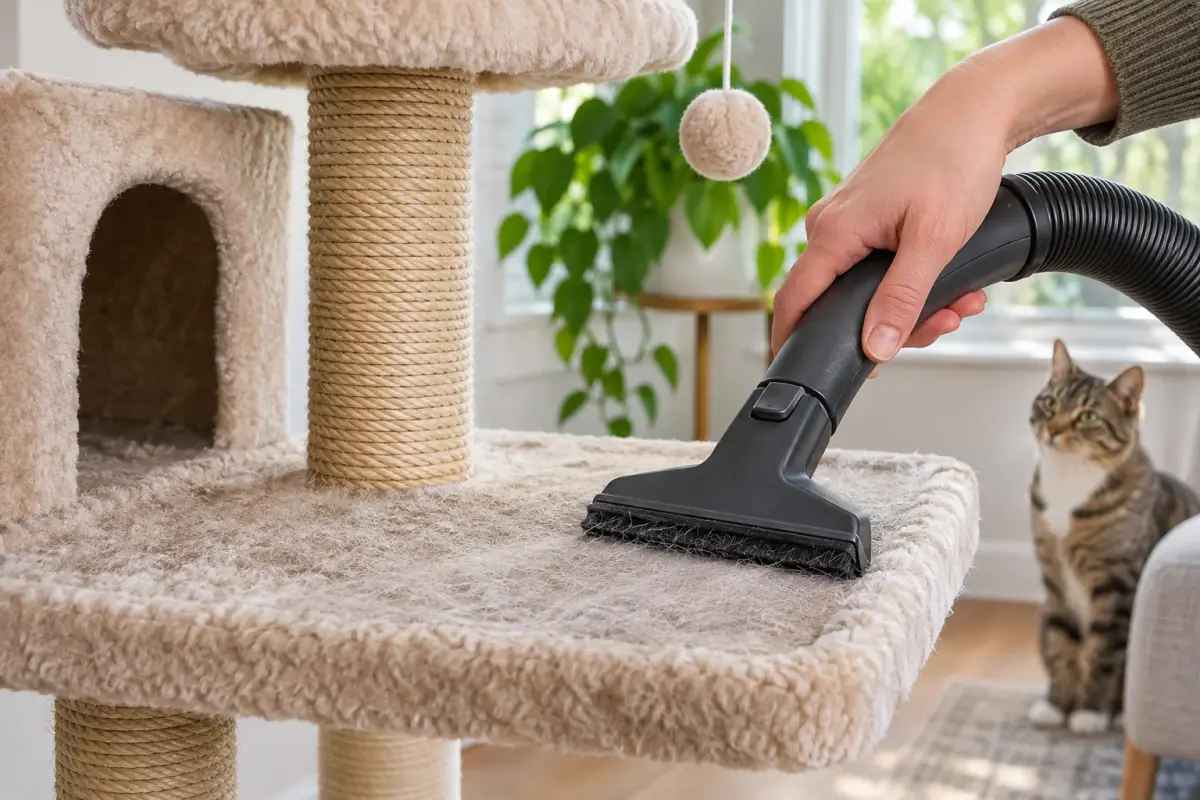
Run a vacuum with an upholstery or brush attachment over every platform, cubby and post. A rubber grooming glove, a damp rubber dish glove or a lint roller lifts fur that the vacuum misses, especially from fleece and carpet.
Shake out or wash removable beds and hammocks. Check for loose sisal strands and trim them, since loose string-like pieces can be chewed and swallowed. Cornell Feline Health Center warns about strand-like toy parts for this reason.
Spot-cleaning carpet and fabric
For everyday stains, mix a little unscented dish soap in warm water, dab it on with a cloth, blot, then dab again with plain water and blot dry. Do not soak the carpet, because the wood underneath can warp and stay damp, which encourages odor and mold.
For urine, vomit or diarrhea, blot up as much as possible, then use an enzymatic pet-odor cleaner, following the label. The ASPCA recommends enzymatic cleaners for pet urine and warns against ammonia-based products, and Cornell also advises avoiding vinegar-based cleaners, because these smells can draw a cat back to mark the same spot.
Deep cleaning every month or two
Step 1: Take the tree outside or onto a sheet and vacuum thoroughly, including the underside of platforms. Step 2: Remove and machine wash any covers or beds in hot water with unscented detergent. Step 3: Spot-clean all carpet as above. Step 4: Wipe hard surfaces and the base with a damp, soapy cloth.
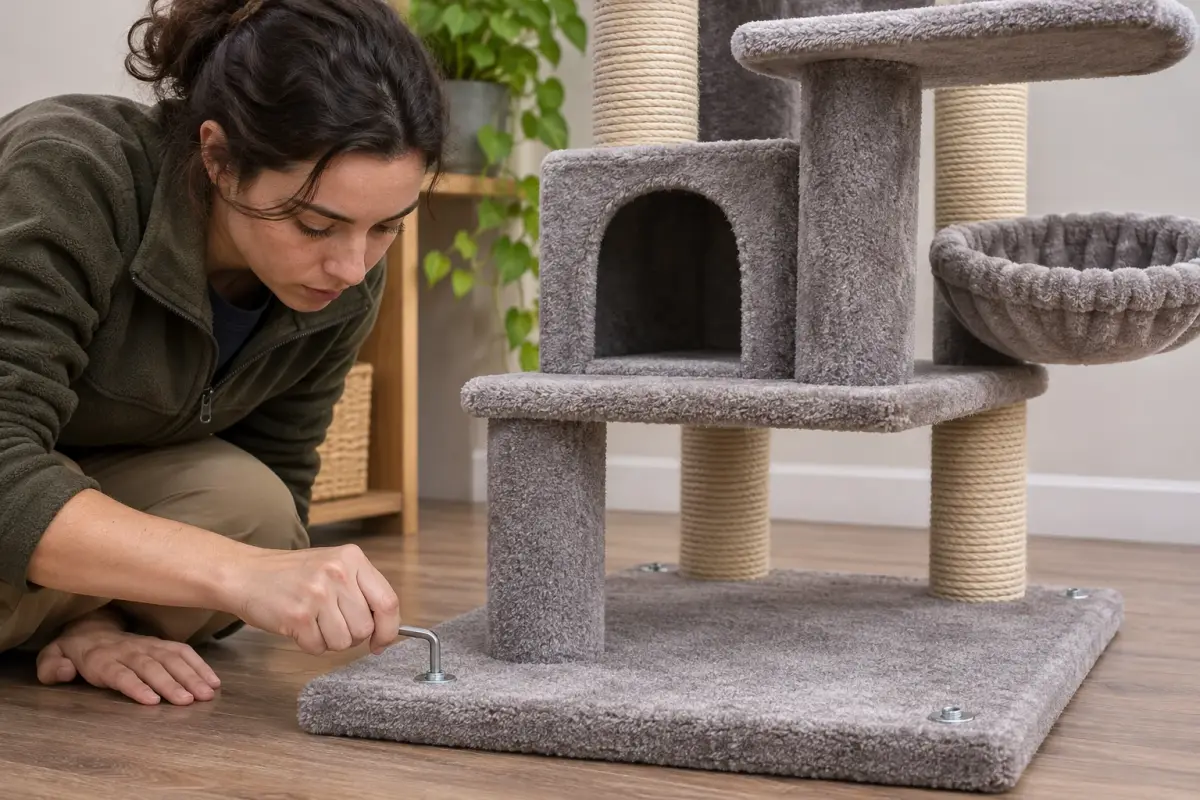
Step 5: Let everything dry fully, ideally in sunlight or with a fan, before your cat uses it. Step 6: Check every screw and bracket and tighten them; Cornell stresses that cat furniture must be sturdy enough not to tip. Sprinkle a little catnip on the top platform to welcome your cat back.
Fleas and cleaners to avoid
If your cat has fleas, the tree will hold eggs and larvae. Vacuum it daily for a few weeks, empty the vacuum outside each time, and wash all removable fabric hot. Treat your cat with a flea product your vet recommends; flea sprays meant for dogs or for homes are not safe to use on cats or on surfaces they lie on without checking the label and your vet.
Avoid bleach, strong disinfectants, scented sprays and essential oils, which can irritate cats or be harmful to them. Steam cleaning works for some trees, but heat and moisture can loosen glue, so let the tree dry completely.
When to replace it, and when to call your vet
Replace carpet or the whole tree when it smells even after cleaning, the carpet is matted flat, platforms crack or the tree wobbles. Rewrapping posts with fresh sisal can extend its life. If you do replace it, a sisal cat tree is one place to start, and a wooden cat scratcher with a sisal board can cover for a worn post in the meantime; more cat scratchers and cat trees are in the shop, and our cat tree buying guide covers what to check.
Call your vet if you find frequent vomit or hairballs on the tree, urine on platforms, blood or flea dirt. Repeated vomiting or urinating outside the box can have medical causes, and a flea problem is best treated with your vet's guidance.
This page is general information, not veterinary advice, and it cannot replace an examination by the vet who knows your pet.
Common questions
How do you get cat urine out of a cat tree?
Blot up as much as you can, soak the area with an enzymatic pet-odor cleaner, let it work as directed and blot dry. Avoid ammonia and vinegar, which can encourage your cat to mark the same spot.
Can you steam clean a cat tree?
Steam can lift dirt and kill flea eggs, but heat and moisture may loosen glue and warp wood. Use short passes, avoid soaking, and let the tree dry fully before your cat climbs it.
How often should you clean a cat tree?
Vacuum weekly, spot-clean as needed, and deep clean every one to two months. Clean more often if you have allergies, several cats or a cat that vomits hairballs on its favorite perch.
Sources we checked
This guide is general information, not veterinary advice. If your pet is unwell or injured, contact your veterinarian.


