






Care & how-to
How Do Dogs Play With Cats? What Is Safe and What Is Not
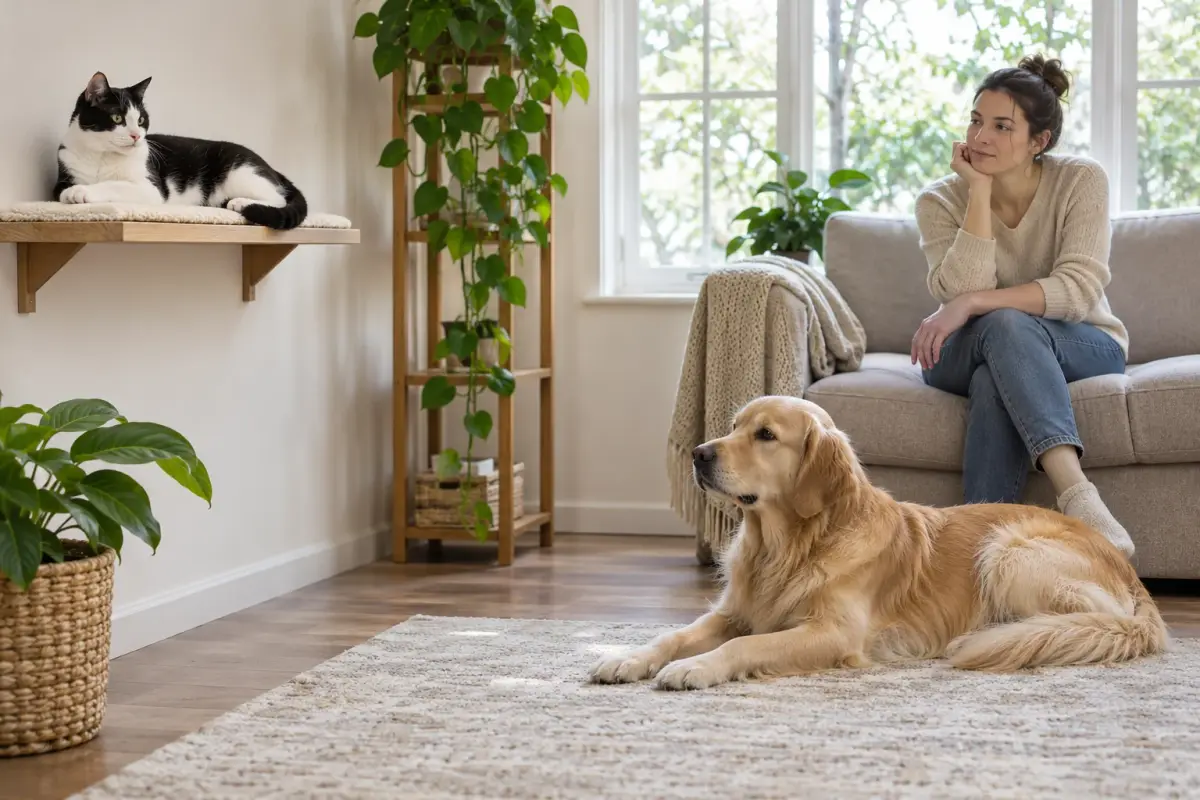
Dogs and cats can play together, but only when both can leave at any time and neither is being chased. Safe play is short, loose and mutual, with the cat free to retreat to a high spot or a gated room. If the dog fixates, chases or the cat hisses, flattens its ears or lashes its tail, end the session and separate them.
By Matt GarnettUpdated November 14, 20264 min read2 sources
What play between a dog and a cat can look like
Dog-and-cat play is real but looks different from dog-and-dog play. A dog may bow, bounce and paw; a cat may stalk, pounce, bat and then retreat. VCA notes that stalking, pouncing and biting are common play behaviors in cats, especially in kittens and cats under two. When both animals take turns, pause, and can walk away without being followed, it is more likely to be play.
The difference between play and a problem is choice. Play is mutual, and either animal can stop it. Chasing is one-sided: the AKC says chasing is an instinct for dogs and that some breeds suit life with cats better than others, so a dog that locks on to the cat is not playing, whatever its tail is doing.
Signs the play is going well
Watch for relaxed bodies, short bursts of activity, and breaks in between. The cat can approach and leave on its own, the dog responds when you call or cue it, and both go back to normal behavior afterward. Keep early sessions brief, as the AKC advises with introductions: several short meetings a day, with treats for calm behavior from both.
Reward the dog for staying calm near the cat. The AKC suggests asking for a sit, a down or a stay and using cues such as leave it and watch me. A long line is a good intermediate step before the dog is off the leash.
Warning signs to stop the session
VCA says the first warning that a cat is becoming overstimulated is often side-to-side tail movement, followed by flattened ears and enlarged pupils, and recommends stopping the session before the cat becomes too agitated. With a dog and cat together, hissing, swatting, hiding or freezing are also reasons to stop and separate them.
On the dog's side, stop if it stares, stalks, chases, pins the cat or will not respond to your cue. Do not punish either animal. VCA warns that physical punishment can increase aggression or fear. Redirect the dog to an appropriate game such as fetch or a toy, as the AKC suggests, and give both animals time to settle.
Set up the home so the cat can always escape
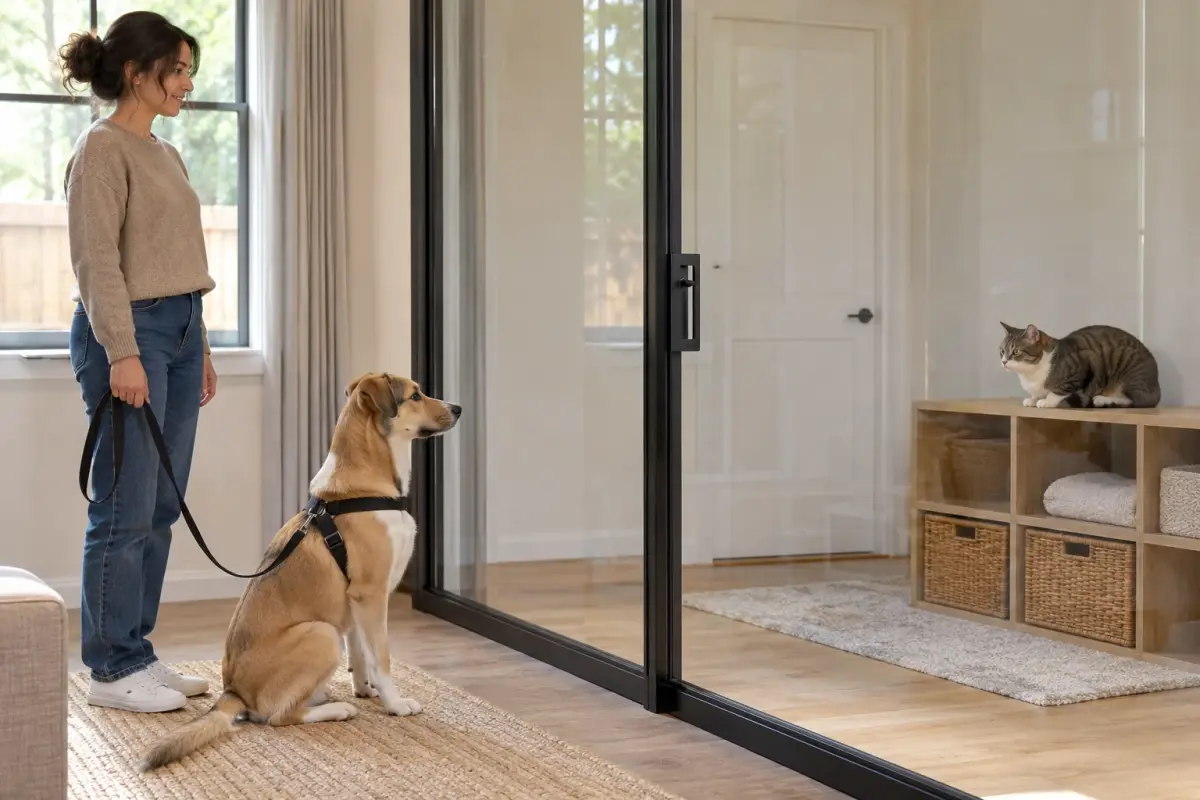
The AKC recommends giving the cat a permanent dog-free area, reached by a baby gate or cat door, with a litter box, bed, water, toys and a scratching post, and providing high perches such as shelves or cat trees. A tall perch such as this five-story cat tree with hammock lets the cat watch from above, and you can compare more cat trees with that in mind; our guide to choosing a cat tree covers the options.
A gate lets the two see and smell each other without contact. For a doorway, a portable mesh pet safety gate is one option, though a dog that jumps or pushes needs a sturdier barrier, and you can browse more dog gates. A second perch like this cat tree with a condo and big hammock gives the cat a second hiding choice.
Supervision and when to separate them
The AKC says not to leave the two alone together until you are confident, which may take weeks or months, and to keep the cat's nails trimmed or capped. Feed them apart, keep the litter box where the dog cannot reach it, and keep the first meetings with the dog on a leash. Our guide to introducing a cat to a dog walks through the first days.
If the dog fixates on the cat, the cat hides for days or stops eating or using the litter box, or either animal is hurt, separate them and talk to your vet or a qualified trainer or behaviorist. Scratches and bites should be checked, since cat bites in particular can become infected.
This page is general information, not veterinary advice, and it cannot replace an examination by the vet who knows your pet.
Common questions
How do I know if my dog is playing with my cat or chasing it?
Play is mutual and short, with pauses, and the cat can leave when it wants. If the dog stares, stalks or chases and ignores your cue, or the cat flees or hides, it is chasing and the session should stop.
Is it normal for dogs and cats to wrestle?
Some pairs do play-fight. It is fine only if both take turns, stay relaxed and can stop. If the cat hisses, flattens its ears, lashes its tail or tries to escape, end it and separate them.
How can I let my cat get away from the dog?
Give the cat a dog-free room behind a baby gate or cat door and high perches such as shelves or cat trees, so it can always leave and watch from above.
Can I leave my dog and cat alone together?
The AKC says not to until you are confident they are safe, which may take weeks or months. Until then keep them supervised and separate when you are out.
Sources we checked
This guide is general information, not veterinary advice. If your pet is unwell or injured, contact your veterinarian.


