






Care & how-to
How to Introduce a Cat to a Dog
Introduce a cat and a dog slowly, in stages: keep them in separate areas for the first few days, swap bedding so they learn each other's scent, feed them on either side of a closed door, then let them see each other through a baby gate with the dog on a leash. Only move on when both are calm. Expect it to take weeks, sometimes months, before they can be left alone together.
By Matt GarnettUpdated November 9, 20264 min read2 sources
Before you start: set up two safe zones
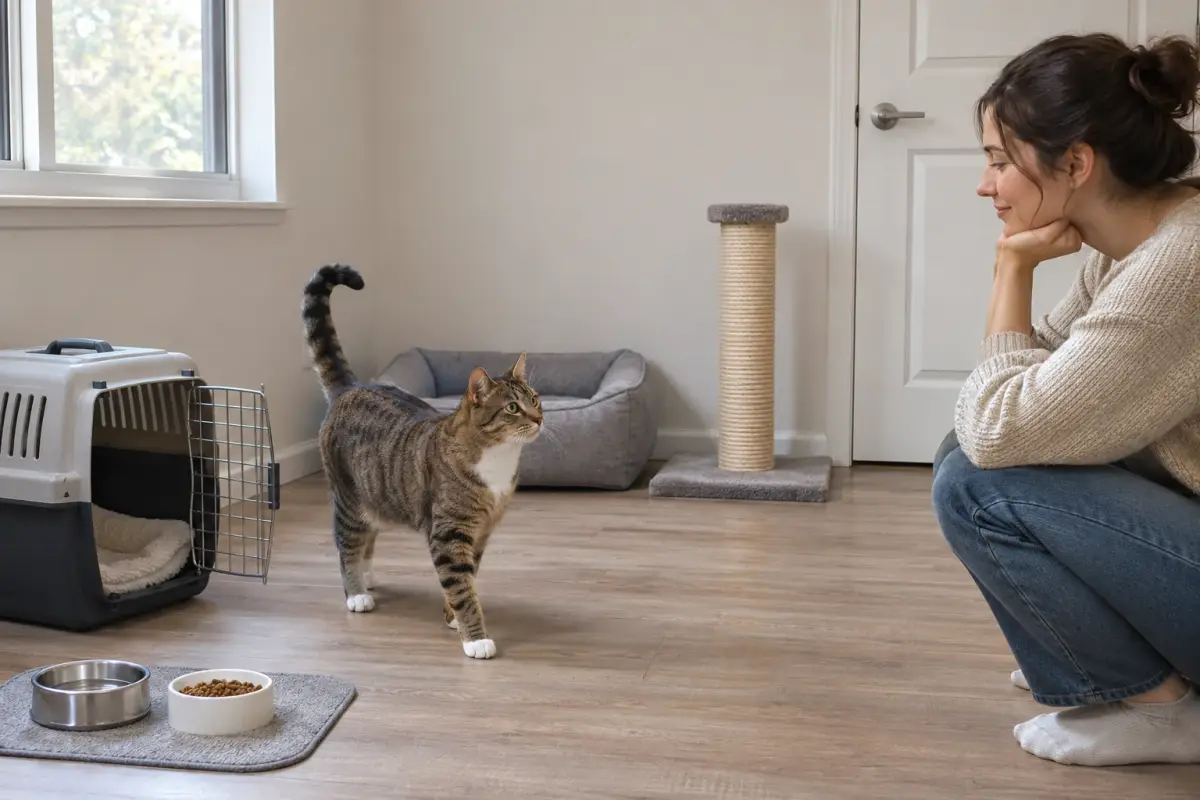
Give the cat a dog-free room with a litter box, food, water, a bed, a scratching post and somewhere high to perch. That room stays the cat's retreat for good, not just during introductions. Keep cat food and the litter box where the dog cannot reach them; many dogs will raid both.
Around the rest of the house, add escape routes: cat trees, cleared shelves and a pet gate with a cat door the cat can slip through. Trim the cat's nails beforehand to reduce injuries if a swipe happens. If the dog is new, give them their own space, such as a crate area, in a different part of the home.
Step 1: Scent before sight
For at least the first few days, keep them completely apart so they can hear and smell each other without contact. Rub a soft cloth on the dog and leave it near the cat's bowl, and do the same the other way round. Pair the new smell with something good, such as a meal or a favorite treat.
You can also rotate spaces: while the dog is out on a walk, let the cat explore the main living area, and let the dog sniff the cat's room while the cat is elsewhere. This builds familiarity with no chance of a chase.
Step 2: Meals on either side of a door
Feed them on opposite sides of a closed door, starting with the bowls a few feet back. Over several days, move the bowls closer each meal until both are eating calmly right by the door. If either one stops eating, hisses or stares fixedly at the door, move the bowls back to the last comfortable distance.
Meanwhile, practice basic cues with your dog away from the cat: sit, down, watch me and leave it. These are the tools you will use to keep the dog's attention on you, rather than on the cat, during the first meetings.
Step 3: First look through a barrier
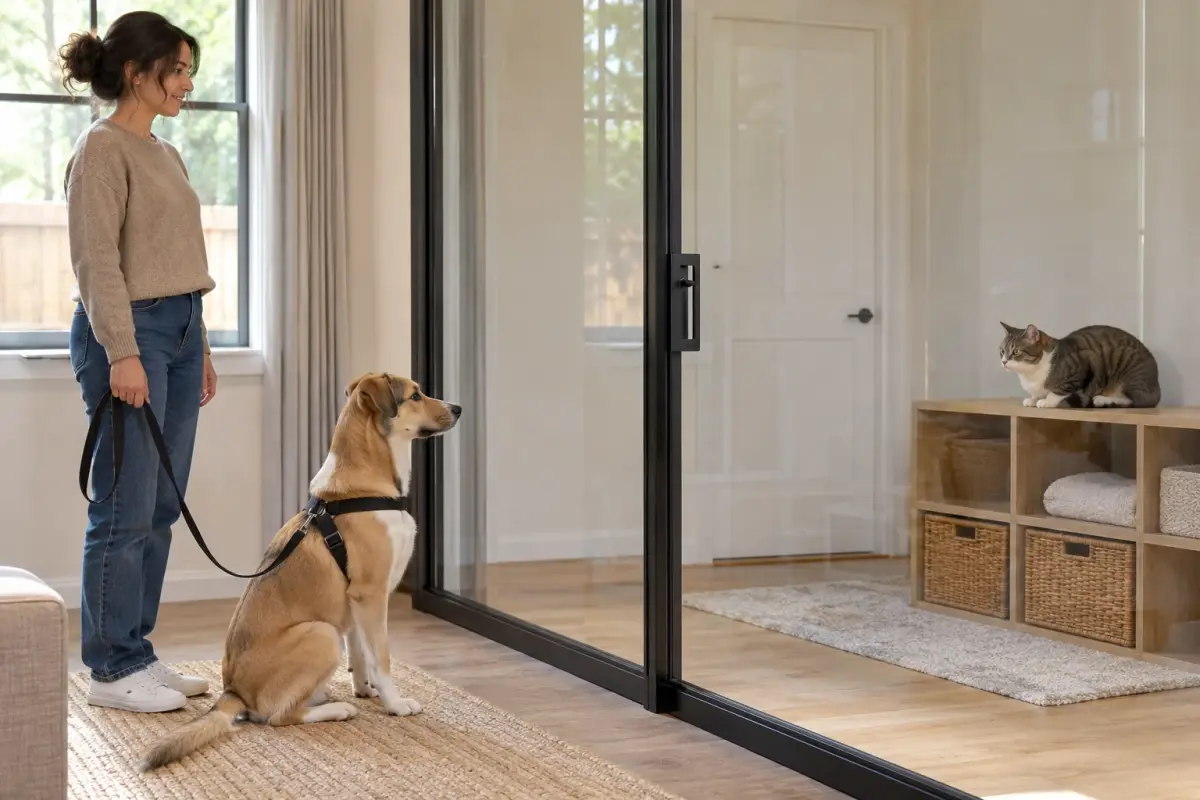
When both are relaxed at the door, let them see each other through a walk-through pet gate, cracked door or screen, with the dog on a leash. Keep sessions short, just a few minutes, and reward the dog for calm behavior such as sitting, looking away from the cat or lying down. Let the cat watch from a high spot and leave whenever it likes.
Repeat several times a day for at least a week. Lunging, barking, a fixed stare, whining or trembling from the dog, or hissing, flattened ears and a puffed tail from the cat, mean you have gone too fast. End the session calmly and go back a step.
Step 4: Supervised time in the same room
Once barrier sessions are consistently calm, bring them into the same room with the dog on a leash and the cat free to move, approach or leave. Give the dog something to do, like a chew or a trained settle on a mat, and reward glances at the cat that end with the dog turning back to you.
If the dog is reliably calm and responsive over many sessions, you can drop the leash and let it trail, then move to off-leash supervised time. Keep separating them behind a closed dog gate with a door, or a shut door, when you are out or asleep until you are confident; the AKC notes this can take a few weeks to a few months.
Dogs with a strong chase drive, and when to get help
Chasing is instinctive for many dogs, and breeds developed for hunting, herding or ratting can find a running cat hard to ignore. Never let a dog chase the cat, even in play, since each chase makes the next more likely. Some dogs can only ever be trusted with a cat under supervision, and a few cannot safely live with one.
Get help from a qualified trainer or behavior professional, and talk to your vet, if the dog fixates or lunges no matter the distance, if the cat stops eating, hides constantly or begins urinating outside the box, or if there has been any injury. Stress can make cats ill, so a cat who withdraws needs attention too.
This page is general information, not veterinary advice, and it cannot replace an examination by the vet who knows your pet.
Common questions
How long does it take for a cat to get used to a dog?
Simple introductions may settle in one to two weeks, but many pairs need several weeks to a few months before they are relaxed together. Let the more nervous animal set the pace.
Is it easier to introduce a puppy or an adult dog to a cat?
Dogs and cats raised together young often get along more easily, but puppies are boisterous, so the cat needs escape routes. An adult dog known to be calm around cats can be easier still.
Should the dog be on a leash when meeting a cat?
Yes. A leash lets you prevent a chase and reward calm behavior during early meetings. The cat should never be restrained, so it can retreat whenever it wants.
What if my cat hisses at the new dog?
Hissing is a normal warning that the cat feels uneasy. Increase the distance, slow the process down and keep rewarding calm behavior. Persistent hiding or not eating is a reason to call your vet.
Sources we checked
This guide is general information, not veterinary advice. If your pet is unwell or injured, contact your veterinarian.


