






Care & how-to
How to Bathe a Dog at Home: Step-by-Step Guide
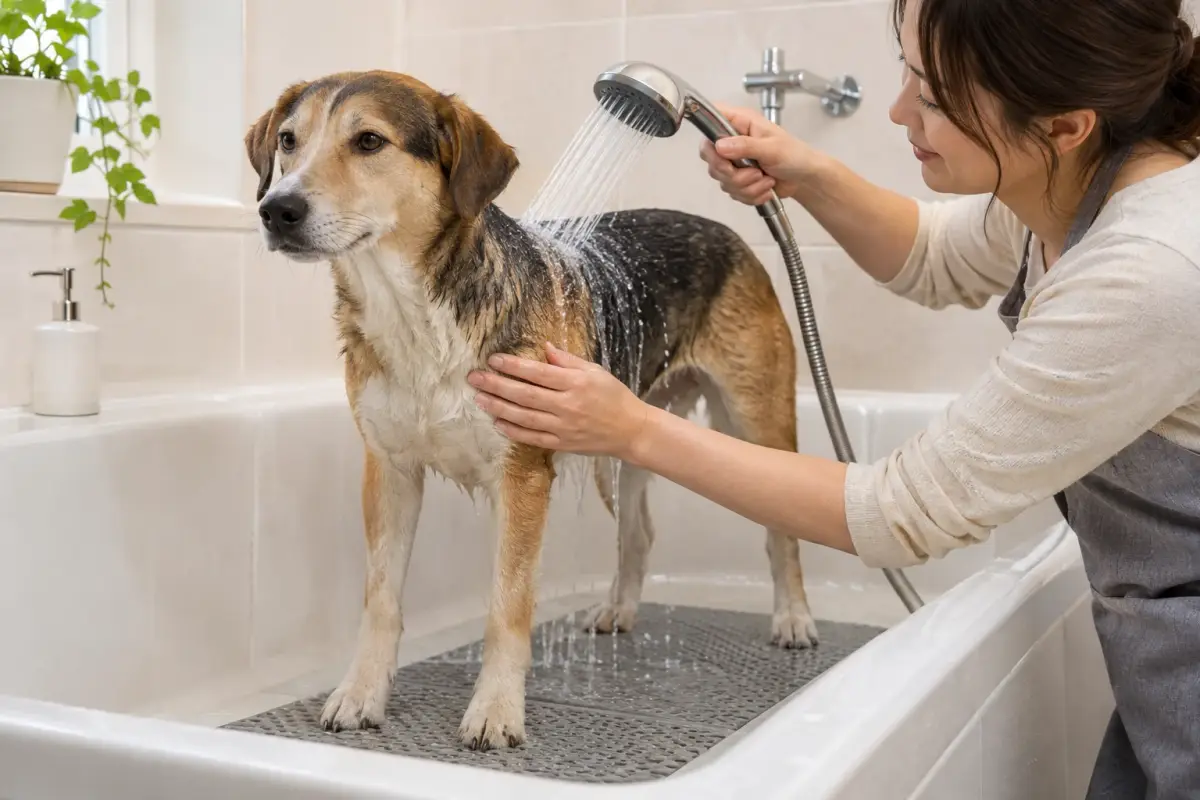
To bathe a dog, brush out tangles first, wet the coat thoroughly with lukewarm water, lather a dog shampoo from the neck back, wash the face last with a damp cloth, and rinse until the water runs completely clear. Towel and dry your dog well, and keep it warm. Lots of treats and a non-slip mat make the whole thing calmer.
By Matt GarnettUpdated November 14, 20264 min read4 sources
Get ready before your dog gets wet
Gather everything first: a shampoo made for dogs, several absorbent towels, a non-slip mat for the tub or shower floor, a cup or hand-held sprayer, cotton balls for the ears if your vet recommends them, and treats. Small dogs can be washed in a sink or laundry tub; larger dogs in a bathtub, walk-in shower or, in warm weather, outdoors with a hose that runs lukewarm. The AKC advises against outdoor baths when it is cool or cold.
Brush your dog thoroughly before the bath. VCA Animal Hospitals notes that tangles and mats become harder to remove once wet, and water can tighten them against the skin. Trim nails a day or two earlier if they are due, so they do not scratch you or the tub. Take a walk first so your dog has been to the bathroom and is a little tired.
Step-by-step: washing
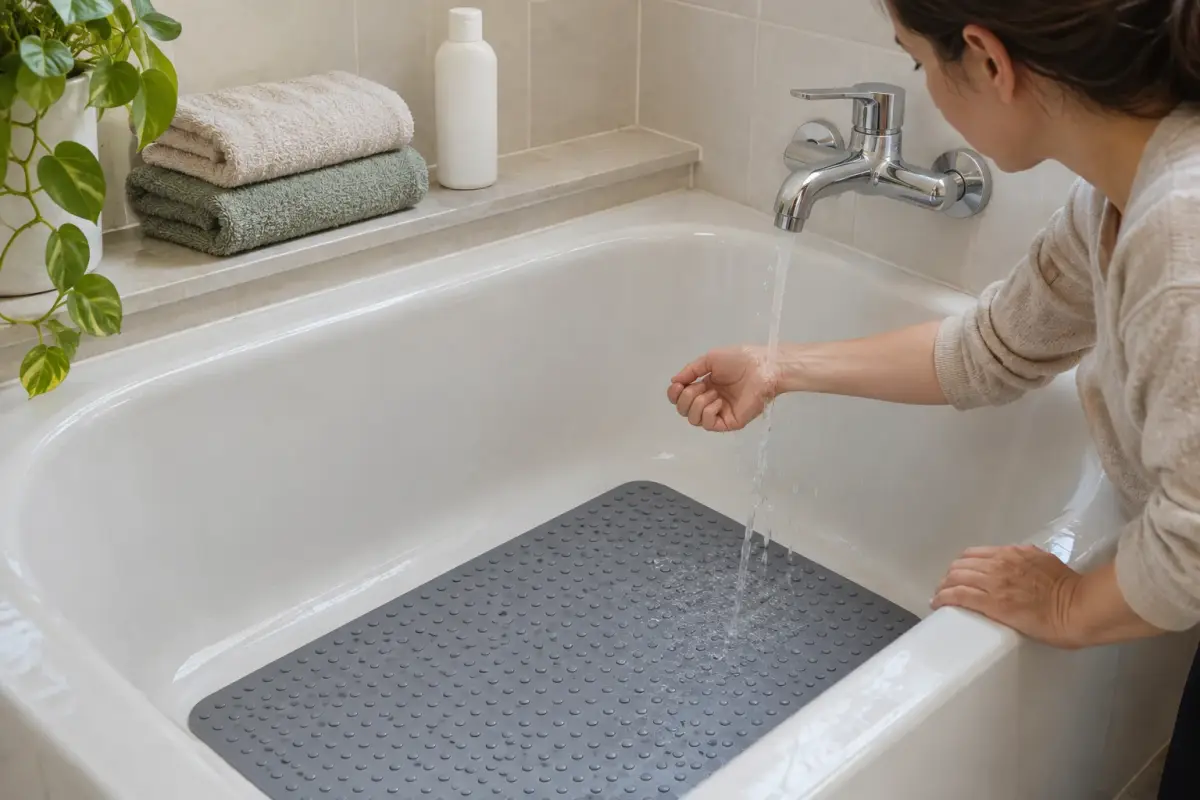
Step 1: Put your dog on the non-slip mat and test the water on your wrist; it should feel lukewarm, not hot. Step 2: Wet the coat right down to the skin, starting at the neck and working back and down the legs. Thick double coats take a while to soak through. Keep water away from the eyes, ears and nose. Step 3: Apply shampoo, diluted if the label suggests, starting at the neck and working backward, massaging it into the coat and skin.
Step 4: Wash the legs, paws, belly and tail, including under the armpits and between the toes. Step 5: Clean the face with a damp washcloth rather than pouring water over the head, wiping gently around the eyes and muzzle. Skin folds on breeds such as Bulldogs and Pugs need gentle cleaning and careful drying.
Step-by-step: rinsing and drying
Step 6: Rinse thoroughly, starting at the head and neck and working back. Leftover shampoo can irritate skin and cause itching, so rinse longer than you think you need, until the water runs clear and the coat feels squeaky rather than slick. The AKC suggests rinsing should take much longer than lathering. Step 7: If you use a conditioner made for dogs, apply it and rinse again.
Step 8: Squeeze excess water from the coat with your hands, then wrap your dog in a towel and rub dry. Let your dog shake, ideally while still in the tub. Step 9: Dry long or thick coats with a pet dryer on a cool or low setting, or a human dryer on its coolest setting held well away, brushing as you go. Keep your dog warm and indoors until it is completely dry.
How to bathe a puppy
Puppies need a gentler version. Use a mild puppy shampoo, slightly warm water, and a small tub or sink so your puppy feels secure. Keep the bath short, talk calmly, and offer treats throughout. VCA notes that puppies have thinner skin and are more sensitive to temperature, so check the water carefully and dry them thoroughly so they do not get chilled.
The first few baths are about teaching your puppy that water and handling are nothing to fear. If your puppy panics, end on a calm moment and try again another day. Between baths, spot-clean dirty paws or bottoms with a damp cloth instead of giving a full bath.
Tips for nervous dogs and when to call the vet
Spread a suction lick mat with a little dog-safe spread on the tub wall to keep your dog busy. Use a sprayer on low pressure or a cup, since running water noise bothers some dogs. Have a helper steady and reward. Never leave a dog alone in a tub, and never punish fear; go slower instead.
While bathing, look over the skin. Call your vet if you find lumps, red or scabby patches, hair loss, fleas or ticks, a bad smell from the ears, or if your dog seems sore when touched somewhere. Bath time is a good chance to spot problems early.
This page is general information, not veterinary advice, and it cannot replace an examination by the vet who knows your pet.
Common questions
What is the best water temperature for bathing a dog?
Lukewarm, similar to what you would use for a baby. Test it on your wrist. Hot water can scald and dry the skin, while cold water makes the bath stressful and leaves your dog chilled.
Should I bathe my dog before or after a haircut?
Brush and bathe before clipping, because clean, dry hair cuts more evenly and clippers stay sharper. Bathe again afterward only if needed to remove loose clippings.
How do I keep water out of my dog's ears during a bath?
Wash the head with a damp cloth instead of pouring water over it. Some vets suggest a cotton ball gently placed in the outer ear; ask yours, and remove it straight after the bath.
Sources we checked
This guide is general information, not veterinary advice. If your pet is unwell or injured, contact your veterinarian.


