






Buying guides
Best Cat Litter for Kittens: How to Choose
The best setup for a kitten is a box with a low entry, plain unscented litter in a fine, loose texture, and a quiet spot the kitten can reach quickly. Because kittens explore with their mouths, ask your vet whether clumping litter is right yet. Browse our litter boxes for open, shallow-entry styles, and keep the box simple while your kitten learns.
By Matt GarnettUpdated November 14, 20264 min read2 sources
The box: low entry and enough room
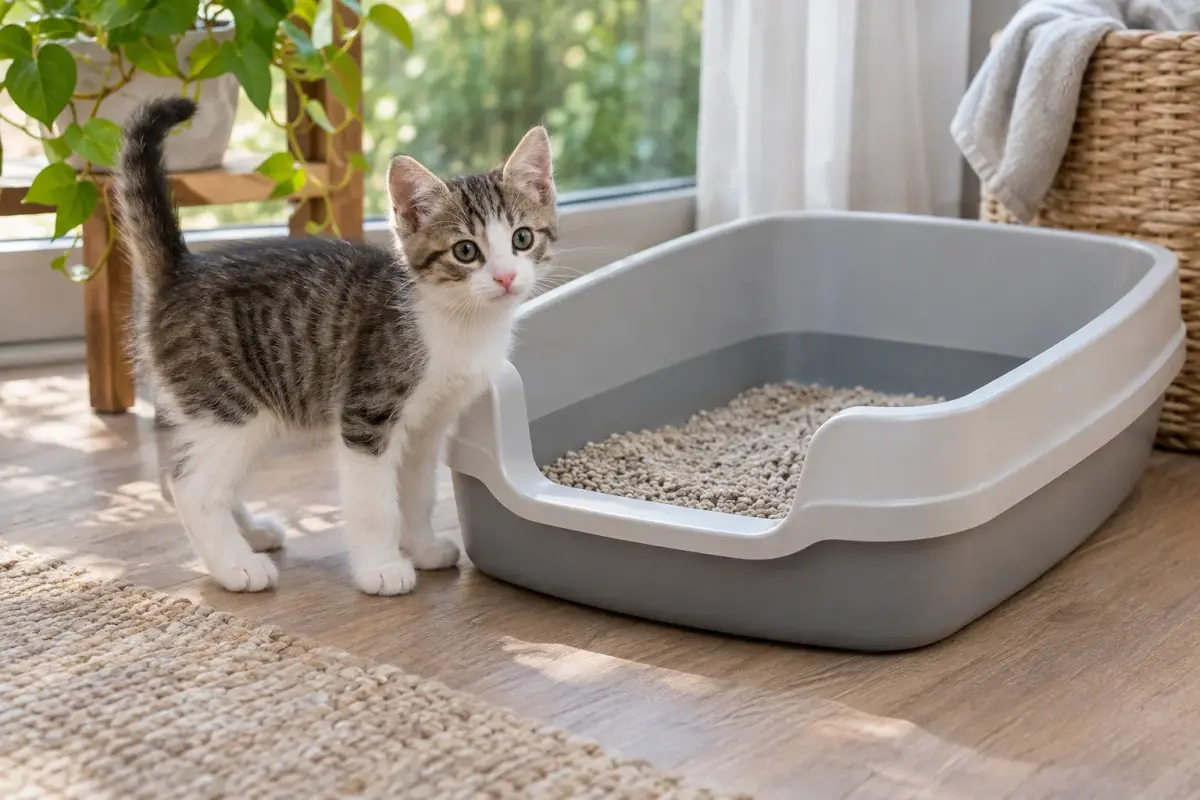
VCA Animal Hospitals says small kittens, seniors and cats with mobility problems need low sides they can enter and exit easily. The Merck Veterinary Manual adds that larger boxes are better, because cats need room to dig and turn around. VCA suggests a box about 1.5 times the length of your cat's body, so plan for the adult your kitten will become and make sure the entry stays low.
A shallow basin, such as a plain cat litter basin, is easy for a tiny kitten to climb into. As your kitten grows, a roomier open tray like this 18.9 inch cat litter box gives space to turn and dig. Provide at least 3 inches of digging material, which is the depth VCA advises for adult-size boxes, and top it up as your kitten learns to scratch.
Litter: what to look for
VCA says most cats prefer fine, clumping clay litter, and that cats eliminate best in loose, granulated material. The Merck Veterinary Manual says cats can be sensitive to smells, so unscented litter is often the better choice. For a kitten, that means skipping perfumed litters and choosing a plain, fine texture that feels natural to dig in.
Kittens often taste and nibble whatever they find. That is why it is worth asking your vet whether a clumping litter is suitable at your kitten's age, or whether to begin with a non-clumping one. Watch for any litter eating, and tell your vet if you see it. Keep the same litter once your kitten uses it reliably, since sudden changes can put a kitten off the box.
Open, high-sided or covered?
VCA does not recommend covered boxes, because most cats prefer an uncovered one, and a hood can also make a nervous kitten reluctant to go in. For most kittens an open box with a low entry is the best type. A kitten that stands to go, or kicks litter hard, may later need a backsplash or higher sides, which VCA mentions for cats that stand to eliminate.
Once your kitten is confident, a high-sided litter box can help contain scatter, as long as there is still a low way in. See our wider guide to litter boxes for how the main designs compare, and pair the box with a litter mat to catch stray granules.
Where to put the box and how many
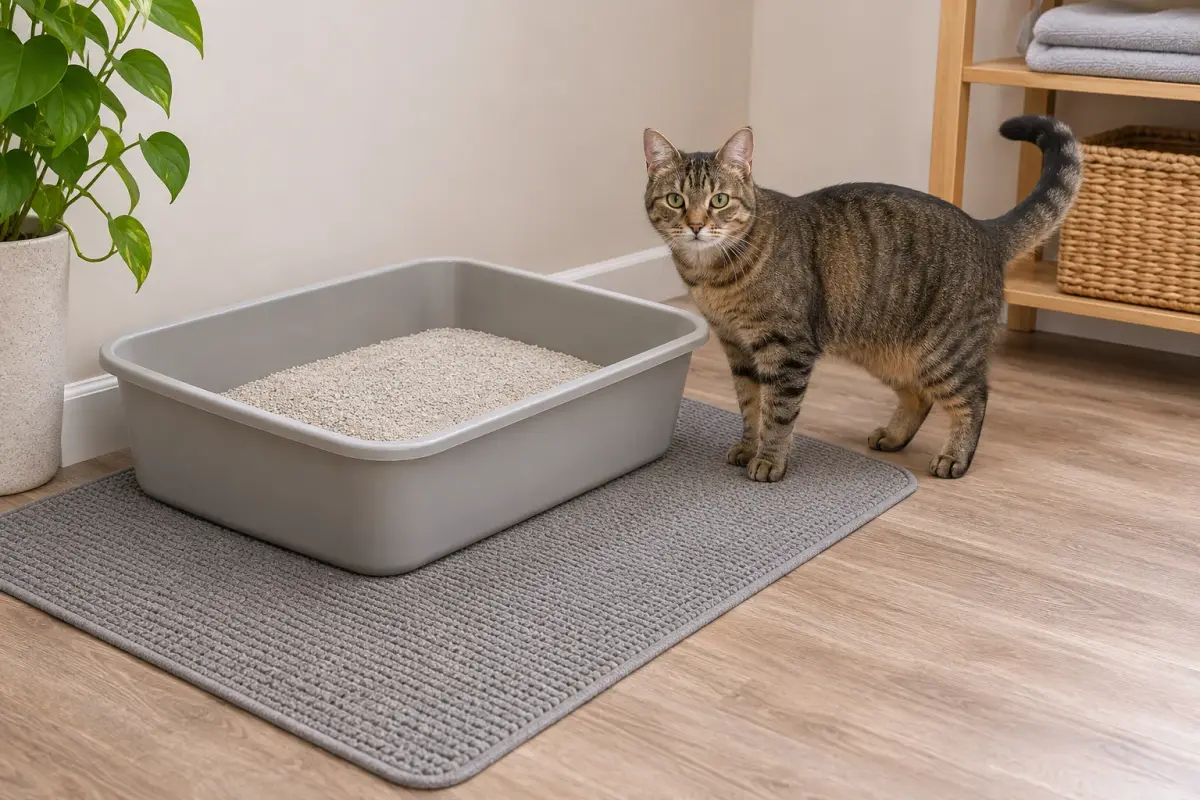
VCA advises a quiet but easily reached spot, away from food dishes and beds, and on each floor of a large home. Kittens have little warning, so a box close to where your kitten plays and sleeps prevents accidents. VCA also suggests confining a new kitten to a small room with its box until it uses it reliably.
The usual rule from both VCA and the Merck Veterinary Manual is one box per cat plus one extra, even for a single kitten once it roams the home. Our guide on how to litter train a kitten walks through the first days step by step.
Mistakes, accidents and when to call the vet
If your kitten has an accident, interrupt it with a brief, neutral sound and never scold, frighten or rub its nose in the mess, which VCA warns against. Clean the spot thoroughly with an enzymatic cleaner, since lingering odor invites repeat accidents. Move the kitten to the box and praise it when it goes.
If a kitten repeatedly goes outside the box, strains, cries in the box, or has diarrhea, see your vet promptly, since several illnesses can cause this. When you are ready to choose a box, browse our litter boxes.
This page is general information, not veterinary advice, and it cannot replace an examination by the vet who knows your pet.
Common questions
What is the best cat litter for kittens?
A plain, unscented, fine-textured litter is the safest starting point. Ask your vet whether clumping litter suits your kitten's age, since kittens often taste litter while exploring.
What kind of litter box is best for a kitten?
An open box with a low entry that the kitten can step into easily. VCA says small kittens need low sides, and most cats prefer uncovered boxes.
How deep should litter be for a kitten?
VCA advises at least 3 inches of digging material in a box. Some kittens do well starting shallower, so watch whether yours digs, and ask your vet or breeder if unsure.
How many litter boxes does one kitten need?
The standard guidance is one box per cat plus one extra. For a single kitten confined to a room, start with one box and add a second as it explores the home.
Sources we checked
This guide is general information, not veterinary advice. If your pet is unwell or injured, contact your veterinarian.


