






Training & behavior
How to Litter Train a Kitten
Most kittens litter train themselves within days, because digging in loose material is instinct. Your job is to make the right spot obvious: start your kitten in one small room with a shallow litter box of unscented, fine litter, place them in it after naps, meals and play, keep it scrupulously clean, and never punish accidents.
By Matt GarnettUpdated November 13, 20264 min read3 sources
Why kittens learn the litter box so quickly
Kittens are born with the urge to dig, eliminate and cover it up in loose, sandy material. VCA notes that most kittens eagerly use a box filled with soft litter, and many arrive from their mother or a foster home already using one. Very young kittens cannot even eliminate on their own until about three weeks old; by the time they come home, usually at eight weeks or older, they are ready.
So litter training is mostly about setup and supervision. If a kitten keeps going somewhere else, the cause is almost always the box, the litter, the location or a kitten given too much space too soon, rather than a kitten who cannot learn.
Step 1: Set up the right box and litter
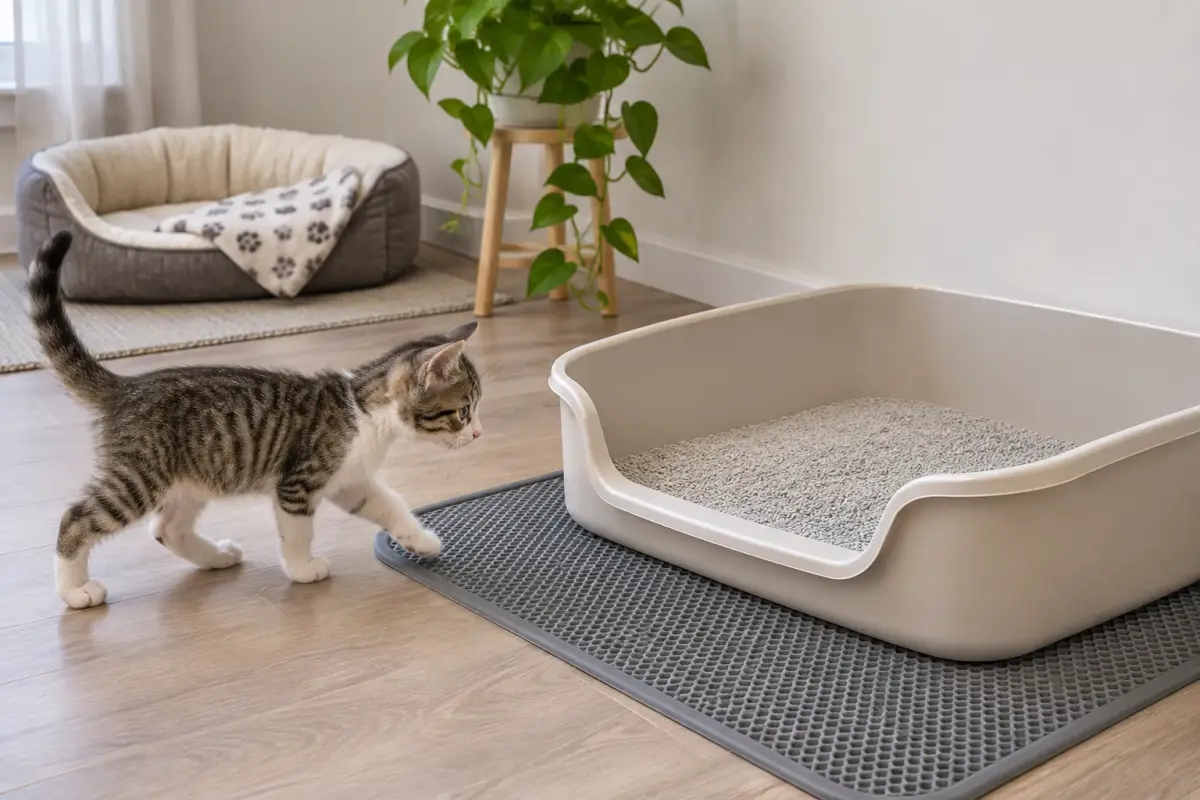
Choose a box with one low side your kitten can climb into easily but big enough to turn around in without stepping in waste. VCA suggests at least 3 inches of litter and recommends starting with a smaller box, then upgrading as your kitten grows; a full-grown cat does best with a box about one and a half times its body length.
Use an unscented, fine-grained litter. Both the ASPCA and Cornell Feline Health Center report that most cats prefer it, and VCA notes kittens tend to like clumping litter. Skip hoods and liners at first, because many cats dislike them; an open litter basin is the simpler start. If your kitten came from a foster or breeder, ask what litter they used and start with that. Our litter box buying guide covers the styles to move on to as your kitten grows.
Step 2: Start in one small room
Give your kitten a single cozy room for the first days or weeks: litter box with a litter mat under it, bed, toys, food and water, with the box placed well away from the food. VCA advises not letting a new kitten roam the house unsupervised until it reliably uses the box, and returning it to the room whenever you cannot watch it.
A small space means the box is never more than a few steps away, which matters because kittens give very little warning. As your kitten proves reliable, open up one more room at a time, adding a second box if the new area is far from the first.
Step 3: Place your kitten in the box at key times
Gently set your kitten in the box when it wakes from a nap, a few minutes after eating, after a play session, and any time you see sniffing, circling or pawing at the floor. VCA singles out waking from a nap as one of the most likely moments. You can scratch the litter lightly with a finger to show what it is for.
Let your kitten explore and step out on its own. Do not hold it in the box. When it uses the box, offer quiet praise or a small treat afterward. Within a few days most kittens head there on their own.
Step 4: Keep it clean and handle accidents calmly
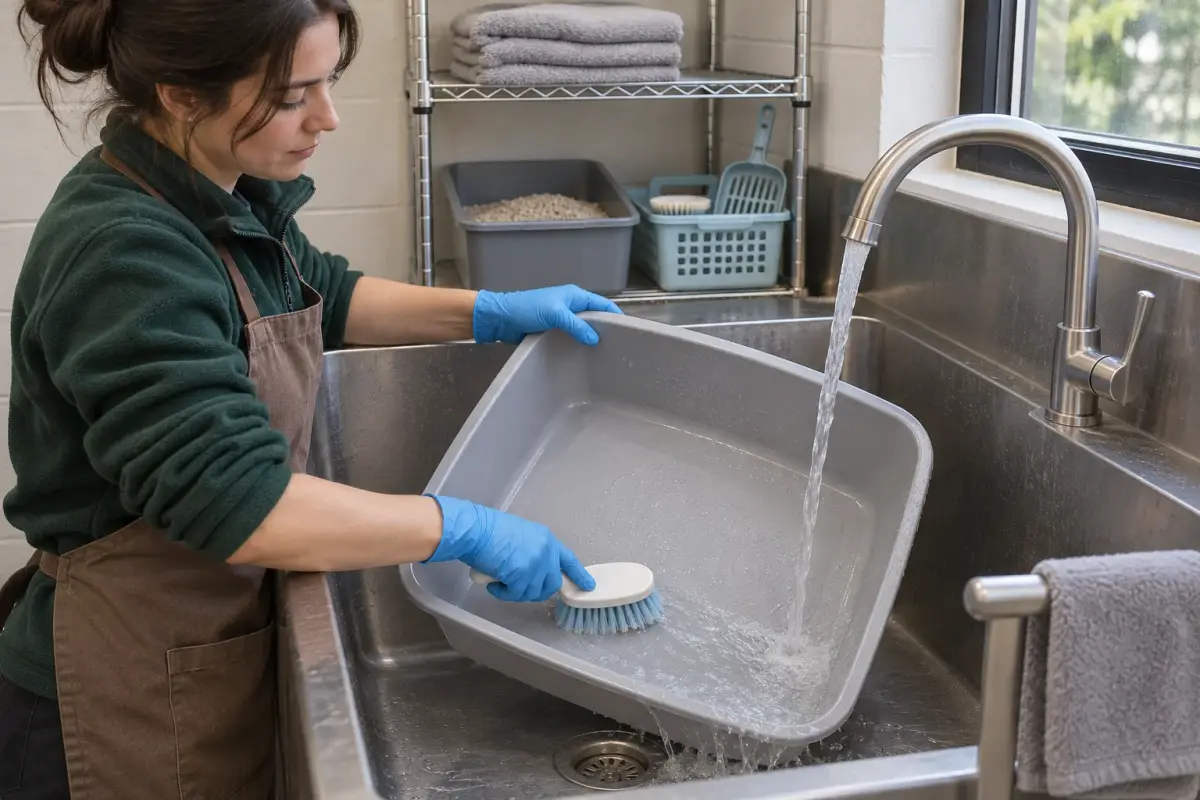
Scoop at least once a day with a mesh litter scoop, and more often for a kitten, since cats avoid a dirty box. VCA recommends emptying and refilling the litter weekly and scrubbing the box with mild soap and hot water regularly. Add a litter box for each cat in the home plus one extra once your kitten has the run of the house.
If an accident happens, clean it with an enzymatic pet-odor cleaner, not an ammonia-based product, which the ASPCA warns can draw a cat back to the spot. Never scold, rub a nose in it or carry the kitten to the mess. VCA cautions that punishment creates fear and secrecy around toileting and makes the problem worse. Treat an accident as a sign to supervise more closely.
When to call your vet
Call your vet if your kitten strains in the box, cries while going, passes very little urine often, has diarrhea for more than a day, has blood in the urine or stool, or keeps going outside the box even with a clean, well-placed box. VCA notes that several illnesses can cause elimination problems, and a kitten with diarrhea may simply not make it in time.
A kitten that was reliable and suddenly stops also deserves a check before you assume it is behavior. Bring a fresh stool sample to the visit if you can, since intestinal parasites are common in young kittens.
This page is general information, not veterinary advice, and it cannot replace an examination by the vet who knows your pet.
Common questions
How long does it take to litter train a kitten?
Many kittens are reliable within a few days to a week, especially if they used a box before coming home. Supervision in a small room speeds things up; allow a few weeks before giving full run of the house.
What age can you start litter training a kitten?
Kittens start using litter naturally at around four weeks, as they begin to wean. A kitten adopted at eight weeks or older can be set up with a box from the first hour home.
Should I use clumping litter for a kitten?
Many vets are comfortable with clumping litter, and VCA notes kittens tend to prefer it. If your kitten eats litter rather than just digging in it, switch to a non-clumping paper or pellet litter and mention it to your vet.
Can you litter train an adult cat the same way?
Yes. Confine a newly adopted adult cat to one room with its box for a few days, use unscented fine litter, keep it clean and expand access gradually once it uses the box every time.
Sources we checked
This guide is general information, not veterinary advice. If your pet is unwell or injured, contact your veterinarian.


