






Buying guides
Best Disposable Litter Box: What Actually Matters
The best disposable litter box is one that is big enough for your cat to turn around in, low enough to step into, and sturdy enough not to soak through. Disposable boxes suit travel, moving, guests and short-term needs. For everyday use, a reusable open box that you scoop daily and wash weekly is usually the better choice.
By Matt GarnettUpdated November 13, 20264 min read2 sources
When a disposable litter box makes sense
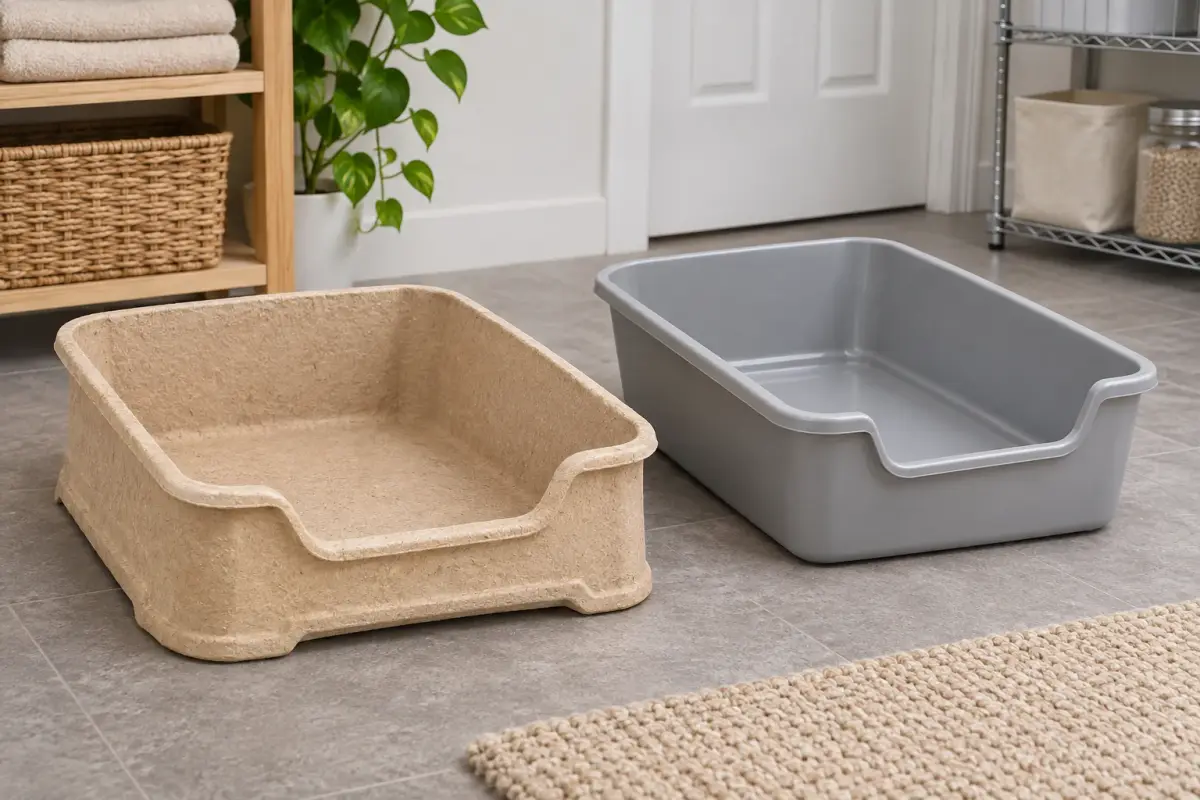
A disposable box is a cardboard or paper-based tray you use for a short time and throw away. That suits a few situations well: a road trip or hotel stay, a move between homes, a foster cat who will be with you briefly, or a spare box for guests. In those cases you skip washing and carrying a bulky tray, and the cat still has a familiar place to go.
For a cat that lives with you full time, a reusable box is the longer-term answer. Cornell's Feline Health Center advises keeping as many boxes as cats plus one, and a steady supply of disposable trays gets awkward fast at that rate. Browse our reusable litter boxes if the box will be in use for weeks rather than days.
What to look for: size, sides and sturdiness
Size is the first feature to check. Cornell says large and overweight cats need bigger boxes, and the ASPCA notes that most cats prefer large boxes they can enter easily and that a box that is too small can push a cat to go elsewhere. Many disposable trays are compact, so measure your cat and pick the roomiest one you can find.
Low sides matter next. Cornell says kittens, elderly cats and cats with mobility problems need low sides, and a cardboard tray usually has them. The trade-off is sturdiness: look for thick, coated or wax-treated board, a flat base and a rim that does not collapse when the cat steps on it. A tray that bends under weight will tip litter or spill urine.
Moisture, leaks and how long one box lasts
The main weakness of a disposable box is moisture. Cardboard softens when urine soaks in, so the practical life of one box depends on your cat and the litter. Use about one to two inches of litter, which both Cornell and the ASPCA treat as the range cats prefer, and scoop at least once a day so the base stays dry. If the board feels soft, replace the box before it leaks.
Place the tray on a washable mat or a tray for the first few uses. Skip liners: Cornell notes that many cats dislike them, and the ASPCA recommends removing them. If your cat starts avoiding the box, strains, or goes outside it, call your vet, since litter box changes can signal a health problem as well as a dislike of the box.
Best option for each situation
For travel, choose a compact tray that fits in the car and use the same litter your cat already knows, so the smell and feel are familiar. For a move, set the tray in a quiet corner of the new home and keep the old box nearby until your cat settles. For a foster cat or a houseguest's pet, a disposable box saves a cleaning job when the stay ends.
For a household that will need a box for longer than a couple of weeks, a sturdy open box such as this plastic litter box is more practical. If your cat likes some privacy, a semi-enclosed litter box gives a partial screen while keeping most of the view and airflow of an open box. Compare more in our litter boxes range.
What to avoid
Avoid trays that are too small for your cat, thin board that sags when wet, and boxes with tall sides if your cat is young, old or stiff. Avoid scented litter or scented cleaners; Cornell recommends unscented, finer-textured litter. Avoid moving the box around or placing it near feeding areas, since the ASPCA and Cornell both advise a quiet, private spot.
Avoid using a disposable box as a permanent solution just because it is easy. If it needs replacing every few days, the costs and waste add up, and a reusable box that you wash weekly with warm water and unscented soap is simpler.
Care, placement and switching to a reusable box
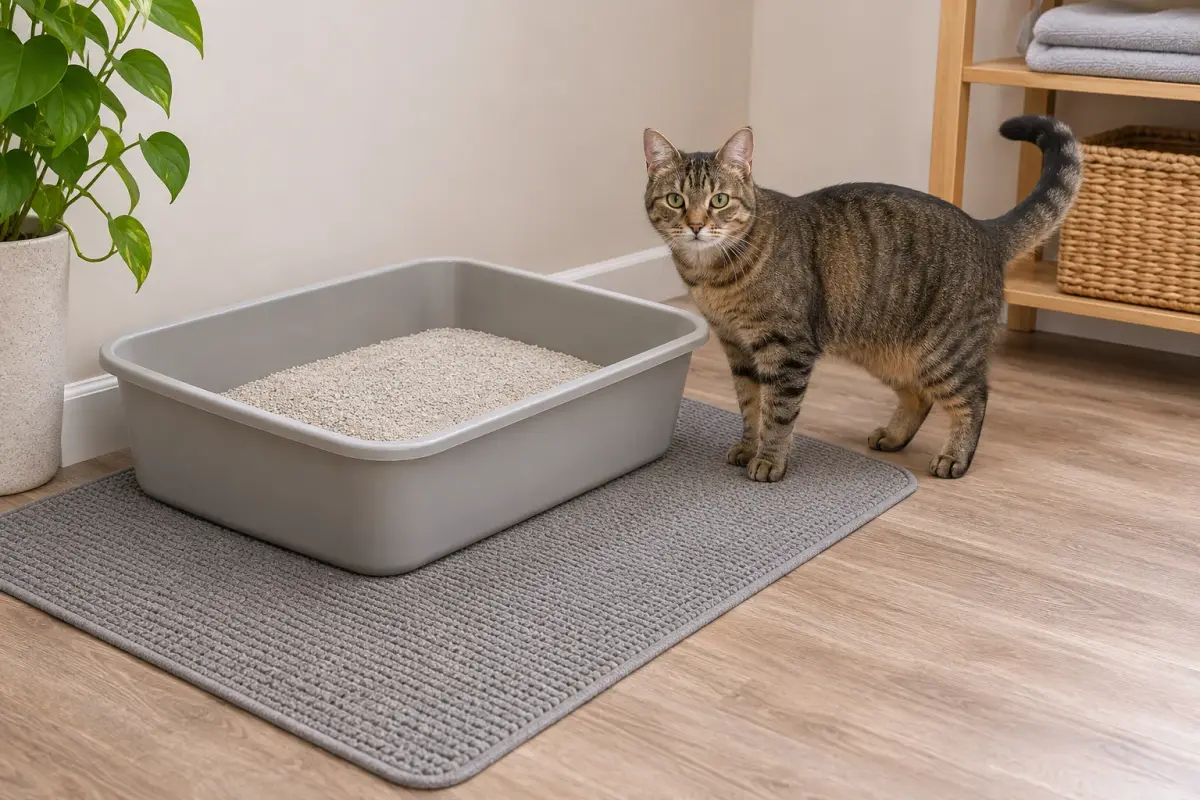
Put the tray in a quiet, private spot with more than one way out, away from the feeding area, as Cornell advises. Scoop clumps and waste daily, and replace the whole tray when the base is damp or smells. Wash a reusable box once a week with unscented soap and refill it with fresh litter, per the ASPCA.
When your cat is settled, move to a reusable box in the same position, using the same litter, so the change is small. Our litter boxes collection covers open, covered and corner designs for different homes and cats.
Common questions
Are disposable litter boxes good for cats?
They work well for short-term needs such as travel, moving or guests, as long as the tray is big enough, low enough to enter and sturdy. For daily use a reusable box is usually better.
How often should I replace a disposable litter box?
Replace it as soon as the base feels damp or soft or the box smells, even with daily scooping. How long that takes depends on your cat, the litter and the board's moisture resistance.
How much litter goes in a disposable box?
About one to two inches, which is the depth Cornell and the ASPCA describe as what most cats prefer. Deeper litter is less appealing to most cats and makes a flimsy tray heavier.
Can I use a liner in a disposable litter box?
It is better not to. Cornell notes that many cats dislike liners, and the ASPCA recommends removing them, so a coated tray with a little litter is a more cat-friendly choice.
Sources we checked
This guide is general information, not veterinary advice. If your pet is unwell or injured, contact your veterinarian.


