Buying guides
Best Dust-Free Cat Litter: How to Choose Low-Dust Litter
The best dust-free cat litter is really a low-dust litter your cat will still use: a large-granule type such as paper or pine pellets, or a low-dust, unscented clumping formula if your cat insists on a fine texture. Then cut the rest of the dust at the box, by pouring low and slowly and catching scattered granules on one of our litter mats.
By Matt GarnettUpdated November 13, 20265 min read3 sources
What "dust free" actually means
No loose litter is completely free of dust. Every granule rubs against its neighbors in the bag and in the box, and the fine particles that break off are what puff up when you pour or when your cat digs. Labels such as "99% dust free" describe how a litter behaves when it is new and poured carefully, not after a week of scooping and stirring.
So treat the search for the best dust-free cat litter as a ranking, not a yes-or-no question. The litters that make the least dust are the ones with large, hard, uniform pieces. The ones that make the most are fine, soft clays. Your job is to find the lowest-dust option on that scale that your cat is willing to step into every day.
Why litter dust is worth caring about
Dust is more than a cleaning nuisance. VCA Animal Hospitals lists dust from cat litter, along with cigarette smoke, perfume and hairspray, among the possible triggers for asthma and bronchitis in cats, and suggests low-dust litter as part of managing it. Your cat's face is a few inches from the litter every time it digs, so it breathes far more of that cloud than you do.
Watch for coughing, gagging with the neck stretched out, wheezing, labored breathing or breathing with the mouth open. Any of these is a reason to call your vet, and open-mouth breathing or bluish gums mean your cat needs to be seen right away. A litter change can reduce one trigger, but it is not a treatment, and only a vet can tell asthma apart from other causes of coughing.
Litter types ranked by dust
Lowest dust: paper pellets and pine or wood pellets. The pieces are large and compressed, so very little breaks off, and the pine type turns to sawdust only as it absorbs urine, which sinks to the bottom rather than floating up. Crystal (silica gel) litter comes next: the beads are hard and make little dust, though some cats dislike the feel and the crunch.
In the middle sit plant-based clumping litters made from tofu, corn, wheat or walnut shell, which vary a lot by brand and granule size. Highest dust: clumping clay, especially the cheaper, finer grades, because soft clay powders as it is poured and dug. A premium clay labeled low dust can still beat a poor plant litter, so judge each bag by how it pours, not only by its type.
Balance low dust against what your cat will use
The trap is choosing the least dusty litter and then finding your cat has stopped using the box. The ASPCA notes that most cats prefer clumping, unscented litter with a medium to fine texture, and Cornell's Feline Health Center says the same about finer-textured, unscented litter about one to two inches deep. Pellets are the opposite of fine, so plenty of cats refuse them.
If your cat accepts pellets or crystals, they are the lowest-dust route. If it wants a fine, scoopable feel, look for a clumping litter sold as low dust and unscented, and keep it at one to two inches rather than piling it deep. Switch gradually: Cornell suggests mixing small amounts of the new litter into the old over several days, and a cat that starts going outside the box should see a vet before you blame the litter.
Scented litter and odor control
Many litters that promise low dust also promise fresh scent, and the two goals pull against each other for a sensitive cat. VCA lists perfume among the possible airway irritants, and both the ASPCA and Cornell say most cats prefer unscented litter. If your cat already coughs or sneezes, an unscented, low-dust formula is the safer choice.
Control odor with routine instead of fragrance. Scoop at least once a day, as the ASPCA advises, and empty and wash the whole box regularly with warm water and unscented soap. A clean box made from unscented litter usually smells of less than a dirty box covered in perfume, and it gives your cat no reason to look for somewhere else to go.
A box and mat setup that keeps dust down
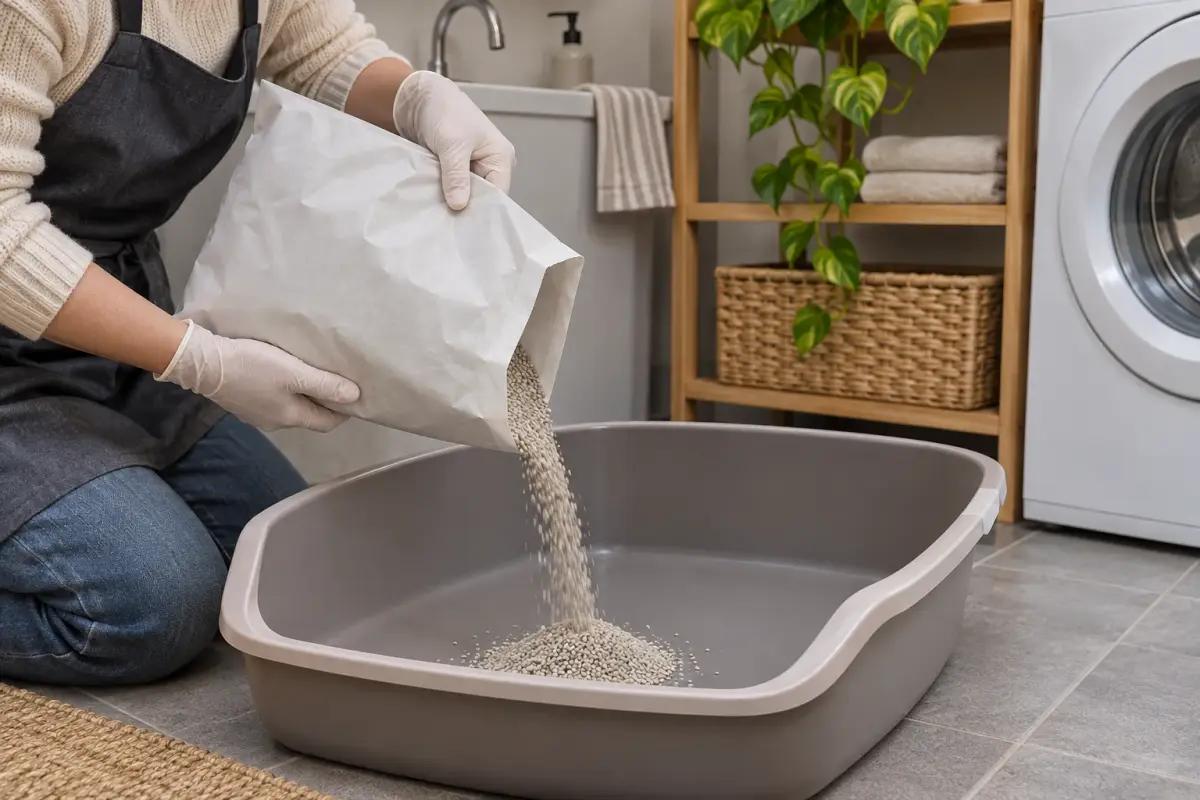
Much of the dust you see is made by people, not cats. Pour from as close to the box as you can and slowly, and avoid emptying the last inch of a bag, where the broken granules collect. Scoop gently instead of raking hard, and keep the box out of a closed, unventilated closet where the cloud has nowhere to settle.
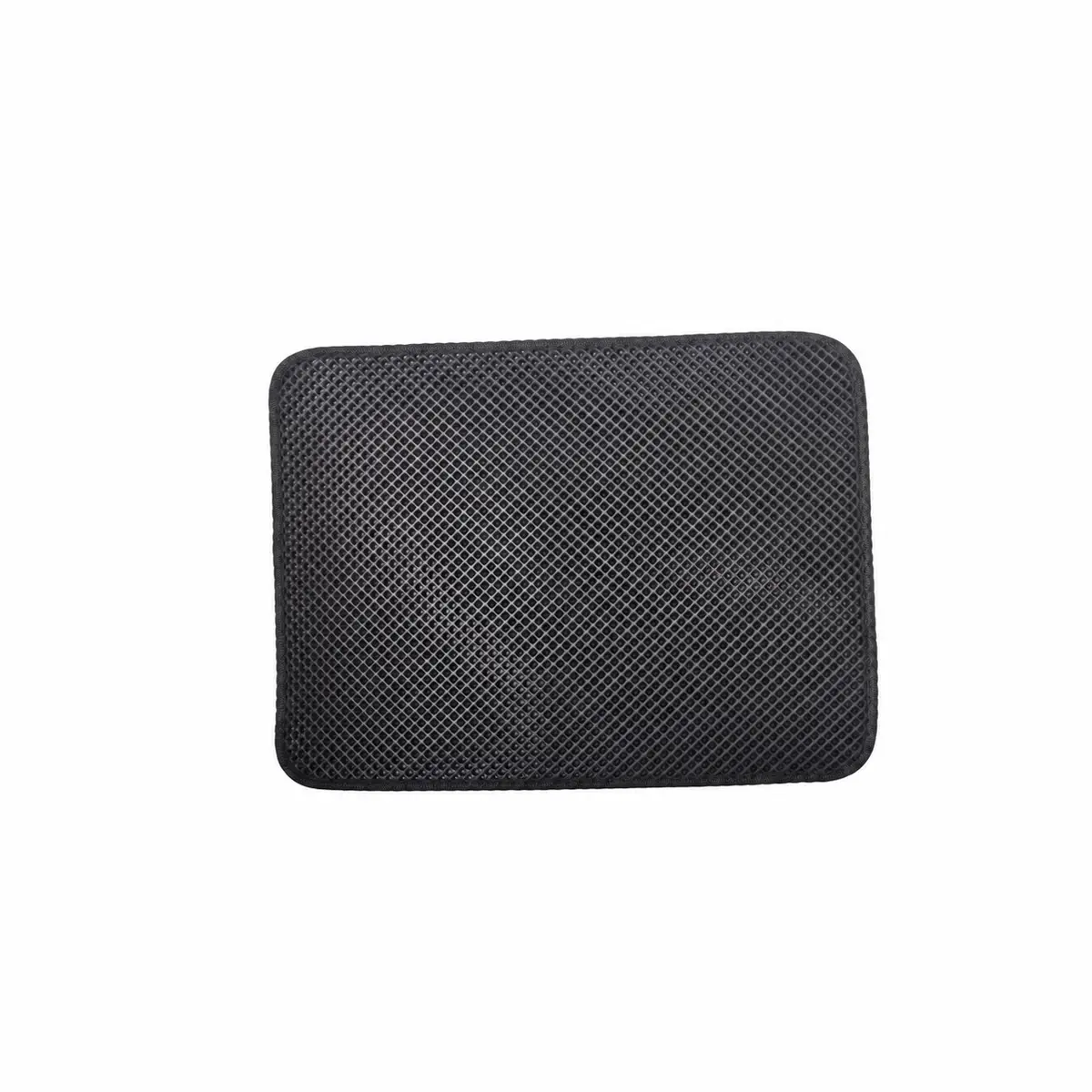
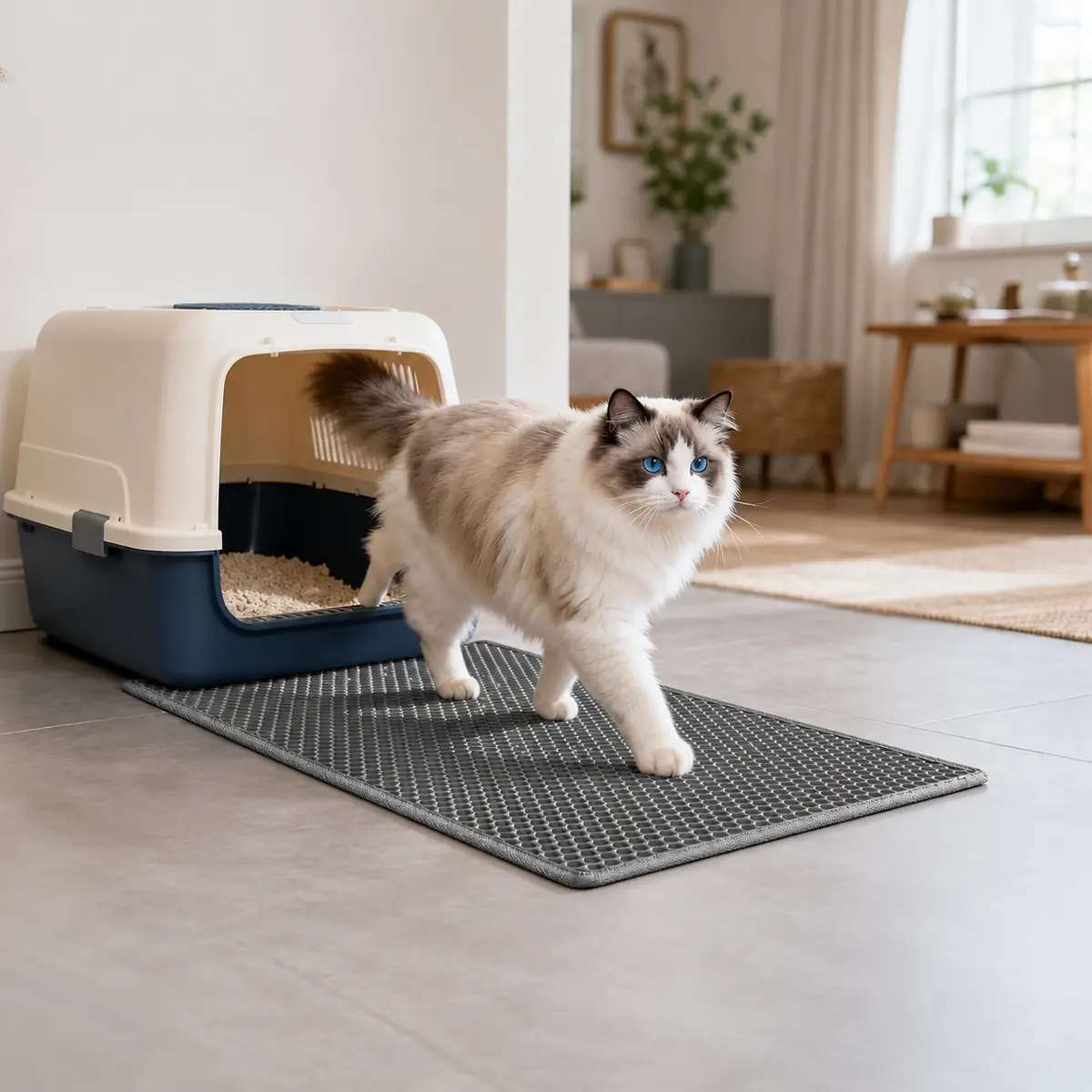
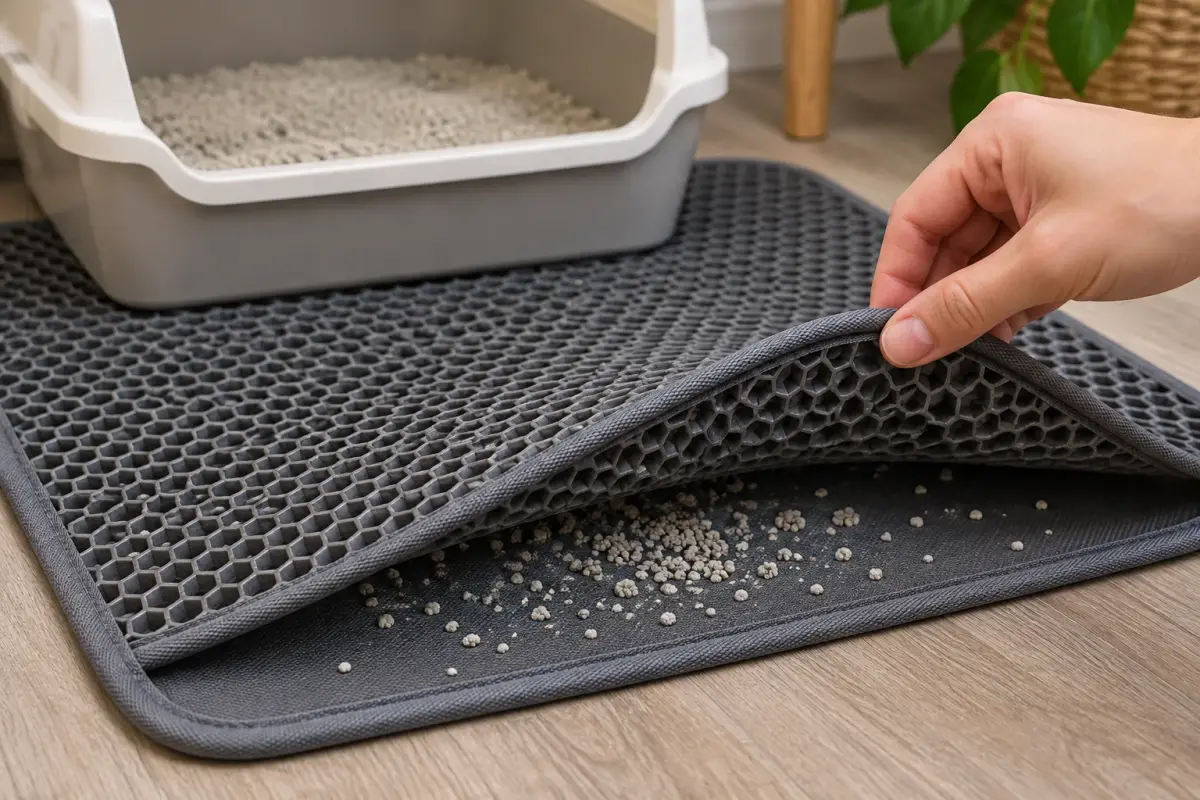
A covered litter box holds dust inside the box, but Cornell notes that most cats prefer an open box because covers hold odors in, so try one only if your cat accepts it. Outside the box, a layered trapping mat such as the double-layer litter mat with a filter top or the washable EVA double-layer litter mat catches the granules that would otherwise be crushed into fresh dust underfoot.
What to avoid
Avoid strongly perfumed litter for a cat with any breathing signs, and avoid shaking a box to level it, which throws the finest particles into the air. Be wary of switching litter overnight, since a sudden change of texture or smell is a common reason a cat stops using the box.
Also avoid judging a litter by the word "natural" alone. Natural litters range from very low dust to quite dusty, depending on how fine they are ground. Pour a little into a bowl in good light before filling the box, and you will see how it behaves in your home. When you find the right one, pair it with one of our litter mats to keep what is left of the dust in one place.
This page is general information, not veterinary advice, and it cannot replace an examination by the vet who knows your pet.
Common questions
What is the best cat litter for odor control and dust free?
Look for an unscented, low-dust clumping litter if your cat likes a fine texture, or paper or pine pellets if it accepts them. Odor control comes mostly from scooping at least daily and washing the box, not from added scent.
Is crystal litter dust free?
Crystal (silica gel) litter makes very little dust because the beads are hard and do not powder easily. It is not completely dust free, and some cats dislike how it feels and sounds under their paws.
Does low-dust litter help a cat with asthma?
VCA lists litter dust among possible asthma triggers and suggests low-dust litter as one step in managing it. It can reduce a trigger, but it is no treatment, so a coughing or wheezing cat needs to see a vet.
How do I switch my cat to a dust-free litter?
Mix a small amount of the new litter into the old and increase it over several days. A sudden switch can put a cat off the box, so keep one box with the old litter until your cat accepts the new one.
Sources we checked
This guide is general information, not veterinary advice. If your pet is unwell or injured, contact your veterinarian.