








Cats
Covered cat litter boxes
Tidy home. Happy cat.
65 items picked for everyday life with your pet, with shipping estimates on every item.
 The everyday essentials, sorted.
All cats grooming & hygiene →Cat brushes →Litter box furniture & enclosures →Cat grooming supplies →Litter accessories →Litter mats →Cat deshedding brushes →Cat nail clippers →Cat shampoo →Cat litter →Self cleaning litter boxes →
↗Tracked US shippingEstimates on every item↶Returns & refundsHow it works♡Here to helpTalk to Giddy Pets
Find their favorites
Shop cat litter boxes by type
Choose a section to narrow the range.
All covered cat litter boxes
Little essentials. Lots of love.


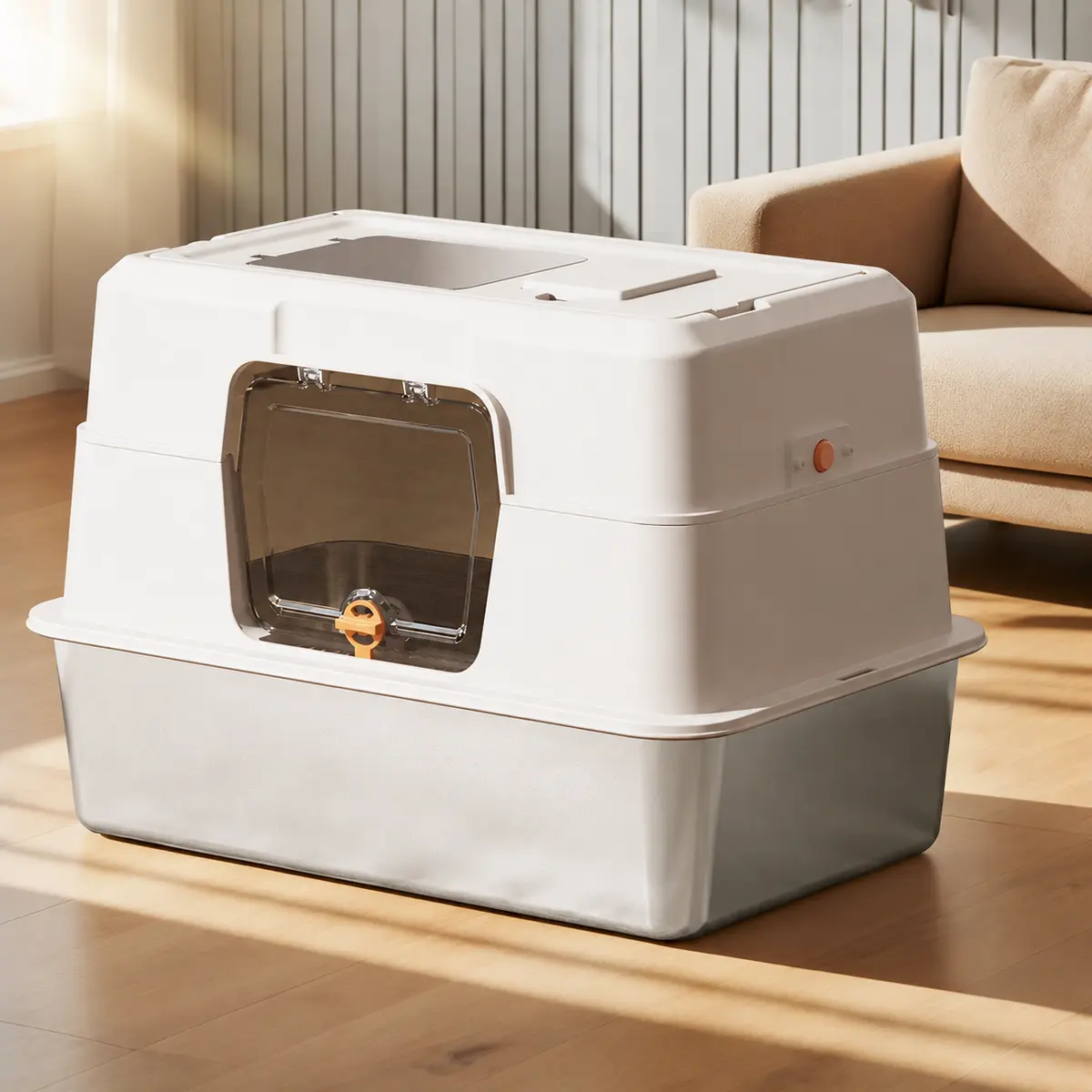


Cat litter boxes
Covered Cat Litter Box with Front Platform and Top Entry
- Options
- 2 to choose from
$62.99
A little guidance
Help choosing covered cat litter boxes
Buying guides and care advice written for this range: what to measure, what matters and what to skip.
From our guides
- Best Covered Litter Boxes: What to Look For Before You Buy →
- Best Disposable Litter Box: What Actually Matters →
- Best Litter Boxes for Odor Control: How to Choose the Right One →
- How Many Litter Boxes Per Cat Do You Need? →
- Best Dog-Proof Litter Box: What Actually Keeps Dogs Out →
- Best Stainless Steel Cat Litter Box: What Matters →
Shop covered litter boxes: hooded and dome boxes with lids, fully enclosed boxes with front entry and top exit, stainless steel enclosed boxes, large and extra large covered boxes, wooden litter box furniture with a drawer, and portable enclosed boxes with scoops and deodorizing bags. This page narrows our Litter Boxes range to designs with a lid. Below is what a cover does well, what cats think of it, and how to choose one your cat will actually use.
What a covered box does well
A lid keeps litter that your cat kicks around inside the box, hides the contents from view and holds in some odor between scoops. It also gives shy cats privacy, and the walls stop spraying or high peeing from hitting the floor or wall behind the box.
For owners, covered boxes look tidier, and the wooden enclosures in this range double as furniture, so the box can sit in a living space without looking like a litter box. Covers can also discourage dogs from snacking from the box, though a determined dog may still push in.
What cats think of covers
Covers are more popular with people than with cats. The Cornell Feline Health Center notes that most cats prefer an uncovered box, which lets odor escape and gives a view all around. Under a lid, smell concentrates, and a cat can feel cornered if another pet waits by the only door.
Many cats use covered boxes happily anyway. The key is to watch your cat. If it hesitates, perches on the edge, rushes out or starts going elsewhere, try removing the lid. Boxes with a removable hood make that test easy.
Choosing size and entry
Covers reduce headroom, so size up. Your cat should be able to stand, turn around and dig without its head touching the lid. Cornell notes that large and overweight cats need bigger boxes; the large and extra large covered boxes here suit them.
Look at the entry. A front door with a low step suits most cats and is kinder to seniors. Boxes with a front entry and top exit, or two openings, mean a cat is never trapped by another pet waiting outside, which addresses Cornell's concern about ambush in multi-pet homes.
Keeping odor down
A lid traps odor for your cat as well as for you, so a covered box needs more frequent cleaning, not less. Scoop at least daily, change litter often enough that it stays dry and fresh, and wash the box and lid with mild detergent regularly.
Deodorizing bags and carbon filters, which several boxes here include, help absorb smell. Avoid heavily scented litter and air fresheners near the box. If the box smells strongly even after scooping, the litter needs changing or the box needs a wash.
Introducing a covered box
Set up the new box next to the old one with the lid off at first and a little used litter inside. Once your cat uses it, add the lid but remove any flap door, which some cats dislike. Add the door last, if at all.
Keep the old box until the new one is used reliably, and follow Cornell's guidance of one box per cat plus one, in different locations. If your cat stops using any box, or strains or goes often, see your vet, since litter box changes can signal urinary problems.
Do cats prefer covered or uncovered litter boxes?
Most cats prefer uncovered boxes, which let odor out and give a view all around. Many cats still use covered boxes well. Watch your cat, and remove the lid if it seems reluctant.
Do covered litter boxes reduce smell?
They hide some odor from the room, but concentrate it inside for your cat. Scoop daily and use a carbon filter or deodorizing bag to keep the inside fresh.
What size covered litter box does my cat need?
Your cat should be able to stand up, turn around and dig without touching the lid. Large and overweight cats need large or extra large models.
Should I remove the flap on a covered litter box?
Many cats dislike the flap at first. Remove it during the introduction and add it back later only if your cat uses the box happily with it.
Can a covered litter box go in a living room?
Yes. Wooden litter box furniture with a drawer hides the box well. Choose a quiet corner away from food bowls and busy doorways, and keep it easy for your cat to reach.