






Buying guides
Best Dog-Proof Litter Box: What Actually Keeps Dogs Out
The most dependable dog-proof setup is a box the dog physically cannot reach, with a top-entry or covered box as backup. Placement and a gate usually matter more than the box. Browse our range of dog-proof litter boxes, and read on for how each style works, which cats it suits and the mistakes that send a cat back to the carpet.
By Matt GarnettUpdated November 14, 20265 min read3 sources
Why dogs get into litter boxes
The American Kennel Club explains that dogs are natural scavengers and cat waste often smells like cat food to them, so raiding the box is common and usually habit or curiosity. It is not harmless: any feces can carry bacteria, and a dog can pick up intestinal parasites from cat waste, even when the cat looks healthy.
Eating a large amount of litter can occasionally cause a blockage, so a dog that eats litter and then strains or stops passing stool needs a call to the vet. The goal of a dog-proof box is therefore not just a tidier floor but keeping the dog away from both the waste and the litter.
Access control beats any box design
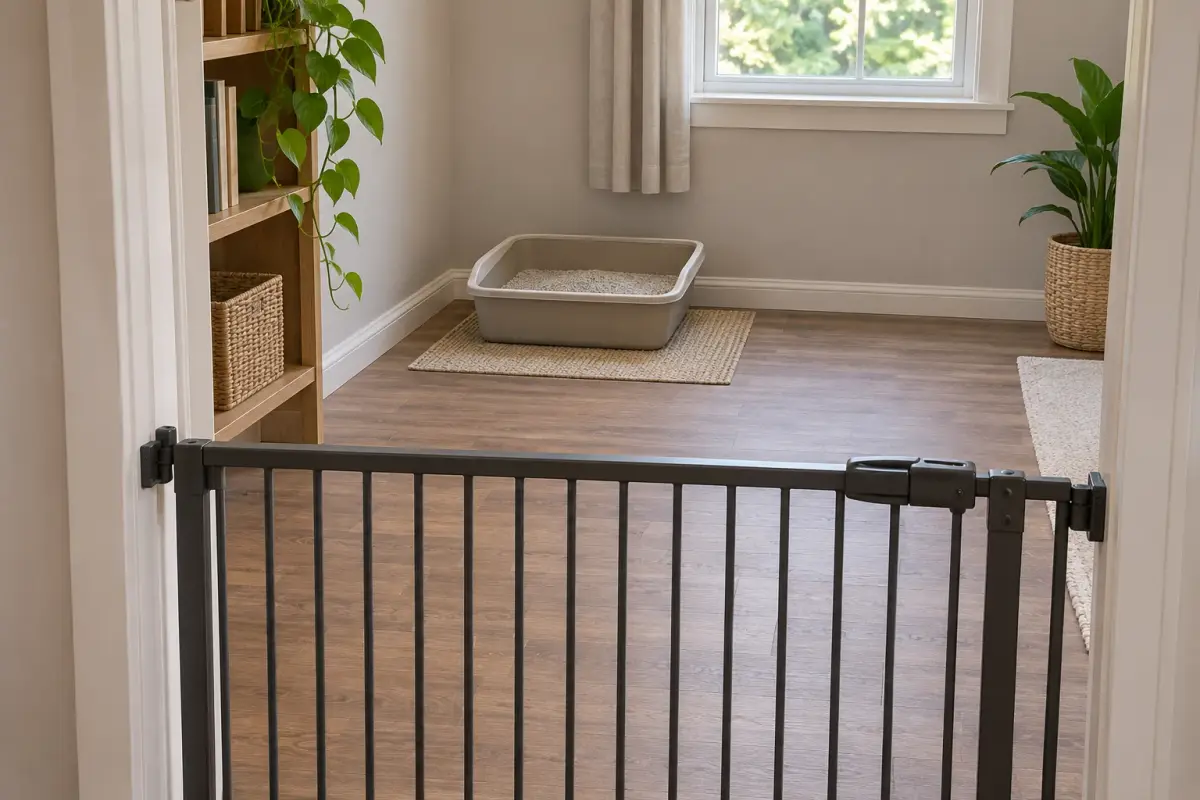
AKC's first suggestion is to put the box where the dog cannot reach it. A pet gate that the cat can slip through, a cat door in a spare-room door, or a box on a high, dog-free surface all work, and they work with any box. If you can only fix one thing, fix access.
Placement still has to suit the cat. The ASPCA advises a quiet spot that is not cornered, where the cat can see people or animals approach and has more than one way out, and it says to avoid areas next to a dog's food and water bowls. A closet with a tiny opening can feel like a trap to a cat, so check how your cat uses the space before committing. Our guide to where to put a litter box covers this in more detail.
Top-entry, covered and furniture boxes compared
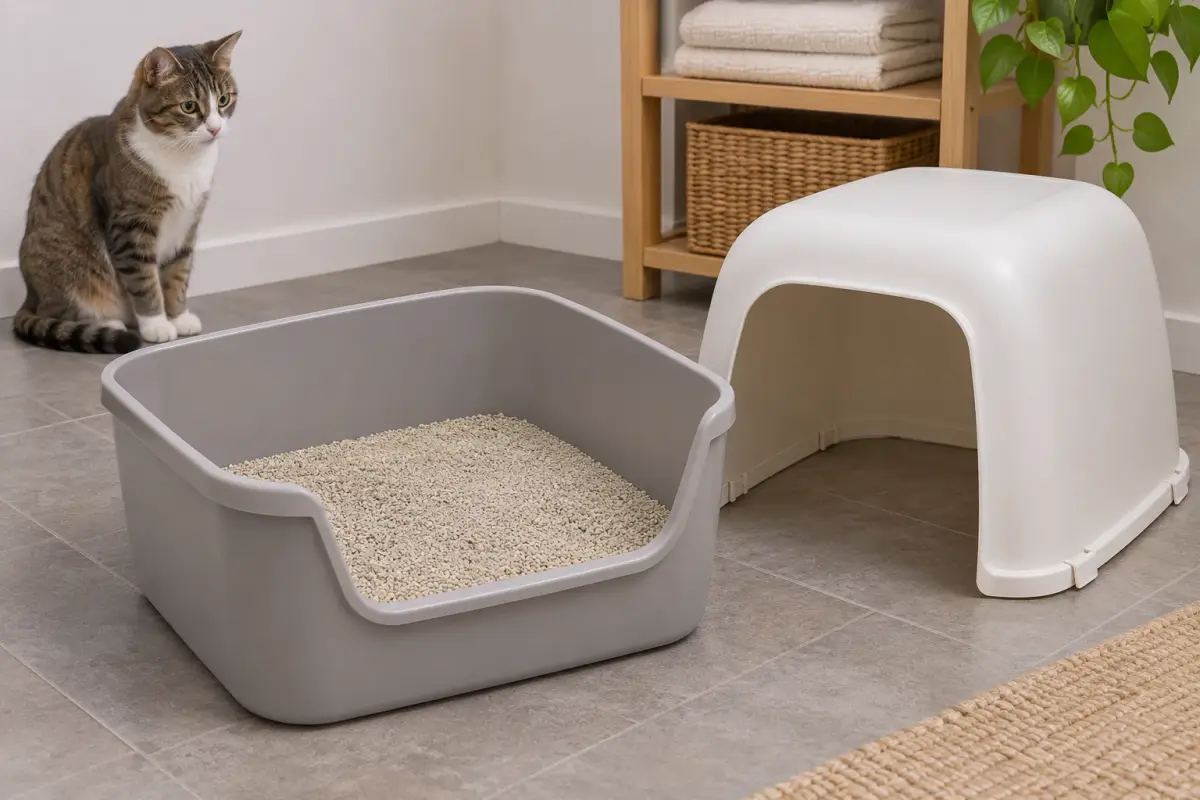
A top-entry box has a hole in the lid, and the cat jumps in from above. It is hard for most dogs to reach into and works well for small and medium dogs. It suits agile, adult cats, but kittens, seniors and cats with stiff joints may struggle with the jump, and Cornell's Feline Health Center notes that these cats need low sides. See our top-entry litter boxes if your cat can manage it.
A hooded box with a small side opening is easier to enter, and a design like this cat litter box with a lid or a semi-enclosed litter box limits access for bigger dogs while keeping litter in. Cornell warns that covers hold odor in and that most cats prefer an uncovered box, and the ASPCA recommends removing covers for the same reason, so treat a hood as a trade-off and watch how your cat responds. An enclosed, drawer-style design such as this fully enclosed anti-splash litter box offers the most protection but needs the most cleaning attention. Browse all covered litter boxes to compare.
Matching the box to your cat and your dog
Size matters as much as style. The ASPCA says most cats prefer large boxes they can enter easily, and Cornell adds that large and overweight cats need bigger boxes. A hood that is too small for your cat is a common reason cats stop using a box. Choose a box where the cat can turn around and dig comfortably, then judge whether the entry is too small for your dog.
Small dogs are the hardest case. A toy-breed dog can fit through an opening a cat uses, so a top-entry box or a gated room is the safer choice. Large dogs are easier to exclude with a hood or a gate. Multi-cat homes need more boxes: the ASPCA recommends one per cat plus one extra, spread across different areas, so you will need a dog-proof plan for every box and not just one.
Keeping a dog-proof box clean and appealing
Scoop at least once a day. The ASPCA recommends daily scooping and a full clean about once a week with warm water and unscented soap, baking soda, or no soap. Cleanliness also helps with the dog problem, since fresh waste is less tempting and it keeps the box pleasant for the cat.
Use one to two inches of litter, which is what the ASPCA and Cornell say most cats prefer. Enclosed boxes tend to trap smell, so ventilate the room and clean the box thoroughly. If a cat avoids the box after a change, go back to an open style in a protected location and look at our guide to covered litter boxes and the number of boxes per cat before buying again.
When to see a vet
Call your veterinarian if your dog has eaten cat waste or litter and develops vomiting, diarrhea, lethargy or trouble passing stool. Dogs that frequently eat cat feces should also have routine parasite checks, and a senior dog that suddenly starts the habit deserves a checkup. Pregnant people and anyone with a weakened immune system should avoid cleaning litter boxes where possible because of toxoplasmosis risk.
A cat that suddenly stops using its box should also be seen, since urinary and digestive problems often show up as litter box changes. Do not punish either pet. Positive training and good management solve most problems. For more ideas on gates and routines, see our dog-proof litter box range again once you know your layout.
This page is general information, not veterinary advice, and it cannot replace an examination by the vet who knows your pet.
Litter-box entry and enclosure layouts
| Layout | Physical access | Measure before choosing |
|---|---|---|
| Top entry | Opening in the lid | Opening,top height and internal area |
| Front-entry covered | Side opening beneath a hood | Threshold,door and removable cover |
| Raised-side open pan | Open top with higher walls | Entrance and side heights |
| Drawer enclosure | A tray slides from an outer body | Entry,tray and cleaning clearance |
Common questions
What is the best way to keep a dog out of the litter box?
Put the box where the dog cannot reach it, such as behind a pet gate the cat can pass or in a room with a cat door. A top-entry or covered box helps as extra protection but works best with controlled access.
Is a top-entry litter box good for all cats?
No. Top-entry boxes suit agile adult cats, but kittens, seniors and cats with joint problems may find the jump hard. Cornell notes these cats do better with low-sided boxes.
Do cats like covered litter boxes?
Many do not. Cornell and the ASPCA both note that most cats prefer uncovered boxes, so if you use a cover, watch your cat and be ready to switch if it avoids the box.
Is it dangerous if my dog eats cat poop?
It can be. Cat feces can carry bacteria and intestinal parasites. Contact your vet if your dog develops vomiting, diarrhea or lethargy, and ask about parasite checks if it happens often.
Sources we checked
This guide is general information, not veterinary advice. If your pet is unwell or injured, contact your veterinarian.


