






Buying guides
Best Top Entry Litter Boxes: What Actually Matters
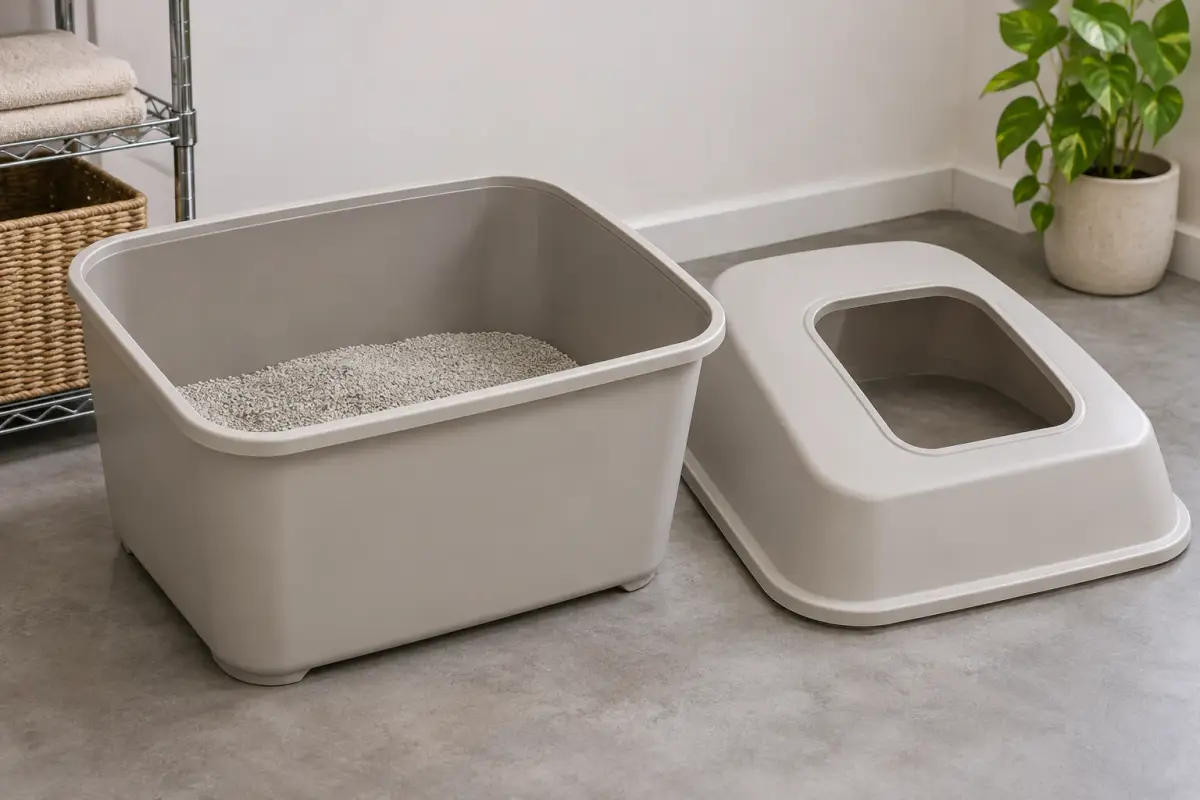
A top entry litter box is worth choosing for an agile adult cat that kicks litter everywhere, or for a home where a dog raids the box. It is the wrong choice for kittens, seniors and arthritic or overweight cats. Three things decide it: how easily your cat can jump in and out, how roomy the interior is, and how easy the box is to scoop every day.
By Matt GarnettUpdated November 13, 20265 min read2 sources
What decides whether a top entry box works
The first question is not which box looks best but whether your cat will use it. The ASPCA notes that most cats prefer large boxes they can enter easily, and that most cats dislike lids on their boxes. A top entry design is a lid with a hole, so it asks more of your cat than an open pan does: a jump up, a turn inside, and a jump out.
That does not make it a bad design. For an adult cat in good shape it can keep scattered litter inside the box and make it harder for a dog to reach the contents. Browse our full range of top entry litter boxes once you know which of the points below fit your cat.
Top entry compared with front entry and open pans
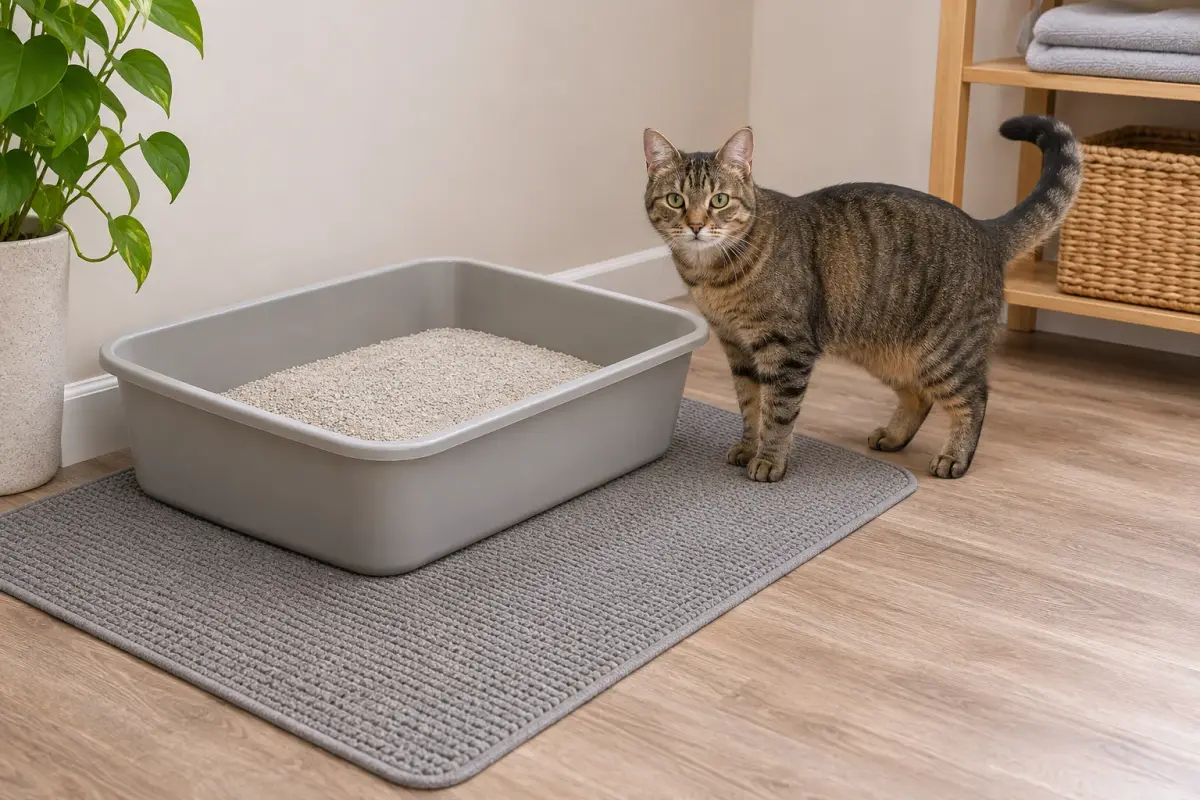
An open pan is the easiest for the cat to use and the easiest to scoop, but it lets litter fly and leaves the contents exposed. A front entry covered box sits in the middle: easy to step into, with a hood that contains some mess. VCA warns that a covered pan can trap odor if it is cleaned infrequently, and that other cats may ambush a cat as it comes out of the hood.
A top entry box avoids the ambush problem at the doorway because the cat exits upward, but it concentrates odor under the lid and relies on a good scoop routine. Some designs combine a top opening with a front door, such as a top and side entry box with a flip top or a front entry box with a top exit. Two ways in can help a cat that is unsure about the jump.
Which cats suit a top entry box, and which do not
Good candidates are healthy adult cats of normal weight that dig vigorously, and households where a dog or toddler would otherwise get into an open box. If your cat already uses a hooded box without fuss, a top entry version is usually an easy step.
Skip it for kittens, senior cats and any cat with arthritis or a mobility problem. VCA notes that older cats may find a box with lower sides or no cover easier to get into, and that an overweight cat may not fit comfortably in a covered pan. For those cats, look at low entry litter boxes for senior cats instead. If a cat that has always used its box suddenly avoids it, see your vet, because avoidance can point to a urinary or joint problem rather than a box your cat dislikes.
Size, litter depth and how many boxes
Interior space matters more than the footprint. A cat should be able to step in, turn around and dig without its head touching the lid. Because both the ASPCA and VCA suggest a larger box as the usual fix when a cat is unhappy, treat a roomy interior as a requirement, not a luxury. A foldable, portable model such as a large top entry box with scoop and tray is convenient for storage, but check that the walls stay rigid when a cat jumps in.
The ASPCA says cats usually prefer one to two inches of litter rather than three to four. Both the ASPCA and VCA recommend one more box than the number of cats, so three cats need at least four boxes, in more than one location. One top entry box is rarely enough for a multi-cat home.
Placement, scooping and cleaning
Put the box in a quiet spot that is not cornered. The ASPCA suggests locations where a cat can see anyone approaching and has more than one way out, away from noisy appliances and from food and water bowls. Because a lid limits the view from inside, a quiet, low-traffic spot matters even more with a top entry box.
Scoop at least once a day. The ASPCA suggests emptying and washing the box weekly with warm water and unscented soap, while VCA notes that clumping litter may only need a full change every two to four weeks; if the two schedules conflict, follow the more frequent one. Avoid scented cleaners, and replace a plastic box that has been used for years, since it can hold residual odor.
What to avoid, and when to talk to your vet
Avoid boxes with thin, flexible lids, tight openings that a larger cat has to squeeze through, and designs where you cannot reach the corners with a scoop. Do not introduce a top entry box by removing the only box your cat knows. Add it beside the existing one, keep both for a few weeks, and watch which the cat chooses. When you are ready to compare designs, our top entry litter boxes are grouped together, and our covered litter boxes cover the front entry alternative.
Straining, frequent trips with little urine, crying in the box or blood in the urine need a vet the same day, because a urinary blockage can be life-threatening.
This page is general information, not veterinary advice, and it cannot replace an examination by the vet who knows your pet.
Litter-box entrance positions
| Layout | Where the cat enters | Measure or inspect |
|---|---|---|
| Open pan | Over an uncovered side | Entrance height and floor area |
| Front-entry covered | Through a side opening under a hood | Threshold and door opening |
| Top entry | Through an opening above the pan | Top height and opening size |
| Dual opening | Through listed front and top openings | Whether each opening is entry,exit or both |
Common questions
Do cats like top entry litter boxes?
Many adult cats accept them, especially diggers that scatter litter, but the ASPCA says most cats prefer boxes they can enter easily and dislike lids. Introduce one beside the old box and let your cat choose.
Are top entry litter boxes good for senior cats?
Usually not. Older cats and those with arthritis tend to do better with lower sides or no cover, and a jump in and out can be painful. A low entry box is the safer choice.
How many litter boxes do I need with a top entry box?
The ASPCA and VCA both recommend one more box than the number of cats, in at least two locations where possible. Three cats therefore need four boxes, and a single top entry box rarely covers a multi-cat home.
How often should I clean a top entry litter box?
Scoop at least once daily. Wash the box with warm water and unscented soap on a regular schedule, weekly if you want to follow the ASPCA, and replace old plastic boxes that hold odor.
Why is my cat refusing the new litter box?
Common causes include a lid the cat dislikes, a box that feels cramped, a noisy or exposed location, or a health problem. If the change is sudden, talk to your vet before assuming it is behavior.
Sources we checked
This guide is general information, not veterinary advice. If your pet is unwell or injured, contact your veterinarian.


