






Buying guides
Best Covered Litter Boxes: What to Look For Before You Buy
A covered litter box is worth buying if you want to hide litter and scatter and your cat is happy using it. Choose the largest covered litter box your space allows, with an entry that suits your cat's size and age, a lid that lifts off or opens for easy scooping, and a plan to test it beside an open box. Most cats accept either style when the box is big and scooped daily.
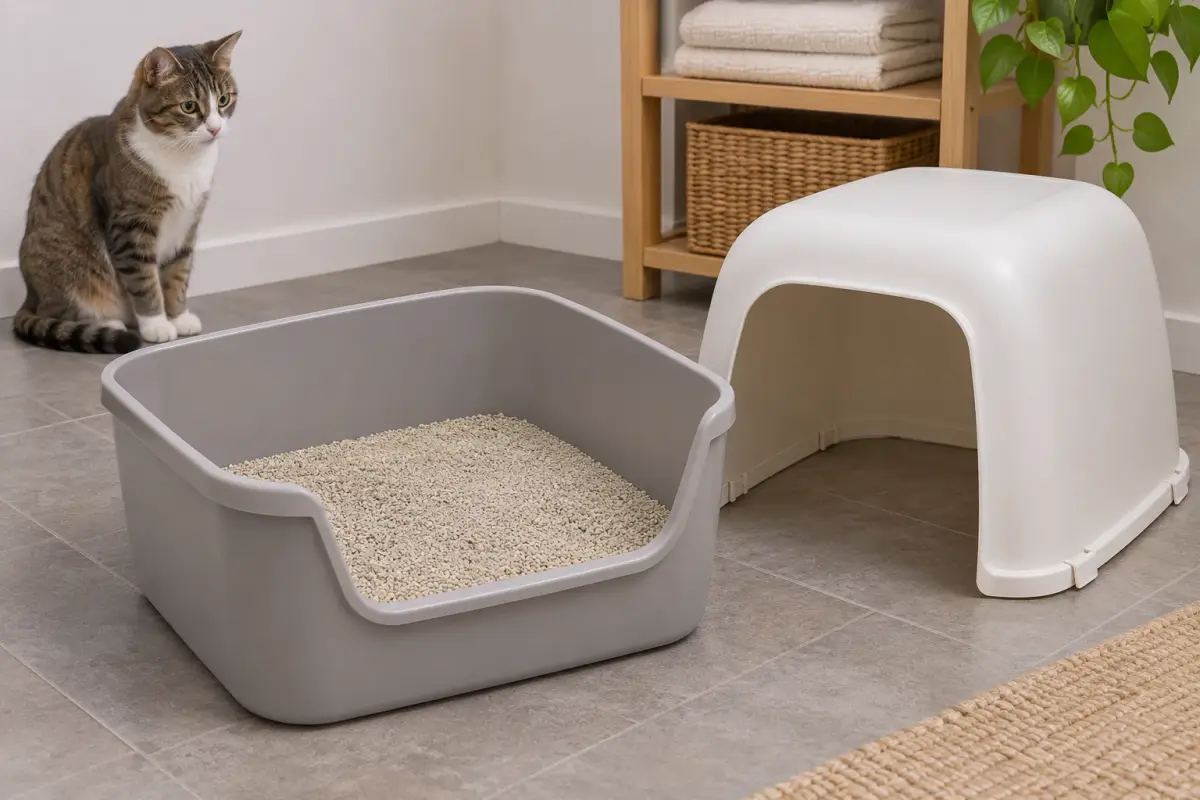
By Matt GarnettUpdated November 13, 20265 min read3 sources
Do cats actually like covered litter boxes?
Mostly they do not mind, which is the honest answer. In a 2013 study in the Journal of Feline Medicine and Surgery, 27 cats were given a covered and an uncovered box of identical size for two weeks. Overall use did not differ, 19 of the cats showed no preference at all, and four preferred each style. The boxes were large, filled with clumping litter and scooped once a day.
The ASPCA is more cautious. Its litter box problems guide says most cats do not like lids and suggests removing covers when a cat avoids the box. VCA Animal Hospitals points out that a covered pan can hold in odors that go with infrequent cleaning, and may let another cat ambush the one coming out. The practical conclusion: buy a covered box for your own convenience, but let your cat's behavior decide whether the lid stays on.
What matters most in a covered box
Size comes first. The ASPCA says the majority of cats prefer large boxes they can enter easily, and that a box can simply be too small. Many covered boxes are compact once the lid is on, so check the interior floor space and the headroom rather than the outer footprint. Your cat should be able to step in, turn around and scratch without the lid touching its back.
The entry comes second. A high doorway or a flap can put off kittens, older cats and cats with sore joints, and VCA notes that an overweight cat may no longer fit comfortably in a covered pan. Look for a generous opening at a height your cat can step through without jumping.
Third, look at how it opens. A lid that lifts off, or a top that swings open, makes daily scooping and the weekly deep clean far easier, and a box you dread cleaning is a box that gets cleaned less. Ventilation matters too: a cover traps smell, so good airflow and a clean routine beat any claim of odor control.
Covered box designs compared
A fully enclosed litter box gives the most privacy and the best litter containment, but it also gives the least airflow and a single way out. It suits a confident single cat in a quiet home that gets scooped every day.
A semi-enclosed litter box leaves part of the top or front open. That is a good middle path for cats unsure about lids, because they can see out and escape quickly, while it still catches a fair share of kicked litter.
A double-entry convertible-lid litter box has two openings and a lid that can come off. Two exits speak to VCA's ambush concern in multi-cat homes, and a removable lid means you can follow the ASPCA's advice later without buying a second box. A basic litter box with a lid is the simplest option and works well if you pick a roomy size.
Best covered box for each cat
Large and heavy cats need the most room. In the 2013 study none of the six cats weighing 13 pounds or more preferred the covered box, so for a big cat start by looking at an extra-roomy large litter box and test a lid only if space allows. Kittens and seniors do better with a low entry and often with no cover at all.
Cats that dig or kick litter out suit a tall-sided open box or a covered one with a deep tray, and our high-sided litter boxes are worth a look too. In multi-cat homes, choose double-entry designs and follow the rule from the ASPCA and VCA: one box per cat plus one extra, in at least two locations. For more on all litter box types, read our litter box buying guide.
Mistakes to avoid
Do not buy on looks alone, and do not skip the test. VCA suggests putting a covered and an open box side by side and seeing which your cat chooses. Keep the old box in place for a few weeks while your cat decides, and if the new one is avoided, take the lid off before you assume anything is wrong.
Do not scoop less often because the lid hides the mess. Clean daily and fully empty and wash the box about once a week, using mild soap rather than strong cleaners that leave a smell. The ASPCA also recommends one to two inches of litter rather than three to four. Finally, place the box somewhere quiet but easy to reach, away from busy corners and noisy appliances.
Setup, cleaning and when to call a vet
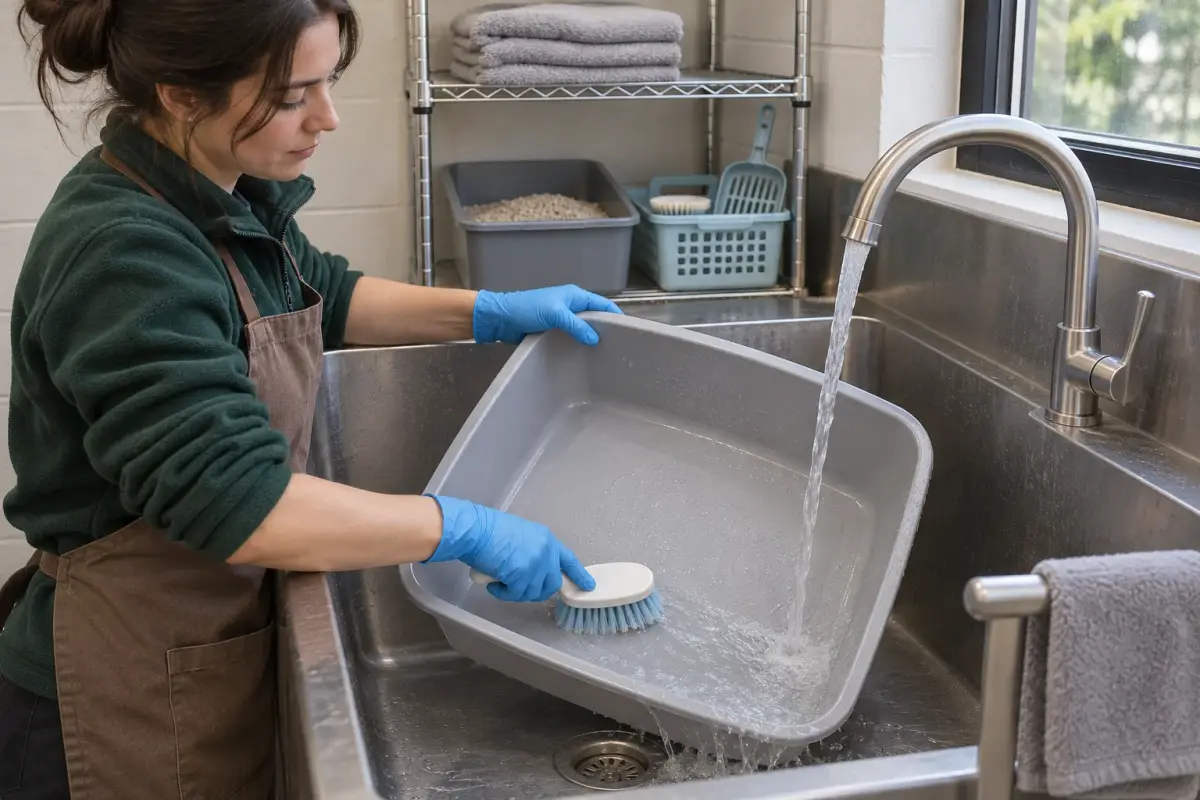
Set the box on a stable, flat surface, add shallow litter, and keep it in a spot your cat can reach without stairs. Wipe the inside of the lid when you do the weekly clean, since that is where odor builds up. Replace a box that has become scratched or has lingering smells.
A sudden change in litter box habits is a reason to call your vet. Straining, repeated trips with little result, or crying in the box can signal a urinary problem that needs same-day attention, and the ASPCA lists medical causes as the first thing to rule out. This page is general information, not veterinary advice, and it cannot replace an examination by the vet who knows your pet.
Litter-box cover and doorway configurations
| Configuration | What surrounds the tray | What to measure |
|---|---|---|
| Fully enclosed | A hood above and around the tray | Usable interior and entry opening |
| Semi-enclosed | Part of the top or front remains open | Remaining cover and clear exit |
| Double-entry | Two access openings | Both doors and the space outside them |
| Convertible lid | The lid can be removed | Dimensions with and without the lid |
| Simple lidded box | A tray with a separate lid | How the lid opens for scooping |
Common questions
Are covered litter boxes better for odor?
Not necessarily. A lid hides litter and odor from you, but it traps smell inside the box, which some cats dislike. Daily scooping and a weekly deep clean control odor far better than a lid.
Why does my cat refuse the hooded litter box?
Common reasons include a box that is too small, a doorway that is hard to step through, strong litter scent, or another cat guarding the exit. Try removing the lid and offering an open box beside it.
What size covered litter box does a large cat need?
Look for the roomiest interior you can fit, with enough headroom for the cat to stand and turn. Check the inside dimensions, not the outside, since the ASPCA notes most cats prefer large boxes they can enter easily.
Can I use a litter box with a lid for kittens?
Yes, if the entry is low enough for a kitten to step through. Many kittens do better with a low-sided open box at first, then move to a covered one once they use the box reliably.
Sources we checked
This guide is general information, not veterinary advice. If your pet is unwell or injured, contact your veterinarian.


