Buying guides
Best Large Cat Litter Box: How to Choose the Right Size
The best large litter box is at least 1.5 times your cat's length, nose to base of tail, with room to turn around without touching the walls. Add sides high enough to hold litter and an entry your cat can step into easily. Browse our large litter boxes once you have measured your cat.
By Matt GarnettUpdated November 13, 20265 min read2 sources
What matters most in a large litter box
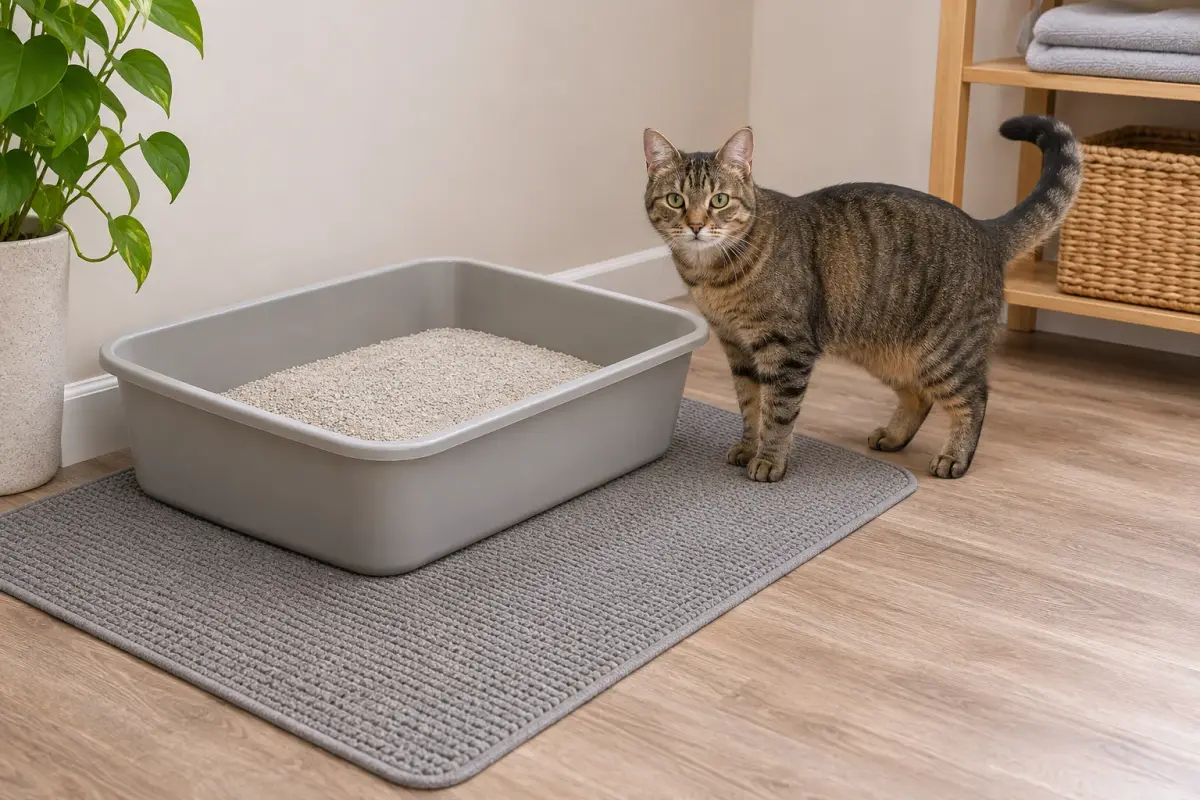
Length is the number that decides it. VCA Animal Hospitals says a litter box should be about 1.5 times the cat's body length, measured from the nose to the base of the tail. If your cat measures 20 inches that way, the box should be at least 30 inches long. Most standard boxes fall short of that for a big cat, which is why large cats often perch on the rim or dig out of the box.
After length, look at width, depth and the way in. A big cat needs to turn around and scratch without touching the walls, so a box that is long but narrow still fails. Sides high enough to hold litter help with scatter. Entry height matters too, because a tall entry that suits a young cat can be a barrier for an older or arthritic one.
Open, covered and dual-entry large boxes compared
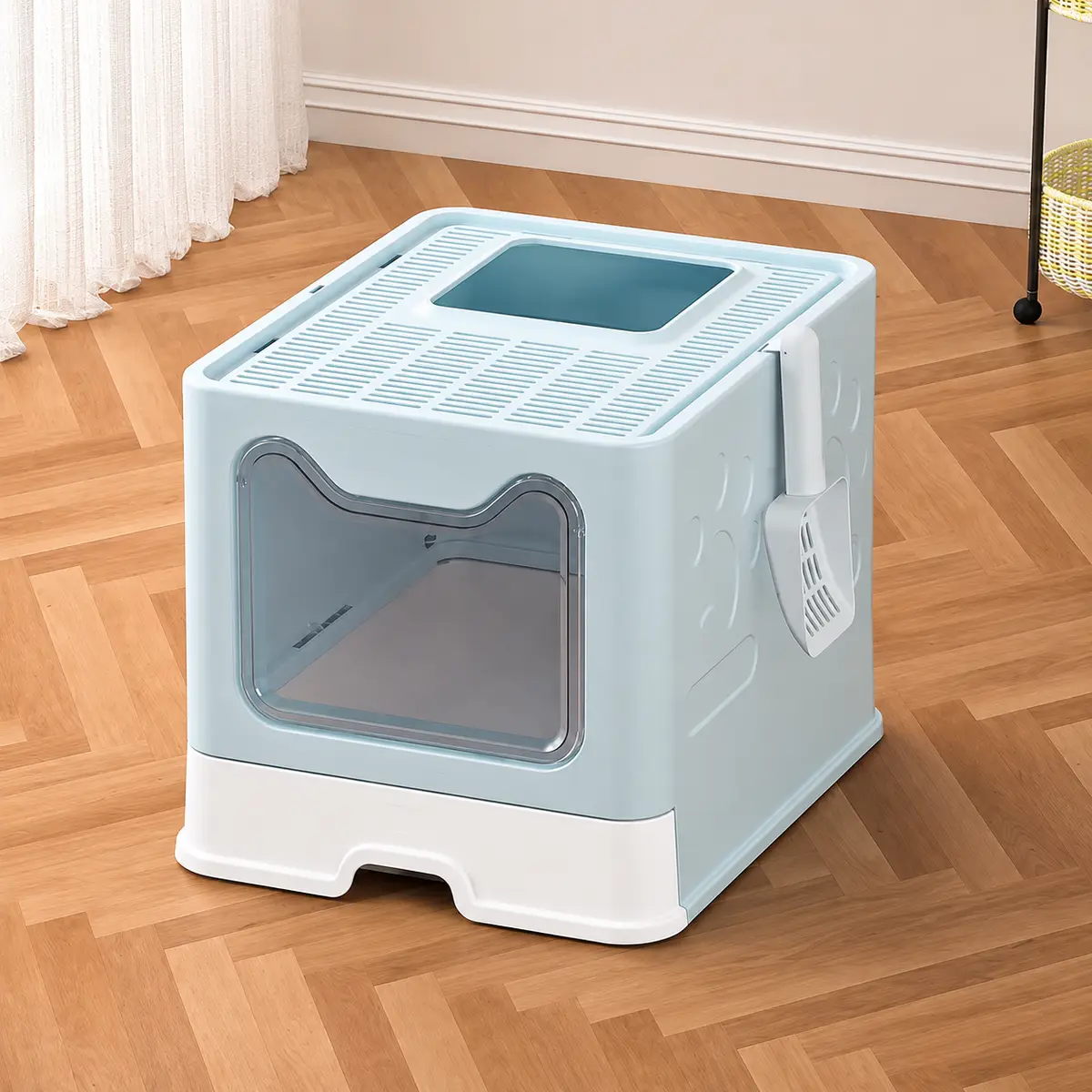
An open large box is the simplest design. It gives a big cat the most room and the easiest exit, and it makes scooping quick. A covered box adds privacy and contains scatter, but a hood shrinks the usable space, so a covered box for a big cat needs to be bigger than an open one. An extra-large convertible dual-entry box can be used open or enclosed, which lets you see which your cat prefers.
A published study of 27 cats in the Journal of Feline Medicine and Surgery found no overall preference for covered or uncovered boxes, and 19 of the cats showed no preference at all. The authors noted that among the six cats weighing roughly 13 pounds or more, none preferred the covered box, and they suggested that big cats using covered boxes may need larger ones. A front-entry enclosed extra-large box is one covered style to compare.
Best large box for each situation
For a large adult cat that uses a box without trouble, a basic open large-space box, such as a simple large cat litter box, is usually enough, and the price of a plain design goes into size instead of features. For a cat that sprays or kicks litter hard, choose higher sides, keeping in mind that a very high rim can be a problem later.
For a senior or arthritic large cat, prioritize a low entry. VCA notes that cats with trouble getting in may prefer a low entry, such as an under-bed storage container. For a multi-cat home, VCA suggests offering the preferred setup in at least two locations, and a large home may need a box on each floor. Our guide to litter boxes per cat goes further on counts.
How to measure your cat and the box
Measure your cat from the tip of the nose to the base of the tail while the cat is standing, then multiply by 1.5. That is your minimum internal length, so check the inside floor measurement, not the outside shell, because rims and lids take space. Compare width too, aiming for enough room to turn fully.
Check the entry height against your cat's age and mobility, and the space where the box will live. A large box needs a quiet spot your cat can reach easily, near where they already want to go. Measure the doorway and corner before ordering, since a 30-inch box is awkward to move later.
What to avoid
Avoid boxes sold as large that list overall dimensions only, because the inside floor is what your cat uses. Avoid a hood or liner that leaves the cat cramped, and avoid very deep walls with no low side for a senior cat. Avoid switching litter, box and position at the same time, since a cat that refuses the box cannot tell you which change caused it.
Avoid deciding on a covered box without a comparison. VCA suggests testing a covered and an open box side by side to see which your cat prefers. The same page suggests comparing litter types and depths, noting that clumping clay litter seems to be the type most cats like. If a cat starts eliminating outside the box, the first step is a vet exam, not a bigger box.
Cleaning, litter depth and when to call your vet
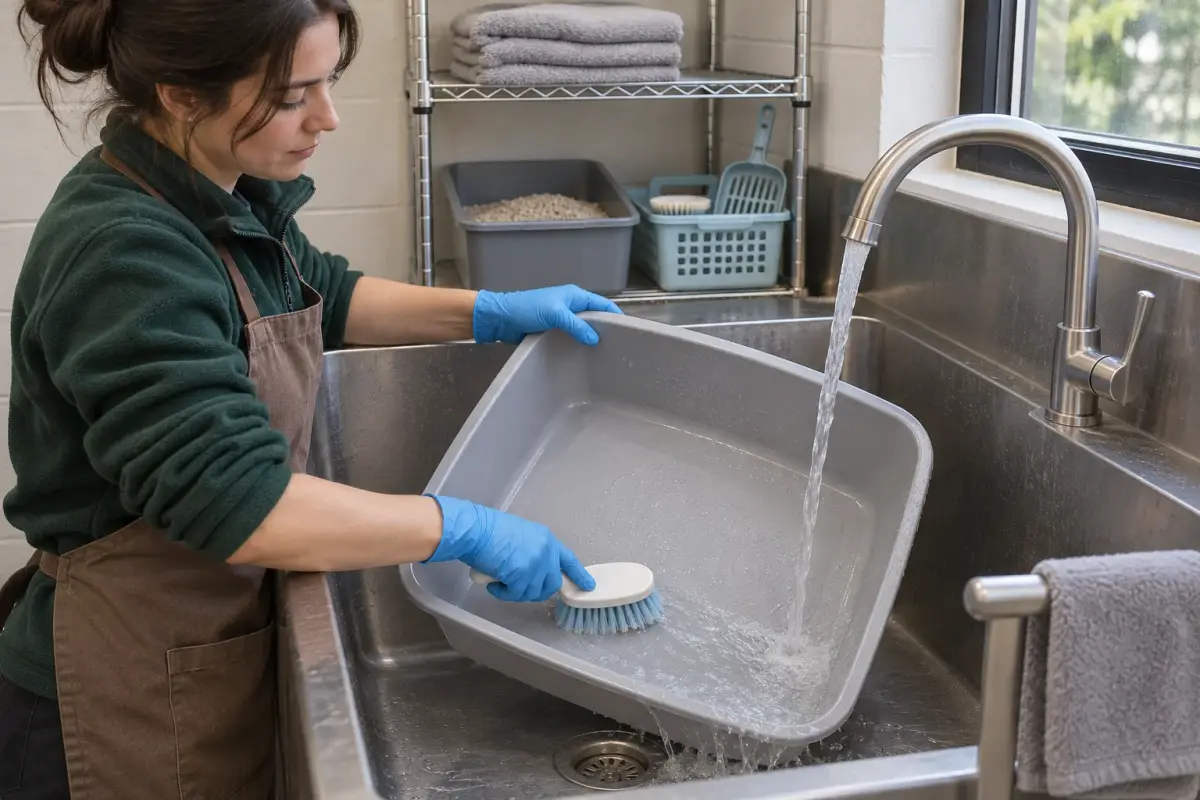
Scoop at least once a day, which VCA lists as the baseline, and replace all clumping litter monthly. Wash the box with mild soap and rinse well; VCA advises avoiding bleach, ammonia and strong chemicals. The JFMS study found that daily scooping was enough for cats to keep using covered boxes, though owners may be tempted to clean a hooded box less often.
See your vet if your cat starts eliminating outside the box, strains, cries in the box, or passes blood, because pain and illness are common causes. A bigger box will not fix a medical problem. When you have your measurements, browse our large litter boxes and choose by length first.
This page is general information, not veterinary advice, and it cannot replace an examination by the vet who knows your pet.
Large litter-box bodies and removable sections
| Layout | Physical arrangement | What to measure |
|---|---|---|
| Open tray | No hood above the floor | Usable floor and entry edge |
| Covered box | A hood surrounds the tray | Usable space after the hood and the doorway |
| Convertible box | Body can be used open or enclosed | Dimensions in each configuration |
| Dual-entry | More than one access route | Both openings and room to exit |
Common questions
How big should a litter box be for a large cat?
VCA says about 1.5 times the cat's body length, measured from the nose to the base of the tail. For a cat that measures 20 inches that way, the box should be at least 30 inches long inside.
Do large cats prefer covered or open litter boxes?
Research found most cats show no overall preference, but among six cats of roughly 13 pounds or more, none preferred the covered box. Try an open box and a large covered one side by side.
What size litter box does a Maine Coon need?
Use the same rule as any cat: measure your Maine Coon from the nose to the base of the tail and multiply by 1.5. Because they are long, many need a box well beyond standard sizes.
How often should I scoop a large litter box?
VCA says to scoop at least once a day and replace all clumping litter monthly. A large box holds more litter, but it still needs daily scooping so your cat keeps using it.
Why is my large cat peeing outside the litter box?
The first step is a vet exam, since pain and illness can cause it. If your vet finds no medical cause, check that the box is big enough, clean, and in an easy-to-reach spot.
Sources we checked
This guide is general information, not veterinary advice. If your pet is unwell or injured, contact your veterinarian.