Buying guides
Best Non-Tracking Cat Litter: What Actually Stops Tracking
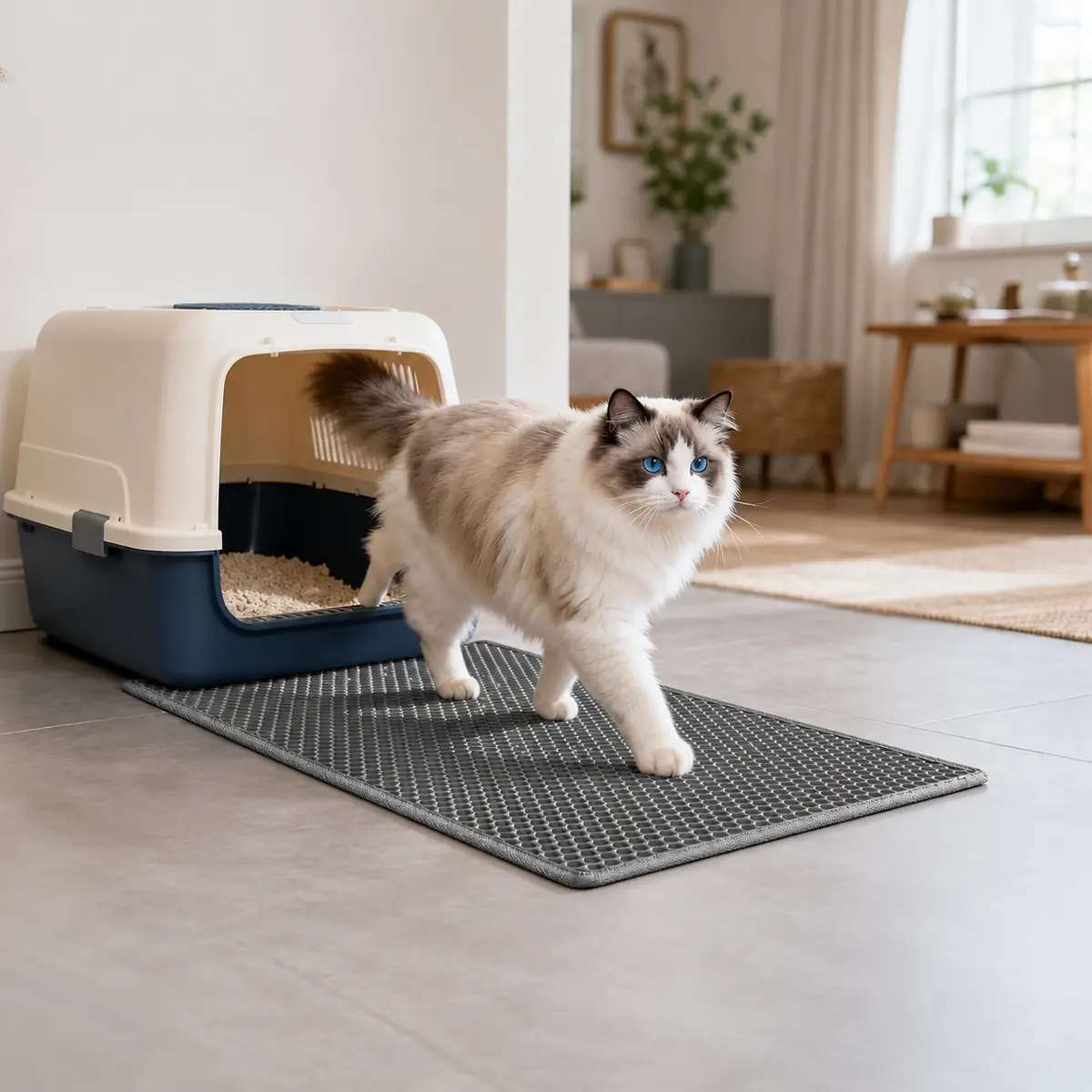
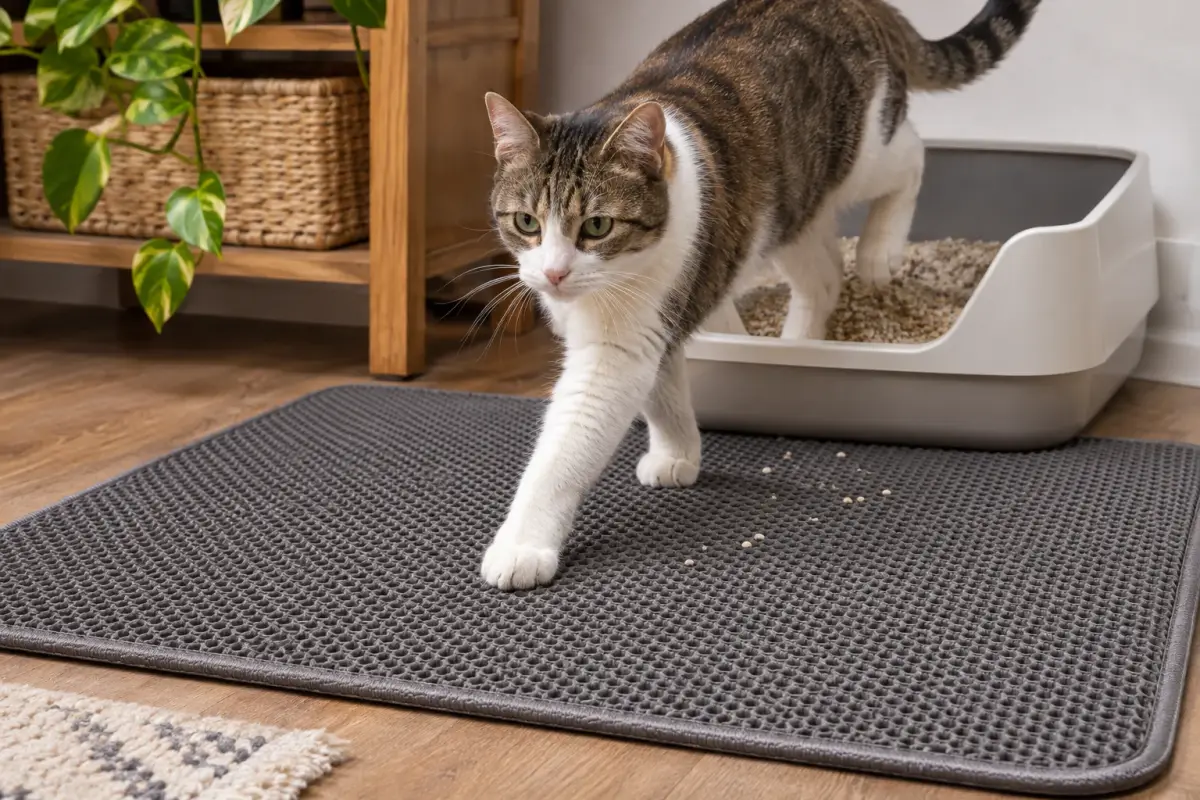
The best non-tracking cat litter has large, heavy pieces that do not lodge between toes, such as pine or paper pellets, but plenty of cats refuse that texture. For most homes the answer is a low-tracking clumping litter your cat accepts, a box with high sides, and one of our litter mats at the exit to catch whatever still comes out.
By Matt GarnettUpdated November 13, 20265 min read2 sources
Why litter tracks in the first place
Tracking happens when granules leave the box on your cat rather than being kicked out. Small, light pieces wedge between toe pads and in the fur around the paws, then drop off a few steps later on the floor, the bed or the couch. Static can make very fine litter cling to fur, and a cat that leaps out of the box flings more than one that steps out calmly.
That means three things decide how much a litter tracks: the size of each piece, its weight, and how much it breaks down into smaller bits as it is used. A litter that starts as large granules but crumbles to powder will track more by the end of the week than on the first day. Keep that in mind before you settle on the best non-tracking cat litter, and look at our litter mats as the second half of the fix.
Litter types ranked by tracking
Least tracking: pine, wood and paper pellets. Each piece is several times larger than a clay granule, too big to wedge between toes, and pine pellets break into sawdust that tends to settle at the bottom of a sifting box. Crystal (silica gel) litter is next; the beads are larger than clay but round and light, so some still roll out.
Middle: plant-based clumping litters made from tofu, corn, wheat or walnut shell, which range from long pellets that barely track to fine grains that track like clay. Most tracking: fine clumping clay, the very texture many cats prefer. A coarser clumping clay or a tofu litter with long, thin pellets is often the best middle ground, because it still clumps and still feels like soil to the cat.
Low tracking against what your cat will accept
The ASPCA says most cats prefer clumping, unscented litter with a medium to fine texture, and Cornell's Feline Health Center describes the same preference for finer-textured litter about one to two inches deep. The litters that track least are coarse, so the lowest-tracking choice is not always one your cat will use. A cat that dislikes its litter may start going on a rug instead, which is a far bigger mess than a few stray granules.
So move in steps. Try the coarsest litter your cat accepts, mixing it into the current litter over several days as Cornell suggests. Keep the depth at one to two inches, since a deep bed gives a digging cat more to throw. If your cat starts avoiding the box, go back a step, and if it strains, cries or visits often with little result, call your vet, because those are medical signs rather than litter preferences.
Box shapes that keep litter in
High sides catch litter kicked sideways, and a top-entry litter box makes the cat climb out across a perforated lid that knocks granules off its paws before it reaches the floor. A box with a long, low lip on one side and high walls on the others is a good compromise for a cat that kicks hard.
Choose the shape to suit the cat. Cornell notes that kittens, elderly cats and cats with stiff joints need low sides, so a top-entry box is a poor fit for them, and that most cats prefer an uncovered box. The ASPCA adds that most cats prefer large boxes they can enter easily, and a cramped box makes a cat scatter litter as it turns. Size up rather than down.
What makes a litter mat work
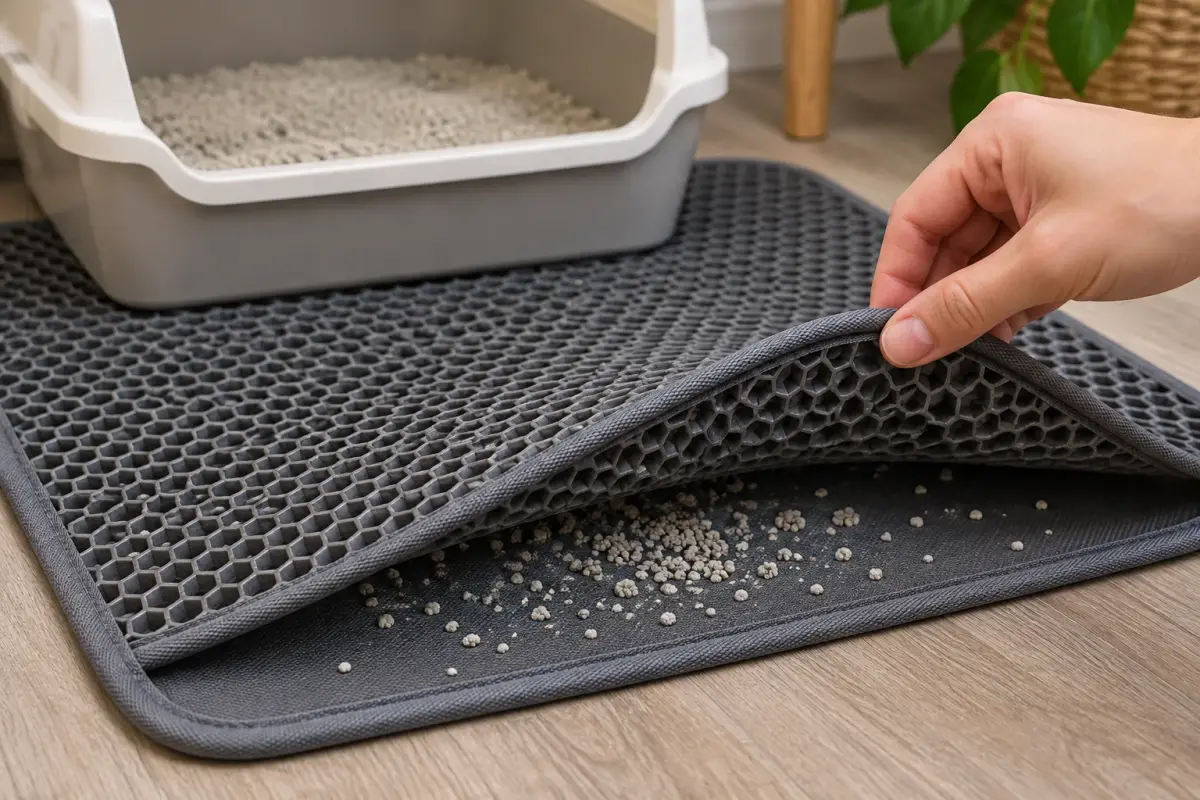
A mat is where most tracking is actually stopped. The useful designs have an open, textured top that brushes litter off paws and lets it fall through into a lower layer, so it is not kicked further on the next exit. A double-layer litter mat with a filter top works this way, and you lift the top and tip the collected litter back into the box or the trash.
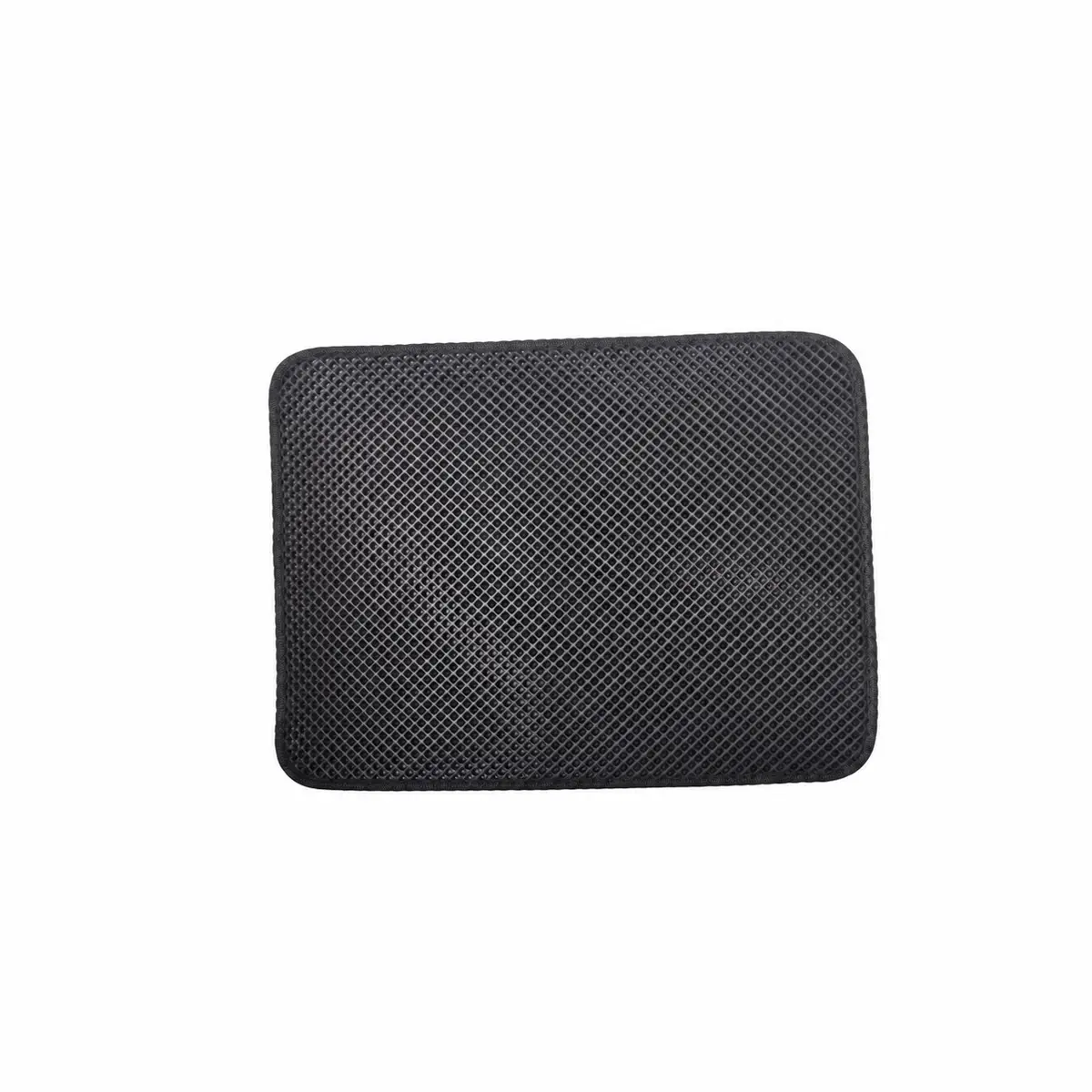
Size matters more than shape. The mat should cover the two or three steps a cat takes after leaving the box, which usually means wider than the box opening and at least as deep as one long stride. A one-piece washable EVA litter mat can be rinsed in a tub, and a smaller claw-shaped litter mat suits a tight bathroom corner.
What to avoid
Avoid very light, fluffy litters in a home where tracking is the main complaint, and avoid filling the box deep to make it last longer. Do not put the box on a smooth floor with no mat, where granules skid far from where they fell, and do not place it where your cat has to walk across carpet to leave.
Avoid changing everything at once, too. If you switch litter, box and location on the same day and your cat stops using it, you will not know which change caused it. Change one thing, wait a week, then change the next. Once tracking is under control, keep a hand vacuum near the box and empty the mat every few days so it keeps working. The full range of litter mats is worth comparing by size before you buy.
Common questions
What cat litter doesn't track?
No loose litter is completely track free, but large pellets made from pine, wood or paper track the least because each piece is too big to lodge between toes. Many cats dislike pellets, so introduce them slowly.
Is clumping or pellet litter better for tracking?
Pellets track less, while fine clumping litter tracks more but is the texture most cats prefer. A coarse clumping litter or long tofu pellets can be a workable middle ground for a cat that refuses pellets.
Do top-entry litter boxes really stop tracking?
They help, because the cat climbs out across a lid that knocks granules off its paws. They suit young, agile cats, not kittens, seniors or cats with stiff joints, which need low sides and an easy way in.
How big should a cat litter mat be?
Wider than the box opening and deep enough to cover the first two or three steps your cat takes after leaving. A mat that is too small just moves the scattered litter a little further along the floor.
Why does my long-haired cat track more litter?
Fur between and around the toe pads traps granules, which then fall off around the house. Coarser litter, a good trapping mat and keeping the paw fur tidy all help reduce what comes out of the box.
Sources we checked
This guide is general information, not veterinary advice. If your pet is unwell or injured, contact your veterinarian.