Buying guides
Best Sifting Litter Boxes for Pellet Litter: What Matters
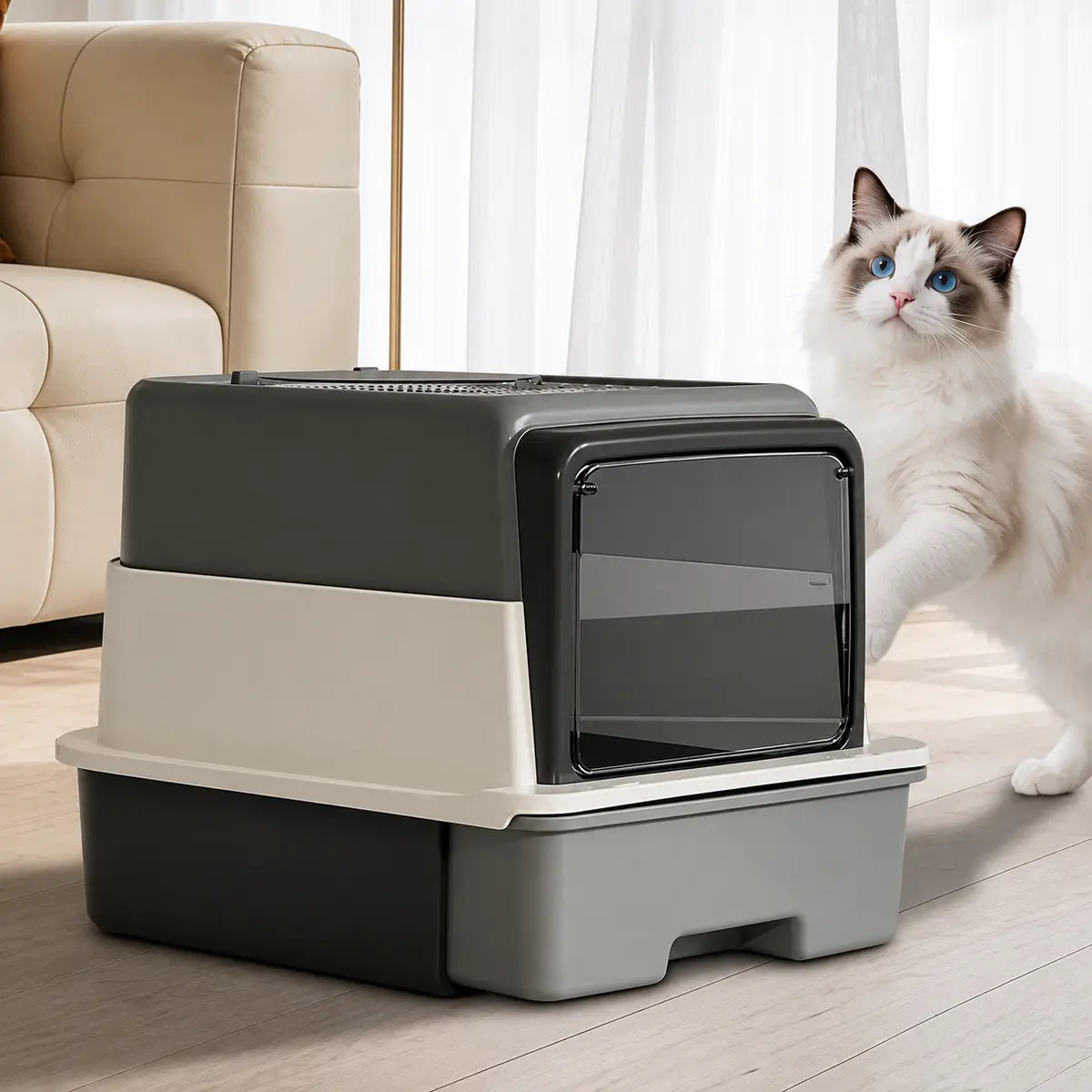
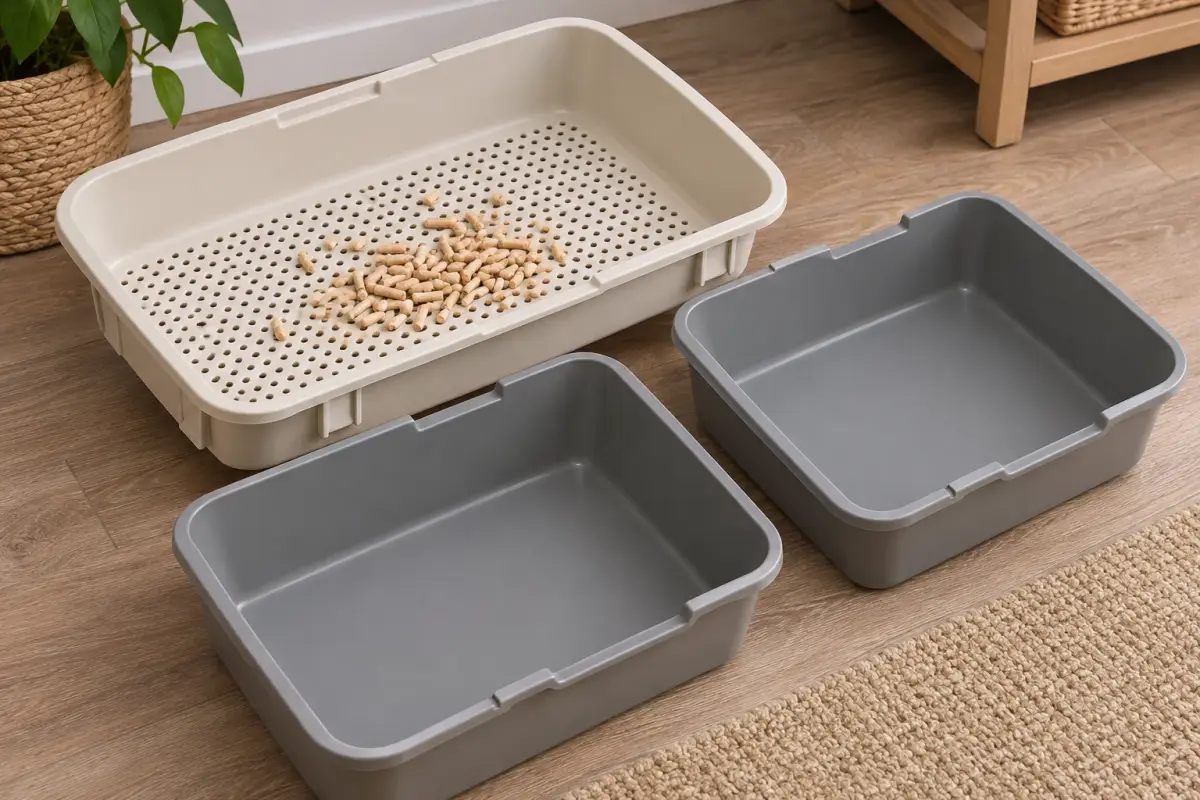
The best pellet litter box is a sifting box: a slotted upper tray over a solid lower pan, so the sawdust that pellets turn into drops away from the intact pellets. Choose one that is large enough for your cat, with low sides if your cat is young or old, and plan to scoop daily. Browse our sifting litter boxes once you know the size you need.
By Matt GarnettUpdated November 14, 20264 min read2 sources
Why pellets need a different kind of box
Pellet litter does not clump. When urine reaches a pellet it absorbs the liquid and breaks down into sawdust, while solid waste stays on top and is scooped out as usual. In an ordinary pan that sawdust settles at the bottom and gets damp, which is where most complaints about smell come from.
A sifting box solves that by design. The upper tray has slots that let the sawdust fall into a lower pan while the intact pellets stay on top, so you lift out the tray, empty the pan and put the pellets back. If you have not chosen litter yet, our guide to cat litter pellets covers the pellets themselves, and our pine pellet litter range is the matching collection.
Size and height for your cat
The ASPCA says overweight and large cats need bigger boxes, and that kittens, elderly cats and cats with mobility problems need low sides. Cornell's Feline Health Center says the same about low sides for seniors and kittens. A sifting box adds a second tray, which can make the rim higher than a plain pan, so check the height of the entry edge as well as the floor space.
For a big cat, look at the inside length and width rather than the product's overall footprint, because the outer rim and handles take up room. Our large litter boxes collection is the place to start for a large or overweight cat. For a senior or arthritic cat, choose the lowest entry you can find, since a high rim is a common reason cats begin avoiding a box.
Tray design, slots and materials
The slots decide whether a sifting box works. They should be small enough to keep intact pellets on top and wide enough for sawdust to pass through without clogging. A lower pan with some depth holds several days of sawdust before it needs emptying, and a smooth, non-porous plastic is easier to wash than a textured one that holds odor.
Look at how the two trays fit together. A loose tray rattles and lets sawdust escape around the edge, while a tight fit with a lip keeps it where it belongs. Check that the upper tray lifts out easily with one hand, because you will do it every day. Replace any box that smells after washing or has cracked, as Cornell advises.
Litter depth and what your cat prefers
Both the ASPCA and Cornell say most cats prefer about one to two inches of litter. In a sifting box this is more than a comfort issue: pellets poured too deep stay above the slots and soak up urine instead of breaking down and dropping through, so the box behaves like an ordinary pan.
The ASPCA also says most cats prefer clumping, unscented litter with a medium to fine texture. Pellets are hard and large, so they are further from that preference, and your cat gets a vote. Put a sifting box with pellets beside the old box and see which one your cat uses before you remove anything.
Cleaning routine and number of boxes
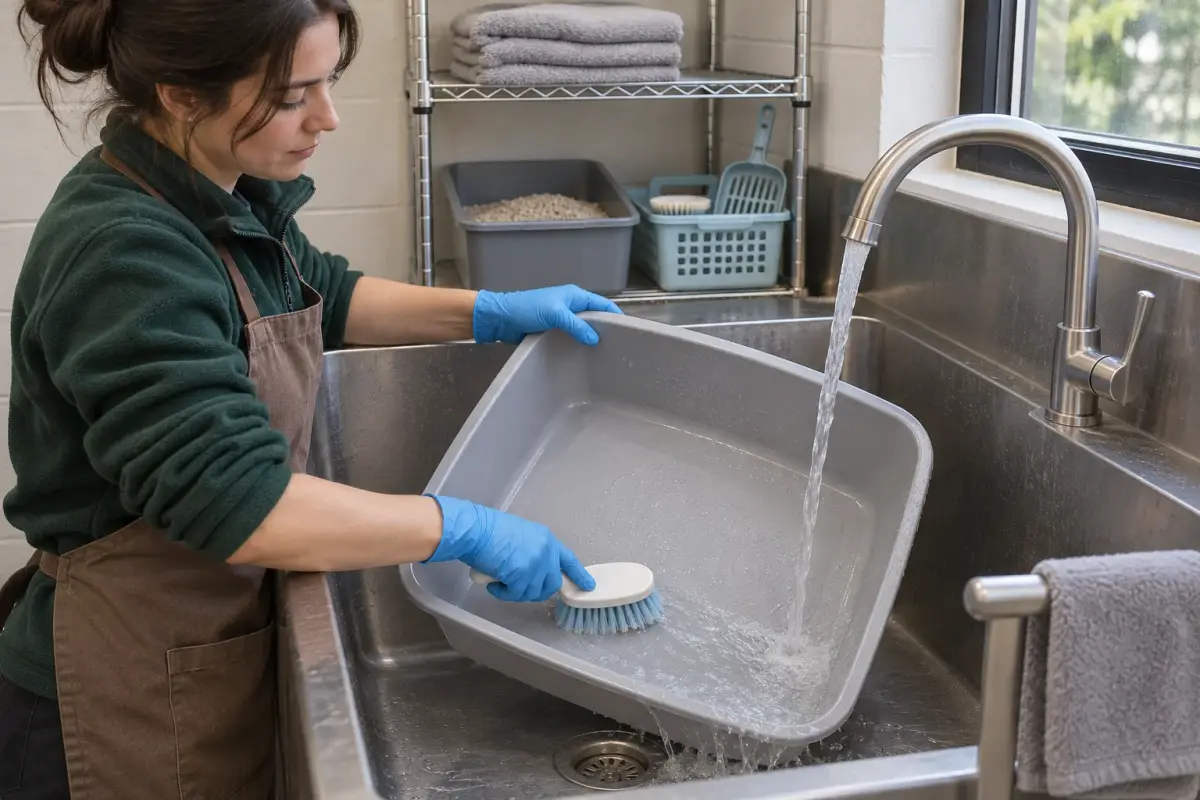
Remove solid waste at least once a day, as the ASPCA recommends. With a sifting box that also means lifting the tray and emptying the sawdust as it builds up, then topping up with fresh pellets. Once a week, wash the box with warm water and unscented soap, dry it fully and refill, and avoid ammonia-based or scented cleaners, which can put a cat off the box.
Keep as many boxes as you have cats, plus one, in quiet places away from food and water. If you are trying pellets for the first time, that extra box is the ideal trial spot, and a litter mat under it catches the sawdust and pellets carried out on paws.
Who a sifting box suits, and when to see a vet
A sifting box suits households that want a low-fuss routine with pellet litter and have a cat that is not fussy about texture. It is a poor fit for a cat that strongly prefers fine clumping litter, or for a home where nobody will empty the lower pan daily. In those cases, a standard box from our litter boxes range with clumping litter is the safer choice.
If your cat starts going outside the box, strains, passes only small amounts of urine or cries while urinating, see your vet promptly, because the ASPCA says those can be signs of a urinary problem and some need treatment immediately. Change one thing at a time so you can tell what caused any change. This page is general information, not veterinary advice, and it cannot replace an examination by the vet who knows your pet.
Common questions
What is a sifting litter box?
It is a box with a slotted upper tray over a solid lower pan. Pellet litter turns to sawdust when wet, the sawdust falls through the slots, and you empty the lower pan without digging through the litter.
Can I use clumping litter in a sifting box?
It is designed for pellets. Clumping litter forms clumps that sit on top of the slots rather than falling through, so a standard box with a scoop is usually the better match.
How deep should the pellets be in a sifting box?
About one to two inches, the depth the ASPCA says most cats prefer. Pellets piled deeper never reach the slots, so the sawdust stays mixed in and the box starts to smell.
How often do I empty the lower tray?
Scoop solid waste daily and empty the sawdust as it builds up, often daily or every couple of days in a busy household. Wash the whole box weekly with unscented soap.
Will my cat accept a pellet litter box?
Many do, but cats generally favor fine, clumping, unscented litter. Put a pellet box beside the old one and see which your cat uses before removing the original.
Sources we checked
This guide is general information, not veterinary advice. If your pet is unwell or injured, contact your veterinarian.