






Buying guides
Best Brush for Doodles: How to Keep a Curly Coat Mat-Free
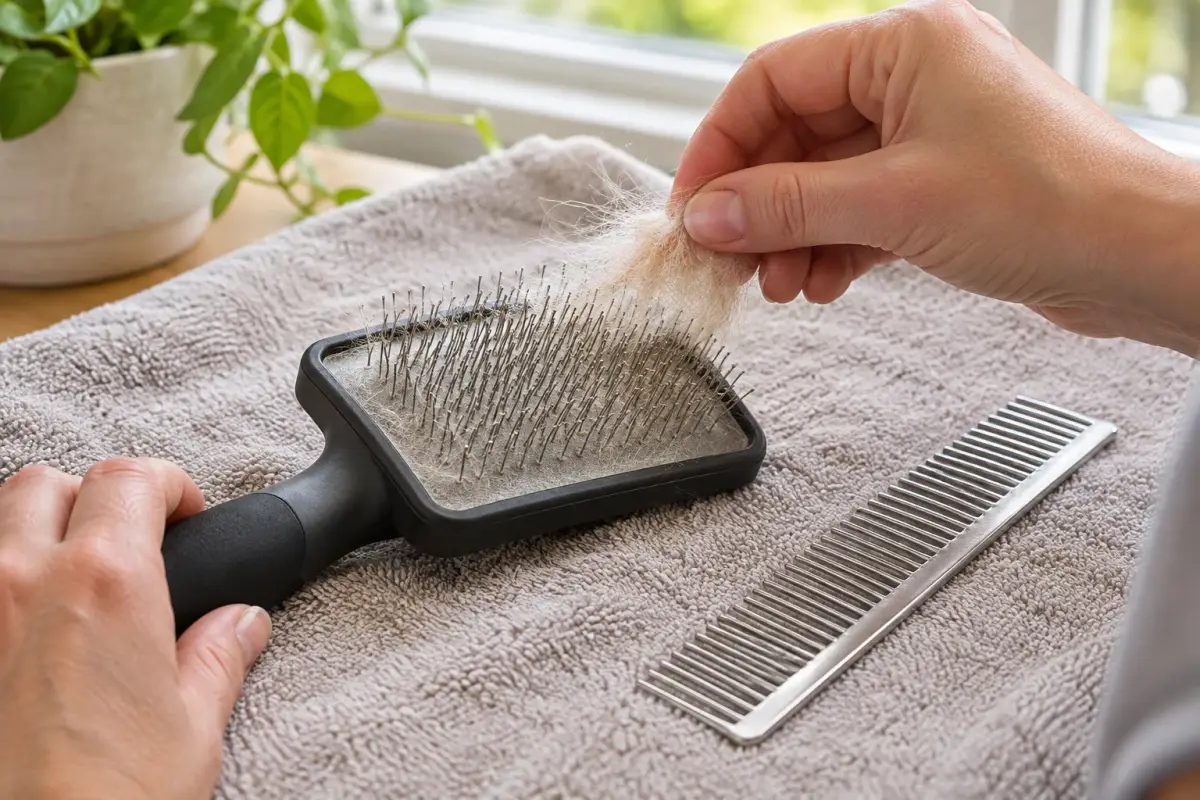
The best brush for a doodle is a firm, long-pin slicker brush paired with a metal comb. Brush in sections, down to the skin, a technique called line brushing, then run the comb through to check for hidden tangles. Doodle coats mat quickly, especially behind the ears and under the legs, so frequent brushing matters more than the exact brush.
By Matt GarnettUpdated November 10, 20263 min read2 sources
Why doodle coats mat
Doodles, crosses between a Poodle and a Golden Retriever or Labrador, often inherit a curly or wavy coat that does not shed much. Hair that would fall out instead tangles into the coat, so mats form close to the skin. The AKC notes Standard Poodles, a common doodle parent, need daily brushing to avoid knotting, and that mats commonly develop behind the ears and under the legs.
Coats vary: a fleece or wool coat mats more than a flatter, wavy one. Many doodles also change coat texture around their first birthday, when matting can suddenly get worse. If you are shopping for a brush, start with our slicker brushes.
Tools compared
A slicker brush, with fine wire pins, is the main tool for curly and wavy coats; the AKC describes slickers as suited to curly coats, removing mats and loose hair. For doodles, a firm, long-pin slicker reaches deeper. A metal comb with wide and narrow teeth is the essential second tool, because it finds tangles a brush skips over. Our range includes a steel needle brush, a self-cleaning slicker brush and a retractable comb.
Pin brushes are gentler for finishing, and dematting tools help with small mats but need care. Undercoat rakes suit doodles with a heavier retriever-type coat. Rubber brushes and bristle brushes do little on a curly coat.
How to line brush
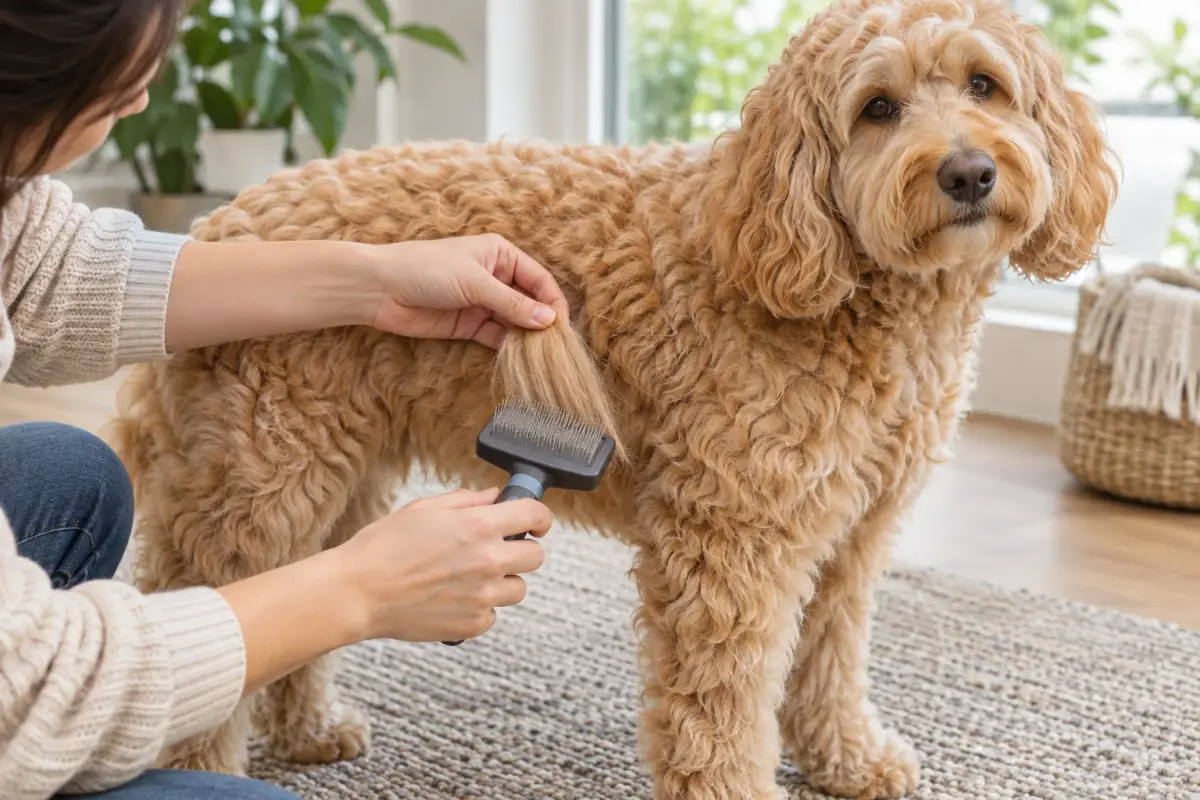
Line brushing means working through the coat in small sections. Hold the hair up with one hand to create a line where you can see the skin, brush the hair below the line down and out from the skin, then move the line up a little and repeat. The AKC describes working section by section through dense coats.
After brushing an area, run the comb through to the skin. If the comb snags, brush that spot again. Use light pressure; pressing hard with a slicker causes brush burn. Mist the coat lightly with water or a detangling spray first, since brushing dry curls can break the hair.
How often, and mat hot spots
Most doodles in a medium or long coat need brushing several times a week, often daily. Focus on hot spots: behind and inside the ears, under the collar or harness, armpits, the chest, between the back legs, the tail and the feet. Brush before baths, because water tightens tangles into felt.
Shorter clips make home care much easier. Many owners book a professional groom every six to eight weeks and keep the coat short between. For other doodle coats, see our guides to the best brush for Labradoodles and whether poodles shed.
Mats, safety and brush care
Work small mats apart from the end with your fingers and the comb. Do not cut mats out near the skin with scissors, which easily cuts the skin. Severe matting pulls on the skin and can hide sores; a groomer may need to clip the coat short, which is kinder than hours of dematting.
Clean hair from the brush after each session and replace slicker brushes when pins bend. If you find red, sore or smelly skin under mats, ask your vet to check it.
Start brushing early and keep sessions short and positive with treats, so your doodle puppy learns to stand calmly. A dog that accepts brushing at home is far easier to keep in a longer coat, and needs fewer dramatic clips at the groomer.
Grooming tool shapes and tooth arrangements
| Tool | Construction described | What to inspect |
|---|---|---|
| Slicker | Fine wire pins | Pin length,spacing and condition |
| Metal comb | Wide and narrow tooth sections | Tooth spacing and smooth edges |
| Pin brush | Pins in a finishing-brush layout | Pin tips and the coat response |
| Dematting tool | A specialized mat-working tool | Its exact working edges and instructions |
| Undercoat rake | Rake-like teeth | Tooth pattern and the individual coat |
Common questions
What brush is best for a Goldendoodle?
A firm, long-pin slicker brush paired with a metal comb suits most Goldendoodle coats. Line brush down to the skin and finish with the comb to catch hidden tangles.
How often should I brush my doodle?
Several times a week at least, and daily for long or fleecy coats. Pay extra attention to behind the ears, armpits, legs and anywhere a collar or harness rubs.
What is line brushing?
A method of brushing a thick or curly coat in small sections, lifting the hair to see the skin and brushing below the line, so you reach the base where mats form.
Is a slicker brush good for doodles?
Yes. A slicker brush is the main tool for curly and wavy doodle coats. Use light pressure to avoid brush burn, and always follow up with a metal comb.
Sources we checked
This guide is general information, not veterinary advice. If your pet is unwell or injured, contact your veterinarian.


