






Buying guides
Best Brush for Labradoodles: Keeping a Doodle Coat Mat-Free
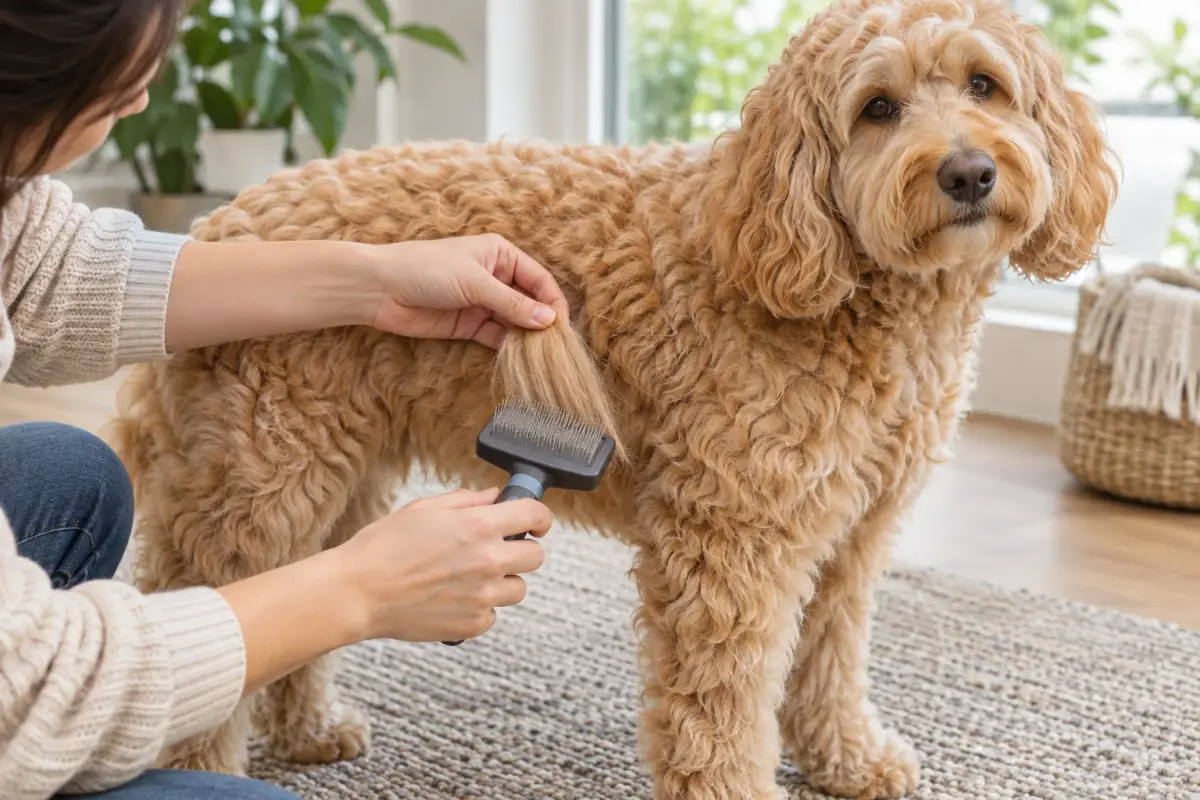
The best brush for most Labradoodles is a firm slicker brush paired with a long-toothed metal comb, used to line brush down to the skin. Fleece and wool coats behave like a Poodle's and mat easily; hair coats behave more like a Labrador's and shed more. Choose the tools by coat type, brush several times a week, and comb behind the ears, under the collar and in the armpits every time.
By Matt GarnettUpdated November 10, 20263 min read2 sources
What matters most: knowing your doodle's coat
Labradoodles come with three broad coat types. A hair coat is flatter and sheds more, like a Labrador. A fleece coat is soft and wavy. A wool coat is dense and curly, like a Poodle's. Fleece and wool coats hold shed hair, which tangles and mats close to the skin, so they need the most brushing.
For curly and wavy coats, the AKC's Poodle grooming guide recommends a slicker brush with short, stiff wire bristles, brushed down to the skin without scraping. A comb checks the work: if it catches, keep brushing that section. Surface brushing leaves a fluffy top over mats underneath.
Slicker, pin brush, comb and rake compared
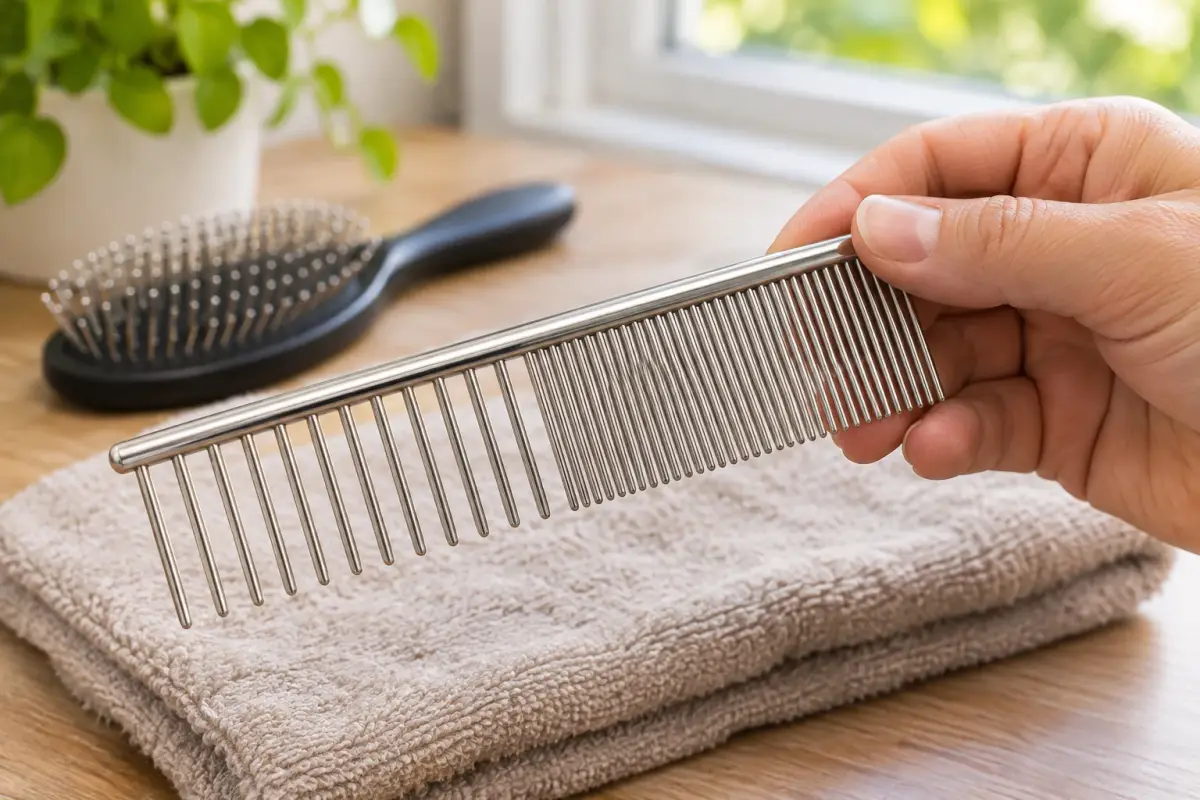
A firm slicker brush is the main tool for fleece and wool coats; a large head covers the body and a small one reaches legs and ears. A pin brush is gentler for puppies and long, fine coats. A long-toothed metal comb with wide and fine sections is essential for checking that you have reached the skin.
For hair-coated Labradoodles that shed, an undercoat rake or rubber curry brush removes loose hair. A detangling spray adds slip and reduces breakage. A mat splitter or dematting comb is useful for occasional knots, used gently.
Best tools for each Labradoodle
For a wool or curly fleece coat, a firm slicker, a long-toothed comb and a detangling spray, with line brushing several times a week. For a wavy fleece coat, the same kit with slightly less frequent brushing. For a hair coat, a medium slicker plus a rake or curry brush during shedding.
For a puppy, a soft slicker or pin brush and short, positive sessions, especially through the coat change between roughly 6 and 12 months, when puppy coats mat fast. For miniature Labradoodles, smaller tools reach legs and faces more easily.
What to avoid
Avoid brushing only the surface. Avoid bathing before brushing, since water tightens tangles into mats. Avoid pressing a slicker into the skin, which causes brush burn. Avoid cutting mats out with scissors; the AKC's grooming advice warns that a sudden movement can lead to a serious cut.
If the coat is matted close to the skin, a groomer may need to clip it short and start again, which is kinder than forcing a brush through. If the skin under mats is red, sore or smelly, ask your vet to check it.
How to line brush a doodle
Part the coat so you can see the skin, brush the hair below the part down and out, move the part up a little and repeat, working in sections over the whole body. Mist with detangler as you go. Comb each finished section to check it is clear to the skin.
Focus on friction spots that mat first: behind the ears, the collar or harness line, armpits, chest, belly, inside the back legs and the tail. Removing a harness after walks and brushing that area prevents a common belt of mats.
How often to brush, and caring for tools
Brush fleece and wool coats at least three or four times a week, and daily during the puppy coat change. Hair coats need brushing once or twice a week. Professional grooming every six to eight weeks, often with a shorter clip, keeps maintenance manageable.
Clean hair from brushes after each use, and wash them occasionally. Replace a slicker when the pins bend out of line and a comb when teeth bend. A good slicker brush and comb last years. For other doodle mixes, see our doodle brush guide.
Coat-tool working surfaces
| Tool | Construction | Inspect before use |
|---|---|---|
| Slicker | Fine pins on a brush head | Pin length and condition |
| Pin brush | Separated pins on a padded head | Pin ends and spacing |
| Metal comb | Rows of teeth | Wide and fine sections if present |
| Undercoat rake | Long spaced teeth | Tooth ends and exact design |
| Rubber curry | Molded rubber working surface | Surface condition |
| Mat splitter | An edged cutting tool | Professional guidance and exact directions |
Common questions
What is the best brush for a Labradoodle puppy?
A soft slicker or pin brush and a comb, in short daily sessions. Early, positive brushing makes the adult coat change much easier. Handle the paws and ears too, so grooming feels normal.
How often should I brush my Labradoodle?
Fleece and wool coats three or four times a week, and daily during the puppy coat change. Hair coats once or twice a week. Comb after brushing to check for hidden knots.
Do Labradoodles need a deshedding tool?
Only hair-coated Labradoodles that shed. Fleece and wool coats need a slicker and comb rather than a rake or deshedding tool. A rubber curry brush also helps hair coats during shedding.
How do I stop my Labradoodle getting matted?
Line brush to the skin, comb to check, focus on ears, armpits and the harness line, and brush before every bath. A shorter clip helps if mats keep returning.
Sources we checked
This guide is general information, not veterinary advice. If your pet is unwell or injured, contact your veterinarian.


