






Buying guides
Best Dog Brush for Shedding: How to Choose a Deshedding Tool
The best brush for a shedding dog depends on its coat. Double-coated dogs need a tool that reaches the undercoat, such as an undercoat rake or bladed deshedding tool, plus a slicker brush for routine grooming. Short, single-coated dogs shed best into a rubber curry brush or grooming mitt. Use bladed tools gently and not too often, because the AKC warns to use light pressure with blades.
By Matt GarnettUpdated November 10, 20264 min read2 sources
What matters most: coat type
Double-coated breeds, such as golden retrievers, huskies, German shepherds and Labradors, have a soft, dense undercoat under longer guard hairs. The AKC notes these coats shed year-round and heaviest in spring and fall. A brush that only touches the top layer leaves the loose undercoat in place, where it ends up on your sofa.
Short, single-coated dogs, such as boxers, beagles and pit bull types, shed short, prickly hairs that weave into fabric. They need a tool that grips and lifts loose hair from the surface rather than one that digs deep. Matching tool to coat is the whole decision, and our dog brushes cover every coat type.
The main tools compared
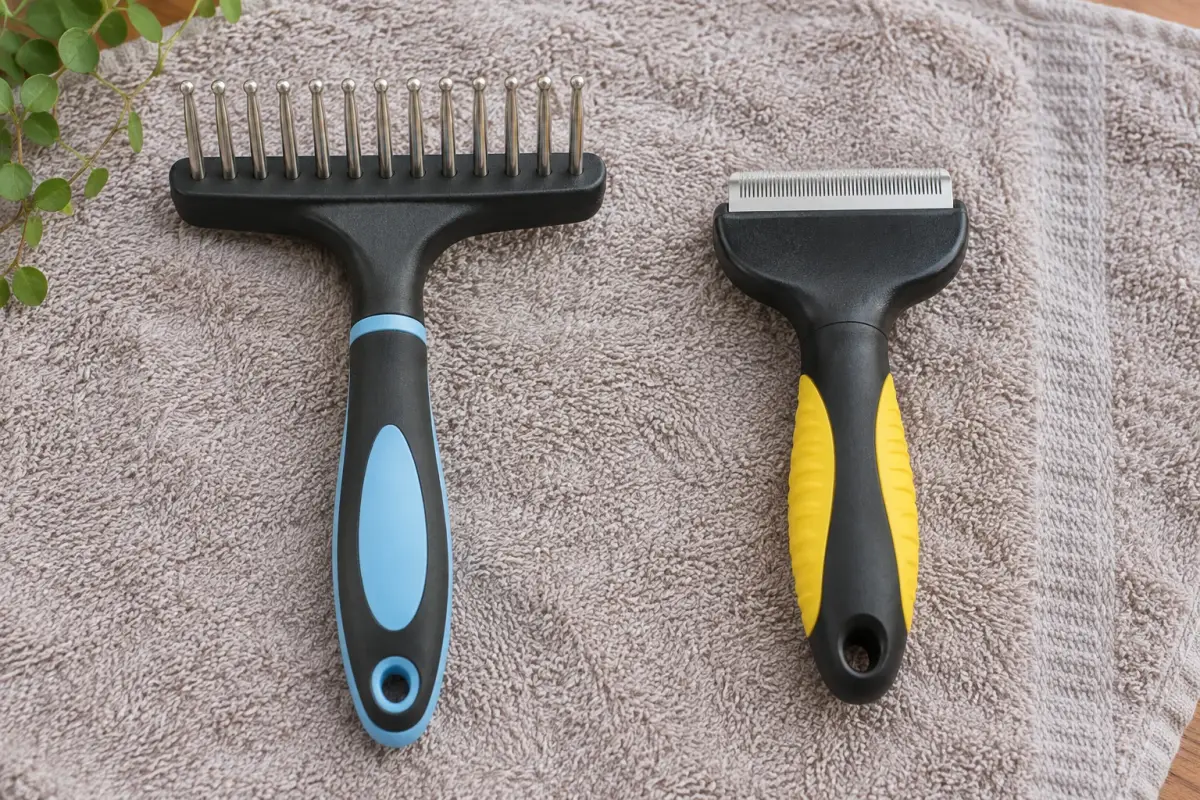
Slicker brushes have fine, bent wire pins; the AKC describes them as removing dead hair from dense coats by reaching into the undercoat. They suit most medium and long coats for regular grooming. Undercoat rakes have one or two rows of long teeth that pull loose undercoat out without cutting guard hairs, and are the safest heavy-duty option for thick coats.
Bladed deshedding tools use a fine-toothed edge to remove large amounts of loose undercoat fast; they work well in shedding season but can cut or thin the topcoat if overused. Rubber curry brushes and grooming gloves suit short coats and double as a bath-time scrubber. Shedding blades, a looped metal band, suit short, dense coats.
Best tool for each coat
For a husky, malamute or other very thick double coat, an undercoat rake plus a slicker, with heavier sessions during a coat blow. For golden retrievers and other feathered double coats, a slicker, a metal comb for the feathering and an undercoat rake in shedding season. For Labradors and other short double coats, a deshedding tool once a week in season and a rubber brush between. Breed guides: German shepherds, huskies, golden retrievers and Labs.
For short single coats, a rubber curry brush or mitt a couple of times a week. For curly, low-shedding coats like poodles and doodles, deshedding tools are the wrong choice; use a slicker and comb to prevent mats. For dogs with sensitive skin, choose rounded or coated pins.
What to avoid
Avoid pressing hard with any blade; the AKC advises light pressure and pulling the tool along the coat in the direction of hair growth. Avoid using a bladed deshedder daily or on wet, matted or broken skin. Avoid deshedding tools on curly coats and on very thin coats.
Avoid shaving a double-coated dog to stop shedding. The AKC explains the undercoat insulates against heat and cold and that shaving can damage how the coat regrows. If shedding comes with bald patches, redness, scabs or constant scratching, that is not normal seasonal shedding and needs a vet. See also why is my dog shedding so much.
How to brush a shedding dog
Brush outside or on a towel. Work in sections, first with a slicker or rake to loosen dead hair, then with a comb, such as this double-sided deshedding comb, to check you have reached the skin. Short sessions most days during a heavy shed beat one marathon session, and keep the dog relaxed.
A bath with a dog shampoo, followed by thorough drying, loosens a lot of undercoat at once, and brushing afterward removes it. Keep treats on hand and stop before your dog gets fidgety, especially with puppies learning to accept grooming.
Care and lifespan
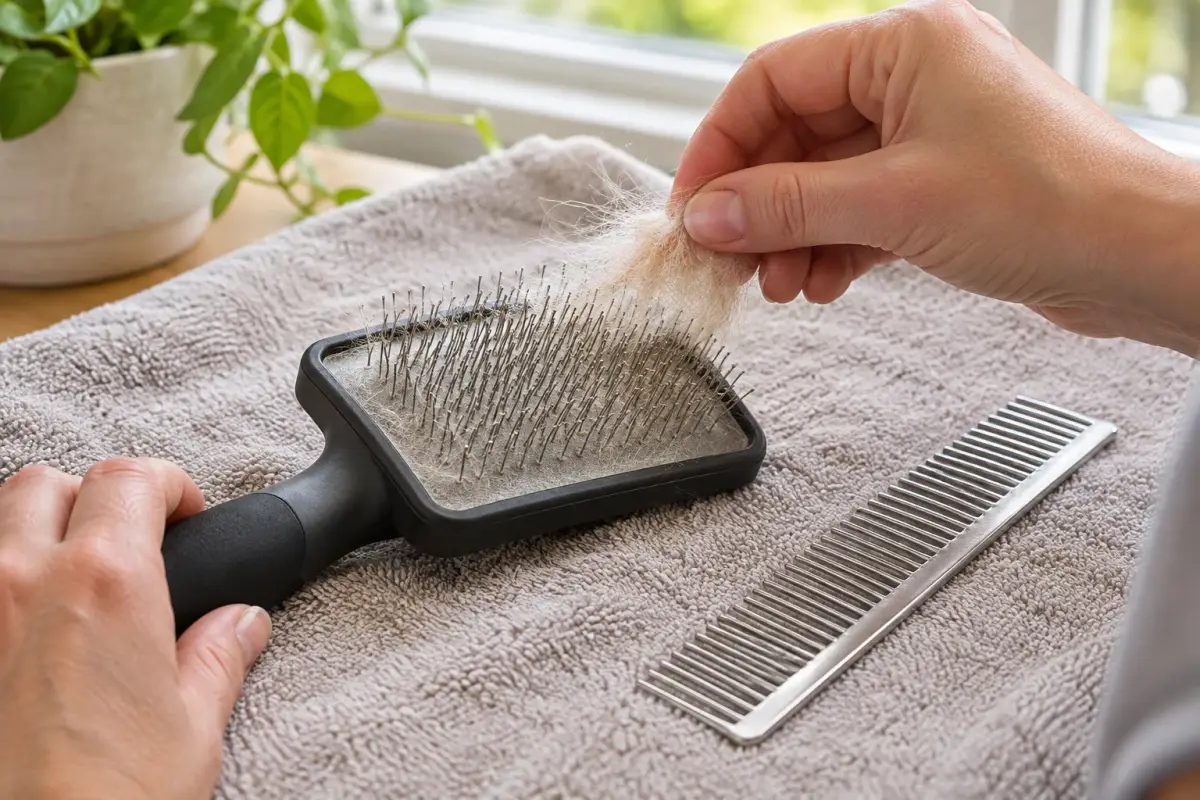
Pull hair out of brushes after every use and wash them in warm soapy water now and then. Replace slickers when pins bend or the pad tears. Keep blades dry to prevent rust and replace them when they stop pulling hair cleanly.
A good undercoat rake lasts many years. Find all our deshedding tools in one place. A deshedding tool's edge dulls over time; when it starts pulling rather than gliding, replace it. Changes in coat quality, such as a dull, greasy or thinning coat, are worth mentioning to your vet.
This page is general information, not veterinary advice, and it cannot replace an examination by the vet who knows your pet.
Deshedding tool surfaces compared
| Tool | Working surface | Inspection point |
|---|---|---|
| Slicker | Fine bent wire pins | Pin tips and spacing |
| Undercoat rake | One or two rows of longer teeth | Tooth length and the coat beneath the surface |
| Bladed tool | A fine-toothed working edge | Exact instructions and pressure limits |
| Rubber curry or glove | Rubber contact surface | Surface condition and contact with the coat |
| Shedding blade | Looped metal band | Edge condition and instructions |
Common questions
What is the best brush for short-haired dogs that shed?
A rubber curry brush, grooming mitt or shedding blade, used a few times a week. These grip and lift short loose hairs from the surface. Bladed deshedders made for long undercoats are rarely needed on short single coats.
Are deshedding tools bad for dogs?
Not when used gently and occasionally. Overuse can cut guard hairs and irritate skin. The AKC advises light pressure with bladed tools. Once a week in shedding season is plenty for most dogs.
How often should I brush a dog that sheds a lot?
Several times a week for heavy shedders, and daily during spring and fall coat blows. Short, frequent sessions keep loose hair off the furniture and let you spot skin problems early.
Is an undercoat rake better than a deshedding tool?
For very thick coats, a rake is gentler on guard hairs and good for regular use. A bladed deshedder removes more undercoat quickly but should be used less often. Many owners use both at different stages.
Sources we checked
This guide is general information, not veterinary advice. If your pet is unwell or injured, contact your veterinarian.


