Buying guides
Best Brush for Labs: Tools That Handle the Shedding
Labs have a short, dense double coat that sheds steadily and blows out heavily twice a year, so the best brush set is simple: a rubber curry brush or grooming mitt for weekly sessions, plus an undercoat rake or deshedding tool for the seasonal blow. A wide-tooth metal comb finishes the job. Long pin brushes and clippers are not needed for this coat.
By Matt GarnettUpdated November 14, 20263 min read3 sources
What a Lab coat needs
The AKC describes the Labrador coat as short, dense and weather-resistant, and says it should never be clipped or trimmed. Labs shed twice a year in handfuls, and the AKC recommends brushing or combing daily during those heavy sheds. Outside the sheds, a weekly brush keeps loose hair down and spreads natural oils.
Because the undercoat is what comes out in quantity, the right tool reaches below the outer coat without scratching the skin. The AKC notes groomers use a grooming rake or quality steel comb to remove loose undercoat on double-coated dogs, and a wide-tooth metal comb is on its list of Lab grooming tools.
Brush types compared for Labs
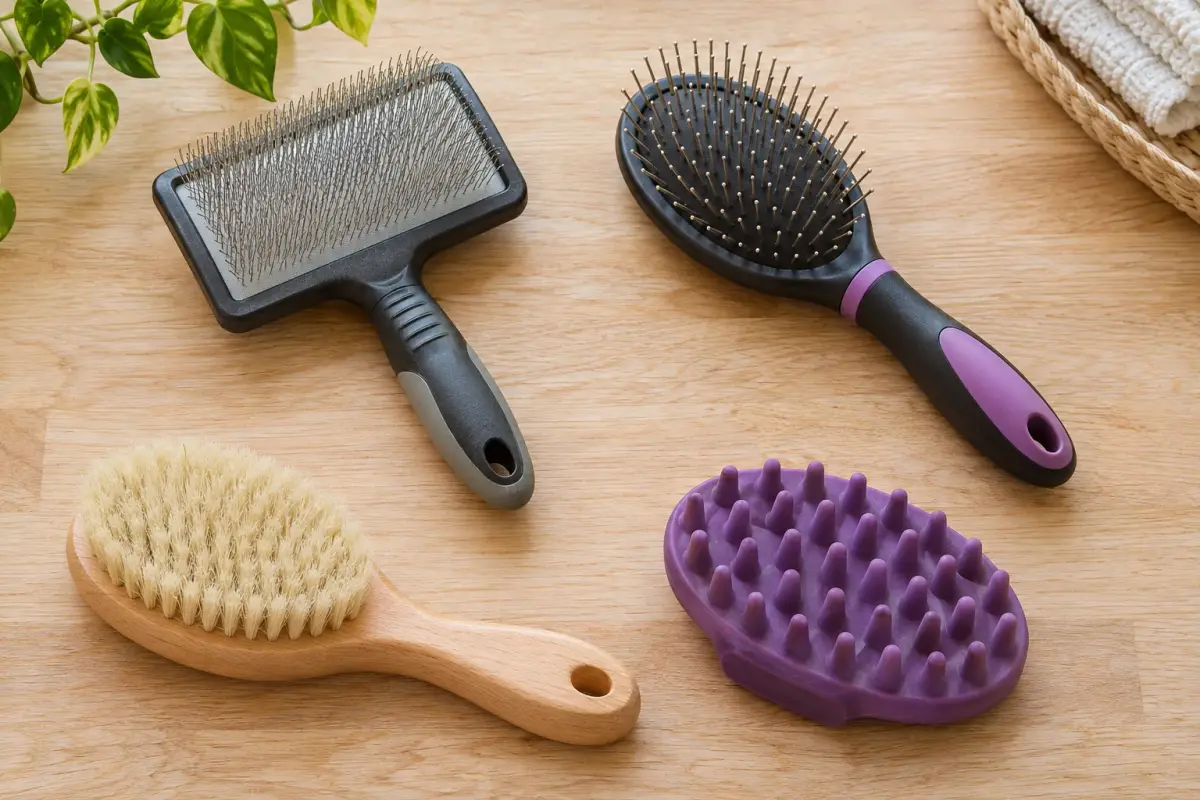
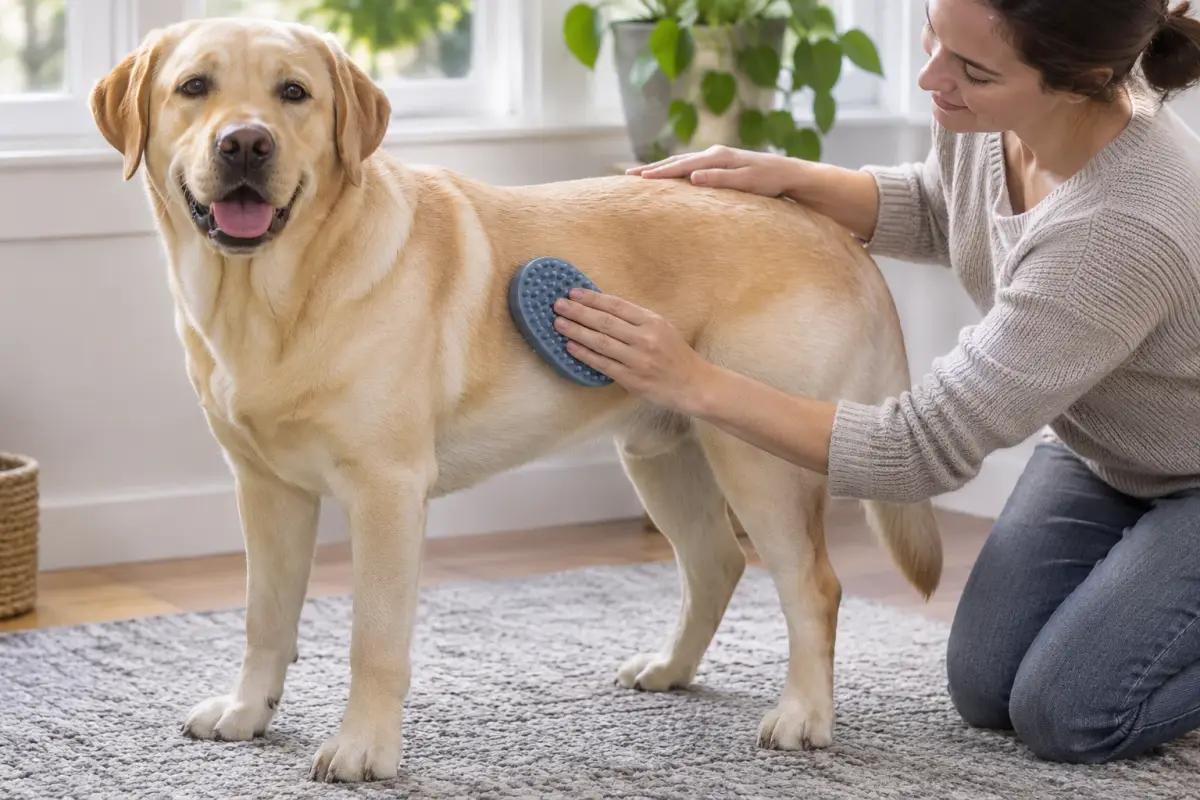
Rubber curry brushes and grooming mitts loosen dead hair and dirt with soft nubs. VCA recommends grooming gloves or short-bristle brushes for smooth coats, and most Labs enjoy them, which makes them good for weekly sessions. Bristle brushes give a finishing shine.
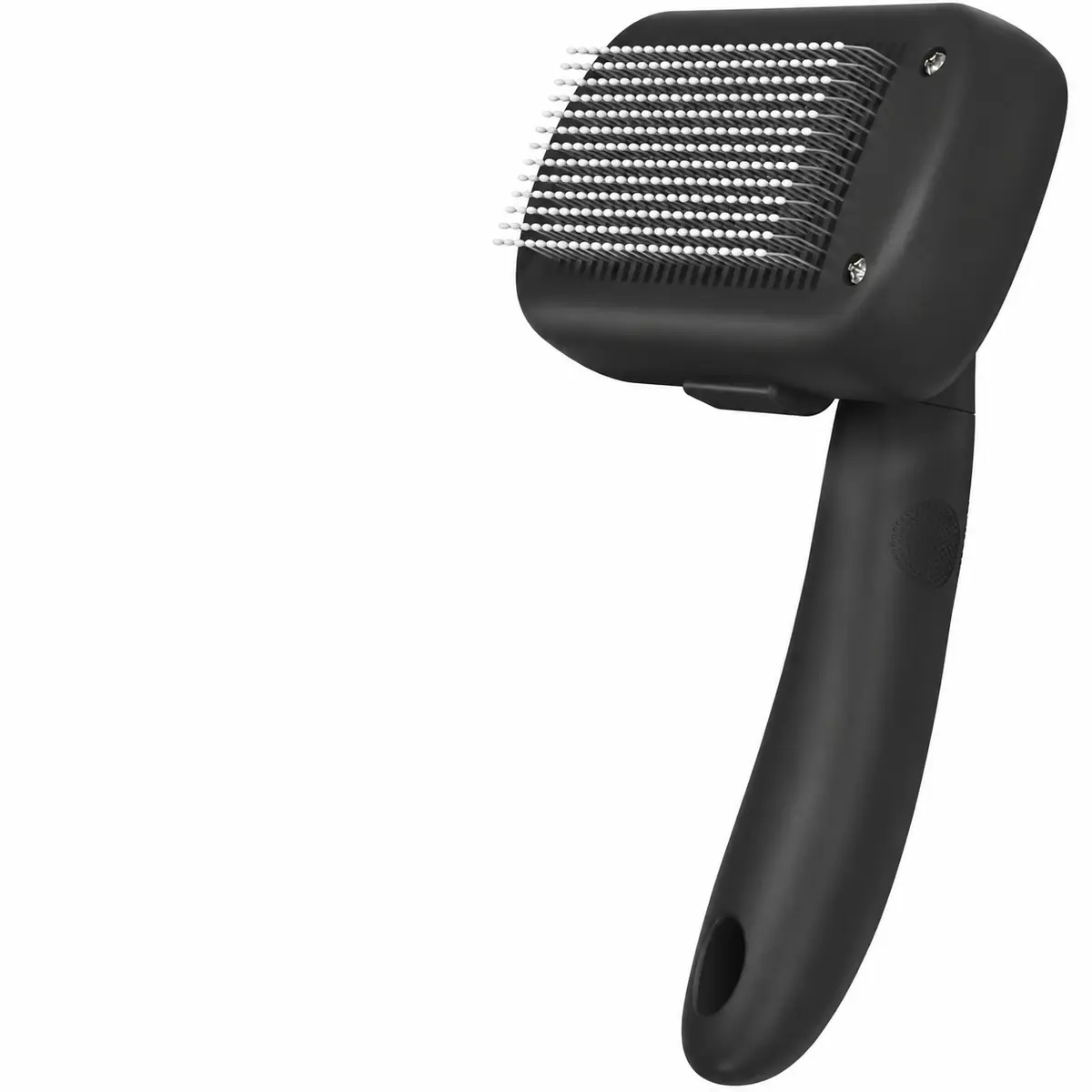
Undercoat rakes have long, rounded teeth that pull loose undercoat through the topcoat. Deshedding blades and edged tools strip a lot of loose hair fast during a blow, but used with pressure or too often they can cut the guard hairs and irritate skin. Slicker brushes work on denser areas such as the thighs and tail but need a light hand on a short coat.
Best tool for each job
For weekly maintenance, a rubber curry brush, used in circles then with the direction of growth, followed by a bristle brush. For the seasonal blow, a rake or deshedding tool every day or two for a couple of weeks, finished with a comb to check you have reached the skin.
For a Lab that dislikes grooming, a grooming mitt feels like petting and builds tolerance. For a puppy, start with a soft rubber brush for a minute or two with treats. Brushing before baths, which the AKC also advises, removes debris and keeps loose hair from matting when wet.
How to use a deshedding tool safely
Work in short strokes in the direction the hair grows, with light pressure, on one section at a time. Stop on any area where the skin looks pink or the dog flinches, and avoid bony areas and the belly with bladed tools. A few minutes per session is plenty.
Use edged deshedding tools only during heavy shedding, not daily all year. If you see red patches, scabs, bald spots or constant scratching, stop brushing that area and ask your vet, because skin problems can look like shedding at first.
What to avoid and care
Avoid shaving or clipping a Lab. The AKC warns that shaving a double coat removes both layers, can leave the coat uneven, does not cool the dog and raises the risk of sunburn and skin problems. Avoid long pin brushes designed for long coats, which skate over a Lab's coat without removing much.
Clean brushes after each use by pulling out hair, and wash rubber brushes in warm soapy water every few weeks. Replace rakes or blades with bent or chipped teeth, which can scratch. A Lab that suddenly sheds far more than usual outside the seasonal blow, or develops thin patches, is worth a vet check.
Brush and comb working surfaces
| Tool | Physical construction | Check before use |
|---|---|---|
| Rubber curry or mitt | Soft molded nubs | Surface condition and fit |
| Bristle brush | A bristle working face | Cleanliness and bristle condition |
| Undercoat rake | Long spaced teeth | Rounded ends and spacing |
| Edged deshedding tool | A blade or fine edged surface | Exact directions and professional guidance |
| Slicker | Fine pins on a brush head | Pin condition and pressure |
Common questions
What is the best brush for a Labrador?
A rubber curry brush or grooming mitt for weekly brushing, plus an undercoat rake or deshedding tool for the twice-yearly shed, finished with a wide-tooth metal comb.
How often should I brush my Lab?
Weekly for most of the year, and daily during the heavy seasonal sheds, according to the AKC. Brush before baths too. A rubber curry brush makes weekly sessions quick and pleasant for most Labs.
Are deshedding tools safe for Labs?
Used gently during heavy sheds, yes. Bladed tools used with pressure or year-round can cut guard hairs and irritate skin, so keep sessions short and light.
Should I shave my Lab to stop shedding?
No. The AKC says a Lab coat should never be clipped, and shaving a double coat can damage it, does not cool the dog and raises skin risks.
Sources we checked
This guide is general information, not veterinary advice. If your pet is unwell or injured, contact your veterinarian.